

 Second citizenship
  19 February 2026
  Reading time: 13 min
 How to get a European passport by investment: from residence to citizenship
A European passport remains one of the most
For investors, the path to an EU passport may begin with a residence permit, either through investment or business activity. This guide explains which routes to EU citizenship work, how long they take, and what level of relocation is required.

 Share
Share  Telegram
  Facebook
 Save
Save 

Which routes to European citizenship exist?
European Union citizenship is acquired through the nationality laws of individual member states. There is no direct “
Most pathways to an European passport fall into three broad routes — by naturalisation, by descent and citizenship for exceptional merit.
1. Citizenship by naturalisation after residence
For most applicants without qualifying ancestry, the typical route to an EU passport is through
In this route you generally proceed:
- obtain a temporary residence permit through employment,
self-sufficiency , study, or by investment; - maintain legal residence over several years under the country’s conditions;
- become eligible to apply for permanent residence;
- apply for naturalisation after satisfying minimum residence, language, and integration requirements.
Over time, and provided the applicant maintains lawful residence and meets integration requirements, these permits may also support a naturalisation pathway.
The number of years required before applying for citizenship varies by country. For example, Portugal typically allows applications after around five years of residence, while in Greece and Italy the residence requirement for naturalisation is generally longer.

2. Citizenship by descent or ancestry
This route recognises family links to an EU citizen. In many EU states, a person born to a parent — and in some cases, a grandparent — with citizenship is eligible to apply for that country’s nationality, provided the lineage can be documented through official records.
In Ireland, individuals with a parent or grandparent who was born in Ireland can often claim Irish citizenship by registering in the Foreign Births Register [1] Source: Foreign Births Register, Ireland.ie .
In Italy, the law allows citizenship by descent if a parent, grandparent, or earlier ancestor was an Italian citizen and certain conditions are met.
These paths can be significantly faster than naturalisation through residence — in some cases without a minimum stay requirement at all — but the specifics vary by jurisdiction and legal documentation must be thorough.
3. Discretionary citizenship for exceptional merit
A small number of EU countries provide narrow, highly discretionary routes to citizenship for people whose exceptional achievements, contributions or services are considered to be of significant national interest.
For example, an American actor Tom Hanks and his wife were granted honorary citizenship of Greece in recognition of their humanitarian support and contributions following the 2018 wildfires in Mati. This was a case where exceptional public service and goodwill aligned with a nation’s interests.
Malta’s Citizenship by Merit is another clear example. Under Maltese law, the Minister responsible for citizenship may grant naturalisation to individuals who have rendered exceptional services to Malta or to humanity at large
[2]
Source: Article 10(9) Maltese Citizenship Act, Government of Malta
. This path differs from standard
Unlike traditional investor citizenship schemes that were phased out following EU legal challenges, the merit route is framed as a form of naturalisation grounded in national interest, evaluated case by case.
Comparison of ways to get a European passport
| Route | Based on | Stay requirement | Language test | Obtaining period |
|---|---|---|---|---|
| Residence by investment → citizenship | Investment and | Required at the citizenship stage | ||
| Citizenship by descent | Proven ancestry | Not required | Rarely required | |
| Citizenship by merit | Exceptional achievements | Not required | Not required |
5 five key benefits of EU citizenship
EU citizenship offers advantages that go well beyond what residence permits can provide. For many investors and financially independent individuals, these benefits only become fully visible after comparing citizenship with
1. Freedom to live and work across the European Union
An EU passport allows you to live, work, study, or run a business in any EU member state without additional visas or permits [3] Source: Free movement and residence rights for EU citizens, European Commission . For example, a person who obtains Portuguese or French citizenship can later relocate to Germany, Spain, or Italy without reapplying for residence.
2. Strong global mobility
Most EU passports provide
3. Permanent legal status without renewals
Unlike residence permits, citizenship does not need to be renewed and is not tied to investment thresholds, income levels, or physical presence rules. An investor who no longer wishes to maintain an investment or a financially independent person whose income structure changes does not risk losing status once citizenship is granted.
4. Full access to social and economic rights
EU citizens gain access to national healthcare systems, public education, and social protections on the same basis as local nationals. For example, a family that acquires Italian or French citizenship can enrol children in public schools and universities without the limitations often faced by temporary residents.
5. Long-term security for future generations
EU citizenship can usually be passed on to children automatically or with minimal formalities. This means that children born after naturalisation often acquire citizenship at birth, ensuring
Portugal Golden Visa: is it still the fastest route to citizenship?
Portugal Golden Visa is a
Path from Golden Visa to Portuguese citizenship
In most cases, applicants may become eligible to apply for Portuguese citizenship after around 5 years of residence. For investors, the main question is not only the legal minimum number of years, but also what is required to keep the “citizenship clock” moving. The most important factors usually include:
- maintaining residence status throughout the required period and renewing the permit on time;
- meeting minimum stay requirements to avoid breaking residence continuity;
- passing the language requirement, typically Portuguese A2 or higher.
In Portugal, the mandatory residence period for naturalisation might be increased to 10 years for most foreigners and to 7 years for citizens of the Community of Portuguese Language Countries. The period would be counted from the date of obtaining a residence permit, rather than from the date of applying for citizenship, as is currently the case.
Discussions on amendments to the nationality law are scheduled for autumn 2025. Until then, the existing rules remain in effect for residence permit and citizenship applicants, and applications are processed under the current law.
 Olga Koltsova
Investment Programs Expert
Olga Koltsova
Investment Programs Expert
Greece Golden Visa: entry speed, timeline
Greece Golden Visa is a
Path from Greece Golden Visa to Greek citizenship
Golden Visa holders can pursue a Greek passport through naturalisation. In most cases, applicants may become eligible to apply for Greek citizenship after around 7 years of residence.
For investors, the main question is not only the legal minimum number of years, but also what is required to keep the “citizenship clock” moving. The most important factors usually include:
- maintaining residence status throughout the required period and renewing the permit on time;
- living in Greece on a real, continuous basis during the 7-year period — spending around 183 days per year in the country to demonstrate genuine residence for naturalisation;
- demonstrating integration, which may include language and other eligibility criteria depending on the case.
Consistent compliance with these conditions increases the chances of a successful citizenship application.
Malta Permanent Residence vs Malta Global Program
Malta offers two popular residence options that often appear in investor comparisons: Malta Permanent Residence Programme, MPRP, and the Malta Global Residence Programme, GRP. Both can support
Malta Permanent Residence Programme is designed for applicants who want to obtain permanent residence status in Malta from the start, rather than renewing a temporary permit every year. Under the programme, applicants must meet several financial commitments to qualify for permanent residence status:
- Property requirement: either purchase residential property worth at least €375,000; or
- rent residential property with an annual rent of at least €14,000 for a minimum 5-year period.
- Government contribution fee: around €37,000 (a contribution to state funds).
- Administration fee: around €60,000.
- Charitable donation: €2,000 to a registered Maltese NGO.
- Asset requirement: applicants must demonstrate ownership of minimum assets of €500,000+, including a set amount of liquid assets e.g., €150,000, or €650,000+ in total assets including a smaller liquid component, though exact thresholds vary by option.
Malta Global Residence Programme is primarily a tax residence framework for financially independent applicants who want to relocate and structure their lifestyle around Malta. It is typically associated with meeting specific conditions related to accommodation and minimum tax payments.
The main tax conditions include:
- foreign income remitted to Malta is taxed at a flat 15% rate. The minimum annual tax is €15,000 per family;
- foreign income not transferred to Malta is not taxed in Malta;
- capital gains earned outside Malta are exempt from Maltese tax, even if brought into Malta;
- income that arises in Malta and capital gains realised in Malta are taxed at standard rates up to 35%;
- no inheritance tax is charged on assets.
Each programme addresses different relocation needs. The choice depends on whether permanent residence or tax efficiency is the main goal.
Path from Malta residence to Maltese citizenship
For applicants considering Malta as a
Under Maltese rules, applicants generally need to demonstrate:
- at least 5 years of residence in Malta within the 6 years preceding the final 12 months before applying; and
- continuous residence in Malta for the 12 months immediately before the citizenship application.
In practice, this means Malta is a
Can Hungary’s investor route lead to a passport?
Hungary Guest Investor route, or Golden Visa, is a residence by investment option with qualifying investments starting at €250,000 via an investment fund share.
It is an attractive entry point due to its
Path from Hungary’s investor residence to Hungarian citizenship
A Guest Investor Permit can be maintained with minimal time in Hungary, but a citizenship strategy generally cannot. If your goal is a Hungarian passport, you should plan for a genuine relocation path where residence continuity and integration can be demonstrated.
To become eligible for Hungarian citizenship by naturalisation, applicants generally need to meet the following requirements:
- maintain continuous residence in Hungary, which in practice may require limiting time spent outside the country to no more than around 45 days per year during the period for naturalisation;
- establish continuous residence in Hungary;
- meet integration expectations, which include Hungarian language ability and constitutional knowledge.
Hungary’s investor residence can be a viable way to secure a
Cyprus permanent residence: lifestyle and eligibility for citizenship
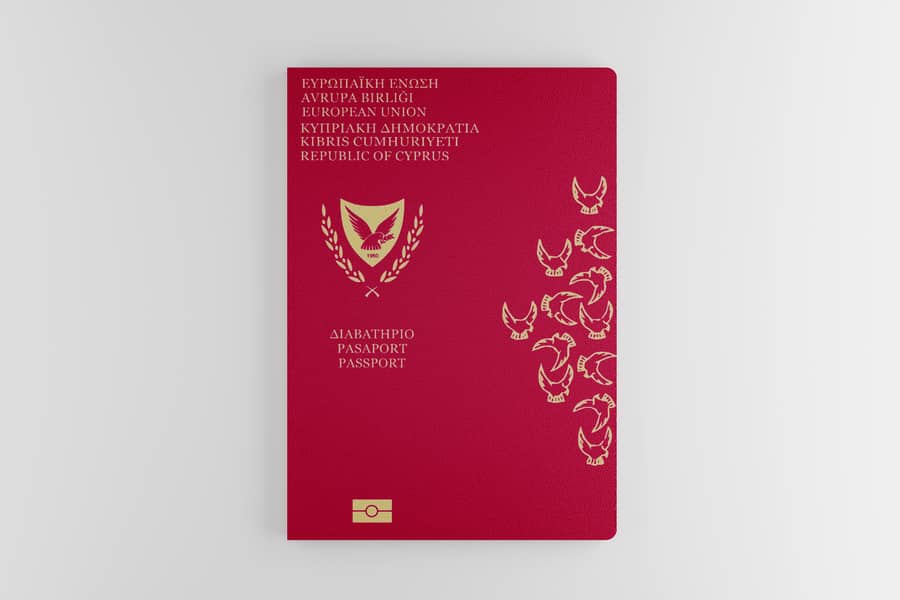
Cyprus offers permanent residence by investment with a minimum investment starting at €300,000. The programme is often chosen by investors who want a stable
Path from Cyprus permanent residence to Cypriot citizenship
In most cases, applicants may become eligible to apply for Cypriot citizenship after around 8 years of residence. For investors, eligibility depends on genuine residence rather than holding a permit on paper. In practice, the key factors usually include:
- maintaining legal residence status throughout the required period;
- having lived in Cyprus for at least eight years of lawful residence within the 10 years before applying, including a period of continuous residence in the final 12 months with no more than about 90 days of absence in that year;
- keeping a clean compliance record and meeting any documentation requirements at the citizenship stage.
Cyprus permanent residence can work well as a
Italy Investor Visa: is it one of the longest paths to EU citizenship?
Italy Investor Visa is a
Path from Italy Investor Visa to Italian citizenship
To become eligible for Italian citizenship by naturalisation, applicants generally need to meet the following requirements:
- maintaining continuous legal residence throughout the 10-year period;
- spending the majority of each year in Italy and keeping a stable life base in the country;
- meeting integration requirements, which may include language and other documentation at the citizenship stage.
Italy Investor Visa can support a
Italian alternative for financially independent person
Italy Elective Residence is a
The programme is designed for
Path from Italy Elective Residence to Italian citizenship
As with investor routes, an Italian passport is possible by naturalisation, provided the applicant maintains lawful residence of
Spain Non-Lucrative Visa: is it right for you?
Spain
The visa is designed for relocation. It does not allow employment in Spain and is renewed on the condition that the applicant continues to meet the financial and residence requirements.
Path to Spanish citizenship
In most cases, applicants may become eligible to apply for Spanish citizenship after around 10 years of residence.
Spain applies strict rules on physical presence when assessing citizenship applications. In practice, this means applicants are expected to:
- maintain continuous legal residence throughout the 10-year period;
- live in Spain for more than 183 days per year, making Spain their primary place of residence;
- meet integration requirements at the citizenship stage, including language and other formal criteria.
Spain
Does Andorra Residence Permit align with your goals?
Andorra offers a residence permit that attracts investors and financially independent individuals who want a European base with favourable taxes and quality of life. To qualify for
- Minimum investment: €600,000 into the economy of Andorra.
- Proof of annual income: typically €52,100 or more.
- Residence requirement: holders must live in Andorra at least 90 days per year to maintain their status.
These figures apply to what is often called passive residency, where the permit is granted without the right to local employment and is tied to investment or financial sufficiency rather than
Path from Andorra residence to citizenship
Even though Andorra has a residence permit, it does not align with an EU passport strategy. Andorran citizenship is a separate national process, and becoming a citizen requires a very long period of continuous residency — in many cases up to 20 years before eligibility.
In limited situations, for example, if education in the country is completed locally, the requirement may be shorter, but the standard naturalisation timeline remains long.
Andorra residence can be an attractive choice for lifestyle, low taxes, and European proximity, but it does not support an EU
France Visiteur Visa & Startup Visa: choosing the right non-investment route
France offers multiple residence options for
The France Visiteur Visa is intended for financially independent applicants who wish to reside in France without working locally.
Key financial and residence requirements:
- Proof of sufficient income of at least €1,800 per month for a single applicant, with higher amounts for couples or dependants.
- Evidence of adequate accommodation in France for the entire period of the visa.
- Health insurance coverage valid in France for the applicant and any family members.
The France Tech Visa is tailored for founders and entrepreneurs who plan to launch an innovative company in France. It allows entry and residence based on a credible business project and support from a recognised French entity such as a public incubator or accelerator.
Path from Visiteur and Startup visas to French citizenship
Applicants may become eligible for France citizenship after about 5 years. Continuous residence means genuine living in France each year. In practice, this often means at least 183 days per year.

Austria residence: strong lifestyle appeal with limited passport predictability
Austria offers a residence permit for financially independent applicants who can support themselves without working in the country [7] Source: Settlement and Residence Act (NAG), Republic of Austria . as a baseline requirement, applicants must demonstrate monthly income from €2,500, calculated individually and adjusted based on family composition.
In practice, income expectations are higher for families. For example, in 2024 a married couple is generally expected to show from €3,900 per month, with an additional €380 per month for each child.
Applicants must also demonstrate sufficient savings. While the formal requirement is that funds on a bank account should equal at least one year of income, in practice advisers recommend showing €80,000 or more in savings to strengthen the application.
Path from Austria residence to Austrian and EU citizenship
Naturalisation in Austria requires long and continuous residence, usually more than ten years before an application is considered. For financially independent residents, this means:
- maintaining lawful residence status and renewing the permit on time;
- living in Austria for at least 183 days per year to demonstrate genuine residence;
- integrating into Austrian society, which generally includes German language ability and cultural understanding;
- complying with Austrian law and civic expectations throughout the residence period.
Austria’s financially independent residence route can provide a stable European base and a high quality of life for
Choice framework: country, budget, timeline
Southern European countries such as Portugal, Greece, Spain, and Italy offer different balances between lifestyle, residence requirements, and naturalisation timelines. Some jurisdictions are more flexible at the residence stage but become stricter when it comes to citizenship, especially around physical presence and integration.
Minimum legal periods to apply for citizenship range from around five years in some countries to ten years or more in others. In practice, the timeline also depends on physical presence, renewals, language requirements, and administrative processing.
Looking at the table below helps identify which countries align with a faster eligibility window and which ones are better suited for applicants who prioritise lifestyle and
Comparison of the EU countries for second citizenship
| Program | Best for | Investment, income, savings | Time to citizenship | Dual citizenship |
|---|---|---|---|---|
| Portugal Golden Visa | Investors seeking low presence | €250,000+ Investment | Allowed | |
| France Tech Visa | Entrepreneurs | Seed funding Business plan Resources to operate | Allowed | |
| France Visiteur Visa | Financially independent | €1,800+ per month Income €30,000+ Savings | Allowed | |
| Malta Permanent Residence | €169,000+ Investment | Allowed | ||
| Malta Global Residence Programme | Tax payment | Allowed | ||
| Greece Golden Visa | Investors prioritising fast entry | €250,000+ Investment | Allowed | |
| Cyprus Permanent Residence | Investors wanting PR first | €300,000+ Investment | Allowed | |
| Austria residence for financially independent | Proof of funds Economic contribution | Not allowed | ||
| Italy Investor Visa | €250,000+ Investment | Allowed | ||
| Italy Elective Residence | Financially independent | €31,160+ per year Passive income or savings | Allowed | |
| Spain | Financially independent | €28,800+ per year Passive income or savings | Not allowed | |
| Hungary Guest Golden Visa | €500,000+ Investment | Allowed | ||
| Andorra Residence Permit | 600,000+ Investment | Allowed |
Typical documents required for EU citizenship applications
While exact requirements vary by country, most EU citizenship applications through naturalisation follow a similar documentation framework. Applicants are usually expected to provide:
- valid passport and residence permit, confirming lawful stay throughout the qualifying period;
- proof of continuous residence, such as residence certificates, registration records, or address history;
- evidence of physical presence, which may include entry and exit records, tax residency confirmation, or utility bills;
- criminal record certificates from the country of residence and, in some cases, from the country of origin;
- proof of legal income or financial stability, demonstrating the ability to support oneself;
- language certificate, where required, confirming proficiency at the level set by national law;
- civil status documents, such as birth certificates, marriage certificates, and documents for dependent children;
- health insurance coverage, valid during the residence period;
- application forms and government fees, as required by the competent authority.
Authorities may request additional documents to verify integration, compliance, or continuity of residence. For example, tax records may confirm physical presence during the period.
Risks and limitations on the path from residence to citizenship, with real examples
A residence permit is a powerful first step, but it is not a promise of citizenship. The biggest risks usually appear years later, when applicants expect to qualify for naturalisation. The safest approach is to treat every route as a
Residence rules and citizenship rules are not the same
Some programmes are flexible at the residence stage, but much stricter at the citizenship stage. Greece is a clear example. A Golden Visa can be maintained with limited stay, yet a citizenship application typically requires genuine residence over seven years, meaning roughly half the year in Greece, around 183 days per year, plus integration.
Malta illustrates the same principle in a different way. A residence status can support relocation and tax planning, but citizenship by naturalisation demands genuine residence, including continuous residence in the 12 months before applying.
Eligibility timelines can change
Portugal is currently known for a comparatively short eligibility window, around five years, and that is why it often appears as the fastest option on paper. At the same time, nationality rules can be debated and revised. If a programme is part of your
Integration requirements are often underestimated
Language is not a formality. Portugal typically requires Portuguese at A2 level for naturalisation. Other countries assess language and social integration more broadly. France, for example, is often discussed as a
Processing times and administrative discretion can extend the real timeline
Even when a person becomes eligible to apply, the outcome is not immediate. Naturalisation procedures involve document checks, requests for additional evidence, and administrative capacity constraints. This is why the table in this article should be read as eligibility benchmarks, not as guaranteed passport dates.
Main takeaways on European passports
- European citizenship is granted only through national laws. Investment can open the door to residence, but citizenship is always obtained through naturalisation, ancestry, or in rare cases, exceptional merit.
- Golden Visas, financially independent visas, and startup routes all lead to the lawful residence. From there, the path to citizenship depends on how consistently the applicant maintains that residence, renews permits, and complies with local rules over many years.
- Countries that appear flexible at the residence stage often become strict at the citizenship stage. Spending most of the year in the country is a decisive factor in Spain, Austria, Greece, Malta, Italy, and France.
Low-presence strategies rarely translate into predictable naturalisation outcomes. - Eligibility windows range from around 5 years in Portugal and France to 10 years or more in Italy, Spain, Austria, and Hungary. These are minimum legal thresholds. Real timelines are often longer due to processing, integration checks, and administrative discretion.
- Some routes are best suited for applicants who want to relocate and build a life in one country. Others work better for those who prioritise flexibility and travel but accept a longer or less predictable citizenship path. Choosing a programme without matching it to your real lifestyle is the most common mistake.
About the authors


Frequently asked questions
No, you cannot buy a passport. While there are investor residence programmes in some European countries like Portugal, Greece, and Malta, these programmes only grant residence permits, not citizenship.
Citizenship can only be obtained by naturalisation, which involves a required period of lawful residence and integration. The idea of a “
The timeline to European citizenship varies by country. The minimum residency requirement for naturalisation is typically 5 years in countries like Portugal and France, though Greece and Italy generally require
The overall timeline is also influenced by factors like residency continuity, language proficiency, and administrative processing.
Yes, to obtain citizenship by naturalisation, you generally need to live in the country. Some countries have physical presence requirements, at least 183 days per year, meaning that to maintain your residence status and be eligible for citizenship, you need to spend a significant portion of your time in the country. While residence permits may not require continuous physical presence, citizenship generally does.
The fastest route to citizenship in Europe is typically through Portugal, which allows for naturalisation after about 5 years of residence. However, some factors like language skills and integration may influence the final timeline.
Malta's Citizenship by Merit or Exceptional Service route could be faster for those with a proven record of outstanding contributions, but it’s rare and discretionary. Keep in mind, even in the fastest programmes, the timeline for naturalisation is subject to residency continuity and other requirements.


Contact us today
Passportivity assists international clients in obtaining residence and citizenship under the respective programs. Contact us to arrange an initial private consultation.

