

 Second citizenship
  06 February 2026
  Reading time: 12 min
 Grenada citizenship by Investment: practical guide for investors from Iran
The Grenada citizenship by investment program offers Iranian investors fast, remote access to global mobility and the option to apply for the US
Applicants must pass enhanced Due Diligence, complete a mandatory online interview, and use

 Share
Share  Telegram
  Facebook
 Save
Save 

What are the 7 benefits of Grenada citizenship for Iranian investors?
Grenada’s citizenship by investment program offers mobility, a fully remote process, and the opportunity to apply for a US
1. E-2 business visa to the USA
Grenadian citizens may apply for an
For
2. US Visitor Visa
Grenadian citizens are eligible to apply for B-1/B-2 Visitor Visas valid for up to ten years, permitting stays of up to 180 days a year for business meetings or tourism. Iranian investors should expect thorough interviews, disclose all nationalities, and demonstrate stable travel and financial histories consistent with their application.
3. Scholarships at British universities
As a Commonwealth country, Grenada allows its citizens to apply for Commonwealth Scholarships at leading UK universities in cities like London, Liverpool, and Manchester. These can support Master’s studies in fields such as engineering, data science, or public policy.
For Iranian families focused on education, this can complement UK or EU school pathways. Scholarships are competitive and require strong academic records and financial documentation. Course availability and eligibility depend on the year’s list approved by the Commonwealth Scholarship Commission and partner universities.
4. Freedom to choose a country of residence
Citizenship by investment is processed remotely and does not require residence in Grenada before or after approval. The program includes a mandatory online interview and robust Due Diligence. Compared to
5. Tax optimisation
Grenada offers a favourable personal tax framework: no taxes on worldwide income, capital gains or inheritance for
6. Citizenship transfer to future generations
Children born after citizenship is granted may qualify for Grenadian citizenship. Those born within 12 months of approval must be included in the original application and cannot be added later.
Iranian families should plan dependents at the time of filing and prepare civil documents and apostilles early to avoid delays.
7. Visa-free travel
Grenadian citizens can travel
- up to 90 days in the Schengen Area within any 180-day period;
- up to 180 days per year in the UK;
- up to 30 days in China and Singapore.
Iranian travellers using multiple nationalities should keep consistent travel histories and documentation. ETIAS, an electronic prescreening system for
Specifics of obtaining Grenada citizenship for Iranian investors
Grenada’s CBI remains fully remote and fast, but
Eligibility for Iranian nationals is limited. Residents of Iran are ineligible. Applicants born in Iran may be considered if they:
- have
10+ year s of lawful residence orlong-term visas in approved jurisdictions like UAE, UK, EU, Schengen, Canada, USA, KSA, Australia, New Zealand; - have no current economic ties to Iran, and agree to enhanced Due Diligence, which may include checks in the country of birth and additional investigative costs.
Since 1 July 2024, the minimum
Regional reforms have tightened compliance. Under the Caribbean harmonisation framework, programs share information on applicants, conduct mandatory interviews, and align minimum pricing.
A refusal in one Caribbean CBI program can impede or effectively block approval in another. Prior visa refusals in US, Schengen or the UK and all nationalities must be fully disclosed.
Iranian investors should prioritise transparent Source of funds, wealth and clean,
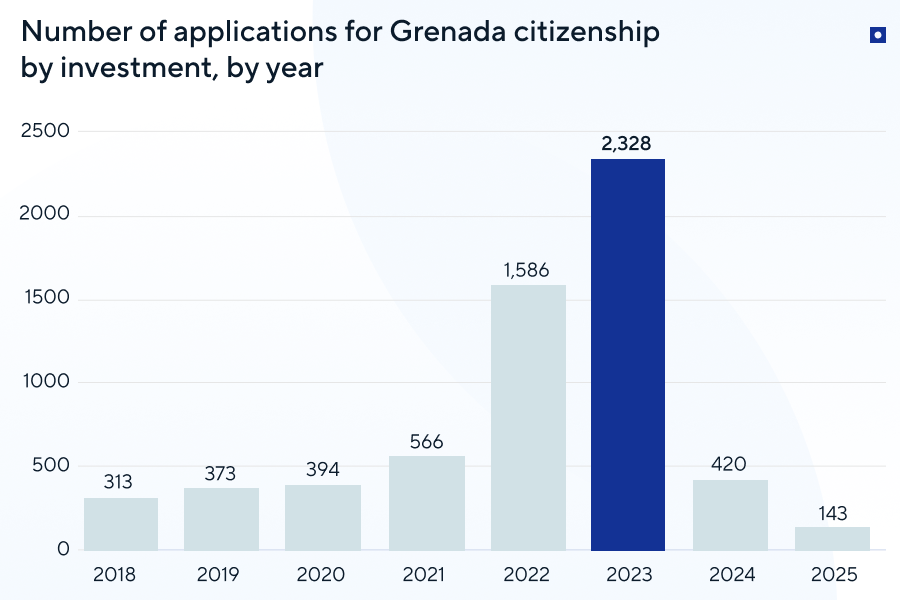
Program scale and demand remain significant. From January to September 2024, Grenada issued 4,861 naturalisation certificates to investors and dependants, generating $144 million. Leading applicant nationalities included China, Nigeria and the USA.
Who can obtain Grenada citizenship by investment?
For Iranian applicants, Grenada’s citizenship by investment program includes additional compliance measures beyond standard rules. The Investment Migration Agency applies strict eligibility filters based on current country of residence, any financial or asset ties to Iran, the full path and transparency of international fund transfers.
All funds must be fully documented,
General eligibility
Grenada citizenship is available to an investor’s family members, including parents and siblings. Applications are accepted from foreigners who pass Due Diligence and meet the program’s requirements:
- the main applicant must be over 18, have no criminal record, be in good health and have a legal source of income;
- a spouse must have no criminal record;
- children under 30;
- the investor’s parents;
- siblings over 18 who are unmarried and have no children.
Additional requirements
All family members must be financially dependent on the main applicant.
Applicants and their families do not need to travel to Grenada to participate in the citizenship program. The investor submits documents through a licensed agent, and the procedure is fully remote.
After the application is approved, only a newborn child of the married couple may be added — and only within 12 months after birth.
Citizenship obtained by investment cannot be the primary citizenship for a newborn. First, the child acquires the citizenship of the mother or father. If the parents are citizens of different countries, the family may choose the citizenship that offers more advantages.
Iran-specific eligibility notes
Applications from individuals currently residing in Iran are not accepted under the IMA policy.
Iranian citizens living abroad may apply only if they meet all program requirements and can demonstrate no current economic ties to the country: no
Enhanced Due Diligence and a mandatory online interview apply to the main applicant and dependants aged 17+. Checks may include additional verification related to place of birth and payment chains.
All funds must move through

How can an investor obtain a Grenada passport?
To become a Grenadian citizen, an investor contributes $235,000 to the country’s economy. There are two options:
Non-refundable contribution to the National Transformation Fund. The fund supports projects in renewable energy, agriculture and tourism. The required contribution for an investor and a family of up to four is $235,000. For the fifth family member and beyond, an additional $25,000 is required.- Purchase of
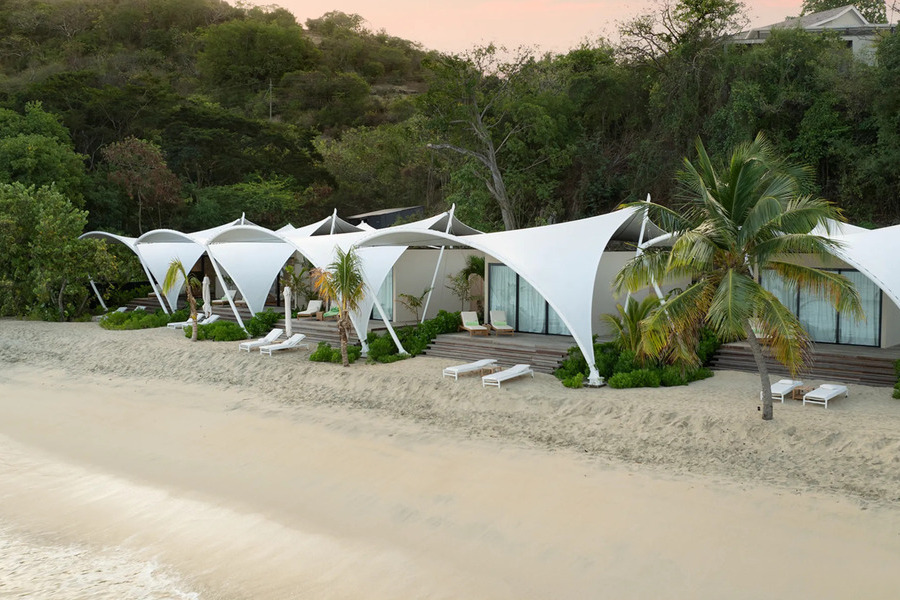
government-approved real estate. The list mainly includes hotel and resort developments. The standard minimum investment is $350,000. For some projects, the threshold is reduced to $270,000.
If an investor selects real estate, the property may be rented out with an annual return of
Costs of obtaining Grenada citizenship
The main expense when obtaining Grenada citizenship is fulfilling the investment requirement. An applicant must either make a contribution of $235,000 or purchase real estate worth from $270,000.
In addition, applicants pay for Due Diligence, a background check conducted for each family member, as well as government fees and charges. These expenses amount to $5,000 per family member aged 17 and above.
Cost calculation for Grenada citizenship by a contribution to the National Transformation Fund
| Expense | Investor | Married couple | Family of 4+ |
|---|---|---|---|
| Investment | $235,000+ | $235,000+ | $235,000 +$50,000 for a parent or grandparent under 55 +$75,000 for a sibling +$25,000 for a parent, grandparent aged 55+, or a child from the fifth applicant onwards |
| Due Diligence | $5,000 | $5,000 for the investor +$5,000 for a spouse | $5,000 per applicant aged 17+ |
| Other fees and charges | $4,500+ | $8,850+ | $17,350+ |
| Total | $244,500+ | $253,850+ | $262,350+ |
Documents required to obtain Grenada citizenship by investment
The main documents needed to apply for Grenada citizenship include:
- colour copy of a passport for each applicant;
- police certificates from country of citizenship and every country of residence for
12+ month s in the last 10 years; - 12 photographs sized 35 × 45 mm, one of which must be certified by a lawyer;
- proof of funds, such as bank statements for the last 12 months;
- birth certificate — two copies;
- medical certificate;
- CV;
- marriage or divorce certificate — two copies;
- education certificate or transcript;
- proof of meeting the investment requirement;
- copy of the licence of the lawyer or notary certifying the documents;
- proof of residential address: a utility bill, tenancy agreement or property ownership certificate.
To obtain a medical certificate, the investor and all family members included in the application undergo a medical examination. Applicants are checked for vaccination records and for the absence of serious or infectious diseases.
All documents submitted under the Grenada
Step-by -step process for Iranian applicants: how to obtain a Grenada passport by investment
Foreign nationals file only through a licensed agent. According to Pasportivity’s legal team, the process typically takes from eight months. Under current IMA rules, applications from individuals residing in Iran are not accepted.
Iranian applicants must evidence no current economic ties to Iran and follow
-
1 day
Preliminary check
A Passportivity Compliance Specialist confidentially verifies eligibility before filing. They review all nationalities held, check for prior US, Schengen, or UK visa refusals, and screen Source of Funds, Source of Wealth, and
place-of -residence requirements. -
2 to 4 weeks
Document collection
Passportivity lawyers prepare a personalised document list, complete government forms, arrange certified translations and apostilles, and structure the SoF or SOW file. A compliant payment plan is agreed in advance sending bank, currency, escrow/government accounts, with name/address consistency across all documents.
-
3 to 6 months
Due Diligence check
Grenada’s Citizenship Department conducts a thorough background review of identity, finances and travel history. Government fees are paid, and the applicant attends the mandatory online interview. Transfers and historical banking relationships may be verified against the declared payment chain.
-
Up to 1 month
Fulfilling the investment requirement
After approval in principle, the investor completes the selected option: a contribution to the National Transformation Fund or payment for approved real estate via escrow where applicable. All payments are executed through
pre-cleared , regulated institutions with SWIFT/MT103 proofs matching invoices and forms. -
4+ week sReceiving documents
The investor receives the naturalisation certificate. The passport is then issued and delivered to the chosen address by Pasportivity.
A Grenada passport must be renewed every 10 years. The renewal procedure is fully remote via a consulate; maintain
up-to -date civil status and address documentation to streamline processing.
What are the other ways to obtain Grenada citizenship?
Apart from the
By birth
A child automatically acquires Grenada citizenship if born on the country’s territory. To formalise the status, parents must register the newborn at the Civil Status and Vital Statistics Office.
By descent
A child is entitled to Grenada citizenship if at least one parent is a citizen of Grenada, regardless of the child’s place of birth. To obtain a passport, parents submit the child’s birth certificate and documents proving the citizenship of the mother or father to the Ministry of Legal Affairs.
By marriage
Spouses of Grenadian citizens may apply for citizenship if they confirm the authenticity of the marriage and evidence of living together. as proof, applicants may provide a marriage certificate, joint utility bills or a tenancy agreement. Applications are filed with the Ministry of Home Affairs.
By naturalisation
A foreigner may apply for citizenship after living legally in Grenada for at least seven years. Applicants must also demonstrate a stable income, no criminal record and compliance with local laws.
By repatriation
Foreigners who can demonstrate family or historical ties to Grenada may obtain citizenship. For example, if a grandparent was born in the country. Applicants must submit documents proving their ancestors’ citizenship or birth in Grenada.
For government service
Foreigners may obtain Grenada citizenship if they serve the country in official capacities — for example, specialists working in the judicial system, lecturers at state universities, military advisers or diplomats.
The decision is taken by the Government of Grenada, the Ministry of National Security and the Cabinet of Ministers.
By adoption
Children under 18 adopted by Grenadian citizens automatically acquire Grenada citizenship. Parents submit the court adoption order and the child’s birth certificate to the Ministry of Social and Community Development, Housing and Gender Affairs.
For exceptional merits
The Government of Grenada may grant citizenship to foreigners who make a significant contribution to the country’s development. These may include prominent businesspeople, athletes representing the national team,
Taxes paid by Grenada residents
A foreigner becomes a tax resident if they spend more than 183 days a year in the country. Tax residents pay taxes on their worldwide income, while
For individuals
Income tax is progressive, ranging from 0% to 28% depending on annual income:
- up to XCD 24,000 — 0%;
- from XCD 24,000 to 60,000 — 10%;
- above XCD 60,000 — 28%.
Withholding tax on dividends, interest and royalties for
For legal entities
Companies in Grenada pay corporate income tax at 28%. VAT is also charged:
- 15% — standard rate;
- 20% — for mobile operators;
- 10% — for hotels and diving companies;
- 0% — for suppliers of basic food items or water.
VAT applies to companies with annual revenue from XCD 300,000.
Employers pay social security contributions at 4% of employees’ salaries. A 15% withholding tax applies to dividends and royalties paid to
Property taxation
Property owners pay an annual tax of up to 0.8% of the property’s market value. When selling residential or commercial property, a property transfer tax is charged:
- for Grenadian citizens — around 5%;
- for foreigners — up to 15%.
How to renew a Grenada passport?
A Grenada passport is valid for 10 years, after which it must be renewed [217] Source: Passport renewal, Grenada Constitution . The application is submitted to a Grenada consulate and must include original and notarised copies of the birth certificate and the previous passport, as well as two photographs sized 45 × 35 mm.
In some cases, additional documents may be required:
- written consent for children under 16;
- a marriage or divorce certificate;
- a spouse’s death certificate.
The renewal fee is $350, and $250 for children under 18. Applications are processed within two to three weeks. The new passport may be received by mail or collected in person at the consulate.
To avoid administrative complications, investors may contact Pasportivity. The firm’s lawyers assist clients even after obtaining citizenship, for example, with passport renewal, bank account opening and company registration.
Why may Grenada citizenship be refused or revoked?
The Government of Grenada places great importance on the country’s international reputation and therefore conducts thorough checks on all citizenship applicants.
For Iranian applicants, authorities closely review Source of funds or source of Wealth, the integrity of payment corridors, any current economic ties to Iran, and full disclosure of nationalities and prior visa decisions. A mandatory online interview and enhanced Due Diligence are standard.
Grounds for refusal
An application for Grenada citizenship may be refused if an applicant:
- provides false or misleading information;
- has been convicted of an offence punishable in Grenada by more than six months of imprisonment (unless pardoned);
- is under criminal investigation or prosecution;
- is considered a potential threat to the national security of Grenada or any other country;
- engages in activities that may damage Grenada’s reputation;
- has been refused a visa to a country with which Grenada has
visa-free entry and subsequently has not obtained a visa from that country — for example, a refusal of a US or Schengen visa.
Before considering
Additional risk factors commonly triggering refusal for Iranian applicants:
- current residence in Iran or use of
Iran-linked banks, counterparties or transactions in the payment chain; - inability to demonstrate that current income and business interests are not connected to Iran;
non-disclosure of other nationalities or prior US, Schengen and UK visa refusals;- inconsistencies across addresses, employment, financial and travel histories, or gaps in documentation supporting funds used for the application.
Grounds for revocation
Citizenship may be revoked if it is discovered that false information was submitted during the application process. Citizenship may also be withdrawn for offences against the state — for instance, incitement to rebellion or participating in military action against Grenada while serving in the armed forces of another country.
If, within five years after obtaining citizenship, the individual is convicted in any country and sentenced to imprisonment for 12 months or more, this may also constitute grounds for loss of citizenship.
Additional revocation triggers relevant to Iranian applicants:
- later discovery of
Iran-linked economic activity or sanctioned counterparties in the funds used for the application or investment; - material omissions or misrepresentations about nationalities held, place of residence, travel history, visa decisions, or sources of funds or wealth.
Grenada welcomes
Live in Grenada
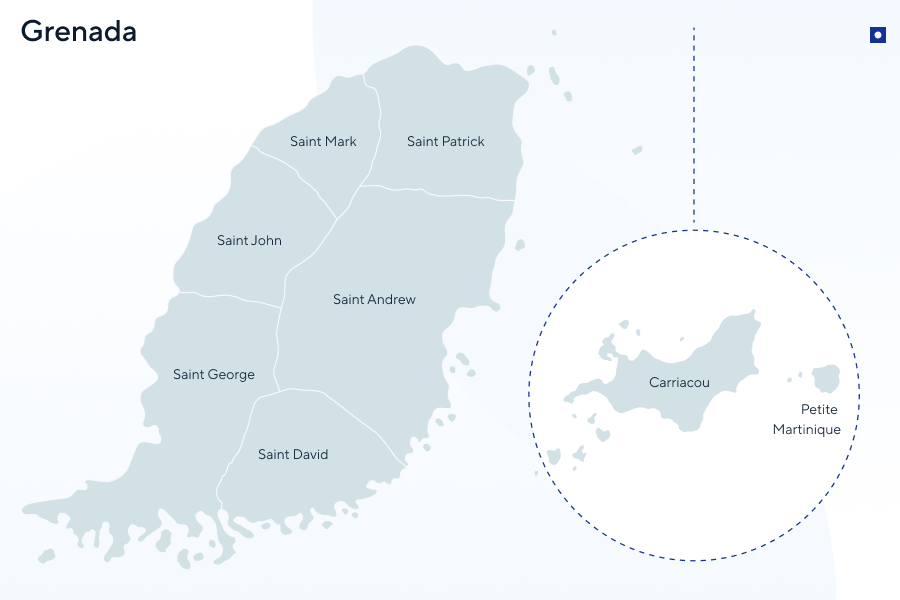
Grenada is a small island nation in the eastern Caribbean Sea, located near Venezuela and Trinidad and Tobago. The island is known for its mountainous landscape, tropical forests and long
Climate
Grenada has a tropical climate. Daytime temperatures range from +26°C to +30°C, and nighttime temperatures stay around +22°C to +24°C.
The rainy season lasts from May to December. Rainfall is usually brief — sunshine may be followed by a tropical downpour within an hour.
From January to April, the weather is drier and milder. This is the island’s peak tourist season.
Because of the warm climate, fresh fruit such as mangoes, papayas and bananas are available
Cost of living
Monthly expenses for one person in Grenada, excluding rent, are around $1,071. This amount covers food, transport and daily spending. For example, a meal at a café costs about $11, a litre of milk — $3, and a monthly bus pass — $37.
For comparison, a single person spends around $621 per month in Russia, $1,110 in France and $1,183 in Germany.
Travel opportunities
A Grenada passport allows travel to more than 140 countries without a visa or with simplified entry, such as visa on arrival.
Grenada has convenient connections to North and South America: the flight to Miami takes about four hours, and to Panama — just over three hours. A direct flight to London takes approximately nine hours.
141 countries with visa-free entry for Grenada citizens
| № | Country | Entry condition | Length of stay |
|---|---|---|---|
| 1 | Andorra | 90 days | |
| 2 | Angola | 30 days | |
| 3 | Antigua and Barbuda | No limit | |
| 4 | Argentina | 90 days | |
| 5 | Armenia | eVisa | 120 days |
| 6 | Austria | 90 days | |
| 7 | The Bahamas | 90 days | |
| 8 | Bangladesh | 90 days | |
| 9 | Barbados | No limit | |
| 10 | Belgium | 90 days | |
| 11 | Belize | No limit | |
| 12 | Benin | eVisa | 30 days |
| 13 | Bhutan | eVisa | 14 days |
| 14 | Bolivia | Visa on arrival | 90 days |
| 15 | Bosnia and Herzegovina | 90 days | |
| 16 | Botswana | 90 days | |
| 17 | Brazil | 90 days | |
| 18 | Bulgaria | 90 days | |
| 19 | Burundi | Visa on arrival | 30 days |
| 20 | Cabo Verde | Visa on arrival | 90 days |
| 21 | Cambodia | Visa on arrival | 30 days |
| 22 | Chile | 90 days | |
| 23 | China | 30 days | |
| 24 | Colombia | 90 days | |
| 25 | Comoros | Visa on arrival | 45 days |
| 26 | Costa Rica | 90 days | |
| 27 | Côte d’Ivoire | eVisa | 90 days |
| 28 | Croatia | 90 days | |
| 29 | Cuba | 60 days | |
| 30 | Cyprus | 90 days | |
| 31 | Czechia | 90 days | |
| 32 | Denmark | 90 days | |
| 33 | Djibouti | eVisa | 30 days |
| 34 | Dominica | No limit | |
| 35 | Dominican Republic | No limit | |
| 36 | DR Congo | eVisa | 30 days |
| 37 | Ecuador | 90 days | |
| 38 | Egypt | Visa on arrival | 30 days |
| 39 | Equatorial Guinea | eVisa | 90 days |
| 40 | Estonia | 90 days | |
| 41 | Eswatini | 30 days | |
| 42 | Ethiopia | eVisa | 90 days |
| 43 | Fiji | 120 days | |
| 44 | Finland | 90 days | |
| 45 | France | 90 days | |
| 46 | Gabon | eVisa | 90 days |
| 47 | The Gambia | 90 days | |
| 48 | Georgia | eVisa | 365 days |
| 49 | Germany | 90 days | |
| 50 | Greece | 90 days | |
| 51 | Guinea | eVisa | 90 days |
| 52 | Visa on arrival | 90 days | |
| 53 | Guyana | 90 days | |
| 54 | Haiti | 90 days | |
| 55 | Hong Kong | 90 days | |
| 56 | Hungary | 90 days | |
| 57 | Iceland | 90 days | |
| 58 | India | eVisa | 30 days |
| 59 | Iran | eVisa | 15 days |
| 60 | Ireland | 90 days | |
| 61 | Israel | 90 days | |
| 62 | Italy | 90 days | |
| 63 | Jamaica | No limit | |
| 64 | Jordan | Visa on arrival | 45 days |
| 65 | Kenya | 90 days | |
| 66 | Kiribati | 120 days | |
| 67 | Laos | Visa on arrival | 30 days |
| 68 | Latvia | 90 days | |
| 69 | Lesotho | 90 days | |
| 70 | Liechtenstein | 90 days | |
| 71 | Lithuania | 90 days | |
| 72 | Luxembourg | 90 days | |
| 73 | Madagascar | Visa on arrival | 90 days |
| 74 | Malawi | 90 days | |
| 75 | Malaysia | 30 days | |
| 76 | Maldives | Visa on arrival | 30 days |
| 77 | Malta | 90 days | |
| 78 | Mauritania | Visa on arrival | 90 days |
| 79 | Mauritius | 90 days | |
| 80 | Micronesia | 30 days | |
| 81 | Moldova | 90 days | |
| 82 | Monaco | 90 days | |
| 83 | Montenegro | 90 days | |
| 84 | Mozambique | Visa on arrival | 30 days |
| 85 | Nepal | Visa on arrival | 90 days |
| 86 | Netherlands | 90 days | |
| 87 | Nicaragua | Visa on arrival | 90 days |
| 88 | Nigeria | eVisa | 30 days |
| 89 | Norway | 90 days | |
| 90 | Pakistan | eVisa | 30 days |
| 91 | Palau | Visa on arrival | 30 days |
| 92 | Panama | 90 days | |
| 93 | Papua New Guinea | eVisa | 60 days |
| 94 | Peru | 180 days | |
| 95 | Philippines | 30 days | |
| 96 | Poland | 90 days | |
| 97 | Portugal | 90 days | |
| 98 | Romania | 90 days | |
| 99 | Russia | 90 days | |
| 100 | Rwanda | Visa on arrival | 30 days |
| 101 | Saint Kitts and Nevis | No limit | |
| 102 | Saint Lucia | No limit | |
| 103 | Saint Vincent and the Grenadines | No limit | |
| 104 | Samoa | Visa on arrival | 60 days |
| 105 | San Marino | 90 days | |
| 106 | Senegal | Visa on arrival | 90 days |
| 107 | Serbia | 90 days | |
| 108 | Seychelles | 90 days | |
| 109 | Sierra Leone | Visa on arrival | 90 days |
| 110 | Singapore | 30 days | |
| 111 | Slovakia | 90 days | |
| 112 | Slovenia | 90 days | |
| 113 | Solomon Islands | Visa on arrival | 90 days |
| 114 | Somalia | Visa on arrival | 30 days |
| 115 | South Africa | 90 days | |
| 116 | South Korea | eVisa | 90 days |
| 117 | South Sudan | eVisa | 30 days |
| 118 | Spain | 90 days | |
| 119 | Sri Lanka | eVisa | 30 days |
| 120 | Suriname | 180 days | |
| 121 | Sweden | 90 days | |
| 122 | Switzerland | 90 days | |
| 123 | Tajikistan | eVisa | 45 days |
| 124 | Tanzania | 90 days | |
| 125 | Thailand | eVisa | 30 days |
| 126 | Visa on arrival | 30 days | |
| 127 | Togo | Visa on arrival | 90 days |
| 128 | Trinidad and Tobago | No limit | |
| 129 | Tuvalu | Visa on arrival | 30 days |
| 130 | Turkey | Visa on arrival | 90 days |
| 131 | Uganda | 90 days | |
| 132 | Ukraine | 90 days | |
| 133 | United Kingdom | 180 days | |
| 134 | Uruguay | 90 days | |
| 135 | Uzbekistan | 30 days | |
| 136 | Vanuatu | 30 days | |
| 137 | Vatican City | 90 days | |
| 138 | Venezuela | 90 days | |
| 139 | Vietnam | eVisa | 30 days |
| 140 | Zambia | 90 days | |
| 141 | Zimbabwe | 90 days |
Education
Grenada’s education system provides free primary schooling, and school attendance is compulsory until the age of 14. Secondary education continues until
Grenada’s most
Healthcare
The public healthcare system covers basic services, such as consultations and treatment at local clinics. Tests, medicines and specialised treatment are generally paid separately.
The country’s main hospital is General Hospital in St George’s. There are also private medical centres on the island. For complex surgeries, patients often travel to the USA or Barbados.
Key facts about the Grenada passport
- Applications from individuals currently residing in Iran are not accepted under current IMA policy. They must demonstrate no current economic ties to Iran: no
Iran-linked income, companies, banks or transactions and provide a clear Source of Funds and Source of Wealth. - Grenada citizenship may be obtained by birth, marriage, naturalisation, descent, adoption, exceptional contribution or government service.
- Investors obtain a passport by a
non-refundable contribution to the National Transformation Fund from $235,000, or through approved real estate from $270,000. - An investor may include family members in the application: a spouse, children, parents, and biological siblings, subject to the program’s age and dependency rules.
- Grenada citizens may travel
visa-free to 141 countries, including the United Kingdom, Singapore, China and the Schengen Area. They are also eligible to apply for a US Visitor Visa and theE-2 treaty investor visa. - Applications are filed only through a licensed agent, such as Pasportivity.
About the authors


Frequently asked questions
Applications from individuals currently residing in Iran are not accepted. Iranian citizens who live outside Iran may apply if they satisfy all program rules, pass enhanced Due Diligence with a mandatory online interview, can show a lawful source of funds, and can demonstrate no current economic ties to Iran.
Iranian nationals may also be eligible to apply for citizenship in other countries, subject to the specific eligibility criteria, compliance requirements, and programme conditions applicable in each jurisdiction.
Use a coherent record that aligns across documents and dates:
Economic ties include ongoing
To evidence severance, provide corporate exit documents, contract termination letters, bank closure letters, audited financials showing cessation of Iran revenue, tax clearances, and a clean payment chain for the application funds through regulated,
Children born before approval must be included in the original application; they generally cannot be added later. After approval, only a newborn child of the married couple can be added, and this must be done within 12 months of birth, with complete civil documents and translations.
Typical refusal drivers include misrepresentation or omissions, criminal issues, security concerns, unresolved prior visa refusals to
Revocation can occur if false information later comes to light, for offences against the state, or after serious convictions; discovery that
Funds sourced directly from
Investors choose one of two investment options:
- Contribution to the National Transformation Fund. For a single applicant or a married couple, the required amount is $235,000.
- Real estate purchase from $270,000. In this case, an additional government fee from $50,000 applies.
In both options, applicants also pay government fees, Due Diligence costs and other charges.
You can begin once you have your Grenadian passport and naturalisation certificate. The process is consular: you form or acquire a real, operating US business, invest and commit funds “at risk,” then file DS-160 and DS-156E with the US embassy or consulate that serves your country of lawful residence.
Your package includes corporate documents, a
There is no fixed statutory minimum; the investment must be “substantial” in proportion to the business. In practice, many service or
The enterprise must be active and
You do not need to live in Grenada. Apply at the US post where you are a legal resident; many posts accept
Use regulated banks in clean jurisdictions, keep transfers transparent, and ensure the funds are irrevocably committed to the US business through expenses, asset purchases or an escrow release tied solely to visa issuance. Avoid
Present your Grenadian passport and naturalisation certificate for treaty nationality, then reuse your citizenship dossier as SOF or SOW evidence, expanded for US standards.
Add US corporate formation records, ownership ledger, IRS EIN, bank account statements, executed lease, vendor and employment contracts, invoices, asset receipts, and a granular
Expect closer scrutiny. Disclose all nationalities and prior visas fully and consistently; use your Grenadian passport for treaty eligibility and be ready to explain your background, travel history and compliance posture. Consistency across DS forms, corporate filings and banking is essential.
Timelines vary by consulate from a few weeks to several months depending on appointment backlogs and case complexity. Visa validity for Grenadian nationals is commonly issued in
Spouses may obtain work authorisation in the US; children under 21 can study but are not authorised to work.
Refusals often stem from insufficient or poorly documented capital, a business that appears marginal or passive, lack of operational control, weak or unrealistic business plans, or gaps in the
Mitigate with adequate capitalization, real operational spend before interview, a conservative and evidenced plan, clean banking corridors, and
The Government of Grenada sets eligibility requirements for applicants. The main applicant must be:
- over 18;
- in good health;
- without a criminal record;
- able to demonstrate a legal source of income.
Family members who may be included:
- children under 30;
- spouse;
- parents;
- biological siblings.
Grenada citizenship allows
Grenada does not impose taxes on inheritance or capital gains. Tax residents are not taxed on income earned outside Grenada.
Yes. Investors may obtain citizenship through a
For a single applicant or a family of up to four, the required contribution is $235,000. Additional contributions:
- $25,000 per child or parent aged 55+;
- $50,000 per parent under 55;
- $75,000 per sibling.
Grenada citizens may visit 141 countries without a visa. For example:
- United Kingdom: up to 180 days per year;
- Schengen Area: up to 90 days in any 180-day period;
- China and Singapore: up to 30 days.
No. Investors receive citizenship directly, not a residence permit.
Grenada citizens may stay in the Schengen Area for up to 90 days in any 180-day period, and in the United Kingdom for up to 180 days per year.
The main investment, the contribution or real estate payment, is transferred only after preliminary approval. During the assessment stage, the applicant pays only
If citizenship is refused, the investor loses only
The interview is conducted online and consists of a questionnaire and an oral part. During the interview, officials verify the applicant’s identity, the accuracy of documents, the source of funds and the motivation for obtaining citizenship.
Since September 2023, all applicants under the investment program, including spouses and dependents aged 17 and above, must undergo an interview.


Contact us today
Passportivity assists international clients in obtaining residence and citizenship under the respective programs. Contact us to arrange an initial private consultation.

