


 Elena Garnitsarik
 Malta Digital Nomad Visa
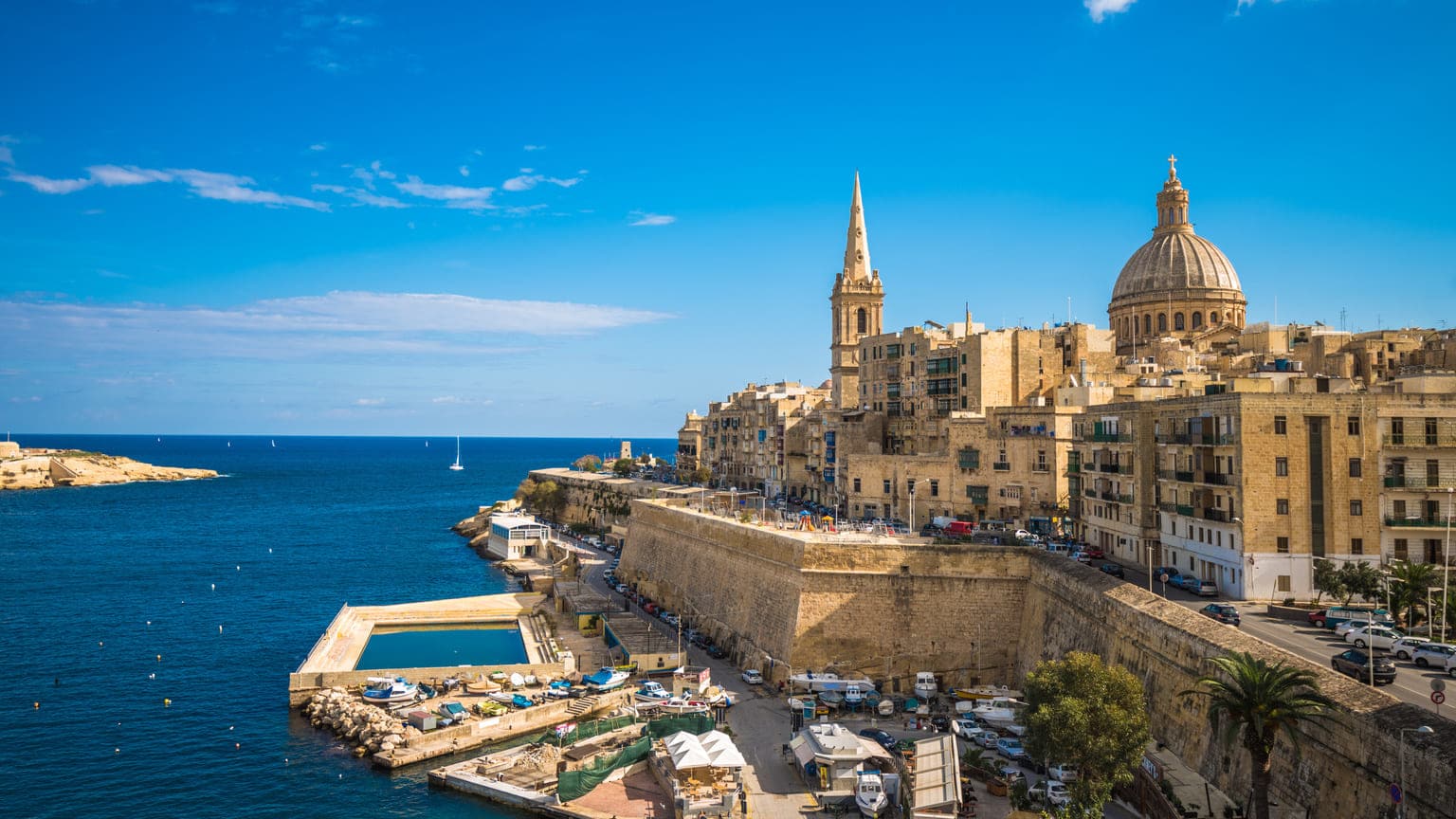
Foreigners may live in Malta for u to 4 years under the Nomad Residence Permit. The permit is issued to the main applicant and their family, including a spouse and children.
€3,500 per month
Minimum income
2+ months
Obtaining period
Up to 1 year
Residence validity
4 years
Living in Malta if the residence permit is renewed
Applicants must buy or rent residential property in Malta for the entire validity period of the permit.
Self employed professionals and freelancers may also apply for residence.
Employment with a Maltese company is not permitted under the digital nomad residence status.
This residence permit does not give digital nomads the right to apply for permanent residence or Maltese citizenship.
7 benefits of Malta Digital Nomad Visa
New travel opportunities
Life and remote work in Malta
Tax optimisation
Affordable cost of living
European healthcare
Favourable conditions for comfortable remote work
Option to include family members in the application
Visa-free travel to 29 European countries
Austria
Belgium
Bulgaria
Croatia
Czech Republic
Denmark
Estonia
Finland
France
Germany
Greece
Hungary
Iceland
Italy
Latvia
Liechtenstein
Lithuania
Luxembourg
Malta
Netherlands
Requirements to apply for the Malta residence permit
Older than 18
No criminal record
Citizen of a country outside the European Union or the EEA
Has residential property in Malta
Has remote employment
No criminal record
Married or in a civil partnership with the applicant
Including adopted children
Financially dependent on the applicant
Not married
Income requirements for digital nomads applying for Malta residence
Schedule a meeting
Help with the choice
Passportivity experts will analyse your situation and offer the most suitable solution.
Key documents to apply for a Malta Freelance Visa and residence permit
- Completed and signed forms for the main applicant
- Completed and signed forms for the family members included in the application
- Motivation letter explaining why the applicant intends to move to Malta
- Copies of all pages of the passport for each applicant
- Employment contract, service agreement stating the remote format of work, or documents confirming the applicant’s position and shareholding in a company
- CV or résumé listing education and employment history
- Bank statements for three months confirming a monthly income of at least €3,500
- Marriage certificate and children’s birth certificates
- Notarised proof of financial dependence for children older than 18
How digital nomads obtain a residence permit in Malta: step by step process
Preliminary check
A Passportivity compliance specialist conducts a background check to identify possible issues and reduce the risk of refusal.
Collection and preparation of documents
The applicant gathers the required documents, and Passportivity’s lawyers submit the digital nomad residence application to the Immigration Agency of Malta.
Payment of the government fee
The Immigration Agency of Malta issues an invoice for the application processing fee of €300. The application is reviewed once the fee is paid.
Preliminary residence approval
The Immigration Agency of Malta carries out its own assessment. The applicant is informed of the residence decision by email. In case of refusal, a new application may be submitted after one year.
Rental or purchase of property in Malta
Once the residence permit is approved, the digital nomad buys or rents property for the full 12 month validity of the residence card. Health insurance must also be purchased with a minimum coverage of €30,000 per person.
Arrival in Malta and issue of residence cards 🔥
The digital nomad informs the Immigration Agency of their arrival. At this point, they submit biometrics, file the documents for the residence card, and receive it in person. The fee for issuing a residence card is €100 per person.
Why choose us
A reliable partner
Passportivity operates strictly within the conditions set out in the Immigration Act and the supplementary Act 123.210.
Deep Expertise
11+ years in investment immigration and financial matters to solve the most complex client challenges.
Individual Approach
We develop step-by-step plans, taking into account client requirements, to achieve optimal results.
Support at every stage
From the first consultation and even after receiving the desired document, we provide legal support.
Additional services
Get a tax number, sign a rental agreement or apostille additional documents — we will fulfill any request.
Flexible communication and 24/7 availability
Meet us in person or online, whatever suits you best.
We respond to inquiries within two hours. Your case is handled by a dedicated lawyer who is always in touch.
From idea to residence permit — guided by experts
For over 10 years, we've been helping clients navigate the path to citizenship and residency. Our approach combines

Frequently asked questions
Yes, if one meets Malta’s requirements for digital nomads:
- income of at least €3,500 per month
- employment with a company based outside Malta
- no intention to work with Maltese citizens as a
self‑employed professional or freelancer
To qualify for the digital nomad residence permit, one must also buy or rent property in Malta. A lease agreement must cover the entire validity of the residence permit, which is twelve months.
Holders of a Maltese residence permit may travel within the Schengen Area without a visa and stay there for up to 90 days out of 180. Digital nomads do not pay tax in Malta on foreign income if they spend no more than 183 days in the country.
Children of foreigners holding a residence permit may study in Maltese schools and universities.
Digital nomads receive their first residence permit for one year. It may be renewed three more times for the same period.
Digital nomads are not allowed to work in Malta. To obtain the right to work, foreigners apply for permanent residence by investment of at least €169,000.
The digital nomad residence permit does not give the right to obtain Maltese citizenship. Malta grants citizenship by naturalisation after ten years of residence.
A digital nomad must confirm income from remote work. In addition, they purchase health insurance and pay government fees: €300 for the application and €100 for the residence card. A lease for one year is also required, costing €12,000 or more.
Digital nomads are exempt from income tax for the first 12 months, then pay it at a fixed rate of 10%. Under the general rules, income tax is calculated on a progressive scale from 0 to 35%.
To become a tax resident of Malta, a digital nomad must live in the country for more than 183 days a year.
The Immigration Agency is not required to state the reason for refusal. Most rejections are connected with a criminal record, negative media coverage, previous Schengen visa refusals, or failure to meet the programme’s conditions.
The initial residence permit is issued for 12 months. To renew it for another year, one must reside in Malta for five months. The applicant collects and submits the same documents as for the first application.
A renewal application is submitted two to three months before the expiry date.
Foreigners may obtain residence in Malta by buying or renting property. The minimum expenses for obtaining residence include:
- €8,750 for renting property, or €220,000 for purchasing property;
- €5,500 administrative fee;
- €15,000 per year in tax on income remitted to Malta.


Contact us today
We will help you obtain Malta Residence Permit without unnecessary hassle. We minimize risks so you don't waste time and money.


