


 Anastasia Agafonova
 Spain Digital Nomad Visa
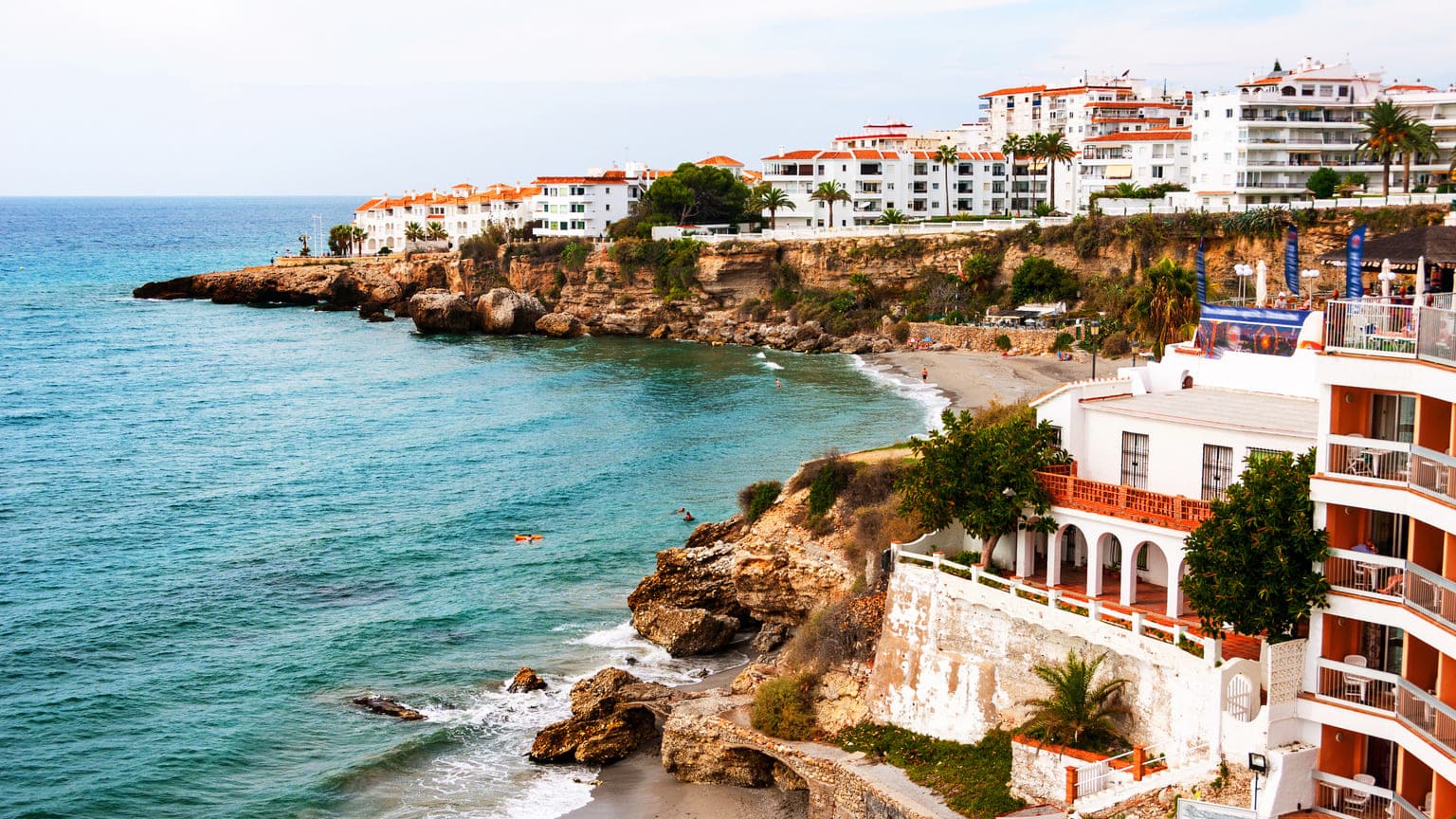
Spain is one of the best European countries for expats and digital nomads. The country attracts them with its quality of life and affordable prices, welcoming atmosphere, and numerous leisure opportunities.
€2,763+
Monthly income
4+ months
Obtaining period
In 5 years
Obtaining permanent residency
Foreigners obtain a residence permit in Spain through the Digital Nomad Visa, which is issued by the consulate. However, if they are already in Spain, they can apply directly for a residence permit at the immigration office.
The Digital Nomad Visa is granted to freelancers, sole proprietors, and employees of foreign companies who work remotely and earn at least €2,763 per month, or €33,150 per year.
A digital nomad may also work in Spain, but income from local companies must not exceed 20% of the total.
Applicants must also rent or purchase property in the country.
The process of obtaining a visa and residence permit takes 4 months or more. The first residence card is issued for 3 years and can then be extended for another 2 years. After that, one becomes eligible to apply for permanent residence.
9 benefits of Spain Digital Nomad and residence permit
Moving to Spain
Status for the whole family
Visa-free travel in the Schengen Area
Access to European banks
High-quality healthcare system
European education
Tax benefits
Permanent residence status
Citizenship for newborn children
Visa‑free travel to 29 European countries
Austria
Belgium
Bulgaria
Croatia
Czech Republic
Denmark
Estonia
Finland
France
Germany
Greece
Hungary
Iceland
Italy
Latvia
Liechtenstein
Lithuania
Luxembourg
Malta
Netherlands
Requirements to apply for the Spain Digital Nomad Visa
Over 18 years old
Not a citizen of an EU country
Has legal income from abroad
No criminal record
Has health insurance
Owns or rents property
Official marriage
Or registered partnership
Financially dependent on the applicant
Studying at university if over 18 years old
Financially dependent on the applicant
Requirements for obtaining a Spain residence permit for digital nomads

Schedule a meeting
Help with the choice
Passportivity experts will analyse your situation and offer the most suitable solution.
Key documents to apply for a Spain Digital Nomad Visa
The application for a Digital Nomad Visa is submitted to the Spanish consulate in the applicant’s country of citizenship or residence. All documents must be translated into Spanish and notarised.
- Completed
MI‑T application form - CV — a résumé in free format
- Copies of family members’ passports
- Marriage and birth certificates
- Criminal record certificates covering the past 5 years
- Proof of income
- Proof of qualifications or work experience
- Health insurance with coverage of at least €30,000 per person if the applicant plans to work in Spain under an employment contract
- Receipt of payment of the government fee
How to obtain residence permit in Portugal for digital nomads: step‑by ‑step process
Preliminary check
Passportivity lawyers check whether the applicant meets the requirements for obtaining a Digital Nomad Visa in Spain. The assessment is carried out by Compliance Department specialists who are familiar with all the details of residence permit routes for digital nomads.
The preliminary check helps identify potential issues and reduces the likelihood of a visa refusal to 1%.
Collection and submission of documents for the Digital Nomad Visa
Passportivity lawyers assist the client and their family in preparing the required documents and completing the Digital Nomad Visa application.
The documents are submitted to the Spanish consulate in the applicant’s country of residence.
Obtaining the Digital Nomad Visa
The Spanish consulate reviews the visa application within 15 to 45 days. The digital nomad receives a passport with a visa sticker showing the date of the visit to the immigration office.
When submitting the visa application, the applicant is assigned an NIE, a foreigner’s identification number. It is required for renting or purchasing property, opening a bank account, registering with the tax office, and signing various contracts.
Purchase or rental of property
The applicant purchases or rents residential property in Spain to register their place of residence. Passportivity’s real estate specialists help select suitable apartments or houses.
Entry to Spain and residence permit application
The Digital Nomad Visa is valid for one year. During this time, the holder must arrive in Spain and submit an application for a residence permit at the immigration office.
By law, the residence permit application is processed within 20 working days.
Obtaining a residence permit card 🔥
Once the application is approved, the applicant must make an appointment with the police to submit fingerprints and receive the residence card. The waiting time for an appointment may be around 30 days, and it takes the same amount of time to receive the residence cards. They are issued only in person to the digital nomad and their family members.
Renewal of residence permit
The first residence card is valid for 3 years. After that, it may be extended for another two years.
The foreigner must submit an application to the Ministry of Inclusion, Social Security and Migration of Spain. The application is processed within 30 days.
How to obtain a residence permit if a digital nomad is already in Spain
Why choose us
Reliable partner
Passportivity operates strictly within the conditions set out in Law No. 28 “On the Development of the Startup Ecosystem” of December 21st, 2022, and Law No. 14 “On Support for Entrepreneurs and Their Internationalisation” of September 28th, 2013.
Deep Expertise
11+ years in investment immigration and financial matters to solve the most complex client challenges.
Individual Approach
We develop step-by-step plans, taking into account client requirements, to achieve optimal results.
Support at every stage
From the first consultation and even after receiving the desired document, we provide legal support.
Additional services
Get a tax number, sign a rental agreement or apostille additional documents — we will fulfill any request.
Flexible communication and 24/7 availability
Meet us in person or online, whatever suits you best.
We respond to inquiries within two hours. Your case is handled by a dedicated lawyer who is always in touch.
From idea to residence permit — guided by experts
For over 10 years, we've been helping clients navigate the path to citizenship and residency. Our approach combines


Frequently asked questions
The Digital Nomad Visa is a permit for foreigners to enter and reside in Spain while working remotely using digital telecommunications and information technologies. Applicants, such as freelancers, sole proprietors, or employees, must work for a foreign company or provide services to foreign firms.
The application must be submitted in person to the Spanish consulate in the applicant’s country of residence. However, booking an appointment at the consulate is available online.
The consulate processes applications within
The visa is issued to freelancers, sole proprietors, and company employees. Their income must be at least €2,763 per month, or €33,150 per year.
The income requirement increases if relatives are included in the application: +€1,035 for a spouse and +€345 for each additional family member.
Part of the income may be demonstrated with savings, but the amount must cover the shortfall for the entire
No, the visa can only be obtained at the Spanish consulate in the applicant’s country of citizenship or residence.
However, a digital nomad may skip the visa stage: they can enter Spain on a Schengen visa and apply directly for a residence permit.
Spain is one of the best countries for digital nomads to live and work in. This is confirmed annually by various expat rankings.
The country offers a high quality of life, affordable prices, reliable internet infrastructure for work, pleasant weather, and many opportunities for leisure and socialising.
If a digital nomad spends more than 183 days per year in Spain, they become a tax resident and must pay taxes on global income. The tax base includes salaries, freelance income, investments, and other sources, regardless of origin. The rates range from 19 to 47%.
Applicants must work with legal entities registered at least one year earlier.
Income is confirmed with bank statements for the past three months, contracts, and employment agreements. Freelancers also provide completed work reports.
A digital nomad may work in Spain, but income from local companies must not exceed 20% of total income.
- Rental or purchase of property. Rent costs about €700 per month for a
one‑bedroom apartment, according to Numbeo. - Government fees: consular fee €80, NIE fee €9.84, residence card fee €73.26.
- Translation and notary services — €1,000+.
- In some cases, health insurance — €50+ per month.
Additional costs may include travel to Spain and unexpected expenses.
This can happen if documents are collected at the end of one year but submitted at the beginning of the next. The income threshold is tied to Spain’s minimum interprofessional wage, SMI, which is reviewed and slightly increased each year.
A digital nomad’s income must be at least 200% of the SMI. If the applicant’s income falls short, the application may be refused. To avoid this, foreigners are advised to show higher income than required.
The process usually takes about four months, from consultation with an immigration agent to receiving the residence card. The timeframe may be shorter or longer depending on how quickly the applicant gathers documents and how fast the authorities process them.
The consulate or immigration office may request additional documents. In such cases, applicants are usually given 30 days to provide the missing certificates or paperwork.
The residence permit is issued for 3 years and may then be renewed for 2 more years. Applicants must submit the request to the Ministry of Inclusion, Social Security and Migration of Spain. The application is reviewed within 30 days. The new residence card must be collected in person.
Permanent residence is available to foreigners who have lived in Spain for at least five years. During this time, absences of up to six months per year are allowed, but not exceeding ten months in total.
Spanish citizenship is available to foreigners who have lived in the country for over 10 years. Applicants must collect the required documents and pass exams on the Spanish language, laws, and culture.
Spain does not generally allow dual citizenship: applicants must renounce their other passports. Exceptions apply to citizens of France, Portugal, the Philippines, Andorra, Equatorial Guinea, and most Latin American countries, excluding Suriname, Bolivia, and Guyana.


Contact us today
We will help you obtain Spain Digital Nomad Visa without unnecessary hassle. We minimize risks so you don't waste time and money.


