

 Residency
 Reading time: 15 min
 15 easiest countries to get residence permit in 2026
Some countries offer more accessible residence routes than others, but the best choice depends on the applicant’s plans. These may include investment, permanent residence, tax planning, business relocation, remote work, or a
This article compares residency by investment countries, permanent residence routes in Europe, and residence options without investment. It explains the main requirements, costs, processing times, family inclusion rules, and the path to permanent residence or citizenship.

 Share
Share  Telegram
  Facebook
 LinkedIn
 X
X

 Save
Save 

Key factors that define easy residency
The easiest countries to get residency are not the same for every applicant. It depends on the applicant’s goal, budget, family situation, and plans for relocation.
For wealthy foreigners, the easiest routes are usually residence by investment countries with clear financial requirements, low stay obligations, and the possibility to include family members. Portugal, Greece, Hungary, Malta, Cyprus, the UAE, and the US may suit applicants who want a residence permit through investment, business, or real estate.
For families planning
When applicants ask which European country is easy to get permanent residence, the answer usually depends on whether they prioritise lower costs, Schengen Area travel, family inclusion, or a future citizenship path.
Easy residency is not about choosing the cheapest or fastest country. For an investor, it may mean a clear investment route. For a family, permanent residence with predictable renewal rules. The right country is the one that fits the applicant’s goal and can be maintained without legal or tax risks.
Olga Koltsova
Investment Programs Expert
For entrepreneurs, the easiest countries to move to are often those with
For digital nomads and financially independent people, the easiest EU country to get residency is often the one with a clear
Easiest countries to get residence permit by investment
Residence by investment is usually the easiest route for applicants who want a predictable legal status without
The UAE and Thailand are stronger for tax planning, business, and lifestyle relocation.
The US is more complex and expensive, but it remains important for investors who prioritise the American market, education, and a Green Card route.
Portugal: EU residence with a low stay requirement
Portugal Golden Visa is a residence permit by investment that allows investors to live, work, study, and run a business in Portugal [283] Source: Portugal Golden Visa, AIMA . The minimum investment is €250,000.
Applicants choose one of five options:
- Supporting cultural projects — €250,000.
- Investing in scientific research — €250,000.
- Purchasing investment fund units — €500,000.
- Investing in a business — €500,000.
- Creating 10 jobs.
Real estate purchase is no longer available as a Golden Visa option.
Applicants may include a spouse, dependent children generally up to 26 years of age if financially dependent and studying, and dependent parents of either spouse.
To maintain the status, an investor spends at least 7 days a year in Portugal. The residence permit is renewed every 2 years. A spouse, children, and financially dependent parents are eligible for residence permits together with the investor.
The path to Portugal citizenship takes 10 years.
Greece: real estate-backed residence in the Schengen Area
Greece has offered residence by investment since 2014, and the route remains one of the most recognised EU Golden Visa options [284] Source: Greece Golden Visa, Ministry of Migration & Asylum . The minimum investment is €250,000.
The real estate route is still central to the programme, but the thresholds depend on the location and type of property:
- €250,000 option remains available for industrial premises converted into residential use or buildings requiring renovation;
- in popular areas, the minimum investment is €800,000;
- in other regions, it is €400,000.
Investors are not required to live in Greece to maintain the status, and the residence card is renewable every 5 years if the investment is kept.
A spouse, children under 21, and parents are eligible to join the application.
Citizenship becomes available after 7 years of continuous residence in Greece, provided the applicant meets language and integration requirements.
Italy: investor residence for business and lifestyle relocation
Italy Golden Visa, also known as the Italy Investor Visa, is designed for foreigners who invest in the Italian economy [285] Source: Italy Golden Visa, Italy Government . The minimum investment is €250,000, and the process usually takes at least 4 months.
Applicants first obtain a D visa at an Italian consulate and then apply for a residence permit within 8 days after entering Italy.
Investment options include:
- €2,000,000 in government bonds;
- €500,000 in an Italian company;
- €250,000 in an innovative startup;
- €1,000,000 as a philanthropic contribution supporting
public-interest projects.
A spouse, children, and parents are eligible to join the visa application.
Italy is not the easiest option for applicants who want a simple property purchase route: buying real estate does not automatically grant a residence permit. The country is more suitable for investors and financially independent families who are considering business, lifestyle relocation, and

UAE: long-term residence for investors and entrepreneurs
The UAE does not use the legal term “residence permit” in the same way as many European countries. Instead, foreign investors obtain residence visas.
Property investors in the UAE can obtain one of two residence visas:
2-year residence visa — available for owning eligible real estate, with no fixed minimum property value requirement;10-year Golden Visa — available for owning real estate worth at least AED 2,000,000, or $545,000.
A spouse and children are eligible to join the application. Continuous residence in the UAE is not required, although the investor must visit the country periodically and maintain ownership of the property.
UAE residency is one of the easiest practical routes for entrepreneurs, high earners, and families who need a safe,
Hungary: 10-year EU residence for guest investors
Hungary Golden Visa, officially connected with the Guest Investor Visa route, allows investors to obtain residence in Hungary and travel
Applicants may invest:
- €250,000 in a
government-approved real estate investment fund; - €1,000,000 to a public trust supporting Hungarian higher education.
Fund investments are typically recoverable after the holding period, subject to fund conditions. Educational donations are
The residence permit is granted for 10 years and is renewable once for another 10 years. Living in Hungary is a right, not an obligation for the investor.
A spouse and children up to 17 years old are eligible to obtain residence status together with the investor.
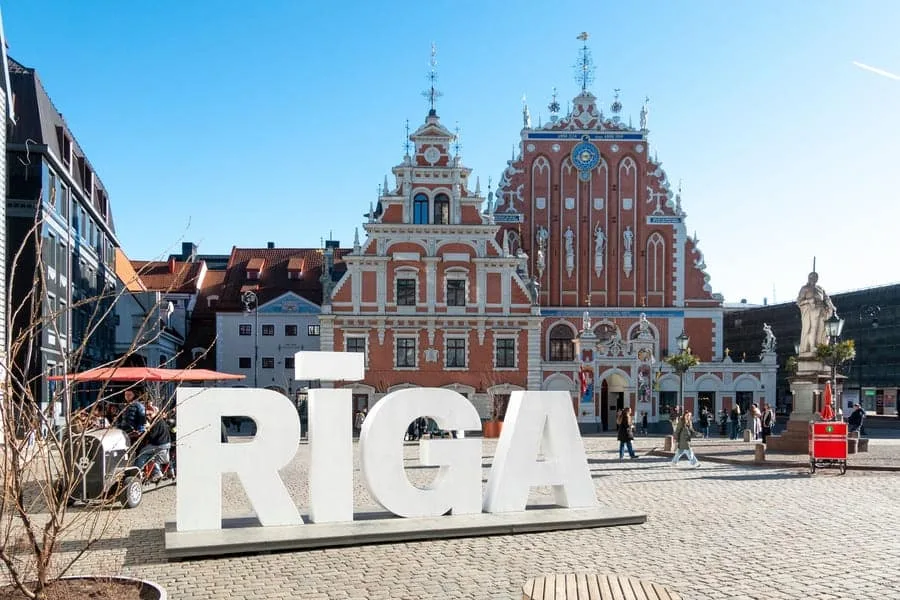
Latvia: lower-threshold EU residence by investment
Latvia Golden Visa offers one of the lowest entry thresholds among EU residence by investment programmes. It provides temporary residence with access to the Schengen Area and may serve as a pathway toward permanent residence under national law.
The lowest route starts with an investment of €50,000 into the share capital of a Latvian company that meets the required employee and turnover criteria.
Other options include purchasing qualifying real estate worth at least €250,000 or making a subordinated loan of at least €280,000 to a Latvian credit institution for at least 5 years.
The passive option of obtaining Latvian residence by purchasing
A spouse and minor children may be included in the application. In some cases, dependent adult children or parents may qualify if financial dependency is demonstrated.
Residence permits are issued for up to 5 years with annual renewal requirements. Applicants must maintain the qualifying investment and comply with Latvian legal obligations.
US: EB-5 route to a green card
The
Applicants can choose between two
- $800,000 if the project is located in a Targeted Employment Area;
- $1,050,000 in other cases.
The investment must create at least 10
The
Comparison of residence by investment options
| Country | Minimum investment | Obtaining period | Time to citizenship |
|---|---|---|---|
| Greece | €250,000 | 7 years | |
| Italy | €250,000 | 10 years | |
| Latvia | €50,000+ | 10 years | |
| Portugal | €250,000 | 10 years | |
| Hungary | €250,000+ | 11 years | |
| UAE | AED 2,000,000 | No fixed citizenship route | |
| US | $800,000 | 5 years after obtaining a green card |
Easiest country to get permanent residency in Europe
Permanent residence gives a foreigner the right to live in a country indefinitely. Unlike a temporary residence permit, permanent residence usually does not require regular
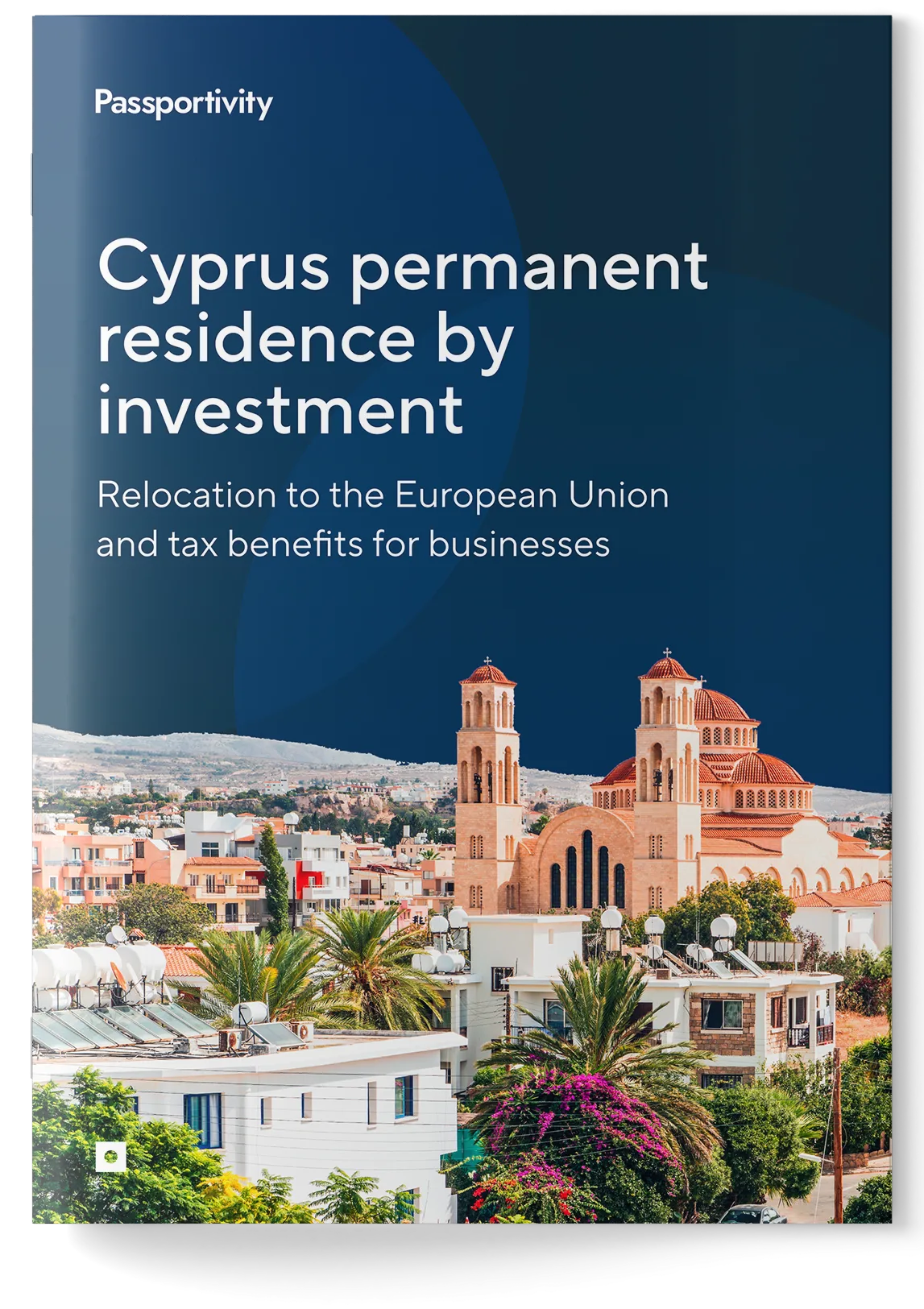
Cyprus: permanent residence in an EU country by investment
Cyprus grants permanent residence to
The most common option is purchasing residential real estate. An investor may buy one or two properties with a total value of at least €300,000, excluding VAT. Residential property must be purchased on the primary market from a developer.
Other options include commercial real estate, securities, or shares in Cypriot companies.
Cyprus permanent residence suits investors who want a family base in the EU, access to local schools and healthcare, and the opportunity to run a business in a country with a 15% corporate tax rate.
The investor is not obliged to live in Cyprus permanently; to maintain the status, they need to visit the country at least once every 2 years.
A spouse and children are eligible to join the application. Adult children qualify if they are unmarried, financially dependent on the main applicant, and enrolled in a university.
Cyprus permanent residence does not grant
Citizenship may become available by naturalisation after the applicant has legally resided in Cyprus for 8 out of the past 11 years and meets the residence requirements before applying.
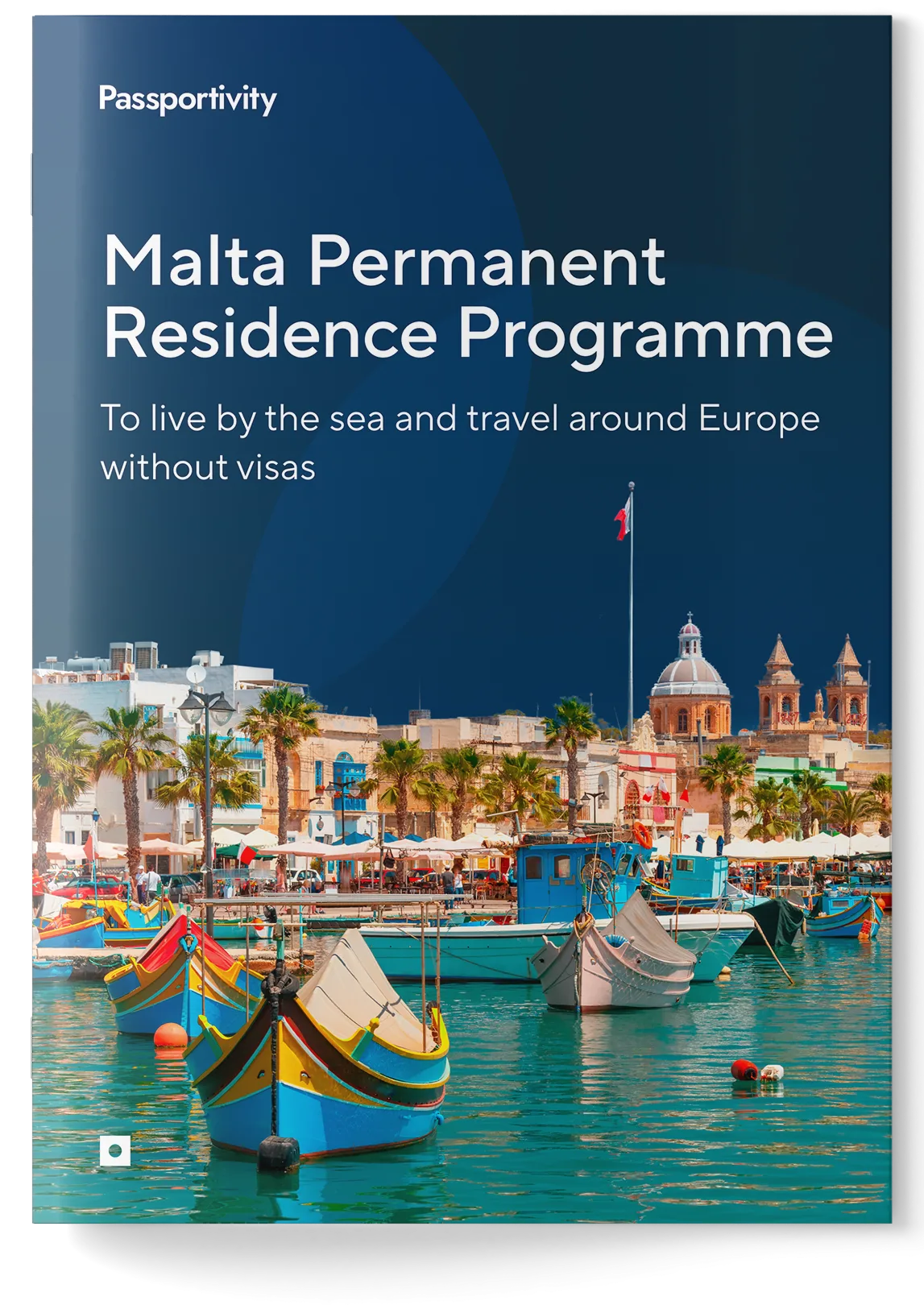
Malta: indefinite permanent residence with Schengen travel
Malta permanent residence is available under the Malta Permanent Residence Programme, or MPRP [290] Source: MPRP rules, Residency Malta Agency . The programme is open to investors from countries outside the EU and the EEA. The status is indefinite, while the residence card is renewed every 5 years.
To obtain Malta PR, an investor must:
- Rent real estate for at least €14,000 per annum or buy a property for at least €375,000.
- Pay €50,000 as an administration fee, regardless of whether they choose to buy or rent property.
- Make a
one-time ,non-refundable contribution of €30,000 to the government if purchasing property or €60,000 if renting. - Donate €2,000 to a local NGO, contributing to social projects in Malta.
- Demonstrate assets worth at least €500,000 with €150,000 in liquid financial assets, or show a portfolio of €650,000 with at least €75,000 in financial assets.
Malta suits investors who want an EU permanent residence route with Schengen Area travel. Malta PR holders may visit Schengen countries for up to 90 days in any
The programme allows the investor to include a spouse or partner, children, parents, and grandparents, provided they meet the dependency requirements.
Panama: fast permanent residence outside Europe
The Panama Golden Visa, also known as the Qualified Investor route, is listed by Passportivity with a minimum investment of $300,000 and an obtaining period of 2 to 4 months [291] Source: Qualified Investor decree, Panama Migration . The route is relevant for investors who consider Panama as a business base or a residence option outside the EU.
The investment may be confirmed through real estate, securities held through a licensed brokerage, or a
Panama may suit investors from the US, Canada, Latin America, and other regions who prefer a residence option in the Americas rather than in the EU. It is less suitable for applicants whose main goal is Schengen Area travel or
Comparison of permanent residence by investment options
| Country | Minimum investment | Obtaining period | Path to citizenship |
|---|---|---|---|
| Cyprus | €300,000 | 8 years | |
| Malta | €169,000 | 5 years | |
| Panama | $300,000 | 5 years |
Easiest countries to immigrate to without investment
Some residence routes do not require an investment in real estate, funds, or business. Instead, applicants prove income, savings, remote work, passive income, or tax residence plans. These options are suitable for digital nomads, financially independent people, retirees, high earners, and families who plan to relocate rather than keep residency only as a backup plan.
For tax payers
Malta offers a residence permit under the Malta Global Residence Programme for applicants who want to become tax residents and use a special tax regime.
The applicant rents or purchases real estate in Malta, pays an administrative fee, and pays tax on foreign income remitted to Malta at 15%. The minimum annual tax is €15,000 per family. Foreign income not transferred to Malta is taxed at 0%, while
There is no minimum stay requirement, but the holder must not spend more than 183 days a year in one foreign country if they want to avoid becoming tax resident there.
For digital nomads
Italy offers a Digital Nomad Visa for
Applicants must work remotely and provide proof of income, accommodation, health insurance, and professional background. Family members may request residence permits together with the main applicant, subject to approval by the Italian authorities.
Spain grants a Digital Nomad Visa to freelancers, sole proprietors, and employees of foreign companies. The minimum income is €2,850+ per month, or €34,190+ per year. If family members are included, the applicant must show an additional €1,070 for a spouse or partner and €360 for each other family member.
A spouse or partner, children, parents, and grandparents may qualify, provided adult relatives are financially dependent on the main applicant.
Croatia issues residence permits to digital nomads who earn income from abroad. The minimum income is €3,295 per month. Eligible applicants include employees of foreign companies, freelancers,
A spouse and children up to and including 17 years old may obtain residence permits through family reunification after the main applicant’s permit is approved.
Hungary has a digital nomad residence permit called the White Card. It is available to foreigners who work for a company outside the European Economic Area and earn at least €3,000 per month.
The permit is issued for one year and may be renewed once for another year. Family members cannot be included in the White Card application.
Malta offers the Nomad Residence Permit to remote workers with income of at least €3,500 per month. The income requirement does not increase when family members are included.
A spouse or civil partner, children under 18, and unmarried financially dependent adult children may qualify.
Portugal grants a Digital Nomad Visa to applicants who earn remote income from abroad of at least €3,680 per month. Applicants must also show savings of at least €11,040 and rent or purchase accommodation in Portugal.
The income requirement does not depend on the number of family members included in the application. A spouse, children, and financially dependent parents may join the main applicant.
For financially independent people
Italy offers an elective residence route for foreigners with stable passive income at €31,160+ per year who intend to live in Italy without working.
A dependent spouse, minor children, and dependent adult children living with the parents may apply together with the main applicant, provided the family has sufficient financial resources.
Spain issues the
Family members may apply together with the main applicant; the income requirement increases by €7,200 for each additional family member.
Switzerland suits wealthy financially independent applicants who do not plan to work in the country. Passportivity’s comparison lists the route with a minimum paid tax of CHF 450,000 a year.
Under Switzerland’s
Austria offers a residence permit for financially independent individuals who have a minimum bank balance of €30,000, accommodation, health insurance, and basic German language knowledge.
Austrian authorities require a secure livelihood and adequate accommodation, and family members may apply if the general requirements and quota rules are met.
Portugal offers the D7 Visa to financially independent foreigners with passive income of at least €920 per month and owned or rented accommodation in Portugal. The route is suitable for applicants with pensions, dividends, royalties, rental income, or other passive income.
A spouse, financially dependent children, and parents may be included in the application.
France issues the Visitor Visa, or
Applicants prove income of at least €1,800 per month, or €21,600 per year, and savings of at least €30,000 in a foreign bank account. They also need health insurance with minimum coverage of €30,000 per person and an address in France, either rented or owned.
Working or doing business in France is not allowed under this visa.
A spouse and children under 17 years old may obtain the Visitor Visa together with the main applicant. Children over 18 qualify only if they depend on the main applicant due to health conditions.
After 5 years of living in France for at least 183 days a year, residents may apply for permanent residence or citizenship by naturalisation, provided they meet the legal requirements.
Thailand offers the
For wealthy applicants, the official LTR criteria include at least $1 million in assets and at least $500,000 invested in Thailand, for example in Thai government bonds, a Thai company, or property.
A spouse and children are eligible for dependent visas, and the applicant must maintain the relevant conditions during the visa validity period.
For entrepreneurs
French Tech Visa is a business and innovation route for foreign entrepreneurs who want to launch and develop a startup in France. Applicants must have at least €23,900 in a personal bank account, and the obtaining period starts at 3 months.
The applicant must present a comprehensive business plan endorsed by a recognised business incubator or accelerator. The visa route is suitable for founders whose project demonstrates innovation, technology, or economic value for France.
A residence permit is usually issued for 4 years, although the validity may be shorter in some cases. A spouse and children are eligible for residence permits together with the main applicant.
Hungary offers a residence permit by company registration for entrepreneurs who want to run a business in the EU and benefit from a
This route may suit business owners, consultants, and founders who need a European company structure together with a residence status. Family inclusion should be checked for the specific case: residence programmes often allow immediate family members to apply, including spouses, minor children, and, in some cases, adult children and parents.
Spain offers the Startup Visa to
The founder proves savings of at least €34,200 in a personal bank account, prepares a business plan, obtains health insurance valid in Spain, and pays government fees, and the process usually takes
A spouse, children under 18, financially dependent children aged 18 to 26 who study and live with the main applicant, and parents may be included, and if family members apply together with the founder, the applicant proves additional savings: €12,820 for a spouse and €4,275 for each other relative.
Comparison of residence routes without investment
| Country | Eligible applicants | Minimum income | Savings required | Time to citizenship |
|---|---|---|---|---|
| Malta | Tax residence | €15,000 annual tax | — | 5 years |
| Portugal | Financially independent persons | €920 a month | €11,040 | |
| Portugal | Digital nomads | €3,680 a month | €11,040 | |
| Spain | Financially independent persons | €28,800 a year | €57,600 | 10 years |
| Spain | Digital nomads | €2,850 a month | — | 10 years |
| France | Financially independent persons | €1,800 a month | €30,000 | 5 years |
| Hungary | Digital Nomads | €3,000 a month | — | — |
| Spain | Entrepreneurs | — | €34,200 | 10 years |
| Austria | Financially independent persons | €2,500 a month | €30,000 | |
| Italy | Financially independent persons | €31,160 a year | — | 10 years |
| Croatia | Digital Nomads | €3,295 a month | — | — |
| France | Entrepreneurs | — | €23,900 | 5 years |
| Hungary | Entrepreneurs | €7,700+ minimum business investment | — | 11 years |
| Thailand | Residence visas | $25,500 | — | — |
Standard documents for obtaining a residence permit
The document list depends on the country and the chosen residence route: investment, business, remote work, passive income, or family relocation. However, most residence permit applications require a similar basic package.
Applicants usually prepare the following documents:
- Valid passport with copies of all relevant pages.
- Birth certificate of the main applicant and included family members.
- Marriage certificate, divorce decree, or other documents confirming family status, if applicable.
- Documents proving family relationships for dependants, such as children’s birth certificates.
Passport-size photographs that meet the country’s official requirements.- Bank statements confirming sufficient funds, income, or the required investment amount.
- Documents proving the lawful source of funds, such as salary records, business income statements, tax returns, property sale agreements, or inheritance documents.
- Police clearance certificates from the country of citizenship and countries of residence.
- Health insurance valid in the country of application.
- Proof of accommodation, such as a rental agreement, property purchase agreement, or registered address.
- Completed government application forms and declarations.
- Documents confirming eligibility for the chosen route, such as an investment agreement, property documents, business plan, employment contract, remote work contract, passive income records, or tax residence documents.
- Receipts confirming payment of government fees.
Documents issued abroad require translation, notarisation, apostille, or consular legalisation. Immigration authorities may request additional documents during the review, especially if the applicant includes family members or applies under an investment, business, or tax residence route.
How to apply for the easiest residence permit by investment step by step?
The process of obtaining the easiest residence permit can take from 2 months to 1 year, depending on the country and the route.
In most European residence routes, at least one visit is required to submit biometrics or receive the residence card. Portugal and Spain require applicants to travel for biometrics. Greece allows online filing through lawyers, but the investor still provides biometrics in person. Cyprus also requires a visit after approval to submit biometric data and receive PR cards.
-
1+ week sSelecting a programme
The first task is choosing an appropriate country that aligns with the applicant’s investment goals and lifestyle aspirations.
-
2—3 weeksGathering documents and submitting an application
To apply successfully, applicants must provide the necessary documentation, including:
- proof of income;
- police clearance certificate;
- evidence showing that all legal obligations regarding residence rights within the chosen jurisdiction have been met.
-
1+ month sDue Diligence
Applicants must undergo Due Diligence, a comprehensive background check conducted by the government or a designated
third-party agency.This process is crucial for verifying the applicant’s financial standing, criminal history, and overall eligibility for the residence permit. It ensures that the individual meets the required standards and helps protect the integrity of the programme by preventing fraud or illegal activities.
-
Up to 2 months
Making the required investment
The investor fulfils the investment condition according to the chosen option and provides supporting documents to confirm compliance.
-
2 to 8 months
Approval and receiving residence permit
Approval and receiving residence permit. Upon approval, the applicant receives a residence permit, and afterward, ongoing obligations must be fulfilled to maintain and renew the status.
Why a residence permit may be refused
A residence permit application may be refused if the applicant does not meet the programme requirements or fails compliance checks. The final decision is always made by the immigration authority of the country where the application is submitted.
Common reasons for refusal include:
- Incomplete or inaccurate documents. Authorities may reject an application if forms contain errors, documents are missing, or translations and certificates do not meet official requirements.
- Unclear source of funds. Investment and financially independent residence routes usually require proof that the applicant’s money was earned legally. Bank statements, tax returns, business records, sale agreements, or inheritance documents may be requested.
- Failed Due Diligence. Applicants may be refused because of criminal records, sanctions exposure, previous immigration violations, or reputational risks.
- Insufficient income or savings.
Income-based visas require stable income or savings above the minimum threshold. If the applicant cannot prove financial stability, the residence permit may be denied. Non-compliance with programme conditions. A refusal may follow if the investment does not qualify, the property is not eligible, the business plan is not viable, or the applicant does not meet health insurance and accommodation requirements.
With Passportivity’s professional support, applicants can reduce procedural, documentation, and compliance risks at each stage of the process, but approval is never guaranteed, as immigration authorities review every application individually and make the final decision.
How to choose the right country for residency: decision criteria
The easiest countries to get residency are not always those with the lowest investment or the fastest processing time, and a suitable route depends on the applicant’s goal, family situation, tax position, available documents, and
Goal of obtaining residency
Applicants first define whether they need a backup plan, relocation route, tax planning option, business base, access to education, or a path to citizenship. For example, Greece may suit a backup residence strategy, while the US is more relevant for investors focused on business expansion and children’s education.
Investment or income threshold
Some programmes require an investment in property, funds, or business. Others are based on passive income, remote work income, savings, or tax payments. For example, Greece and Hungary Golden Visa routes start at €250,000, while Portugal D7 visa is based on passive income rather than investment.
Stay requirement
A low stay requirement is convenient for investors who do not plan to relocate immediately. Greece does not require Golden Visa holders to live in the country to renew the status.
Portugal has a low stay requirement of 7 days per year, but applicants who plan to apply for citizenship later need to check residence and integration rules carefully.
Family inclusion
Most residence routes allow a spouse and minor children to apply together with the main applicant. Some programmes also include adult children, parents, grandparents, or siblings if they are financially dependent.
Malta and Cyprus may suit larger family applications, while Hungary White Card for digital nomads does not allow family members to be included.
Tax consequences
A residence permit does not automatically make a person a tax resident. Tax residence depends on days spent in the country, centre of vital interests, income sources, and local legislation. Malta, the UAE, Italy, Portugal, and Switzerland may be relevant for
Healthcare
Applicants planning relocation usually compare access to public and private healthcare, insurance requirements, and medical costs. France, Italy, Spain, and Portugal may suit families and retirees who prioritise life in Europe with access to developed healthcare systems. The UAE may suit applicants who prefer private healthcare and international clinics.
Safety and stability
For a plan B, applicants consider political stability, personal safety, infrastructure, and the ability to relocate quickly with family. Malta, Cyprus, Portugal, the UAE, and Switzerland may be relevant for applicants who want a stable
Education
Families with children compare international schools, universities, language of instruction, and access to the European or US education system. Malta may suit
Path to permanent residence or citizenship
Some countries grant permanent residence immediately, while others require several years of temporary residence first. Cyprus and Malta offer permanent residence by investment. Portugal, Greece, Italy, France, Spain, and the US may lead to citizenship after several years, provided the applicant meets residence, language, integration, and legal requirements.
Compliance and Due Diligence
Investment migration programmes involve checks on the applicant’s background, source of funds, sanctions exposure, and immigration history, and Passportivity helps applicants reduce procedural, documentation, and compliance risks at each stage of the process, while the final decision always remains with the immigration authority.
Main takeaways on easiest countries to get residency
- The easiest country to get residency depends on the applicant’s goal, and investors, entrepreneurs, digital nomads, financially independent persons, and families need different routes, such as investment, permanent residence, tax residence, remote work, passive income, or business relocation.
- Residence by investment countries usually suit applicants who want a predictable legal status, family inclusion, and a low stay requirement. Latvia, Portugal, Greece, Italy, and Hungary Golden Visa routes require investments of at least €50,000.
- Malta and Cyprus are among the most practical options for permanent residence in Europe. To qualify for Malta permanent residence, applicants need to spend at least €169,000.
- Residence without investment is available to digital nomads, financially independent persons, taxpayers, and entrepreneurs, and for example, Portugal D7 visa applicants prove passive income of at least €920 per month, while Portugal Digital Nomad Visa applicants prove remote income of at least €3,680 per month.
- A residence permit does not automatically make the holder a tax resident, and Malta Global Residence Programme applicants, for example, pay tax on foreign income transferred to Malta at 15%, with a minimum annual tax of €15,000 per family.
- Hungary residence permit by company registration has one of the lowest thresholds, with €7,700 minimum business investment.
About the authors


Frequently asked questions
For investors, Greece is one of the easiest EU countries to get residency. The Greece Golden Visa starts with an investment of €250,000, the process takes
The answer may differ for other applicants, and digital nomads, financially independent persons, entrepreneurs, and
Malta and Cyprus are among the most practical options for investors seeking permanent residence in Europe. To qualify for Malta permanent residence, applicants need to spend at least €169,000, and Cyprus permanent residence requires an investment of at least €300,000.
Malta may suit investors who want Schengen Area travel, broad family inclusion, and an indefinite permanent residence status, while Cyprus may be a better fit for applicants who prefer
Among the listed routes, the lowest entry threshold is Hungary residence permit by company registration, with €7,700 minimum investment.
Among traditional residence by investment routes, Latvia has one of the lowest entry thresholds, as applicants may invest at least €50,000 in a business, while Greece, Portugal, Italy, and Hungary Golden Visa routes require investments of at least €250,000.
Malta offers a residence route for applicants who plan tax residency under a special tax regime, and the minimum expenses start at €30,000 and include administrative costs and
Yes. Some residence routes allow applicants to maintain the status without
This does not mean that every route leads to permanent residence or citizenship without living in the country, and citizenship and permanent residence usually require physical presence, tax compliance, language knowledge, and integration.
Thailand LTR Visa is one of the fastest routes, as the minimum visa cost is $25,500 and the processing time starts at 1 month, and the visa may be valid for up to 15 years.
For European routes, Malta residence permit and French Tech Visa take 3 months, while Greece Golden Visa takes 4 months, and the fastest option is not always the best one, as applicants also need to compare renewal rules, tax consequences, family inclusion, and
Read also




Contact us today
Passportivity assists international clients in obtaining residence and citizenship under the respective programs. Contact us to arrange an initial private consultation.