

 Second citizenship

 Reading time: 10 min
Latvian citizenship: a complete guide
Latvian citizenship can be acquired through naturalisation, descent or birth. Naturalisation remains an active route: 724 people became Latvian citizens this way in 2025.
The naturalisation path takes at least 10 years, including the residence period before an application can be submitted. Latvian citizenship also gives EU citizenship, with the right to live, work and study across the EU and travel freely within the Schengen Area.

 Share
 Telegram
 Facebook
 LinkedIn
 X

 Save
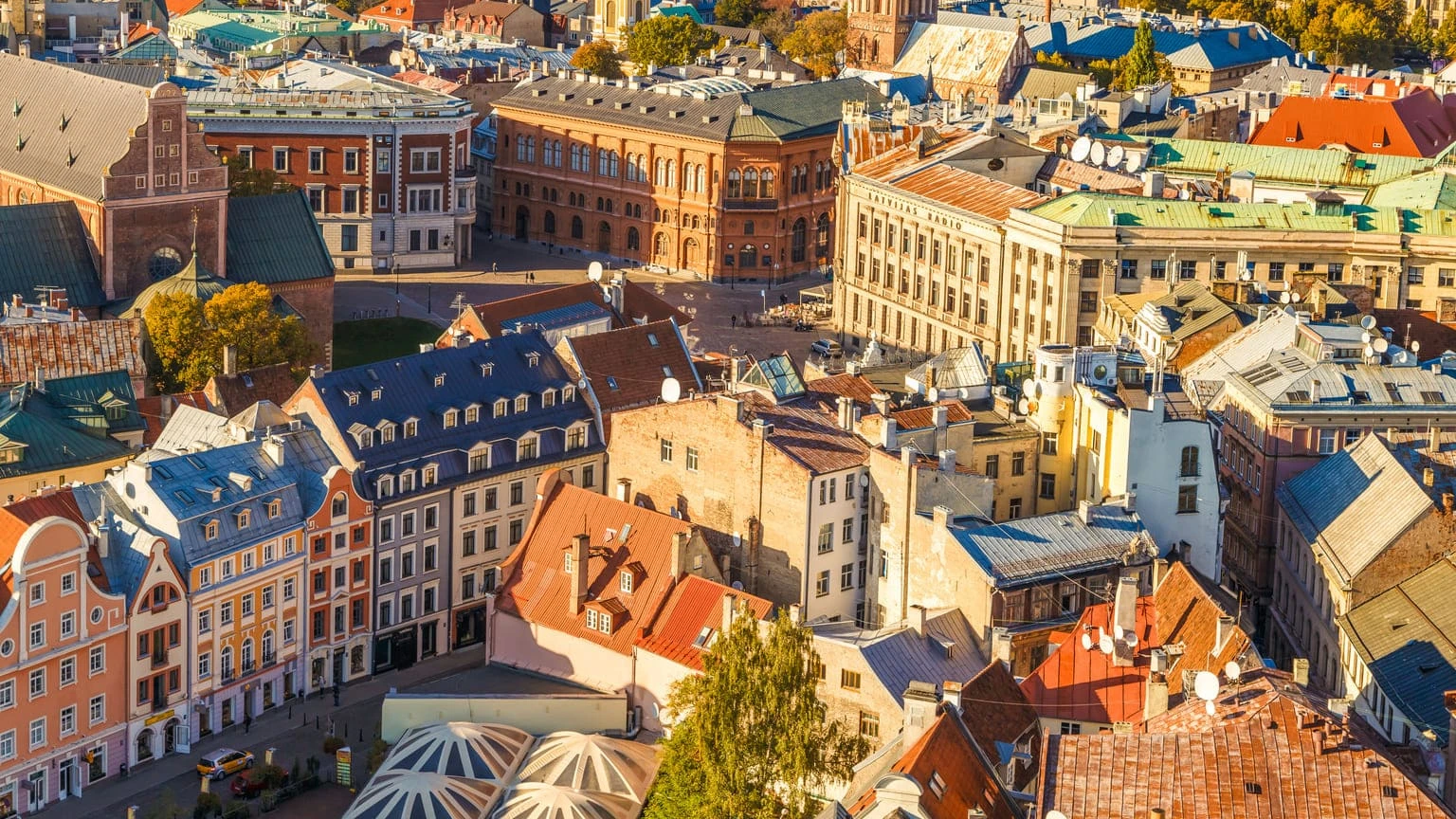

How to get Latvia citizenship
There are several ways to obtain Latvian citizenship, and the process varies depending on the applicant’s circumstances. Some routes require proof of Latvian ancestry or previous citizenship, while naturalisation involves residence and integration requirements.
Citizenship by naturalisation
Eligibility requirements. Naturalisation is available to
The residence period may include interruptions of up to one year in total. However, an applicant must live in Latvia continuously during the final year before submitting the application [1] Source: Citizenship Law of the Republic of Latvia, Sections 11 and 12 .
Applicants must prove their knowledge of Latvian and pass tests on the basic principles of the Constitution, the national anthem, and Latvian history and culture.
For
To qualify for permanent residence, the applicant must generally have continuously resided in Latvia for five years, with absences not exceeding six consecutive months or ten months in total. Therefore, merely holding an
 Elena Garnitsarik
Head of the Legal Department
The basic documents for naturalisation include:
- an application for naturalisation;
- a passport or identity card;
- documents confirming residence in Latvia during the previous five years;
- proof of a legal source of income, such as an employment certificate, bank statement, pension certificate or proof of benefits;
- one 3 × 4 cm photograph;
- proof of payment of the state fee;
- a criminal record certificate from the country of citizenship, if the applicant is a foreign citizen.
A foreign criminal record certificate must generally be issued no more than six months before the application. Depending on the country of issue, it may also require legalisation and translation into Latvian.
Some applicants must renounce their previous citizenship. This requirement generally applies to citizens of countries outside Latvia's permitted dual citizenship categories. Those who need to renounce their citizenship must provide proof before taking the pledge of loyalty to Latvia.
The Cabinet of Ministers makes the final decision on granting citizenship after the applicant has met all naturalisation requirements, including taking the pledge of loyalty.
Citizenship for minors. Children under 15 can acquire citizenship together with a parent who is being naturalised, provided they permanently reside in Latvia. No additional state fee is charged for their naturalisation.
Processing time and fees. The naturalisation process usually takes 6 to 12 months. Applicants who must renounce their previous citizenship may need additional time. The state fee for submitting an application is €28.46 [2] Source: Office of Citizenship and Migration Affairs, documents, state fee and processing time for naturalisation .
Citizenship through marriage
Marriage to a Latvian citizen does not give citizenship automatically or shorten the standard naturalisation period. A foreign spouse first obtains legal residence in Latvia and later applies for citizenship through naturalisation [3] Source: Citizenship Law of the Republic of Latvia, Section 12 .
A spouse of a Latvian citizen may obtain a temporary residence permit for up to two years and renew it while the basis for residence remains valid. After five years of continuous residence, the spouse may apply for permanent residence if they meet the applicable requirements, including Latvian language proficiency at A2 level [4] Source: Immigration Law of the Republic of Latvia, Sections 27, 29 and 31 .
The
Citizenship by investment
Latvia does not offer direct citizenship by investment. Investment may provide a basis for temporary residence, followed by permanent residence and citizenship through the standard naturalisation process.
Latvia changed its
For investment in the share capital of a Latvian company, the minimum amount depends on the size of the business:
- €50,000 — for a company with no more than 50 employees and an annual turnover or balance sheet total of up to €10,000,000;
- €100,000 — for a company that, alone or together with its Latvian subsidiaries, has more than 50 employees and an annual turnover or balance sheet total above €10,000,000.
Both options provide a temporary residence permit for up to two years. An additional €10,000 payment to the state budget is required when applying for the first residence permit.
A new investment option is now available through a
Citizenship for children
A child acquires Latvian citizenship if one or both parents are Latvian citizens at the time of birth. This rule applies whether the child is born in Latvia or abroad.
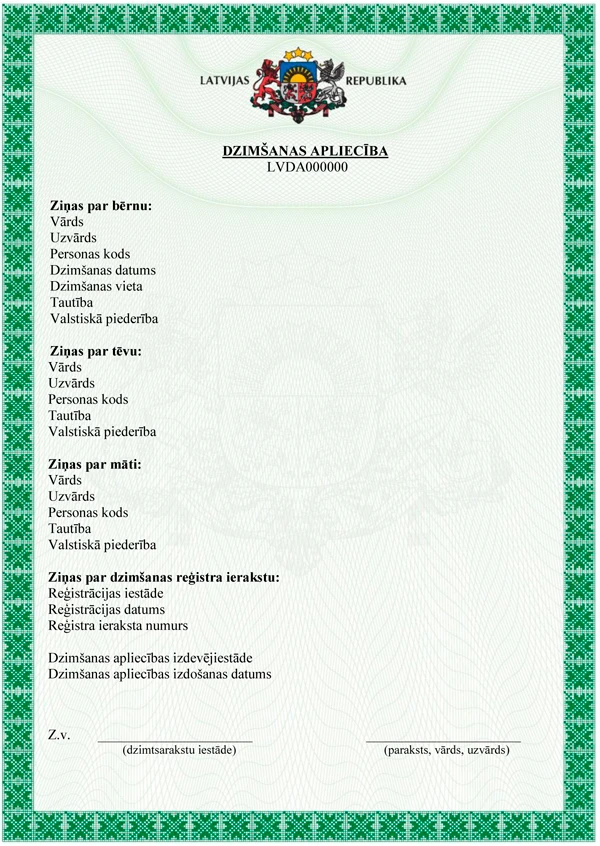
Children born abroad must be registered with the Office of Citizenship and Migration Affairs. The application is signed by a legal representative for a child under 15; from the age of 15, the child signs it personally [6] Source: Office of Citizenship and Migration Affairs, Latvian citizenship for a child born abroad to one or two Latvian citizens .
The basic documents include:
- an application;
- a birth certificate or an extract from the Birth Register;
- identification documents of the parent or parents;
- the child’s passport or identity document, if one has been issued.
Children of Latvian
Citizenship by descent
Descendants of Latvian citizens. A person may qualify for citizenship if one of their ancestors was a Latvian citizen on 17 June 1940, and they can document the family connection between each generation [8] Source: Office of Citizenship and Migration Affairs, citizenship for descendants of Latvian citizens of 17 June 1940 .
Latvian exiles and their descendants. A separate route applies if the Latvian citizen left the country or was deported between 17 June 1940 and 4 May 1990 and could not return for permanent residence before 4 May 1990 [9] Source: Office of Citizenship and Migration Affairs, Latvian exiles and their descendants .
Applicants generally provide:
- an application;
- a passport or identity card;
- a birth certificate;
- birth, marriage or
name-change documents confirming the line of descent; - proof that the ancestor was a Latvian citizen on 17 June 1940;
- for descendants of exiles, documents confirming departure, deportation or inability to return to Latvia permanently.
Historical proof may include a
Benefits of Latvian citizenship
Latvian citizenship gives a person permanent status in Latvia and the rights of an EU citizen. It also provides additional opportunities for living, travelling and participating in public life.
EU citizenship
Every Latvian citizen is also a citizen of the European Union. This gives them the right to live, work and study in other EU countries under EU free movement rules, without applying for a traditional immigration visa or work permit [10] Source: Treaty on the Functioning of the European Union, Article 20 .
Latvian citizens may also vote and stand as candidates in European Parliament and municipal elections in another EU country where they live. Outside the EU, they may request consular assistance from another EU member state if Latvia has no diplomatic representation there.
Security and stability
Latvia has a stable parliamentary system with regular elections. The Saeima is elected every four years in general, equal and direct elections, while the parliament approves the government and supervises its work.
Latvia ranks among the world’s more peaceful countries. In the 2026 Global Peace Index, it ranks 19th out of 163 countries, ahead of Australia, Belgium, Poland, Lithuania, Estonia, Spain and Germany [11] Source: Global Peace Index 2026, Institute for Economics & Peace .
Latvia has also been a NATO member since 2004. Membership gives the country protection under NATO’s collective defence principle, under which an armed attack against one member is considered an attack against all Allies.
Freedom of travel
Latvian citizens can travel without a visa across the 29 countries of the Schengen Area, including 25 EU states and four
A Latvian passport allows
Social benefits
Latvia provides
Patient contributions for covered medical services are relatively small. A visit to a family doctor costs €2 for patients under 65 and €1 for those aged 65 or older, while a specialist visit costs €4; total patient contributions are capped at €570 per year. Children under 18, pregnant women receiving
Social insurance replaces part of a person’s income during illness, unemployment or parental leave. Sickness benefit equals 80% of the average insurance contribution wage, while unemployment benefit is paid for up to eight months and initially amounts to
Families also receive direct financial support. In 2026, the childbirth allowance is €600, while childcare allowance is €298 per month until the child reaches 18 months. The state also pays a monthly family benefit, with the amount increasing according to the number of children [14] Source: State Social Insurance Agency of Latvia, changes to family benefits in 2026 .
Rich cultural heritage
Latvia has preserved a strong tradition of folk music and dance. The Latvian Song and Dance Celebration is held every five years and brings together tens of thousands of singers and dancers. The Baltic Song and Dance Celebrations have been included in UNESCO’s Representative List of the Intangible Cultural Heritage of Humanity since 2008 [15] Source: UNESCO, Baltic Song and Dance Celebrations .
Latvian folk songs, known as dainas, are another important part of the country’s cultural heritage. UNESCO’s Memory of the World Register includes the Dainu Skapis, or Cabinet of Folksongs, which preserves source material for nearly 218,000 Latvian folk song texts and more than 350,000 handwritten records [16] Source: UNESCO Memory of the World, Dainu Skapis — Cabinet of Folksongs .
Traditional celebrations also remain part of everyday cultural life. Jāņi, celebrated on 23 and 24 June, is one of Latvia’s most important national holidays, marked by bonfires, folk songs and dances, flower and oak wreaths, and traditional foods.

Potential drawbacks of Latvian citizenship
Latvian citizenship comes with obligations that applicants should consider, particularly if they plan to obtain citizenship for their children or relocate to Latvia.
Mandatory national defence service. Male Latvian citizens born after January 1st, 2004, may be called up for national defence service. The standard service lasts 11 months [17] Source: National Defence Service Law, Sections 2 and 3 .
Citizens who permanently reside abroad and have registered their foreign address are exempt from conscription until 2027. The exemption expires in 2027, although the rules for drafting citizens living abroad may be revised. Acquiring citizenship by descent does not automatically exempt a person from military service [18] Source: Ministry of Defence of Latvia — National Defence Service: Information for Diaspora .
Renunciation of previous citizenship. Some applicants must give up their existing citizenship to obtain a Latvian passport. Exceptions generally apply to citizens of EU, EFTA and NATO countries, as well as Australia, Brazil and New Zealand. Certain applicants acquiring Latvian citizenship by descent may also retain their original nationality.
Legal framework for citizenship in Latvia
The Citizenship Law is the main legal act regulating Latvian citizenship. Adopted in 1994, it defines the legal status of Latvian citizens and sets the rules for acquiring, retaining, losing and restoring citizenship, as well as for dual citizenship [19] Source: Citizenship Law of the Republic of Latvia, current consolidated version .
The law is based on the continuity of the Latvian state and the Law on Nationality of 23 August 1919. Its practical application is supplemented by Cabinet regulations that set procedures for citizenship registration and naturalisation.
1 October 2013. Latvia significantly expanded the rules on dual citizenship. Latvian citizens were allowed to retain citizenship of EU, EFTA and NATO countries, as well as Australia, Brazil and New Zealand, and countries that have a dual citizenship agreement with Latvia [20] Source: Amendments to the Citizenship Law adopted on 9 May 2013, Section 9 .
The same reform introduced separate rules for Latvian exiles and their descendants, allowing them to register as citizens while retaining another citizenship. It also simplified the recognition of children of Latvian
1 January 2020. Latvia stopped granting
23 April 2022. Latvia expanded the grounds for revoking citizenship from dual citizens. Citizenship may be revoked for substantial financial, material, propaganda, technological or other support for genocide, war crimes, crimes against humanity or actions threatening democratic states, as well as for direct participation in such acts. Revocation is permitted only if it does not make the person stateless [23] Source: Amendments to the Citizenship Law adopted on 21 April 2022, Section 24 .
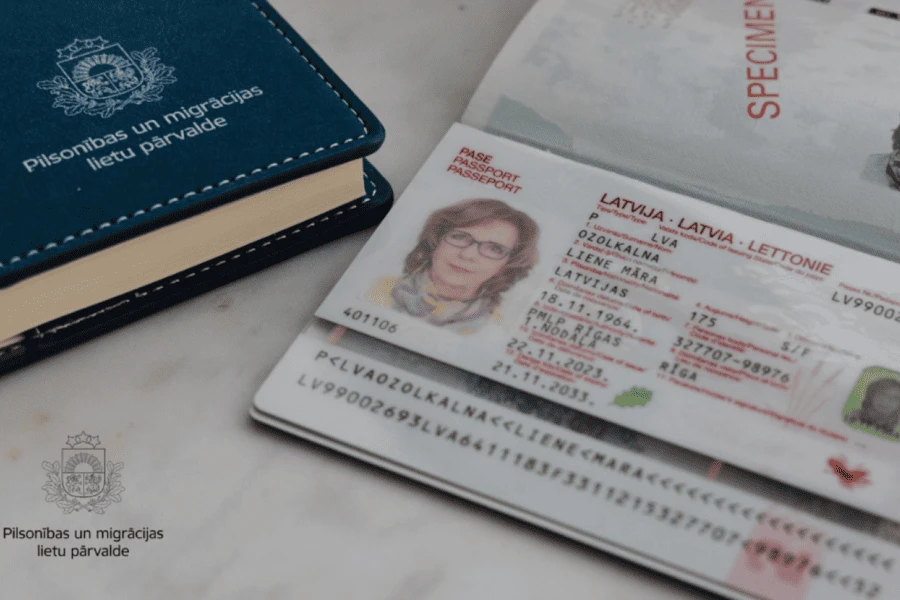
Latvian passport validity and renewal
Latvian passport validity depends on the holder’s age. Adults over 20 receive a passport valid for 10 years, while shorter validity periods apply to children and young adults:
- under 5 years old — 2 years or for the duration of a trip in certain cases;
- 5 to 20 years old — 5 years;
- over 20 years old — 10 years.
A new passport is required when the previous document expires, is lost or damaged, or when personal information such as the holder’s name or legal status changes. The document may also be replaced before its expiry date.
Applications are submitted in person to the Office of Citizenship and Migration Affairs in Latvia. Citizens living abroad can apply through a Latvian diplomatic or consular mission. When replacing a passport, the previous document must normally be submitted.
A standard passport costs €50 and is issued within 10 working days. Expedited issuance within two working days costs €75 [24] Source: Office of Citizenship and Migration Affairs, state fees for passports and identity cards .
Latvian citizens aged 15 or older must also have a valid eID card. A passport remains optional for those who only need an identity document, although it is required for travel to countries where an eID card is not accepted.
Latvia citizenship in numbers
Latvia had 1.845 million residents at the beginning of 2026. Latvian citizens accounted for 87.9% of the population, Latvian
Latvian
Citizens of other countries, by contrast, hold citizenship of another state while residing in Latvia. This group includes citizens of EU and
Latvia received 787 applications for citizenship through naturalisation in 2025. During the same year, 724 people acquired Latvian citizenship through this procedure. The number of applications remained high in 2026. From January to July alone, Latvia received 544 naturalisation applications, while 243 people acquired citizenship during the same period.
Latvia has accepted naturalisation applications since 1 February 1995. By 31 July 2026, the authorities had received 153,600 applications covering 167,230 people.
Dual citizenship rules
A Latvian citizen may retain another citizenship if it is held with a member state of the EU, EFTA or NATO, or with Australia, Brazil or New Zealand [27] Source: Citizenship Law of the Republic of Latvia, Section 9 .
Dual citizenship is also permitted in several special cases. A Latvian citizen may retain another citizenship if they:
- are a Latvian exile or a descendant of a Latvian exile;
- are a Latvian or Liv who acquires Latvian citizenship through registration;
- acquire another citizenship automatically through marriage or adoption;
- are under 25 and hold Latvian citizenship together with citizenship of another country.
Children may hold Latvian citizenship together with citizenship of any country. If the second citizenship is not otherwise permitted under Latvian law, they generally have to choose which citizenship to retain before turning 25.
A Latvian citizen who acquires citizenship of a country not covered by the permitted categories generally has to renounce Latvian citizenship within 30 days. Citizens must also notify the Office of Citizenship and Migration Affairs when they acquire another citizenship [28] Source: Office of Citizenship and Migration Affairs, dual citizenship rules .
Reasons citizenship may be refused
Latvian citizenship through naturalisation may be refused if the applicant does not meet the statutory requirements or is subject to restrictions under the Citizenship Law.
The main grounds for refusal include:
- failure to meet the residence, Latvian language, knowledge or legal income requirements;
- activities that threaten Latvia’s national or public security, democratic constitutional order, independence or territorial integrity;
- links to terrorism,
anti-state or criminal organisations, or money laundering; - service in the armed forces or a military organisation of another country without the required authorisation;
- a criminal conviction for an offence that is also considered a criminal offence in Latvia;
- unpaid taxes or other payment obligations to the Latvian state;
- certain past involvement with Soviet security services or organisations specified in the Citizenship Law.
The authorities assess each application individually. Even if the formal naturalisation requirements are met, the Cabinet may refuse citizenship if the applicant’s behaviour or activities are considered a threat to Latvia’s security, public order or constitutional system.
Key facts about Latvian citizenship
- Latvian citizenship can be obtained through naturalisation, descent, birth or restoration. Marriage leads to citizenship through naturalisation.
- Naturalisation requires five years of permanent residence in Latvia. Applicants must pass citizenship exams in Latvian, the Constitution, the national anthem, history and culture.
- The Latvia residence by investment programme offers temporary residence from €50,000, followed by permanent residence and citizenship through naturalisation.
- Dual citizenship is permitted only in specified cases. Latvian citizens may generally retain citizenship of an EU, EFTA or NATO country, Australia, Brazil or New Zealand.
- Latvian passports are valid for up to 10 years.
About the authors

Frequently asked questions
Latvia offers residence by investment from €50,000, but there is no direct
Applicants generally need to have lived permanently in Latvia for at least five years before applying. They must also have a legal source of income and make a pledge of loyalty to Latvia.
Naturalisation also requires Latvian language skills and knowledge of the Constitution, the national anthem, and Latvian history and culture. Applicants must also meet the other requirements of the Citizenship Law, including the rules on previous citizenship and restrictions on naturalisation.
Applicants for citizenship through naturalisation must pass a Latvian language proficiency test. The law does not set a specific CEFR level such as A2 or B1; applicants must demonstrate sufficient speaking, reading, listening and writing skills for everyday and public situations.
The language test is not required for every route to citizenship. For example, it does not generally apply to citizenship acquired by birth or descent.
The naturalisation procedure itself can take up to one year. Before applying, a person generally needs five years of permanent residence in Latvia, so the full route takes considerably longer.
Latvian citizenship may be held together with citizenship of a NATO, EU or EFTA member state, as well as Australia, Brazil or New Zealand. This means citizens of NATO countries do not normally have to renounce their existing citizenship when naturalising in Latvia.
The Latvia residence by investment programme does not grant citizenship directly. Investors first obtain temporary residence, may qualify for permanent residence after at least five years, and then generally need another five years of permanent residence before applying for citizenship through naturalisation. Latvian citizenship also gives EU citizenship.
Citizens of EU, EFTA and NATO countries, Australia, Brazil and New Zealand may retain their existing citizenship when naturalising in Latvia. Applicants from other countries generally have to renounce their previous citizenship unless a specific exception applies.
Read also





Contact us today
Passportivity assists international clients in obtaining residence and citizenship under the respective programs. Contact us to arrange an initial private consultation.