

 Second citizenship
 Reading time: 11 min
 Fastest Ways to Get Citizenship by Investment
Citizenship by investment is one of the fastest legal routes to a second passport. The shortest programmes take at least two months, while others require around six to ten months or longer.
Investors can choose between government contributions, real estate, business projects and other approved options. This guide compares the fastest programmes, their minimum investments, processing times and key requirements.

 Share
Share  Telegram
  Facebook
 LinkedIn
 X
X

 Save
Save 

Fastest citizenship by investment programs compared
Citizenship by investment can take from two months to around a year. Processing times depend on the country, Due Diligence checks and how quickly the applicant completes the investment and document requirements. The table below compares the minimum investment, citizenship timeline and popular
Fast-track citizenship: costs and processing times
| Country | Minimum investment | Citizenship timeline | Popular |
|---|---|---|---|
| El Salvador | $1,000,000 | Schengen Area, Japan, South Korea, Hong Kong | |
| Vanuatu | $130,000 | Hong Kong | |
| Nauru | $90,000 | South Korea, Hong Kong | |
| São Tomé and Príncipe | $90,000 | Hong Kong | |
| Sierra Leone | $95,000 | Singapore | |
| Grenada | $235,000 | Schengen Area, UK, South Korea, Hong Kong | |
| Dominica | $200,000 | Schengen Area, South Korea, Hong Kong | |
| Antigua and Barbuda | $230,000 | Schengen Area, UK, South Korea, Hong Kong | |
| St Kitts and Nevis | $250,000 | Schengen Area, UK, South Korea, Hong Kong | |
| St Lucia | $240,000 | Schengen Area, UK, South Korea, Hong Kong |
Top countries for fast-track investment citizenship
A short processing time does not make these programmes interchangeable. Each country sets its own investment options, family rules and eligibility requirements, which can make one route more suitable than another despite similar timelines.
El Salvador: at least 2 months
El Salvador citizenship by investment is available under the Freedom Visa. Applicants make a
The application is submitted remotely. Due Diligence takes at least 30 days and includes sanctions screening and verification of the investor’s sources of income. After approval, the investor completes the contribution and provides biometrics in El Salvador, Spain or the US. The passport is issued on the same day as the biometric appointment.
A spouse and children aged 17 or younger can apply with the investor. An unmarried partner may also be included if the couple can prove a genuine relationship, for example through joint property or common children.
Vanuatu: at least 3 months
Vanuatu offers three investment options for citizenship:
- National Development Fund — a
non-refundable contribution of $130,000. - CNO Future Fund — an investment of at least $157,000 in a fund that finances coconut oil production.
- Sustainable Development Fund — an investment of at least $165,000 in a fund that supports cocoa production.
Under the two
The path to citizenship takes at least 3 months. Applicants undergo an initial check by the Financial Intelligence Unit, followed by a review by the Citizenship Commission. After approval, the investor completes the investment and receives the citizenship documents and passport.
Applicants do not need to live in Vanuatu, pass exams or attend an interview. However, the investor and family members must submit biometrics for their passports in Vanuatu, Dubai, Hong Kong or Nouméa. A consul may also travel to another country to collect biometric data.
A spouse, children and parents may apply together with the investor. Children are eligible up to the age of 25, while parents must be over 50 and financially dependent on the investor or their spouse.
Children born after the investor becomes a Vanuatu citizen can acquire citizenship by entitlement. This applies whether the child is born in Vanuatu or abroad, provided at least one parent was already a Vanuatu citizen at the time of birth.
Nauru: at least 3 months
A temporary reduction makes Nauru citizenship by investment one of the
The process takes at least 3 months and is carried out remotely. Applicants do not need to travel to Nauru, live in the country or speak the official language.
Nauru has particularly broad family rules. An investor may include a spouse, children, parents, grandparents, brothers and sisters, with no age restrictions for these relatives. Family members may also be added after the application is approved.
The programme also accepts crypto assets as proof of income. In this case, the applicant provides a detailed history of cryptocurrency transfers for verification.
São Tomé and Príncipe: at least 6 months
A relatively low entry threshold is one of the main features of the São Tomé and Príncipe route. The minimum
The Citizenship by Investment Unit reviews an application in approximately
A spouse, children and parents may apply together with the investor. For a family of up to four, the contribution is $95,000; each additional family member adds $5,000. Applicants holding three or more citizenships are currently not accepted under the programme.
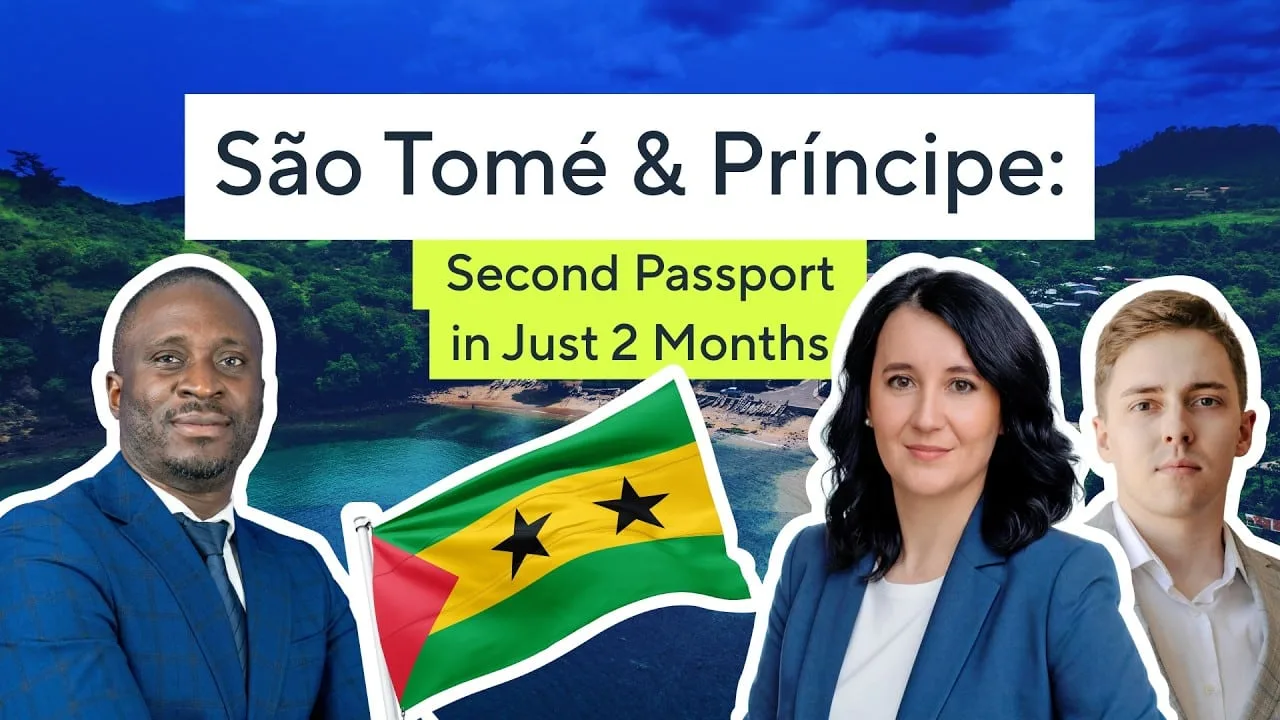
Discover the opportunities an African passport can offer and learn about the key requirements and conditions for obtaining citizenship through investment
Sierra Leone: at least 6 months
From October 1st, 2026, Sierra Leone offers three direct routes to citizenship. The standard option remains suitable for investors who want to include family members, while two new routes are designed for entrepreneurs applying alone or with a business partner:
Fast-Track Citizenship — anon-refundable contribution of $140,000. A spouse, children, parents, grandparents and some other relatives may be included for an additional fee starting at $10,000 per person.- Solo Entrepreneur — $95,000 for one applicant plus a $5,000 Due Diligence fee. Dependants cannot be included.
- Enterprise Citizenship — $80,000 per applicant for two people applying jointly, such as business partners. Both receive citizenship under one application, with a shared Due Diligence fee of $5,000. Dependants cannot be included.
The standard citizenship route takes at least 6 months and can be completed remotely, without a residence requirement.
Grenada: at least 6 months
Grenada offers two investment options for obtaining citizenship:
- А
non-refundable contribution of $235,000 to the National Transformation Fund. The same contribution applies to a family of up to four; for additional relatives, the amount increases by $25,000—75 ,000 depending on their age and relationship to the investor. Government-approved real estate — at least $270,000 for a share in an approved project or $350,000 for other qualifying property. The property can be sold after five years.
Applicants should allow at least 6 months to reach passport issuance. The procedure is completed remotely, and there are no language or history exams. Applicants over 17 attend an online interview and later take an oath of allegiance, which can also be arranged remotely.
A spouse, children, parents and certain siblings can be included in the application. Children qualify up to the age of 30, while siblings must be
Dominica: at least 8 months
Dominica offers two investment routes, both with a minimum qualifying investment of $200,000. The final amount depends on the chosen option and the number of family members included in the application:
- Economic Diversification Fund. The contribution is
non-refundable . A family of three or four contributes $250,000. For larger families, additional contributions of $25,000—40 ,000 per dependant may apply. Government-approved real estate. Investors purchase a share in an approved project and may sell it after three years. In addition to the investment, applicants pay a government fee of $75,000 for one investor or $100,000 for a family of three or four.
The programme has operated since 1993, making it one of the
A spouse can apply with the investor, along with financially dependent children up to and including 30. Financially dependent parents and grandparents of either spouse may also qualify if they are over 65.
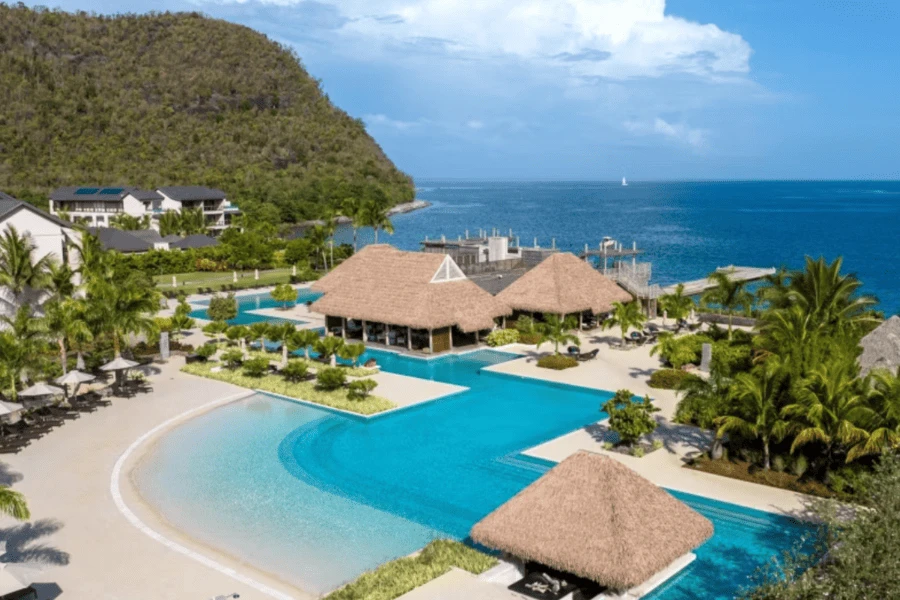
Antigua and Barbuda: at least 8 months
Antigua and Barbuda has four qualifying investment options, with the lowest threshold at $230,000:
- National Development Fund — $230,000. The contribution is
non-refundable , and the amount remains the same regardless of the number of applicants. - University of the West Indies Fund — $260,000. This option is available to families of six or more.
Government-approved real estate. The minimum investment is $300,000. The property must be held for at least five years and can then be sold.- Business investment. An applicant invests at least $400,000 as part of a joint project worth at least $5,000,000. An individual business investment requires at least $1,500,000.
The application itself can be handled remotely and usually takes at least 8 months. Applicants over 16 attend an online interview, while adults later take an oath of allegiance. Unlike most other Caribbean citizenship programmes, Antigua and Barbuda also requires investors to spend five days in the country within the first five years of citizenship.
St Kitts and Nevis: at least 10 months
St Kitts and Nevis has granted citizenship to investors since 1984, making it the
- Federal Consolidated Fund — $250,000. The contribution is
non-refundable and covers a single applicant or a family of up to four. Starting with the fifth applicant, the contribution increases by $25,000 for a child aged 17 or younger and $50,000 for an adult dependant. - Social and infrastructure projects — $250,000. The investment goes to
government-approved projects, such as housing and other public infrastructure. A government fee of at least $25,000 is paid separately. Government-approved real estate — $325,000. Investors may buy a share in a resort, hotel or condominium. A private home requires at least $600,000. The property can be sold after seven years.
Applicants should allow at least 10 months from filing to passport issuance. The application itself is submitted remotely.
Biometric enrolment is mandatory for the investor and family members. It can be completed at centres in St Kitts and Nevis and several other countries, including the UAE, Türkiye, the US, the UK and Hong Kong. Passports and naturalisation certificates are collected in person in St Kitts and Nevis or at an approved embassy or consulate.
A spouse, financially dependent children up to and including 29, and financially dependent parents over 55 may join the application. A parent or child of the main applicant may also act as a sponsor and cover the programme costs, subject to Due Diligence.

St Lucia: at least 10 months
St Lucia launched its citizenship by investment programme in 2015, making it the newest among the Caribbean CBI countries. Investors can choose between five qualifying options, with the lowest threshold at $240,000:
- National Economic Fund — $240,000. The
non-refundable contribution covers a family of up to four. For larger families, the amount increases by $10,000 for each dependant aged 17 or younger and by $20,000 for each adult dependant. - Social and infrastructure projects — $250,000. An administrative fee of at least $15,000 is paid separately.
- Government bonds — $300,000. The bonds are
interest-free and may be redeemed after five years. Government-approved real estate — $300,000. Investors purchase a share in an approved hotel, villa or resort project. The property may be sold after five years.- Business investment — $1,000,000. This amount applies to participation in a joint project worth at least $6,000,000. An individual investment requires at least $3,500,000.
The entire procedure can be completed without travelling to St Lucia. Applications are submitted online, while naturalisation certificates and passports are delivered by courier. Applicants should allow at least 10 months to complete the process.
A spouse, financially dependent children aged 30 or younger, parents over 55, and siblings under 18 may qualify with the investor. A sponsor, such as a parent, may also cover the programme costs but must provide financial documents and undergo Due Diligence.
Standard documents for citizenship by investment
Most programmes require a similar core set of documents, although the exact list depends on the country and the applicant’s circumstances.
Applicants generally provide:
- a valid passport and copies of the required passport pages;
- birth certificates for the main applicant and family members included in the application;
- a marriage certificate or divorce decree, if applicable;
- documents confirming the relationship with dependants;
- recent
passport-size photographs; - bank statements showing that the applicant has enough money to complete the investment;
- documents confirming the legal source of funds, such as employment records, business income documents, property sale agreements or inheritance records;
- police clearance certificates from the country of citizenship and, where required, countries of residence;
- medical certificates confirming the absence of certain communicable diseases;
- Due Diligence forms, declarations and other documents required by the government or an authorised agent.
The authorities may request additional documents during the review, especially if the applicant has several sources of income, owns companies in different countries or includes multiple family members in the application.
What determines the citizenship processing time
Citizenship processing times can vary even within the same programme. Some applications move quickly, while others require longer checks or additional documents.
Due diligence is a background check conducted to verify an individual’s identity, reputation, and source of funds.
Checks can take several months and are often the longest part of a
Number of dependants. A family application requires separate passports, civil records, police certificates and, in some programmes, due diligence checks for adult family members. The more dependants included, the more documents the authorities need to verify.
Document quality. Missing apostilles, expired police certificates, translation errors or different spellings of the same name can delay an application. Authorities may return documents for correction before the case moves forward.
Additional requests. During the review, authorities may ask for updated bank statements, extra proof of income, clarification of business ownership or documents confirming family relationships. Each additional request extends the processing time until the information is provided and checked.
Government workload. A sudden increase in applications can create a backlog and extend processing times. Grenada faced this in 2023, when the government announced a ban on new Russian and Belarusian applicants, resulting in a surge of
Main investment options for second citizenship
Citizenship by investment programmes usually offer several qualifying options. The choice affects the total cost, whether the capital can be recovered later, and how long the investment must be maintained.
Government contribution
A
This route does not require managing an asset or selling it later. The contribution is not returned, so the full amount becomes part of the cost of obtaining citizenship.
Real estate investment
Some programmes allow applicants to invest in
Real estate can usually be sold after a mandatory holding period. However, investors should also budget for purchase fees, taxes, maintenance and resale costs.
Business investment
A qualifying investment may be made into a local company or approved business project. Some programmes require the investor to create jobs, maintain the investment for a set period or invest in a specific sector.
Entrepreneurs may prefer this route if they want to keep capital in an operating business. It usually requires more documents and ongoing compliance than a government contribution.
For entrepreneurs, some investment migration programmes offer the option of investing in a qualifying business or enterprise instead of, or alongside, a
 Elena Garnitsarik
Head of the Legal Department
Elena Garnitsarik
Head of the Legal Department
Bank deposit
Some citizenship routes accept a fixed deposit with an approved bank or state institution. The money remains blocked for a specified period and is returned after the holding requirement is met. The capital may be recoverable, but the investor cannot freely use it during the deposit period.
Securities and other approved investments
Some programmes allow applicants to invest in government bonds, investment funds or other approved financial instruments. Minimum amounts and holding periods vary by country.
Unlike a government contribution, this money may remain invested and can sometimes be recovered later. The result depends on the asset and the programme rules.
Common reasons citizenship applications are rejected
Making the required investment does not guarantee citizenship. The authorities also assess the applicant’s background, finances and whether every person included in the application meets the programme rules.
Failed due diligence. Serious findings during background checks can lead to refusal. For example, an undisclosed criminal case, sanctions exposure or links to financial crime may make an applicant ineligible.
The source of funds cannot be verified. Investment money must have a clear legal origin. Problems may arise if a large transfer appears in the account shortly before the application and there are no contracts, tax records or other documents explaining where it came from.
Document problems remain unresolved. A missing apostille or outdated certificate will more often delay a case than cause an immediate refusal. But if the authorities cannot verify a key document or the applicant does not provide requested evidence, the application cannot move forward.
Programme conditions are not completed. Approval in principle is not the final step. The applicant must still make the qualifying investment and pay the required government fees before citizenship can be granted.
Risks and future of fast-track citizenship
Stricter regulation. Investor citizenship programmes are under growing international scrutiny. In April 2025, the Court of Justice of the European Union ruled that Malta’s investor citizenship scheme was contrary to EU law because it granted nationality through a transactional process based on predetermined payments and investments
[2]
Source: Court of Justice of the European Union, Commission v Malta, Case
Stricter rules do not necessarily reduce demand. After St Kitts and Nevis transferred its programme to a dedicated government authority, the programme recorded growth of 169%.
More extensive due diligence. Caribbean citizenship programmes are already introducing stricter common controls. The five Eastern Caribbean CBI countries have adopted legislation for a regional regulator, ECCIRA, which is expected to become operational in 2026. The reforms also include biometric checks and stronger regional vetting of applicants [3] Source: Eastern Caribbean Central Bank, Communiqué of the 112th Meeting of the ECCB Monetary Council .
Higher investment thresholds. Minimum contributions can rise significantly. Grenada increased its National Transformation Fund contribution for a single applicant from $150,000 to $235,000 in July 2024 [4] Source: Investment Migration Agency Grenada, new CBI pricing structure . Dominica doubled its minimum Economic Diversification Fund contribution from $100,000 to $200,000 in the same year [5] Source: Dominica Citizenship by Investment Unit, CBI price increase .
Caribbean programmes face possible closure. In June 2026, the European Commission asked Antigua and Barbuda, Dominica, Grenada, St Kitts and Nevis, and St Lucia to phase out their citizenship by investment programmes by June 1st, 2028. All five countries currently retain
Since January 1st, 2026, the US has suspended the issuance of immigrant visas and
How Passportivity helps avoid application delays
An unsuitable programme, missing documents or issues discovered during government Due Diligence can extend the time it takes to obtain citizenship. Passportivity identifies potential problems before submission and supports investors throughout the application process.
Preliminary Due Diligence. A compliance specialist reviews the applicant’s background before the service agreement is signed. The check takes two days, and the applicant only needs to provide a passport. If potential risks appear, the team can request additional evidence or recommend another route before filing the application.
Programme selection. Lawyers consider the applicant’s nationality, family composition, source of funds and other personal circumstances when choosing a citizenship programme. This helps avoid applying under a route whose eligibility rules the applicant cannot meet.
Document preparation. Passportivity lawyers prepare the application package, check documents before submission and arrange translations, notarisation or apostilles where required. The aim is to submit a complete file rather than correct basic document issues after filing.
Communication with the authorities. Passportivity submits applications and communicates with the relevant government bodies during processing. If the authorities request clarification or additional documents, the legal team helps prepare the response and keep the case moving.
In countries where citizenship applications must go through an authorised agent, Passportivity holds the required licences and can represent applicants throughout the process.
Key facts about the fastest ways to obtain citizenship
- Citizenship by investment is one of the fastest routes to a second passport.
- El Salvador offers the shortest timeline in this comparison — at least 2 months. Other
fast-track programmes generally take around six to ten months or longer. - A fast process does not always mean a low investment. Minimum amounts differ significantly between countries and depend on the selected investment option and family composition.
- Many applications can be completed mostly or entirely remotely.
- Due Diligence remains a key part of every
fast-track route. Problems with the source of funds, background checks or documents can extend the processing time or lead to refusal.
About the authors
Frequently asked questions
Among the countries compared in this article, El Salvador offers the shortest
Some
Grenada has the shortest minimum processing time among the Caribbean
Most
Antigua and Barbuda is an exception: investors must spend at least five days in the country within the first five years of citizenship.
Usually not. Marriage to a citizen does not normally grant citizenship automatically. Many countries require the foreign spouse to remain married for several years, live in the country, or meet language and integration requirements before applying.
Citizenship by investment can be much faster because some programmes grant citizenship in a few months without a prior residence period.
Due Diligence is usually the longest stage of the
Citizenship obtained through an investment programme can be revoked in certain cases, for example if the applicant provided false information, concealed important facts or obtained citizenship fraudulently. The exact grounds depend on the laws of the country.
The main risks are changes to programme rules, higher investment thresholds, stricter Due Diligence and changes to
Travel benefits can also change after citizenship is granted. Other countries may suspend
Not automatically. Obtaining citizenship does not usually make an investor a tax resident of that country. Tax residency is generally determined by where a person lives, how long they stay there and other criteria set by local law.
Investors may still have tax obligations in their current country of residence. Information about foreign accounts may also be exchanged between participating jurisdictions under the Common Reporting Standard, or CRS.
The opportunity to optimise taxes is one of the reasons why investors obtain a residence permit or second citizenship. They choose countries that offer special tax regimes or fully exempt residents from paying certain taxes.
It depends on the country. In some
The rules are set by each country’s citizenship law, so investors planning for future children should check whether citizenship passes by descent and whether any additional application or fees are required. For example, Vanuatu allows a person born after their parent became a naturalised citizen to claim citizenship by entitlement.
Many
However, the rules of the applicant’s current country also matter. Some states restrict dual citizenship or require citizens to notify the authorities after acquiring another nationality. Investors should check these requirements before applying.
Read also



Contact us today
Passportivity assists international clients in obtaining residence and citizenship under the respective programs. Contact us to arrange an initial private consultation.