

 Life abroad
 Reading time: 12 min
 Moving to Spain from the US: Visas, Costs and Taxes
Spain attracts Americans with European residence, lower everyday costs, strong healthcare, and a lifestyle that is less dependent on cars. It can suit remote professionals, retirees, families, students, and people who want a
A US passport allows short visits, but relocation requires a visa or residence permit. This guide explains the main routes, costs, taxes, healthcare, housing, banking, and practical steps before moving to Spain.

 Share
Share  Telegram
  Facebook
 LinkedIn
 X
X

 Save
Save 

Spain residence options for US citizens
US citizens may stay in Spain without a visa for up to 90 days in any
A longer stay requires a national visa or residence permit. The right route depends on the applicant’s income source, work plans, family situation, and reason for moving to Spain.
Digital Nomad Visa and Residence Permit
Remote workers and freelancers from outside the EU and EEA can apply for Spain’s Digital Nomad Visa.
Digital nomads must earn at least 200% of Spain’s minimum wage. In 2026, this means at least €2,850 a month, or around €34,200 a year, for the main applicant. If family members are included in the application, the minimum monthly income requirement increases by:
- €1,070 — for a spouse or partner;
- €360 — for each additional family member.
Visa holders may work with Spanish companies or clients, but
The visa is issued for up to 1 year. After that, the applicant can obtain a residence permit for up to 3 years and renew it for
Spain Non-Lucrative Visa
US citizens who have enough savings or passive income can apply for Spain’s
Applicants must prove they have enough money to live in Spain without working. The minimum amount is 400% of Spain’s Public Income Indicator, known as IPREM. In 2026, this is about €2,400 a month for the main applicant, or around €28,800 a year.
Each family member increases the required amount. Spanish consulates in the US usually calculate an extra 100% of IPREM for every dependant, around €7,200 a year in 2026.
The first residence permit is granted for 1 year. After 5 years of legal residence in Spain, the applicant may qualify for
Employment residence
A job offer from a Spanish employer can be a basis for a work visa. The employer first applies for work authorisation in Spain, and the applicant submits the visa application after approval.
The employee route is tied to a work contract. After moving to Spain, the worker must register with Social Security before starting work and apply for a Foreigner Identity Card.
Self-employment residence
A
Study residence
US citizens need a study visa if their programme in Spain lasts more than 90 days. Shorter courses usually fall under the
Admission must be confirmed before the application. Eligible options include university studies,
Students must prove they have enough money for their stay and return travel. The minimum amount is 100% of IPREM, or [[metric:spainNonLucrative]] per month in 2026.
Some family members can accompany the student. This usually applies to a spouse or partner and minor children. The first accompanying family member adds 75% of IPREM. Each additional family member adds 50% of IPREM.
Family-based residence
A close family tie can give a US citizen the right to move to Spain if the sponsor already lives there legally. The sponsor’s status determines the route. Different procedures apply to family members of Spanish citizens, EU citizens, and foreign residents in Spain.
Relatives of Spanish citizens may qualify if they are spouses, registered partners, children, dependent parents, or other eligible family members.
The EU family route can apply to spouses, registered partners, dependent children, and dependent parents. The EU citizen must live in Spain or move there together with the family member.
Family reunification with a foreign resident follows a separate process. The resident in Spain first needs approval for family reunification, and the family member applies for the visa after that approval.
The exact document list depends on the relationship and the sponsor’s status. Applicants usually need proof of family ties, passports, criminal record certificates, medical certificates, and documents confirming the sponsor’s legal residence in Spain.
Comparison of Spain residence options for US citizens
| Visa Type | Best For | Key Requirement |
|---|---|---|
| Digital Nomad Visa and Residence Permit | Remote workers and freelancers who work mainly with companies or clients outside Spain | Income of at least €2,850 a month. |
| Retirees and applicants with savings or passive income who do not plan to work in Spain | Proof of at least €2,400 a month for the main applicant, plus extra funds for family members | |
| Employment residence | Americans with a job offer from a Spanish employer | Work authorisation approved in Spain before the visa application |
| Entrepreneurs, business owners, and independent professionals | Business plan, proof of qualifications, required licences or permits, and enough funds to start and maintain the activity | |
| Study residence | Students whose programme in Spain lasts more than 90 days | Confirmed admission and proof of at least [[metric:spainNonLucrative]] |
| Close family members of Spanish citizens, EU citizens, or foreign residents in Spain | Proof of family relationship and documents confirming the sponsor’s legal status in Spain |
Benefits of Spain residency for a US citizen
1. Potentially lower living costs. Living in Spain can cost around 30% less than in the US. Housing creates the biggest difference. Rent and
Food, transport, and personal care are also cheaper. Expatistan estimates that food costs 25% less in Spain, transport 31% less, and personal care 37% less [1] Source: Expatistan, Spain and United States cost comparison .
The final budget depends on the city and lifestyle. Madrid, Barcelona, and popular coastal areas are usually more expensive than smaller cities, but Spain can still be more affordable for Americans with US income, savings, or pensions.
2. Access to healthcare. The 2026 Health Care Index ranks Spain 10th in the world for healthcare quality, compared with 41st for the US [2] Source: Numbeo Health Care Index, country healthcare quality ranking .
A Spanish residence permit can give Americans access to public healthcare if they are covered by the Social Security system. This usually applies to employees and
3. Safety. Spain ranks higher than the US for safety. In the 2026 Safety Index, Spain placed 50th in the world, while the US placed 94th [3] Source: Numbeo Safety Index 2026, country safety ranking .
Everyday safety is one of the reasons Americans consider Spain for relocation. Large cities, coastal towns, and residential areas are generally comfortable for daily life, walking, public transport, and family routines.
Petty theft remains the main risk in tourist areas. Pickpocketing and bag snatching are more common in crowded places, especially in large cities and around major attractions.
4. Free school education for children. Children living in Spain can attend public primary and secondary schools free of charge. Basic education is compulsory and funded by the state.
International education can also be 2.
5. Unlimited stay in Spain. A Spanish residence permit allows Americans to live in Spain beyond the
6. Option to relocate with family. A move to Spain can include close family members. The main applicant may be able to bring a spouse or partner, children, and in some cases dependent parents.
The exact process depends on the visa or residence permit held by the main applicant. Family members usually need to prove the relationship, have health insurance, and be covered by the applicant’s income or savings.
7. Path to Spanish citizenship. US citizens can apply for
Children born in Spain to foreign parents can usually apply for Spanish citizenship after 1 year of legal residence. If one parent is already Spanish, the child normally receives Spanish citizenship by origin.
Spain generally does not allow dual citizenship with the US. Americans who naturalise in Spain should check in advance how this affects their US citizenship status.

Cost of living in Spain versus US
Living in Spain is about 30% cheaper than in the US for everyday expenses before rent. Numbeo estimates monthly costs for a family of four at €2,600 in Spain, compared with about €3,700 in the US [6] Source: Numbeo, Spain and United States cost of living data .
The difference is especially visible in rent, utilities, internet, public transport, and basic groceries. Gasoline is one of the few everyday expenses that costs less in the US.
Prices comparison in Spain and the US
| Item | Price in Spain | Price in the US | Price differences in Spain vs the US |
|---|---|---|---|
| €905.46 | €1,408.85 | 35.7% cheaper | |
| €1,430.80 | €2,287.60 | 37.5% cheaper | |
| Basic utilities, per month | €132.68 | €186.42 | 28.8% cheaper |
| Internet, per month | €28.68 | €62.88 | 54.4% cheaper |
| Gasoline, 1 litre | €1.52 | €0.86 | 76.7% more expensive |
| Local transport, | €1.50 | €2.05 | 26.8% cheaper |
| Local transport, monthly pass | €30 | €56.25 | 46.7% cheaper |
| Meal at an inexpensive restaurant | €15 | €17.12 | 12.4% cheaper |
| Milk, 1 litre | €1.05 | €0.92 | 14.1% more expensive |
| White bread, 500 g | €1.34 | €3.13 | 57.2% cheaper |
| Beef round, 1 kg | €14.38 | €14.71 | 2.2% cheaper |
| Apples, 1 kg | €2.23 | €4.54 | 50.9% cheaper |
| Oranges, 1 kg | €1.85 | €3.84 | 51.8% cheaper |
| Potatoes, 1 kg | €1.60 | €2.51 | 36.3% cheaper |
| Tomatoes, 1 kg | €2.24 | €4.26 | 47.4% cheaper |
Everyday life for Americans in Spain
Moving to Spain changes more than the country of residence. Daily life becomes more walkable, more social, and often less expensive than in the US. Public transport replaces many car trips, local markets become part of the weekly routine, and long dinners or coffee outside are normal parts of the day.
The experience depends on the region. Madrid and Barcelona offer
Climate
Spain has several climates in one country. The Mediterranean coast has mild winters and long warm seasons: Barcelona averages about +9°C in January and +24°C in July, while Malaga is warmer, from about +12°C to +26°C.
Inland cities have sharper seasonal changes. Madrid is colder in winter, with January averages around +5...6°C, and hot in summer. Seville is one of the hottest major cities in Spain, with July highs around +36°C.
Northern Spain suits people who prefer greenery and milder summers. Bilbao and San Sebastián are cooler and rainier than the Mediterranean coast, with summer averages around +19...21°C.
The Canary Islands offer the most stable climate. Southern Tenerife stays warm throughout the year, with average temperatures from about +18°C in January to +24°C in July [7] Source: AEMET, standard climate values for Spanish cities .
Culture and lifestyle
Daily life in Spain is more social and
The daily schedule can also feel different. Lunch is usually later than in the US, dinner often starts after 8 pm, and some smaller shops may close during the afternoon, especially outside large cities.
Regional identity matters in Spain. Catalonia, the Basque Country, Galicia, Andalusia, Valencia, and other regions have their own traditions, food, holidays, and sometimes
Spanish is enough for daily life in most places, but English is not always widely used outside tourist areas and international neighbourhoods. Learning basic Spanish makes housing, healthcare, paperwork, and local communication much easier.
Food
Fresh food is easy to find in Spain. Supermarkets, local markets, bakeries, fish shops, and small grocery stores are part of daily life in most cities.
The Spanish diet is based on vegetables, fruit, fish, seafood, legumes, olive oil, rice, bread, cheese, and meat. Regional food differs a lot: Valencia is known for rice dishes, Andalusia for tapas and fried fish, the Basque Country for pintxos, and Galicia for seafood.
Eating out is usually cheaper than in the US. A simple meal in an inexpensive restaurant costs about €15 in Spain, while coffee, pastries, tapas, and set lunch menus can keep everyday food costs lower.

Healthcare and insurance
Spain has both public healthcare and private insurance. For Americans, access depends on the type of residence and whether they pay into the Spanish Social Security system.
Employees and
A health card is issued by the autonomous community where the resident lives. This card is used to book public doctors, access medical records, and collect prescribed medicines.
Private insurance is also common for faster appointments and
Pharmacies are easy to find in Spanish cities and towns. Electronic prescriptions can be used across the National Health System, so medicines prescribed in one autonomous region can be dispensed in another.
Transport
Spain is practical for everyday life without a car, especially in large cities. Madrid and Barcelona have the strongest public transport networks, with metros, buses, commuter trains, and easy connections to surrounding towns. Valencia, Seville, Bilbao, Malaga, and Alicante are also convenient for daily travel by metro, tram, bus, bike, or on foot.
Flights are useful for longer routes and island travel. Mainland Spain is connected with the Balearic and Canary Islands, while major airports also offer many routes across Europe.
Taxes for US citizens living in Spain
A residence permit does not automatically make a person a Spanish tax resident, but spending most of the year in Spain usually does.
US citizens also keep tax obligations in the US. This means Americans living in Spain may need to file tax returns in both countries, report worldwide income, and use tax credits or treaty rules to avoid double taxation.
Spanish tax residency
Spain usually treats a person as a tax resident if they spend more than 183 days in the country during a calendar year. A person may also become a tax resident if Spain is the main centre of their economic interests.
Spanish tax residents pay tax on worldwide income. This can include salary, freelance income, pensions, dividends, capital gains, rental income, and income from foreign assets.
Income tax rates in Spain
Employment and
- 19% — up to €12,450;
- 24% — €12,
451—20 ,200; - 30% — €20,
201—35 ,200; - 37% — €35,
201—60 ,000; - 45% — €60,
001—300 ,000; - 47% — over €300,000 [8] Source: BOE, Spain Personal Income Tax Law .
The rate is applied by brackets. A person earning €40,000 does not pay 37% on the full amount. The first part is taxed at 19%, the next part at 24%, then 30%, and only the income above €35,200 falls into the 37% bracket.
Tax on savings and investments
Savings income is taxed separately from employment and business income. This usually includes dividends, interest, capital gains, and some investment income. Investment income taxation is relevant for Americans who receive dividends, sell securities, rent out property, or live partly from investment income
In 2026, savings income is taxed at progressive rates of
Tax benefits
Some Americans who move to Spain for work may qualify for the special tax regime for inbound workers, often called the Beckham Law.
Eligible applicants can be taxed under
The regime is not automatic. It depends on the reason for moving to Spain, previous Spanish tax residence, type of work, and application deadline.
Double taxation treaty
Spain and the US have a double taxation treaty, but US citizens still need to report worldwide income to the IRS.
The treaty helps reduce double taxation by assigning taxing rights by income type. Employment income is usually taxed where the work is physically performed, so Americans who live and work from Spain usually pay Spanish tax on that income first.
Foreign tax credits are the main tool in practice. If income is taxed in Spain, the US may allow Spanish tax paid to reduce the US tax due on the same income.
Passive income needs to be checked separately. Dividends, interest, capital gains, pensions, and rental income can follow different treaty rules.
Banking, housing, and practical setup
Apart from obtaining a residence permit, newcomers also need to arrange banking and housing, understand local driving rules, and prepare the necessary documents if they are bringing a pet.
Opening a Spanish bank account
A Spanish bank account makes everyday setup easier after relocation. It is usually needed to pay rent, utility bills, local taxes, insurance, phone plans, school fees, and other regular expenses.
New residents open a standard current account after receiving an NIE or TIE. An NIE is a foreigner identification number used for tax and administrative procedures. A TIE is a physical residence card issued to
Banks may also ask for a passport, proof of Spanish address, employment contract, tax documents, or other proof of income. The exact list depends on the bank and the applicant’s residence status.
Opening an account as a
Renting or buying property
Americans can generally rent or buy property in Spain regardless of residence status. A residence permit is not required just to sign a rental contract or purchase a home, but the person must still follow immigration, tax, and administrative rules.
Renting is usually the first step after relocation. Landlords commonly ask for a passport or NIE, proof of income, a work contract or bank statements, and a deposit. Some may also ask for several months of rent in advance, especially if the tenant has no Spanish employment history.
Most
Buying property is also possible for foreign nationals. The buyer usually needs an NIE, a Spanish bank account, funds with a clear legal origin, a notary, and registration of the purchase in the Land Registry.
Property ownership does not automatically give the right to live in Spain
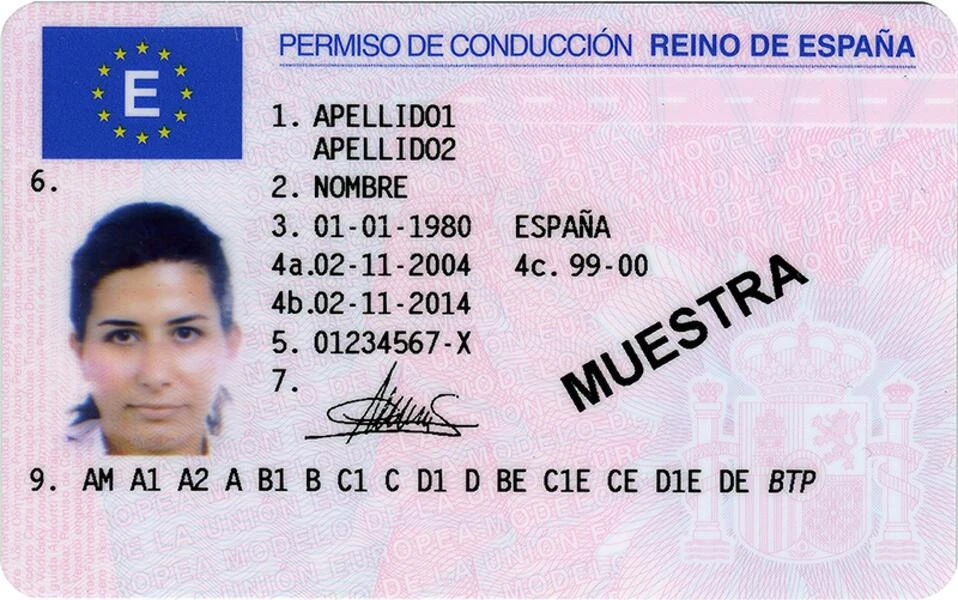
Driving in Spain with a US licence
Americans can drive in Spain with a valid US license for up to 6 months after becoming residents. It is better to get an International Driving Permit in the US before travelling, as Spanish authorities recommend it for licences issued outside the EU and EEA.
The permit does not replace the original licence. Drivers should carry the US licence, the International Driving Permit, and a passport when driving in Spain.
After 6 months of residence, Americans usually need a Spanish driving licence. US licences are not generally exchangeable for Spanish ones, so the driver normally has to pass the required theory and practical exams.
Bringing pets to Spain
Americans can bring dogs, cats, and ferrets to Spain if the pet meets EU entry requirements. The process should be prepared before travel, especially if the pet needs a new rabies vaccination.
To enter Spain from the US, the pet usually needs:
- a microchip for identification;
- a valid rabies vaccination given after the microchip is placed;
- a health certificate issued by a
USDA-accredited veterinarian; - USDA endorsement of the health certificate before departure.
Rabies timing matters. The vaccine must be given after the microchip is placed, and at least 21 days must pass before the pet can enter the EU. This is why dogs, cats, and ferrets under 15 weeks old usually cannot enter Spain [9] Source: USDA APHIS, pet travel from the United States to Spain .
After moving, pet owners can ask a Spanish vet about an EU pet passport. It can make future travel within the EU easier, especially for residents who plan to visit other European countries with their pet.
Best cities in Spain for American expats
The right city depends on whether the priority is international infrastructure, coastal living, transport, or climate.
Madrid suits Americans who want a large European capital with restaurants, museums, nightlife and extensive public transport. Living without a car is realistic: the metro, buses and commuter trains cover most of the city, while
Housing is expensive by Spanish standards. Average asking rents reached €23.2 per m² in July 2026
[10]
Source: Idealista, rental price reports for Spanish cities, July 2026
, the highest among the five cities in this list. Madrid also has hotter summers and colder winters than the Mediterranean coast, so it is better suited to people who prioritise city life over beaches and
Barcelona offers something Madrid cannot: a major international city directly on the Mediterranean. Residents can combine museums, restaurants and dense urban neighbourhoods with beaches and a mild coastal climate. Public transport is extensive, and many central areas are practical for walking or cycling.
The international community is well established. The American Society of Barcelona has been bringing together US residents and other international members since 1974.
Valencia sits between Spain’s largest cities and smaller coastal destinations. The city has beaches, the
Housing is also cheaper than in Spain’s two largest cities. Average asking rents were €16.30 per m². This makes Valencia particularly attractive to remote workers and families who want urban infrastructure, access to the sea, and a lower housing budget.
Malaga is a practical choice for Americans who put climate and outdoor life high on the list. Winters are mild, with average temperatures of around +12°C in January, and the city stays active beyond the summer holiday season. Beaches are part of everyday life rather than something that requires leaving the city.
Alicante has a noticeably
Key facts about moving to Spain from US
- US citizens can stay in Spain without a visa for up to 90 days in any
180-day period. Along-term move requires a national visa or residence permit. - The main residence options include the Digital Nomad Visa,
Non-Lucrative Visa, work residence,self-employed residence, study residence, andfamily-based residence. - Spain can be cheaper than the US for rent, utilities, internet, public transport, restaurants, and many basic groceries.
- Spain offers various benefits for US citizens, such as a lower cost of living,
visa-free travel within the Schengen Area, and access to universal healthcare. - US citizens usually keep tax obligations in the US after moving.
About the authors


Frequently asked questions
US citizens need a visa or residence permit if they plan to move to Spain and stay for more than 90 days.
A US passport allows short visits, but it does not give the right to live in Spain
Americans can stay in Spain without a visa for up to 90 days in any
US citizens usually need to file US tax returns even if they live in Spain. The US taxes citizens on worldwide income, including salary, freelance income, pensions, dividends, capital gains, and rental income.
Living in Spain does not always mean paying the same tax twice. Americans may use foreign tax credits, treaty rules, or the Foreign Earned Income Exclusion if they meet the conditions.
Spain and the US have a double taxation treaty. The treaty helps reduce double taxation by setting rules for different types of income. For example, employment income is usually taxed where the work is performed, while dividends, pensions, capital gains, and rental income may follow separate rules.
Not always. Public healthcare in Spain is available to residents who are covered by the Social Security system, such as employees and
Some Americans need private health insurance, especially at the start. For example,
Americans can bring dogs, cats, and ferrets to Spain if the pet meets EU entry requirements.
The pet usually needs a microchip, a valid rabies vaccination, and a health certificate issued by a
Americans usually need Spain’s Digital Nomad Visa or residence permit if they want to live in Spain and work remotely for a US company. The employer or client should be located outside Spain. Visa holders may work with Spanish companies or clients only within the allowed limit.
The
A job offer is not required for every residence route. Americans can move to Spain without Spanish employment if they qualify through savings, passive income, retirement income, study, family ties, or remote work for a foreign company.
The right option depends on how the person plans to support themselves. The
Read also





Contact us today
Passportivity assists international clients in obtaining residence and citizenship under the respective programs. Contact us to arrange an initial private consultation.