

 Life abroad

 Reading time: 12 min
Sierra Leone country guide: life, economy, tourism and investment
Sierra Leone is a small West African country with striking natural beauty and a tragic recent past. There are Atlantic beaches, tropical forests and mountains — and beneath it all lie deposits of diamonds, gold, iron ore and bauxite. The civil war lasted 11 years and ended in 2002; since then the country has been slowly rebuilding its economy and infrastructure, betting on tourism and looking for foreign investors.
Foreigners can obtain Sierra Leonean citizenship through investment. The minimum contribution is $95,000.
 Share
 Telegram
 Facebook
 LinkedIn
 X

 Save

Geography and climate in Sierra Leone
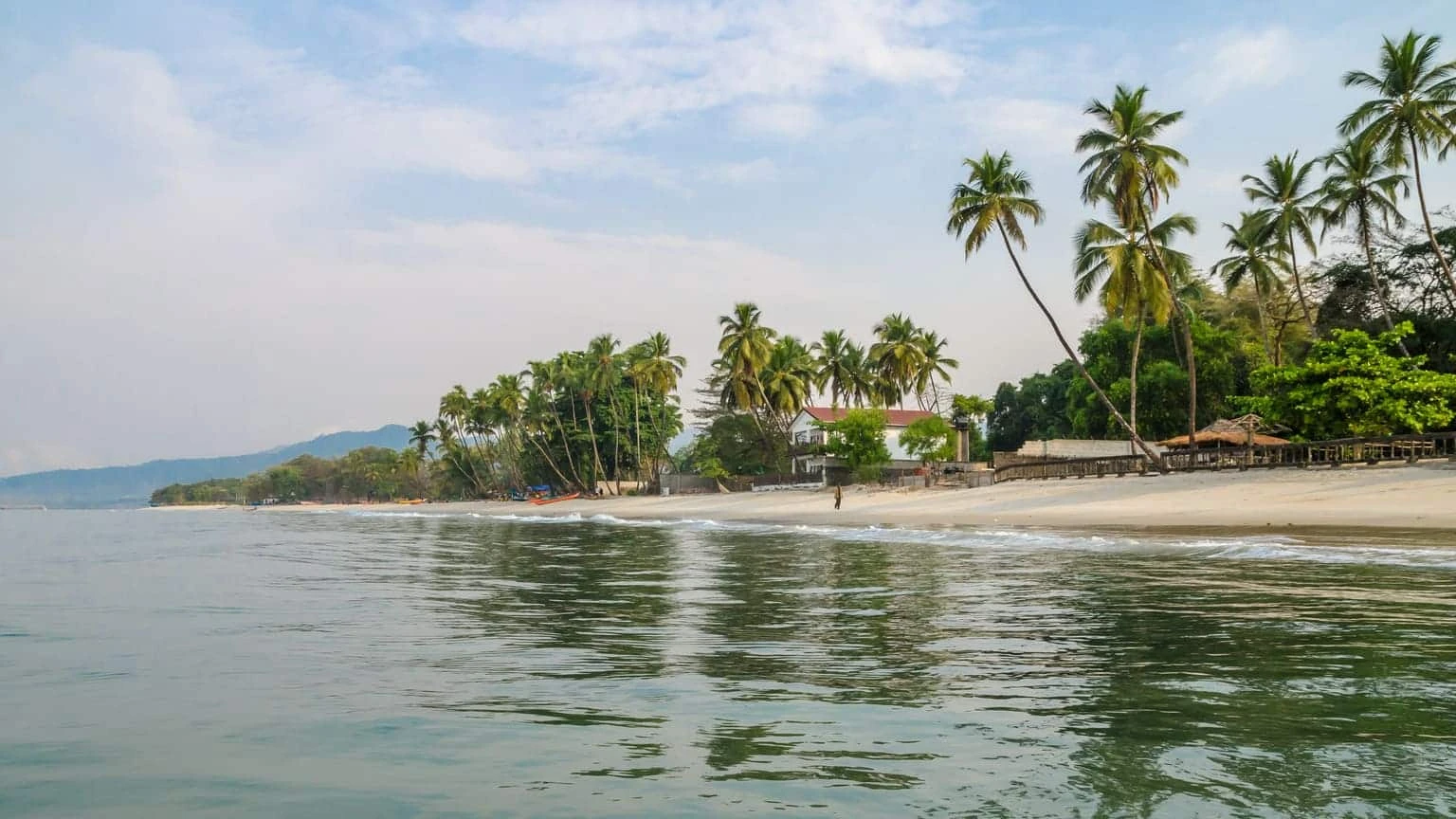
Sierra Leone is a small West African country with a long Atlantic coastline, tropical forests, inland plateaus and mountain ranges. It stays warm throughout the year, but weather conditions vary between the coast and the interior and change noticeably between the wet and dry seasons.
Location and landscape
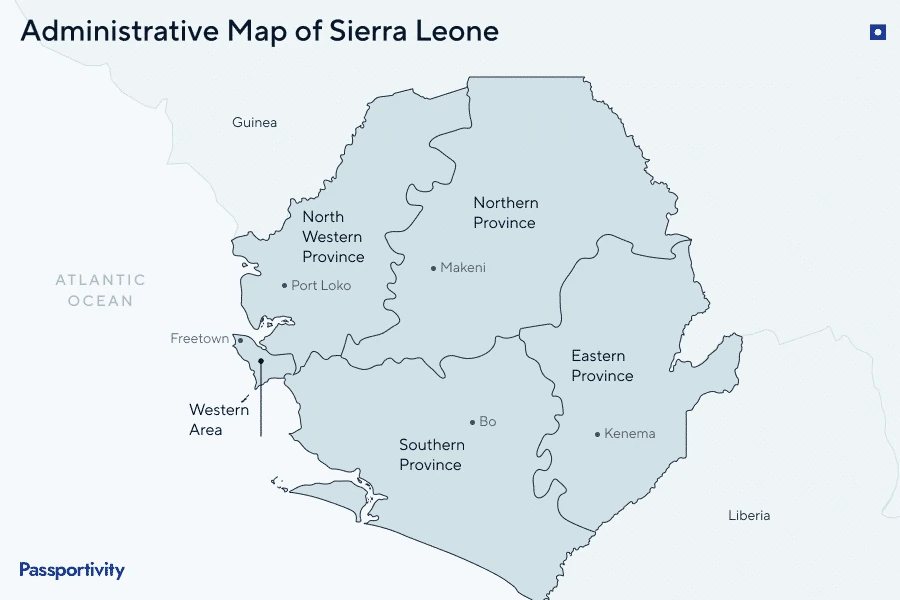
Sierra Leone covers about 72,000 km². It borders Guinea to the north and northeast and Liberia to the south and southeast. The Atlantic Ocean lies to the west.
The coast is mostly
Climate
Sierra Leone has a tropical climate with high temperatures and humidity for most of the year. The national average temperature is about +27°C.
Seasons. The rainy season generally lasts from May to October, while November to April is the dry season. July and August are among the wettest months. From December to February, the Harmattan brings dry, dusty air from the Sahara and lowers humidity [4] Source: EPA Sierra Leone — rainy and dry seasons and the Harmattan period .
Average monthly temperatures are +23…+29°C. In the lowlands, temperatures can rise to an average maximum of about +36°C towards the end of the dry season
[5]
Source: World Bank — monthly temperatures and
The dry season is also the most convenient time to explore Sierra Leone’s Atlantic beaches, rainforests and wildlife reserves. For many foreign visitors, a
Regional differences. The coast is wetter and more humid than the interior. Annual rainfall in parts of Freetown can exceed 4,500 mm, while northern and inland areas receive considerably less rain [6] Source: World Bank — rainfall differences between Freetown, the coast and inland areas .
Freetown and other coastal areas remain humid for much of the year. Inland regions have a more pronounced dry season and hotter conditions towards the end of it. November to April is generally easier for travelling around the country and spending time outdoors.
Climate risks. Heavy rain can cause flash floods in
Rain can also disrupt transport, especially outside the main cities. Most secondary and feeder roads are unpaved, and some rural communities depend on ferries and river crossings that can become unusable during the rainy season. Road access and drainage are therefore worth checking when choosing a place to live.

Political system and government in Sierra Leone
Sierra Leone is a presidential republic with an elected president, a unicameral parliament and a court system based largely on English common law. Its modern political system developed after independence from the United Kingdom and was rebuilt after the civil war ended in 2002.
History of Sierra Leone
Different African communities lived in the territory of modern Sierra Leone long before European contact. Portuguese navigator Pedro de Sintra reached the coast in the 15th century and named the mountainous peninsula around
In the 17th and 18th centuries, the coast became part of Atlantic trade routes, including the slave trade. Freetown was founded in 1787 as a settlement for freed Black people from Britain. More settlers later arrived from Nova Scotia and Jamaica.
Freetown became a British Crown Colony in 1808, and Britain established a protectorate over most of the interior in 1896. Sierra Leone gained independence on 27 April 1961.
In 1971, Sierra Leone became a republic and replaced the British monarch as head of state with a president. The following decades included military coups and periods of political instability. In 1991, a civil war began between the government and rebel forces; it lasted for 11 years and ended in 2002. Since then, Sierra Leone has remained a presidential republic and has held regular presidential and parliamentary elections.
Political system in Sierra Leone
The 1991 Constitution establishes the main rules for the presidency, Parliament and the courts. Freetown is the seat of the central government and home to the State House, Parliament and the Supreme Court.
President and executive power. The president leads the executive branch. A presidential term lasts five years, and one person can serve no more than two terms. A candidate needs at least 55% of valid votes to win in the first round; otherwise, the two leading candidates proceed to a runoff
[8]
Source: Constitution of Sierra Leone — presidential terms,
Julius Maada Bio has served as president since 2018 and was
Parliament. Sierra Leone has one chamber of Parliament. The current Parliament has 149 members: 135 elected MPs and 14 Paramount Chief Members, who represent the country’s districts. Parliament passes laws, approves the national budget and oversees government ministries
[10]
Source: Parliament of Sierra Leone — current composition of the
Court and legal system. The Superior Courts are the High Court, Court of Appeal and Supreme Court. The Supreme Court is the country’s final court of appeal and has exclusive jurisdiction over questions concerning the interpretation of the Constitution.
The legal system follows the English common law model, while customary law also applies outside Freetown and the Western Area. Sierra Leone also has Magistrates’ Courts and Local Courts. Commercial disputes can be heard by specialised divisions of the High Court.
International relations of Sierra Leone
Sierra Leone is a member of the Commonwealth, African Union and Economic Community of West African States, or ECOWAS. It was among the original countries that established ECOWAS in 1975 [11] Source: ECOWAS — Sierra Leone’s membership and role in the regional organisation .
ECOWAS cooperation covers trade, transport, energy, security and freedom of movement. Under the regional framework, citizens of member states have rights of entry, residence and establishment in other participating countries, subject to ECOWAS protocols and national procedures [12] Source: ECOWAS — rights of entry, residence and establishment for Community citizens .
Sierra Leone also has close regional ties with Liberia, Guinea and Côte d’Ivoire through the Mano River Union. Sierra Leone and Liberia founded the organisation in 1973 to promote trade, economic cooperation and regional development. Guinea joined in 1980 and Côte d’Ivoire in 2008 [13] Source: Mano River Union — members and history of regional cooperation .
The country is also a party to the African Continental Free Trade Area, or AfCFTA. Sierra Leone deposited its instrument of ratification in 2019, placing it within the
Economy of Sierra Leone
Agriculture and mining remain central to Sierra Leone’s economy, while services account for the largest share of GDP. The country has significant mineral resources, but weak infrastructure and dependence on commodity exports still limit economic growth.
Key sectors of the economy
Services are the largest part of the economy. According to Statistics Sierra Leone, they accounted for 42.2% of GDP in 2024. Agriculture, forestry and fishing contributed 32.1%, while industry accounted for 23.9% [15] Source: Statistics Sierra Leone] — contribution of services, agriculture and industry to GDP .
Agriculture remains one of the country’s main employers: around 44% of employed people worked in the sector in 2025 [16] Source: World Bank — share of employment in agriculture in 2025 . Rice is an important food crop, while cocoa, coffee and oil palm are among the main commercial crops. The National Investment Board also highlights food processing, horticulture, livestock and agricultural technology as areas with room for further investment [17] Source: National Investment Board — agricultural products and investment opportunities .
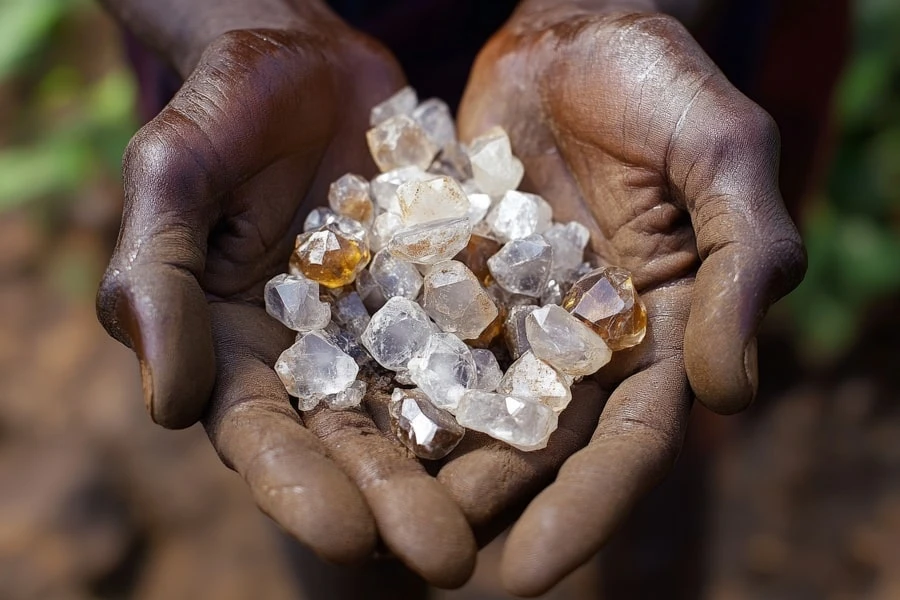
Mining is central to Sierra Leone’s exports. The country has deposits of iron ore, diamonds, rutile, bauxite and gold. Preliminary IMF data show that iron ore exports alone reached about $915 million in 2025, compared with total goods exports of about $1.6 billion [18] Source: IMF — Sierra Leone exports, including iron ore, diamonds and rutile . Heavy reliance on minerals makes export revenue sensitive to changes in international commodity prices.
Economic growth
Sierra Leone’s economy grew by an estimated 5% in 2025. The IMF expects growth to slow to 4% in 2026 as higher oil prices increase transport and production costs. Agriculture, manufacturing and services are expected to support growth, while the economy remains exposed to changes in global commodity and energy prices.
Inflation also eased sharply in 2025 but began rising again in 2026 as fuel costs increased. The IMF expects inflation to reach about 11.6% by the end of 2026 [19] Source: IMF — GDP growth in 2025 and 2026 outlook, inflation and economic risks . Higher prices can increase the cost of transport, imported equipment and other business expenses.
Trade and market access
Freetown is the country’s main trade gateway. The Port of Freetown and Queen Elizabeth II Quay handle general and container cargo, while specialised ports serve the mining industry. Nitti is used for rutile and bauxite exports, and Pepel for iron ore [20] Source: National Investment Board — Freetown, Nitti and Pepel ports and their roles .
Membership in ECOWAS gives Sierra Leonean businesses access to the regional Trade Liberalisation Scheme. Qualifying goods produced within member states can be traded without customs duties under the scheme
[21]
Source: ECOWAS —
Sierra Leone is also classified by the United Nations as a least developed country
[22]
Source: United Nations — Sierra Leone’s status as a least developed country
. This gives its exporters access to the EU’s Everything But Arms scheme, under which goods from eligible LDCs can enter the European Union
The National Investment Board lists agribusiness, mining, energy, tourism, manufacturing, ICT and infrastructure among the main sectors for private investment
[24]
Source: National Investment Board — priority sectors for private investment
. Sierra Leone has also linked its mineral sector to investment migration: the
Citizenship by investment in Sierra Leone
Sierra Leone’s investment migration initiative,
- a spouse;
- children up to 17;
- children aged 18 to 30;
- parents and grandparents of any age;
- siblings up to and including 30;
- spouses and children of adult children and siblings;
- another relative if they are the applicant’s only remaining family member.
Adding family members costs $10,000 or $20,000 per person, depending on the relationship and age.
Applicants pay a Due Diligence fee: $5,000 for an application with up to five applicants and $10,000 for 6 to 10 applicants. For applications with more than 10 people, an additional $900 is charged for each applicant above the tenth
[26]
Source:
The original
Anastasia Agafonova
Lawyer in International Law
Enterprise Citizenship. Two adults can submit a single joint application under this option. They may be business partners, colleagues, project partners or simply two applicants who choose to apply together. Family members cannot be included.
Each applicant contributes $80,000. A single $5,000 due diligence fee covers both applicants.
Solo Entrepreneur. A single applicant can use this option without adding family members to the application. The contribution is $95,000, plus a $5,000 due diligence fee.
| Option | Who can apply | |
|---|---|---|
| Main applicant, applying alone or with qualifying family members | $140,000 for the main applicant, plus from $10,000 per family member | |
| Enterprise Citizenship | Two adult applicants applying jointly, such as business partners or colleagues | $80,000 each |
| Solo Entrepreneur | One applicant without family members | $95,000 |
Pros of Sierra Leone citizenship by investment
Fast process. Investors can obtain Sierra Leonean citizenship in up to 6 months. The application process is remote, and applicants are not required to relocate to Sierra Leone or maintain physical residence in the country.
Citizenship for the whole family. An investor’s family may obtain citizenship together with them. Eligible relatives include a spouse, children up to 19 years old, parents and grandparents.
In special occasions, the programme also allows the inclusion of children, siblings aged 19 to 30, their spouses and children, as well as any sole remaining relative of the main applicant.
Citizenship for future generations. Sierra Leonean citizenship can be passed to children by descent, so the status can remain in the family without a new investment for every generation.
Dual citizenship. Sierra Leone allows its citizens to hold another nationality. Investors therefore do not generally need to renounce their existing citizenship, provided their other country also permits dual nationality [27] Source: Sierra Leone Citizenship (Amendment) Act, 2006, Section 10 .
Regional mobility in West Africa. as citizens of an ECOWAS member state, Sierra Leoneans can enter other ECOWAS countries without a visa for stays of up to 90 days. The regional framework also provides rights of residence and employment subject to national procedures.
Access to Sierra Leone as a second home. The country has a long Atlantic coastline with beaches such as River No. 2, Tokeh, Bureh and Lumley, as well as tropical forests and nature reserves. Citizenship can therefore serve both as a Plan B and as an option for longer stays in the country.
The main disadvantages include:
- relatively limited
visa-free travel outside West Africa; - additional due diligence and family fees on top of the main contribution;
- no option to include dependants under the Solo Entrepreneur and Enterprise Citizenship routes.
For applicants comparing several citizenship programmes, these limitations are worth weighing against Sierra Leone’s lower entry cost and relatively fast application process.
Living in Sierra Leone
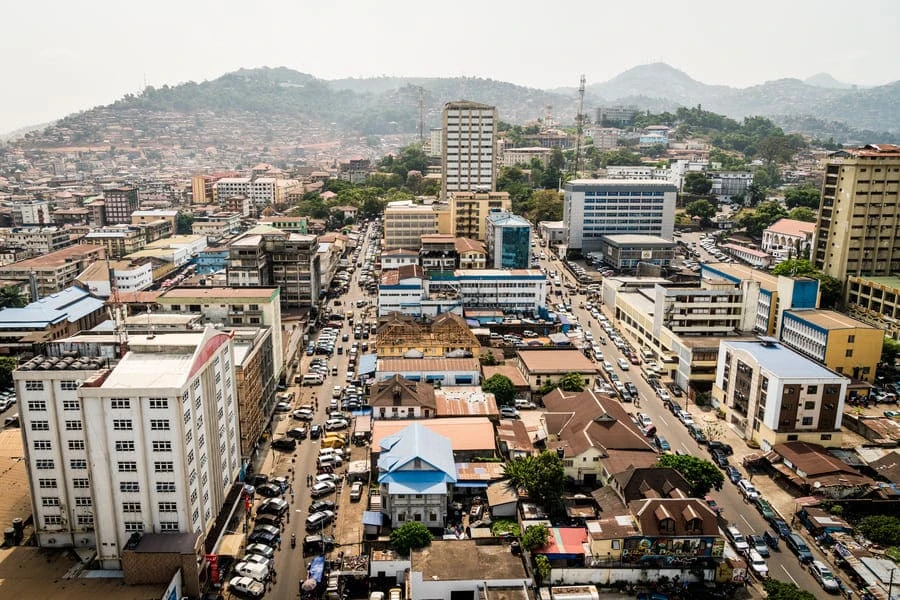
Living conditions vary considerably across Sierra Leone. Freetown offers the widest choice of healthcare, education and everyday services, while access to basic infrastructure is more limited in many smaller towns and rural areas.
Living standards
Sierra Leone had a population of about 8.8 million in 2025 [28] Source: World Bank — Sierra Leone population in 2025 . The Human Development Report 2025 gives the country an HDI of 0.467 and ranks it 185th out of 193 countries and territories. The index measures life expectancy, education and income; the latest ranking is based on 2023 data.
For comparison, India has an HDI of 0.685, Poland 0.906 and the United States 0.938. Sierra Leone remains in the low human development category, while Poland and the US are in the very high human development group [29] Source: UNDP — HDI for Sierra Leone, India, Poland and the United States .
Living standards also differ considerably within the country. Freetown and the Western Area generally offer better access to jobs, healthcare, education and everyday services than rural communities.
Poverty is one of the main factors behind Sierra Leone’s low living standards. The World Bank estimates that about 58% of the population lived below the national poverty line in 2025. The figure is a projection based on economic growth, inflation and household income patterns, as the latest official household survey was conducted in 2018 [30] Source: World Bank — national poverty estimate for Sierra Leone in 2025 .
Access to basic services
Access to utilities is still limited in many parts of Sierra Leone. About 63% of the population has access to basic drinking water, while 32% has basic or safely managed sanitation [31] Source: World Bank — access to drinking water and sanitation .
Electricity reaches about 39% of the population, and access is less reliable outside major urban areas. Around 25% of residents used the internet in 2024 [32] Source: World Bank — access to electricity and internet in Sierra Leone .
Freetown has the widest range of utilities and commercial services. In smaller towns and rural areas, households may rely on generators, wells or other independent sources of electricity and water.
Education
Government and
Access to education has expanded, but literacy remains relatively low. UNESCO estimates the adult literacy rate at 47.7%, compared with 71.9% among people aged 15 to 24 [33] Source: UNESCO — adult and youth literacy rates in Sierra Leone .
Sierra Leone also has public and private universities. The University of Sierra Leone includes Fourah Bay College, founded in 1827, while Njala University has campuses in Njala and Freetown.
Languages
English is the official language and is used in government, education and formal business communication.
In everyday life, Krio is much more widely spoken. It developed from English and several African languages and is used as a common language between people from different ethnic groups. Temne, Mende and other local languages are also widely spoken across the country.
Ethnic groups
Sierra Leone is home to more than a dozen ethnic groups. The two largest are the Mende and Temne: according to the latest detailed national census data on ethnicity, they accounted for 32.2% and 31.6% of the population respectively [34] Source: Statistics Sierra Leone — ethnic groups and their share of the population .
The Mende population is concentrated mainly in the south and east, while Temne communities are more common in the north and around Freetown. Other groups include the Limba, Kono, Koranko, Fullah, Susu, Kissi, Loko, Mandingo and Sherbro. The Krio community has historical roots in freed Black settlers who arrived in Freetown from Britain, North America and the Caribbean.
Everyday life and culture
City and rural life. Everyday life varies considerably between Freetown, smaller towns and rural communities. In the capital, social life centres around restaurants, bars, beaches, markets and public events. In rural areas, farming, fishing and local trade play a larger role in daily routines.
Leisure. Football is one of the country’s most popular pastimes. Matches attract large audiences, and informal games are common in neighbourhoods and on beaches. Lumley Beach in Freetown is especially busy at weekends, when people come to walk, meet friends, eat at beachside restaurants and play football.
Music is another major part of leisure and celebrations. Local performers combine reggae and dancehall with Sierra Leonean styles such as bubu and gumbe. Concerts and festivals often include live music, dancing and fashion shows.
Food. Rice is the main staple and is eaten almost every day. Common dishes combine it with cassava leaves, groundnut or
Family and celebrations. Weddings, funerals and religious holidays are important social occasions and often bring extended families and communities together for shared meals, music and dancing. Kola nuts are traditionally offered to guests and used during ceremonies as a symbol of welcome and respect.
Traditional crafts. Weaving is one of Sierra Leone’s
Key facts about Sierra Leone
| Indicator | Value | Note |
|---|---|---|
| Population | About 8.82 million | The population is young: the median age is about 19.7 years |
| Area | About 72,000 km² | Roughly the size of Ireland |
| Capital | Freetown | About 1.17 million residents in 2025 |
| Official language | English | Krio is the main language of everyday communication |
| Currency | Sierra Leonean leone, SLE | 100 SLE ≈ $4.05 or €3.62 as of October 2026 |
| GDP | About $8.3 billion | Around $919 per person in 2026 |
| Human Development Index | 0.467 | 185th out of 193 countries and territories |
| Life expectancy | About 62 years | Around 64 years for women and 60 years for men |
| Religion | 77% Muslim, 22% Christian | Sierra Leone is known for close relations between Muslim and Christian communities |
| Coastline | About 402 km | Around 350 km consists of sandy beaches |
| Highest point | Mount Bintumani — 1,948 m | Located in the Loma Mountains in northeastern Sierra Leone |
| Independence | 27 April 1961 | Sierra Leone became a republic in 1971 |
Tourism in Sierra Leone
Sierra Leone is still an emerging tourist destination, but it has a surprisingly wide range of attractions: Atlantic beaches, rainforest reserves, wildlife sanctuaries, hiking routes and sites connected with the country’s history. The dry season from November to April is generally the easiest time for beach trips, hiking and travelling between regions.
Beaches and surfing
River No. 2 and Tokeh. Some of Sierra Leone’s
Tokeh Beach is nearby and has a long sandy coastline, resort accommodation and access to Tokeh Island. Both beaches are popular for swimming, relaxing and day trips from Freetown.
Bureh Beach. About 1.5 hours by car from Freetown, Bureh is Sierra Leone’s main surfing destination. Its surf club rents boards and offers lessons, while several guesthouses and restaurants operate close to the beach.
Nature and wildlife
Gola Rainforest National Park. The park protects almost 700 km² of Upper Guinean rainforest. More than 300 bird species live there, along with chimpanzees, pygmy hippos and forest elephants. Visitors can join guided forest walks, birdwatching trips and
Tacugama Chimpanzee Sanctuary. Located in the Western Area National Park near Freetown, Tacugama has operated since 1995 and cares for rescued chimpanzees. Visitors can take guided tours and learn about chimpanzee conservation and the threats facing the species in Sierra Leone [37] Source: Ministry of Tourism — Tacugama Chimpanzee Sanctuary .
Loma Mountains. Hikers can climb Mount Bintumani, Sierra Leone’s highest peak at 1,948 metres. The trek usually takes two days and passes through rainforest and montane landscapes. Reaching the trailheads requires travelling on unpaved roads, usually by 4WD [38] Source: Sierra Leone Tourism — hiking Mount Bintumani and the Loma Mountains .
Culture, heritage and food
Bunce Island. About 32 km upriver from Freetown, Bunce Island preserves the ruins of a major
Food and festivals. Freetown hosts music, food and cultural events throughout the year. The One Nation Reggae Festival combines performances with fashion, food, crafts and cultural exhibitions [40] Source: Ministry of Tourism — One Nation Reggae Festival programme .
Local cuisine is another part of the visitor experience. Typical dishes include jollof rice, pepper soup,
Key facts about Sierra Leone
- Sierra Leone is a West African country on the Atlantic coast. It borders Guinea and Liberia and has about 402 km of coastline.
- The population is about 8.8 million. English is the official language, while Krio is widely used for everyday communication across different ethnic groups.
- Services make up the largest share of GDP, but agriculture and mining remain important parts of the economy. Sierra Leone has significant deposits of iron ore, diamonds, rutile, bauxite and gold.
- Living standards remain low. Sierra Leone has an HDI of 0.467 and ranks 185th out of 193 countries and territories.
- Sierra Leone offers citizenship to foreign investors who contribute from $95,000 to the country’s economy.
About the authors


Frequently asked questions
Sierra Leone is a country in West Africa with access to the Atlantic Ocean. It borders Guinea to the north and northeast and Liberia to the south and southeast. The country has about 402 km of coastline, with beaches, estuaries and mangrove areas along the coast.
Freetown is the capital and largest city of Sierra Leone. It is located on the Atlantic coast and serves as the country’s main administrative, commercial and transport centre. Around 1.17 million people live in the city, and many government institutions, banks, companies and international organisations are based there.
English is the official language of Sierra Leone and is used in government, education, legal documents and formal business communication. In everyday life, Krio is much more widely spoken and serves as a common language between people from different ethnic groups. Krio is an
Mende, Temne and other local languages are also widely spoken in different parts of the country.
The official currency is the Sierra Leonean leone, abbreviated SLE. Banknotes and coins are issued by the Bank of Sierra Leone. The current leone was introduced after a 2022 redenomination, when 1 new leone replaced 1,000 old leones.
Sierra Leone has a population of about 8.8 million people. The population is relatively young, with a median age of around 20 years. Freetown is the country’s largest city and is home to more than 1 million people.
Islam is the largest religion in Sierra Leone: about 77% of the population is Muslim, while around 22% is Christian. Muslim and Christian communities generally coexist closely, and interfaith families and participation in each other’s religious celebrations are common.
The remaining population includes followers of traditional beliefs and other religions, as well as people with no religious affiliation.
Sierra Leone is generally open to tourists, but travellers should take additional precautions. The US Department of State places the country at Level 2 — Exercise Increased Caution because of crime, unrest and limited healthcare infrastructure. Petty theft and robberies occur, particularly in Freetown, and travelling outside the Freetown Peninsula after dark is not recommended.
Visa requirements depend on nationality. Citizens of ECOWAS countries can enter Sierra Leone without a visa. Travellers from the United States, the United Kingdom, EU countries, the UAE, China, India, Russia and many other
A standard
The most comfortable time to visit is generally December to April, when rainfall is lower and travelling around the country is easier. These months are well suited to beaches, hiking and wildlife trips. The rainy season brings heavier rainfall and can make some rural roads and nature destinations more difficult to reach.
Sierra Leone is particularly known for its diamonds and mineral resources. The country has large deposits of diamonds, gold, iron ore, rutile and bauxite. Its diamonds are closely associated with the history of the civil war, when proceeds from their sale were used to finance armed groups, giving rise to the term “blood diamonds”.
The country is also known for its Atlantic coastline and tropical landscapes. River No. 2, Tokeh and Bureh are among its
Sierra Leone also has an important historical and cultural heritage. Bunce Island is one of the country’s
Read also



Contact us today
Passportivity assists international clients in obtaining residence and citizenship under the respective programs. Contact us to arrange an initial private consultation.