Case Studies
Grenada Citizenship for a US Citizen Planning Family Wealth
“I was not looking for another passport simply to have one. I wanted to think 10 or 20 years ahead: how my children would inherit the assets, where part of the family structure would be based, and how we could build something outside the US that would remain useful for the next generation.”
 Share
 Telegram
 Facebook
 LinkedIn
 X

 Save
Why the investor needed a second jurisdiction
Michael had spent more than 20 years building an international portfolio. His main asset was a US industrial equipment distribution group. He also owned commercial property in the UK, held minority interests in businesses in the UAE and Singapore, and managed a securities portfolio in the US.
As his assets became more international, Michael started looking beyond investment returns. His priority was to decide how the family capital would eventually pass to his children and how they would manage assets located in different countries.
A second passport was only one part of the plan.
Michael wanted another jurisdiction where his family could establish a
Michael applied together with his wife, Laura, 49, their
Michael already had geographic diversification. His assets were located in several countries and different currencies. What he did not yet have was a single
Succession became more complex. Michael did not want his children to inherit separate companies, accounts, and properties in several jurisdictions without a structure explaining who would control them and how decisions would be made.
Ethan was already studying finance and had begun taking an interest in the family business. Sophie was still at school. Michael therefore did not want to divide the assets equally and immediately simply because the children would eventually become heirs.
He wanted a mechanism that allowed responsibility to pass gradually.
US citizenship remained central to the family’s tax position. Michael had no intention of renouncing US citizenship. A second citizenship therefore could not be treated as a way to leave the US tax system.
US citizens generally remain subject to US filing rules on worldwide income, including when they live or hold assets abroad. Certain foreign financial structures also create additional reporting obligations.
Business diversification was the third objective. Michael wanted to test a separate Caribbean business line supplying equipment and procurement services to hospitality and construction companies.
Comparison of Caribbean citizenship programmes
Passportivity compared Grenada with Dominica, Antigua and Barbuda, Saint Lucia, and St Kitts and Nevis. The team did not start with passport rankings. Michael already held a US passport, so additional travel freedom was not the main reason for obtaining citizenship.
Instead, each programme was assessed against four questions:
- Could Michael include his wife and children now?
- Would the family have to relocate or reorganise their current life?
- Could the jurisdiction become useful beyond the citizenship application?
- Did Michael see a realistic reason to build family or business connections there over the next 10 to 20 years?
Grenada had one additional advantage. Through a
The right programme therefore had to offer more than citizenship. Michael wanted a jurisdiction where his family could establish a
Caribbean citizenship programmes Michael compared
| Country | What Michael considered | Fit for his strategy |
|---|---|---|
| Grenada | Family citizenship, no immediate relocation, | ⭐ Best fit. Citizenship could become part of the wider family and business strategy |
| Dominica | Straightforward | ✓ Good citizenship option, but Michael saw less reason to build his future business infrastructure there |
| Antigua and Barbuda | ✓ Strong alternative, but it did not fit Michael’s wider plan as closely | |
| Saint Lucia | Several ways to qualify for citizenship and flexibility when choosing the investment route | Worth considering, but the additional flexibility did not solve a specific problem for Michael |
| St Kitts and Nevis | Close alternative, but Michael ultimately preferred Grenada as the jurisdiction around which he wanted to build a second family base |
Why Grenada matched the investor’s long-term plans
Citizenship gave his family a second permanent nationality and a
1. Grenada could become a second family jurisdiction
Michael did not want a second passport with no practical role in the family’s
Michael, Laura, Ethan, and Sophie could obtain citizenship together. Grenada permits dual citizenship and allows qualifying spouses and dependent family members to join a citizenship by investment application.
For Michael, this meant that the whole family would hold the same second nationality. The status also gave them the flexibility to develop their connection with Grenada gradually. They could visit the country, build local relationships, or spend more time there later without making relocation part of the original citizenship decision.
2. Citizenship could continue into the next generation
Succession planning made the permanent nature of citizenship particularly important to Michael. He was not only considering what the second citizenship would provide to him at the age of 55. He wanted to understand whether it could remain relevant when Ethan and Sophie had families of their own.
Under Grenada’s citizenship rules, children born abroad to Grenadian parents may qualify for citizenship by descent, subject to the applicable legal requirements. This gave Michael’s decision an intergenerational dimension. Ethan and Sophie received citizenship together with their parents, and the family connection with Grenada could potentially continue into the next generation.
Citizenship and inheritance remained separate matters: a Grenadian passport did not determine how Michael’s assets would pass to his children. However, both decisions formed part of the same
3. Family did not have to relocate to obtain citizenship
Michael and Laura were not planning to leave the US. Ethan was completing his studies, and Sophie remained at school.
Grenada citizenship by investment did not require the family to relocate or spend substantial periods in the country during the application process. This was important because Michael wanted to add a second citizenship without disrupting the family’s existing life.
After obtaining citizenship, the family could decide independently how strong a physical connection with Grenada they wanted to develop.
4. Trust and estate planning remained separate from citizenship
Trusts were one of the topics Michael raised during the initial discussions. He had seen older references to Grenada as an international trust jurisdiction and initially assumed that citizenship and a Grenadian trust could form part of the same structure.
Passportivity checked this separately rather than treating trust planning as a benefit of citizenship. Grenada amended its International Trusts Act in 2018 and stopped allowing new international trusts to be created under that Act after December 31st, 2018.
Michael therefore did not establish a Grenadian international trust. His US estate lawyers and international tax advisers continued developing the family’s succession structure as a separate project. They assessed the ownership of Michael’s assets, beneficiaries, governance rules, and US tax and reporting consequences independently of the citizenship application.
Citizenship gave the family a second nationality. It did not provide a tax solution, create a trust, or determine how Michael’s assets would be inherited.
Business plans influenced the choice of Grenada, not the need for citizenship. Michael did not need Grenadian citizenship to establish a company or develop commercial activity in the country. His business plans mattered for a different reason: they helped distinguish Grenada from the other Caribbean citizenship programmes Passportivity had compared.
Michael’s US company already supplied equipment to industrial, construction, and hospitality businesses. Through an existing business contact, he had also gained an introduction to a procurement consultant working with projects in Grenada.
Before making any decision about a local company, Michael planned to:
- meet corporate, accounting, and banking advisers in Grenada;
- assess demand from hospitality and construction businesses;
- explore potential relationships with local contractors and developers;
- estimate the costs of maintaining a local operation;
- establish a Grenadian company only if the commercial case justified it.
This gave him a practical reason to build a connection with Grenada beyond the citizenship programme. After obtaining citizenship, Michael and Laura travelled to the country to meet local advisers and learn more about the market.
The business could have been developed without Grenadian citizenship. Citizenship and business were therefore two separate projects: the family obtained a second permanent nationality, while Michael’s commercial interests helped determine which jurisdiction made the most sense for that status.
How Passportivity connected citizenship with the investor’s wider strategy
Passportivity started with Michael’s objectives rather than the application documents. The specialists mapped his family situation, main sources of wealth, business interests, and the jurisdictions where significant assets were located. Four separate workstreams emerged.
Citizenship planning. Passportivity compared Caribbean programmes, checked the eligibility of family members, selected the investment route, and managed the citizenship application.
Estate planning. Michael’s US lawyers remained responsible for decisions about trusts, inheritance, beneficiaries, and
International tax analysis. Tax specialists assessed the US consequences of foreign accounts, companies, future distributions, and any trust structure under consideration.
Passportivity did not present Grenada citizenship as a substitute for any of these legal or tax structures.
The citizenship application instead became one coordinated part of the wider plan.
With Michael, the first question was not ‘Which passport is strongest?’ He already had extensive international mobility. The real question was what the second jurisdiction was supposed to do for his family in 10 or 20 years. Once we defined that role, it became much easier to compare the programmes objectively.
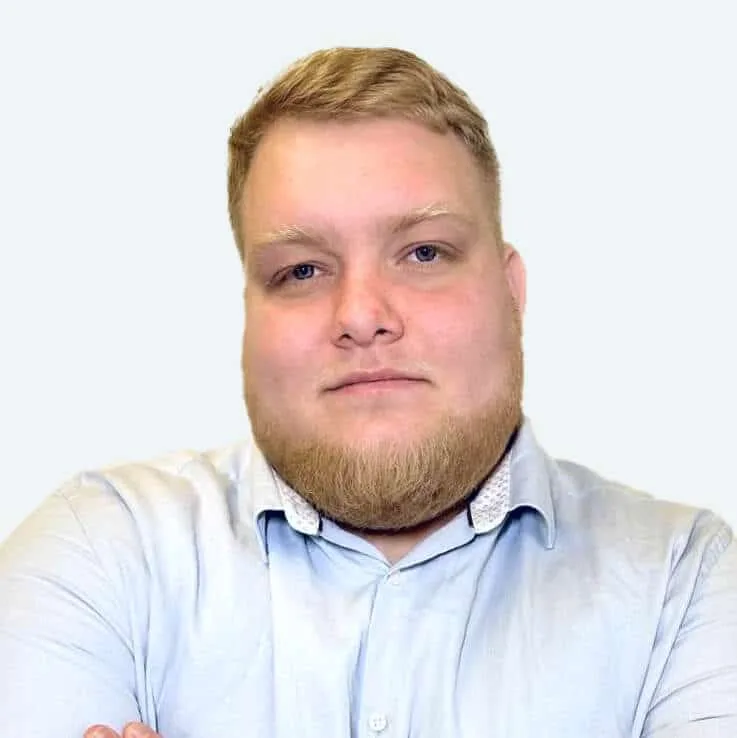 Anton Molchanov
Deputy Head of the Legal Department
How the investor planned the trust and succession structure
Michael did not wait for an inheritance event to determine how his children would manage the family assets. Together with his estate lawyers, he reviewed the portfolio asset by asset.
The advisers divided it into four groups:
- Shares in the US operating business.
- International commercial property.
- Minority business investments abroad.
- Liquid investment assets.
The biggest issue was the operating company. Michael wanted Ethan to have the opportunity to become involved in the business after completing his education. However, he did not want Ethan’s future role to determine Sophie’s economic rights to the family wealth.
The succession structure therefore separated economic benefit from management responsibility. A family trust structure prepared by Michael’s US estate advisers was intended to define beneficiaries and distribution principles, while the operating company required its own governance and succession arrangements.
Michael also prepared instructions covering several practical scenarios:
- what happens if neither child wants to manage the operating business;
- how a future sale of the company should be treated;
- when the children obtain greater
decision-making authority; - how international property is managed before distribution;
- which decisions require independent professional input;
- how future grandchildren may be treated within the family plan.
The advisers deliberately kept this structure separate from Grenada citizenship.
Passportivity coordinated information where the immigration process and estate planning overlapped, but did not replace Michael’s US estate or tax counsel.
For a US citizen, this separation reduced the risk of treating a foreign structure as a simple
Michael’s objective was governance and continuity, not the avoidance of US tax obligations.
Why Michael chose the NTF contribution instead of real estate
The main alternatives were a contribution to the National Transformation Fund and investment in a
Michael chose the NTF. The decision reflected his existing portfolio.
He already owned investment property and did not want the citizenship application to determine where he purchased his next real estate asset. A property linked to the programme would have introduced another investment requiring separate commercial assessment.
Trust and estate planning, legal services, US tax advice, corporate structuring, banking expenses, and the planned Grenada business project were not included in the citizenship budget.
Michael’s expenses on Grenada citizenship
| Expense | Amount | What it covered |
|---|---|---|
| NTF contribution | $235,000 | Michael, Laura, Ethan, and Sophie |
| Due Diligence fees | $15,000 | Michael, Laura, and Ethan |
| Application fees | $6,000 | $1,500 × 4 applicants |
| Application processing fee | $5,000 | $1,500 each for Michael, Laura, and Ethan; $500 for Sophie |
| Interview fees | $3,000 | Michael, Laura, and Ethan |
| Application handling fee | $5,000 | For a family of up to 4 people |
| Document preparation and related expenses | ≈ $4,800 | Legalisation, translations where required, medical certificates, copies, and courier expenses |
| Total | ≈ $273,800 | Citizenship project for the family of four |
How Michael obtained Grenada citizenship in 6 months
Passportivity started Michael’s case on October 7th, 2025. The family received their Grenadian passports in April 2026. Michael’s process took approximately 6 months.
Grenada’s Investment Migration Agency indicates that citizenship cases generally take around 3 to 6 months. Each application undergoes Government Due Diligence, and the programme requires a mandatory interview.
The Grenada citizenship process requires applicants to work through authorised agents. After the Government completes Due Diligence and approves an application, the qualifying contribution or investment is completed before citizenship registration is finalised.
-
1 day, October 7th, 2025
Preliminary Due Diligence
Passportivity checked Michael and the adult family members against international databases. Specialists reviewed his business history, visa history, public records, and initial
source-of-wealth information. No issues were identified that prevented the family from proceeding with the application. -
2 weeks, October 8th to 21st, 2025
Analysis of the family strategy
Passportivity discussed Michael’s succession, family, and business objectives. The team established that travel freedom was not the main goal and compared Caribbean programmes according to the role Michael expected the second jurisdiction to play in the family’s
long-term plans. -
1 week, October 22nd to 28th, 2025
Selection of Grenada and the NTF option
Michael chose Grenada after comparing it with Dominica, Antigua and Barbuda, Saint Lucia, and St Kitts and Nevis. He selected the National Transformation Fund contribution instead of
programme-linked real estate to keep the citizenship project separate from his investment portfolio. -
5 weeks, October 29th to December 2nd, 2025
Collection of documents and
source-of-wealth preparationPassportivity prepared corporate records, bank statements, dividend statements, property documents, and investment account records. Ethan also provided documents confirming his studies and financial dependency on his parents.
-
December 3rd, 2025
Application submission
Passportivity submitted the citizenship applications for Michael, Laura, Ethan, and Sophie through the
authorised-agent procedure. The family paid the applicable government application, processing, Due Diligence, and interview fees. -
14 weeks, December 4th, 2025 to March 11th, 2026
Government Due Diligence and interviews
The Grenadian authorities reviewed the family’s documents and Michael’s international financial background. Michael, Laura, and Ethan completed the mandatory interviews required for applicants aged 17 and over.
-
1 day, March 12th, 2026
Approval of the citizenship applications
The family received approval of their applications. The approval was subject to completion of the qualifying contribution to the National Transformation Fund.
-
5 business days, March 13th to 19th, 2026
$235,000 NTF contribution
Michael made the required
non-refundable contribution to the National Transformation Fund for the family of four. -
2 weeks, March 20th to April 2nd, 2026
Citizenship documents
After confirmation of the contribution, citizenship documents were issued for Michael, Laura, Ethan, and Sophie.
-
5 business days, April 3rd to 9th, 2026
Grenadian passports
Passport applications were completed for all four family members. The entire process took approximately 6 months from the preliminary Due Diligence check to receiving the passports.
From second citizenship to a long-term family and business base
Michael did not treat receipt of the passports as the end of the project. The result affected three areas of his
Family. Michael, Laura, Ethan, and Sophie now shared a second citizenship. The status was permanent rather than tied to a temporary residence permit or an obligation to maintain
Citizenship also gave Michael a longer planning horizon. His focus was no longer only on what happened to his assets when they passed to Ethan and Sophie, but on which family structures could remain workable when the next generation had children of their own.
Capital. The citizenship project prompted Michael to formalise estate planning that he had postponed while concentrating on business growth.
His advisers continued developing the family trust and governance arrangements separately from Grenada. Citizenship did not change Michael’s US tax obligations.
Business. In July 2026, Michael and Laura travelled to Grenada and met a local corporate adviser and accounting firm.
Michael did not immediately register a new company.
Instead, his team began assessing whether a small procurement and sourcing operation serving Caribbean hospitality and construction businesses would be commercially viable. The final structure would depend on the business case and separate legal and tax analysis.
Getting citizenship was actually the smaller decision. The bigger decision was what we wanted the second jurisdiction to mean for the family. Now we have the status, the estate plan is becoming much more structured, and I can develop the business side gradually rather than forcing everything to happen at once.
Michael Reynolds
Private investor and entrepreneur
Grenada citizenship therefore became neither a replacement for Michael’s US citizenship nor a shortcut around US tax and estate rules.
It became one element of a broader plan: organise the transfer of family wealth in advance, give the next generation a second permanent citizenship, and gradually create another point of support for the family and business outside the US.
Schedule a meeting
Help with the choice
Passportivity experts will analyse your situation and offer the most suitable solution.