

 Residency
 Reading time: 15 min
 Best Places for British Citizens to Move Abroad in 2026
More Britons are looking abroad for lower everyday costs, warmer weather, and a better fit for work, retirement, or family life. The financial difference can be significant: Spain and Portugal are estimated to be around 40% cheaper than the UK overall.
This guide brings together some of the best countries for UK citizens considering a move abroad.

 Share
Share  Telegram
  Facebook
 LinkedIn
 X
X

 Save
Save 

Why more Britons consider moving abroad
Moving abroad is rarely about one factor. For some Britons, the trigger is housing or tax; for others, it is climate, work or retirement. In practice, the decision usually comes down to a mix of residence rules, costs, healthcare, safety and
Cost of living
For many households, the first comparison is simply what the same income can buy elsewhere. In July 2026, UK CPI rose by 2.9%
Housing remains a major pressure point. Average UK private rents increased by 3.7% in the 12 months to July 2026, and the average UK house price reached £272,000 [2] Source: Office for National Statistics, UK private rent and house prices in July 2026 .
National averages can hide expensive cities and resorts. Lisbon, Madrid, Barcelona, and popular coastal areas often cost far more than smaller cities or inland locations. Even so, rent, transport, eating out and everyday services can still be cheaper than in the UK.
Tax and business considerations
In the UK, taxable income above £125,140 falls into the 45% additional rate
[5]
Source: GOV.UK, Income Tax rates and allowances for 2026/27
, company profits can be taxed at up to 25%, and the
The pressure increased after the UK changed the rules for
From 6 April 2025, this system was replaced by a
Inheritance Tax also became more relevant for internationally mobile families. A person can fall within the UK Inheritance Tax scope on
Brexit
After Brexit, UK citizens can still visit most EU and Schengen countries without a visa, but only for up to 90 days in any
A holiday stay and a move are now legally separate things. To live, work, study, retire or run a business in an EU country, Britons usually need a national visa or a residence permit, for example, through investment.
Climate
At London Heathrow, Met Office climate normals show about 1,519 sunshine hours and 107 days with at least 1 mm of rain a year [7] Source: Met Office, London Heathrow climate averages . For example, in Málaga, AEMET records 2,905 sunshine hours, 109 cloudless days, and only 42 rainy days a year [8] Source: AEMET, Málaga Airport standard climate values .
Portugal and Spain also have much drier summers than the UK. Lisbon records 793.5 mm of rain a year across 75 rainy days, but July averages only 2.6 mm of rain and less than one rainy day
[9]
Source: IPMA, Lisbon climatological normal
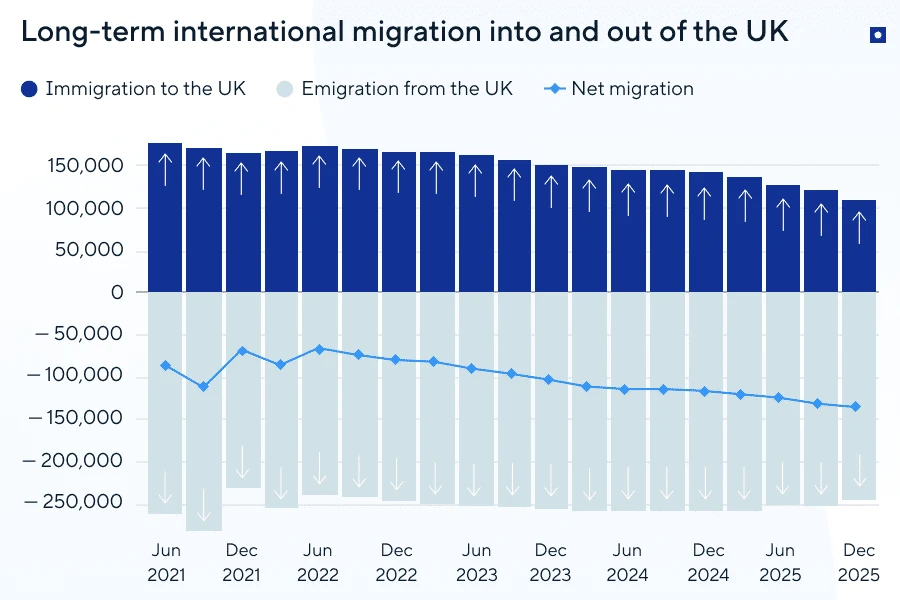
Where do people emigrate from the UK?
More British nationals are leaving the UK than returning. According to the Office for National Statistics, 246,000 British nationals left the UK for at least 12 months in the year ending December 2025, compared with 257,000 in the previous year. In 2025, around 136,000 more British nationals left the UK than arrived [11] Source: Office for National Statistics, UK emigration trends and destination data limitations .
Young adults make up an important part of the trend. ONS data shows that negative net migration was especially strong among people aged 16 to 34
[12]
Source: Office for National Statistics, UK emigration explained, May 2026
. This suggests that emigration from the UK is not only about retirement, but also about work, study, lifestyle, and
Exact destination data is limited. ONS explains that it is difficult to track where British nationals move each year because UK citizens do not need a visa to leave the country, and different states use different migration definitions.
Spain is the most popular European destination for
Europe remains attractive for people who want to stay closer to the UK. Spain, France, Ireland, Portugal, Germany, the Netherlands, Malta, and Cyprus are common choices for British citizens who want shorter flights home, a familiar time zone, EU residence options, better weather, or lower everyday costs.
Spain — the most popular European destination for Britons
Warm weather, frequent UK flights and large British communities make this one of the most familiar EU moves for Britons. Several residence routes cover retirees, financially independent applicants and remote workers.
| Best for | Main appeal | Main limitation |
|---|---|---|
| Retirees, remote workers, families, and | Climate, healthcare, British communities, and regular UK connections | Spain is not a |
Lifestyle
Spain offers a more outdoor lifestyle than the UK. Coastal cities and towns often revolve around cafés, beaches, walking routes, local markets, and longer evenings outside. In Valencia, the Turia riverbed — a former river diverted in the 1960s — is now a
The climate is a major reason to move. Alicante records around 3,000 sunshine hours a year, while many UK locations have much shorter sunny seasons.
Cost of living
Spain is usually cheaper than the UK for everyday life. Expatistan estimates that living costs in Spain are 39% lower than in the UK overall, with housing 47% cheaper.
Taxes
Spain taxes residents on worldwide income. Income tax is progressive. Employment income is generally taxed from 19 to 47%, while savings income, such as dividends and capital gains, is taxed from 19 to 30%.
How to move to Spain
Remote workers can apply for Spain’s Digital Nomad Visa if they earn at least €2,850 a month and mainly work with clients or employers outside Spain.
The
Portugal — an Atlantic base for remote workers and retirees
Mild winters, the Atlantic coast and lower living costs are the main lifestyle draw. The D7 and Digital Nomad routes also cover many retirees, financially independent applicants and remote workers.
| Best for | Main appeal | Main limitation |
|---|---|---|
| Remote workers, retirees, families, and people who want a quieter European base | D7 and Digital Nomad Visa options, ocean lifestyle, milder winters, and lower everyday costs | Lisbon, Porto, and the Algarve have become more expensive |
Lifestyle
Life in Portugal is closely tied to the ocean. Lisbon, Porto, the Algarve, Madeira, and smaller coastal towns offer beaches, seafood, walking routes, outdoor cafés, and regular surf spots.
The climate is milder and sunnier than in the UK. Visit Portugal states that the country has around 3,000 sunshine hours a year, with regional differences between the cooler north, warmer south, islands, and Atlantic coast.

Cost of living
Expatistan estimates that living costs in Portugal are 40% lower than in the UK overall, with housing 39% cheaper. Lisbon, Porto, and the Algarve are the main exceptions. These areas attract expats and tourists, so rent and property prices can be much higher than in smaller inland towns.
Taxes
Portugal taxes residents on worldwide income. Personal income tax is progressive, with rates from 12.5 to 48%. Income from foreign sources, such as dividends, is generally taxed at 28%.
How to move to Portugal
Portugal’s Digital Nomad Visa is designed for remote employees and freelancers with income from outside Portugal. The main applicant must earn at least €3,680 a month.
Portugal’s Golden Visa, or residence permit by investment, starts from €250,000. It is issued for 2 years and can be renewed for further
Greece — one of Europe’s lowest-cost Golden Visa routes
Greece is one of the few European countries where investors can still obtain a Golden Visa by buying property. The minimum investment starts at €250,000 for specific property categories, while standard thresholds are higher.
For buyers already considering a home in Greece, the route combines property ownership with a renewable residence permit and access to the Schengen Area.
| Best for | Main appeal | Main limitation |
|---|---|---|
| Warm weather, island and coastal lifestyle, lower costs than in the UK, and access to the Schengen Area | Bureaucracy can be slow, and island or rural life may feel seasonal outside major cities |
Lifestyle
Greeks don’t really do indoor evenings. From May to October, life moves outside — to the kafeneio for a slow coffee, onto a Blue Star ferry from Piraeus to islands like Symi, or to a panigiri festival on Ikaria that runs into
Cost of living
Greece is usually cheaper than the UK. Expatistan estimates that living costs in Greece are 43% lower than in the UK overall.
The difference is most visible in rent, local food, cafés, transport, and everyday services. Athens, popular islands, and tourist areas can be more expensive, especially in summer.
Taxes
Greek taxation is not as light as the lifestyle may suggest. Employment, pension, and business income are taxed on a progressive scale from 9 to 44%.
Investment income follows separate rates. Dividends are taxed at 5%, interest at 15%, royalties at 20%, and capital gains at 15%. Rental income from Greek property is taxed separately, from 15 to 45%, depending on the amount.
How to move to Greece
The Greece Golden Visa grants a renewable
Current property thresholds depend on the location and type of real estate:
- €800,000+ in Attica, the Thessaloniki Regional Unit, Mykonos, Santorini, and islands with more than 3,100 residents;
- €400,000+ in other areas of Greece;
- €250,000 — industrial properties for conversion into residential use or buildings for renovation.
Other Golden Visa routes include investment in funds, a

Buying a property is a popular choice for investors who receive a golden visa to Greece
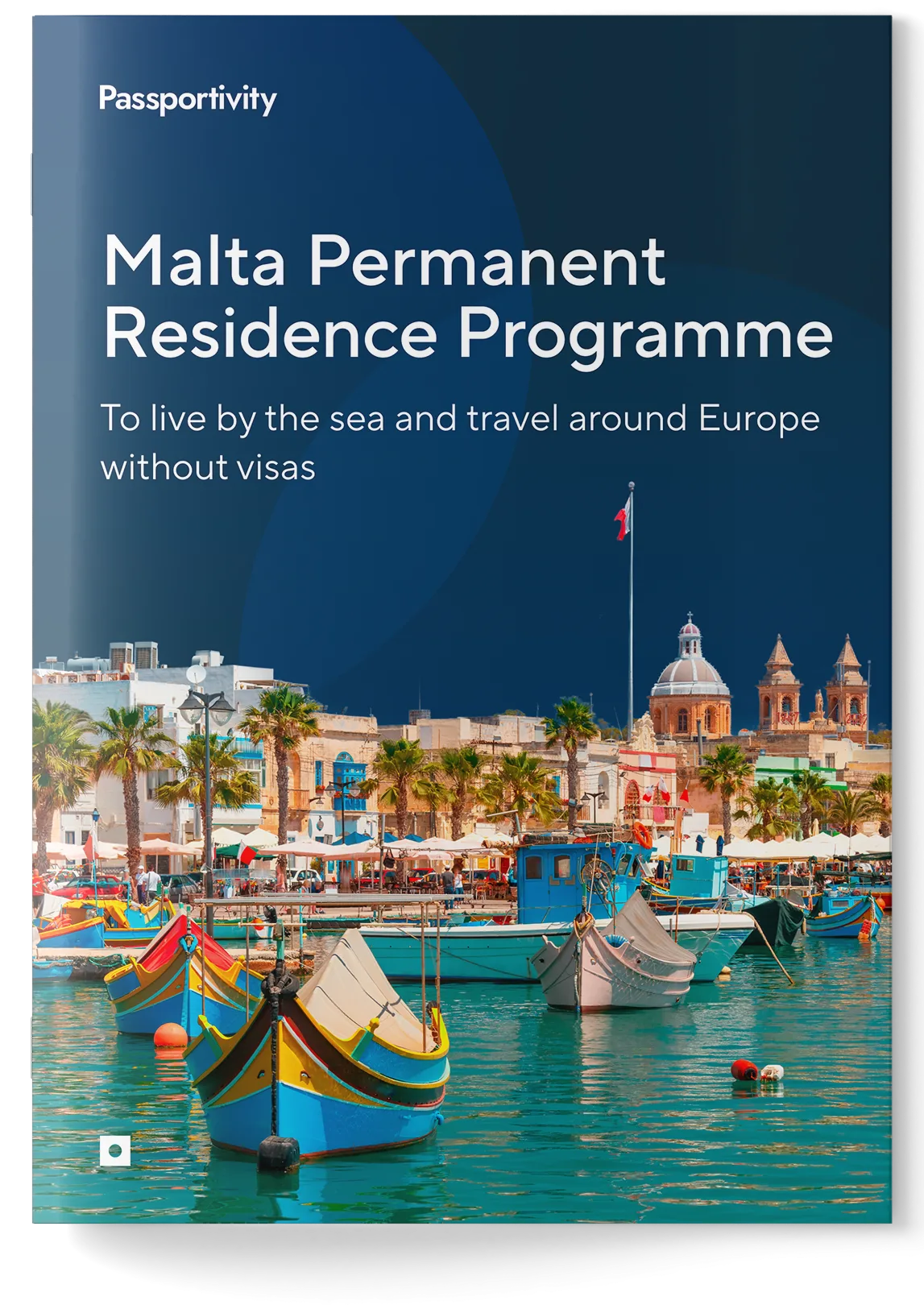
Malta — permanent residence from the start
English is widely used, flights to the UK are frequent, and the Malta Permanent Residence Programme grants permanent rather than temporary residence. These factors make relocation comparatively straightforward for British families and retirees.
| Best for | Main appeal | Main limitation |
|---|---|---|
| Investors, families, retirees, and Britons who want permanent residence rather than a temporary visa | English is widely used, the country is small and easy to navigate, and permanent residence can be obtained from the start | Malta is compact and densely populated, so housing, traffic, and personal space can feel more constrained than in larger countries |
Lifestyle
Malta has a strong
Safety and inclusion are part of Malta’s appeal.
Cost of living
Malta is usually cheaper than the UK, but not always cheap by Southern European standards. Expatistan estimates that living costs in Malta are 26% lower than in the UK overall [15] Source: Expatistan, Malta and United Kingdom cost comparison .
The difference depends heavily on location. Sliema, St Julian’s, Valletta, and popular coastal areas can be expensive, especially for rent. Smaller towns and Gozo may offer better value.
Taxes
Malta has a progressive personal income tax system, with resident single rates from 0 to 35%. The highest rate applies to chargeable income above €60,000.
How to move to Malta
The Malta Permanent Residence Programme provides residence rights for foreign nationals seeking alternative residence in Europe. The investment conditions include:
- renting or purchasing property in Malta;
- paying government fees;
- making a charitable donation to a Maltese organisation.
Malta permanent residence is granted for life.
Cyprus — a tax-friendly island for Britons
| Best for | Main appeal | Main limitation |
|---|---|---|
| Business owners, investors, remote workers, and retirees | Favourable tax rules, warm climate, coastal lifestyle, and strong UK ties | Cyprus is not yet fully in the Schengen Area, so residence there does not give the same Schengen mobility as residence in Spain, Portugal, Malta, or Greece |
Lifestyle
Cyprus has a more relaxed island rhythm than the UK. Limassol and Nicosia suit people who want business, offices, schools, and city infrastructure, while Paphos, Larnaca, and smaller coastal towns feel more
Daily life is shaped by beaches, marinas, seafood, cafés, mountain villages, and short distances between the coast and the Troodos Mountains. The island has long dry summers, mild winters, and over 300 sunny days a year.
Cost of living
Cyprus is usually cheaper than the UK, but not as
Limassol is the main exception. It is the business and international services hub, so rents and property prices can be much higher than in Paphos, Larnaca, or smaller towns.
Taxes
Cyprus has a progressive personal income tax system, with rates from 0 to 35%. The first €22,000 of taxable income is
Corporate income tax is 15%, which remains relatively low compared with many European countries.
One of Cyprus’s main advantages for newcomers is the
 Anton Molchanov
Deputy Head of the Legal Department
Anton Molchanov
Deputy Head of the Legal Department
How to move to Cyprus
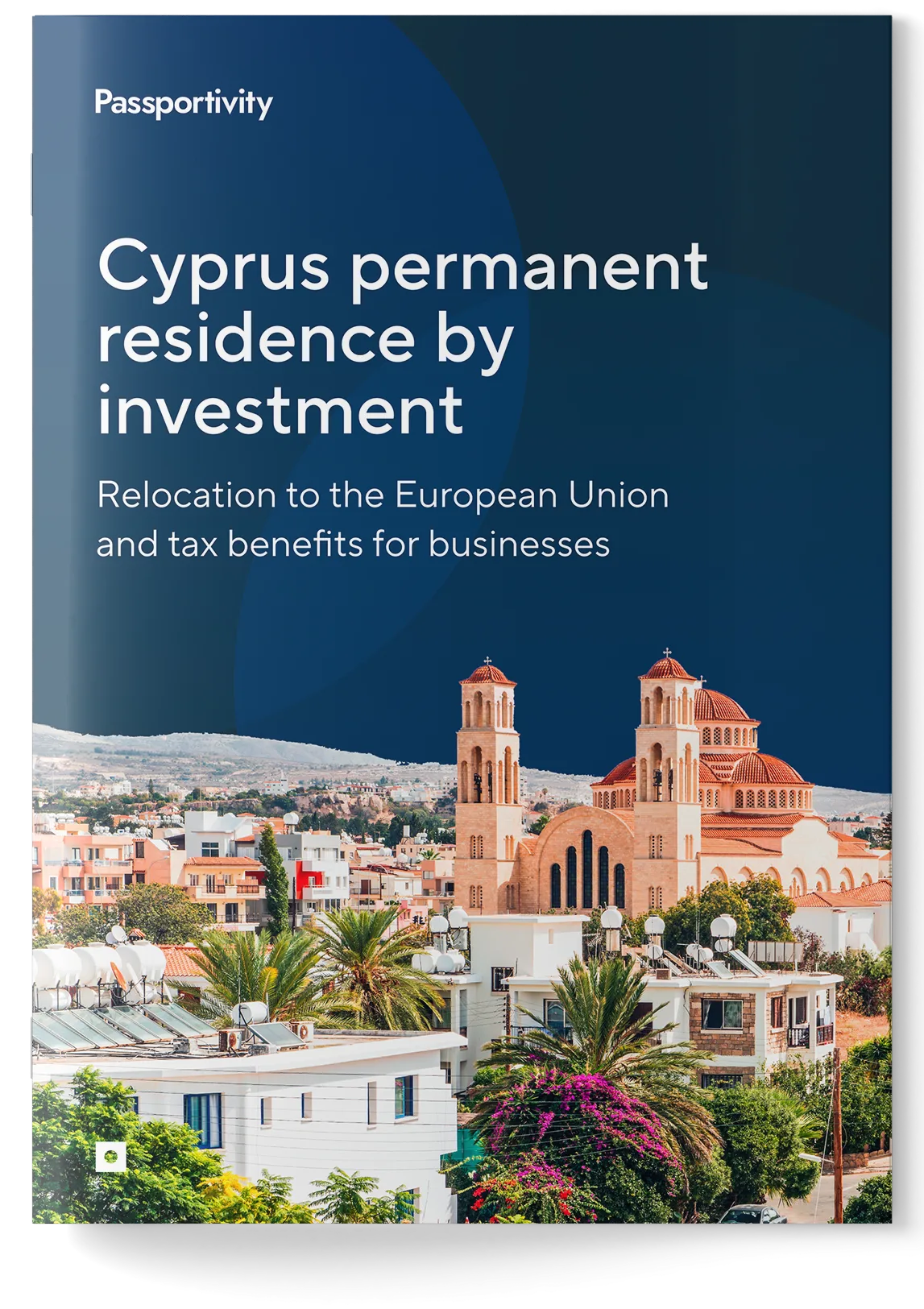
Cyprus offers permanent residence by investment from €300,000. Investors can qualify through residential or commercial property, investment in a Cyprus company, or units of a Cyprus investment fund.
The status is also granted to the investor’s family members: a spouse and children.
United States — a global hub for work and business
Immigration paperwork is more demanding than for most countries in this guide, but the labour market is a draw in its own right. Britons move to the US through employer sponsorship,
| Best for | Main appeal | Main limitation |
|---|---|---|
| Skilled professionals, founders, executives, researchers, and people transferring within global companies | High salaries, global companies, startup funding, top universities, and a large | Visas are competitive, healthcare can be expensive, and life in major hubs costs more than in many European countries |
Lifestyle
Life in the US depends heavily on the state and city. New York and San Francisco suit finance, technology, media, and startups, while Los Angeles is stronger for entertainment, creative industries, and lifestyle relocation.
Cost of living
Expatistan estimates that the United States is 11% cheaper than the UK overall, with transport 36% cheaper and housing about the same [17] Source: Expatistan, United States and United Kingdom cost comparison .
New York, San Francisco, Boston, Los Angeles, and parts of Miami can be very expensive, especially for rent, childcare, healthcare, and private education. Smaller cities can offer much better value.
Taxes
US federal income tax is progressive, with rates from 10 to 37%. The top federal rate applies to taxable income above $640,600 for single filers [18] Source: IRS, federal income tax rates for 2026 .
State taxes matter as much as federal taxes. Some states, such as Florida, Texas, Nevada, and Washington, do not tax wage income, while others apply their own income tax rates. The federal corporate tax rate is 21%, but state corporate taxes can also apply [19] Source: US Code, federal corporate income tax rate .
How to move to the US
The main work route is usually an
The
New Zealand — an English-speaking option for work and outdoor living
For Britons who want an
| Best for | Main appeal | Main limitation |
|---|---|---|
| Skilled professionals, healthcare workers, engineers, tradespeople, young adults, families, and investors | Long distance from the UK, a relatively small job market, and expensive housing in some major cities and resort areas |
Lifestyle
Auckland has the biggest job market and the largest concentration of international firms. Wellington is where government, tech, and creative work overlap. Christchurch feels smaller and easier to navigate — the mountains and coast are half an hour away, and the rest of the South Island is just a short drive further.
Cost of living
New Zealand can be cheaper than the UK despite its reputation for high prices. Expatistan estimates that the country is 32% cheaper overall, with housing 42% cheaper and food around 10% cheaper.
National averages do not tell the whole story. Auckland and Queenstown can be expensive, particularly for housing, while smaller cities and regional areas usually offer better value. Imported goods can also cost more because of New Zealand’s geographic isolation [20] Source: Expatistan, New Zealand and United Kingdom cost comparison .
Taxes
New Zealand has a progressive personal income tax system, with rates from 10.5% to 39%. The highest rate applies to income above NZD 180,000, while companies generally pay 28% corporate income tax.
New arrivals can also qualify for a temporary tax exemption on most
How to move to New Zealand
For Britons aged 18 to 35, the United Kingdom Working Holiday Visa is one of the simplest ways to spend an extended period in the country. It allows a stay of up to 36 months and does not require a job offer, although holders cannot take permanent employment.
For a
Comparison of countries for UK citizens moving abroad
A lower cost of living is only one factor to consider when choosing where to move. Income tax rates and the residence routes available to UK citizens can differ just as much. The table compares these factors across some of the most popular destinations.
Cost of living, taxes and residence options by country
| Country | Best for | Cost of living vs UK | Personal income tax | Main residence options |
|---|---|---|---|---|
| Spain | Retirees, remote workers, families, and | 39% lower | Digital Nomad | |
| Portugal | Remote workers, retirees, families, and people who want a quieter European base | 40% lower | 12. | D7Digital Nomad Visa Golden Visa |
| Greece | 43% lower | Golden Visa | ||
| Malta | Investors, families, retirees, and Britons who want permanent residence | 26% lower | Permanent residence by investment | |
| Cyprus | Business owners, investors, remote workers, and retirees | 24% lower | Permanent residence by investment | |
| United States | Skilled professionals, founders, executives, researchers, and people transferring within global companies | 11% lower | ||
| New Zealand | Skilled professionals, healthcare workers, engineers, tradespeople, young adults, families, and investors | 32% lower | 10. | Working Holiday VisaAccredited Employer Work Visa |
Taxes for British Expats
British expats usually need to look at two systems at once: the UK rules and the tax rules of the new country of residence.
When UK tax residence can end
UK tax residence is tested for each tax year, from 6 April to 5 April. HMRC uses the Statutory Residence Test to assess several factors:
- how many days the person spends in the UK;
- whether they work in the UK or abroad;
- where they have an available home;
- where their close family lives;
- whether they were UK tax residents in previous years [21] Source: GOV.UK, Statutory Residence Test guidance .
A person can usually stop being a UK tax resident by moving abroad for a full tax year, limiting UK visits, and making their main life and work outside the UK. The exact day limit depends on personal ties, so the same number of UK visits can lead to different results for different people.
Some income can remain taxable in the UK after relocation. This can include rent from UK property, some pension income, income from UK workdays, and business income connected with the UK [23] Source: GOV.UK, tax on UK income if you live abroad .
Double taxation agreements
The UK has one of the world’s largest tax treaty networks, covering around 120 countries. For British expats, this includes many common relocation destinations, such as Spain, Portugal, France, Italy, Ireland, Malta, Cyprus, Australia, Canada, and the UAE.
A double taxation agreement does not make foreign income
Anton Molchanov
Deputy Head of the Legal Department
The result depends on the income source. Salary is often taxed where the work is physically performed. Rental income is usually taxed where the property is located. Pensions, dividends, interest, and capital gains can follow separate treaty rules.
For example, a British expat who lives in Spain and rents out a UK flat usually pays UK tax on that rental income first. If the annual net rental profit is £20,000, UK tax at the basic 20% rate would be £4,000.
Spain can also include the same rental profit in the person’s worldwide income if they are Spanish tax resident. If this income falls into a 30% Spanish income tax bracket, Spanish tax on the same profit would be about £6,000 before relief.
Double taxation relief prevents the same income from being taxed twice in full. Spain may credit the £4,000 already paid in the UK against the Spanish tax due. In this simplified example, the person would pay about £2,000 more in Spain, so the total tax on that income would be about £6,000, not £10,000.
Income, capital gains and inheritance
After relocation, the UK tax position depends on what the person keeps in the UK. The first things to check are usually:
- rental income from UK property;
- UK pension payments;
- income from work physically performed in the UK;
- dividends or salary from a UK company;
- gains from selling UK land or property;
- Inheritance Tax exposure after leaving.
Income.
Capital gains.
For example, a British expat sells a UK flat and has a taxable gain of £50,000 after costs and allowances. If £20,000 falls within the basic rate band, that part is taxed at 18%. The remaining £30,000 is taxed at 24%. The UK Capital Gains Tax would be £10,800 before any treaty relief or
Inheritance. The standard UK Inheritance Tax rate is 40% above the
From 6 April 2025, Inheritance Tax depends more on
How to move abroad from the UK: a checklist
Once the country and residence route are chosen, there are a few practical things worth sorting out before leaving the UK.
1. Check the residence route beyond the first visa. Look at the right to work, family eligibility, renewal rules and the route to permanent residence. A visa that is easy to obtain may not be the best option for a
2. Take documents you may need later. Each visa has its own requirements, but some documents are useful to have after the move as well:
- university diplomas and transcripts;
- professional certificates;
- medical records;
- vaccination records;
- prescriptions for regular medication.
UK professional qualifications are not automatically recognised in every country. For regulated professions, such as medicine, law or teaching, they may need to be formally recognised before starting work.
If taking prescription medicine abroad, check the destination country’s rules in advance. Controlled medicines should usually travel with a prescription or doctor’s letter.
3. Check how long the UK driving licence remains valid. The rules are different in each country. In Spain and Germany, new residents generally need to exchange a UK licence within 6 months. In Portugal, residents can use a valid UK licence until it expires.
4. Prepare early if moving with a pet. Since 22 April 2026, Great Britain residents travelling with a dog, cat or ferret to the EU generally need an Animal Health Certificate rather than an EU pet passport. A new certificate is required for each trip from Great Britain to the EU [27] Source: GOV.UK, New EU rules for pet travel for GB residents .
For countries outside the EU, an Export Health Certificate may be required. Some destinations also have their own vaccination, blood test or quarantine rules.
5. Sort out banking and phone access. Leave your UK SIM active for the first months after the move, especially if the number is linked to banking,
Before leaving, notify your bank about the relocation and check whether you can continue using the account as a
6. Try an area before signing a
Key takeaways about moving abroad from the UK
- Britons move abroad for different reasons: lower everyday costs, warmer weather, easier access to Europe, tax planning, remote work, or a better place for family life and retirement.
- Living costs can be much lower outside the UK. Spain is estimated to be 39% cheaper overall, Portugal 40% cheaper, and Greece 43% cheaper.
- Europe and
English-speaking countries remain the two main directions. Spain, Portugal, Greece, Malta, and Cyprus attract Britons in Europe, while the US and New Zealand appeal to those looking forEnglish-speaking destinations. - Golden Visas are one of the clearest routes for Britons who want residence through investment.
- Leaving the UK does not automatically end UK tax obligations. UK property income, some pensions, capital gains and Inheritance Tax can remain relevant after relocation.
About the authors


Frequently Asked Questions
Spain, Portugal, Greece, Malta, and Cyprus are among the most practical European options covered in this guide. Spain and Portugal suit remote workers and retirees, while Greece, Malta, and Cyprus offer
UK citizens can stay in the Schengen Area for up to 90 days in any
Spain and Portugal are two of the main options in this guide. Spain’s
Sometimes. Moving abroad does not automatically end UK tax obligations. UK rental income, some pension income, earnings from work carried out in the UK, and gains from UK property can still be taxable after relocation.
Tax residence is assessed separately for each tax year under the Statutory Residence Test. Double taxation agreements can then help prevent the same income from being taxed twice in full if the new country also taxes it.
Malta and Cyprus both offer permanent residence by investment, making them two of the most direct options for Britons who want
Citizenship is usually obtained later through naturalisation. Among the countries in this guide, New Zealand offers one of the shortest routes: most residents can apply after 5 years of living in the country.
Read also





Contact us today
Passportivity assists international clients in obtaining residence and citizenship under the respective programs. Contact us to arrange an initial private consultation.