

 Banks and taxes
 Reading time: 10 min
 Non-Dom tax regime: capital protection and a Plan B for an investor
The
In Cyprus, foreigners may apply the

 Share
Share  Telegram
  Facebook
 LinkedIn
 X
X

 Save
Save 

What is the Non-Dom tax regime?
- provide exemptions for specific categories of foreign income;
- apply a remittance basis of taxation;
- allow payment of a fixed annual tax instead of ordinary taxation on foreign income.
It does not automatically eliminate worldwide taxation.
How to obtain Non-Dom status?
The
For example, in Cyprus, a foreign investor is considered a
The tax regime is not granted automatically. To obtain it, one must register with the tax authorities and meet specific conditions. In Greece, foreigners pay a fixed annual tax of €100,000 to qualify for
Who may benefit from Non-Dom status?
For example, an owner of overseas real estate may benefit from the
The
In some jurisdictions, capital gains arising from the sale of foreign assets may be covered by the
A financially independent foreign national who has moved to a new country and obtained tax residence with
An investor who has relocated with their family to provide their children with a prestigious education is exempt from tax on income earned in other countries.
5 benefits of the Non-Dom regime
For globally active investors and entrepreneurs,
1. Tax optimisation of foreign income
In countries applying a remittance basis,
2. Predictability of tax liabilities
Certain
3. Capital protection and structuring flexibility
4. Inheritance and family wealth planning
In some jurisdictions, foreign assets may receive favourable inheritance or gift tax treatment during the
5. Jurisdictional diversification and mobility
Establishing tax residence under a

Countries that offer Non-Dom tax status
Several European jurisdictions continue to offer preferential tax regimes for new tax residents. Although these regimes are often referred to collectively as “
Cyprus
Cyprus tax residence may be obtained by spending more than 183 days per year in the country or by applying the “
A foreign national becomes a Cyprus tax resident after 60 days if they:
- own or rent residential property in Cyprus;
- conduct business or are employed in Cyprus;
- do not spend more than 183 days per year in another country and are not considered a tax resident there;
- reside in Cyprus for at least 60 days per year.
A foreign national is recognised as a
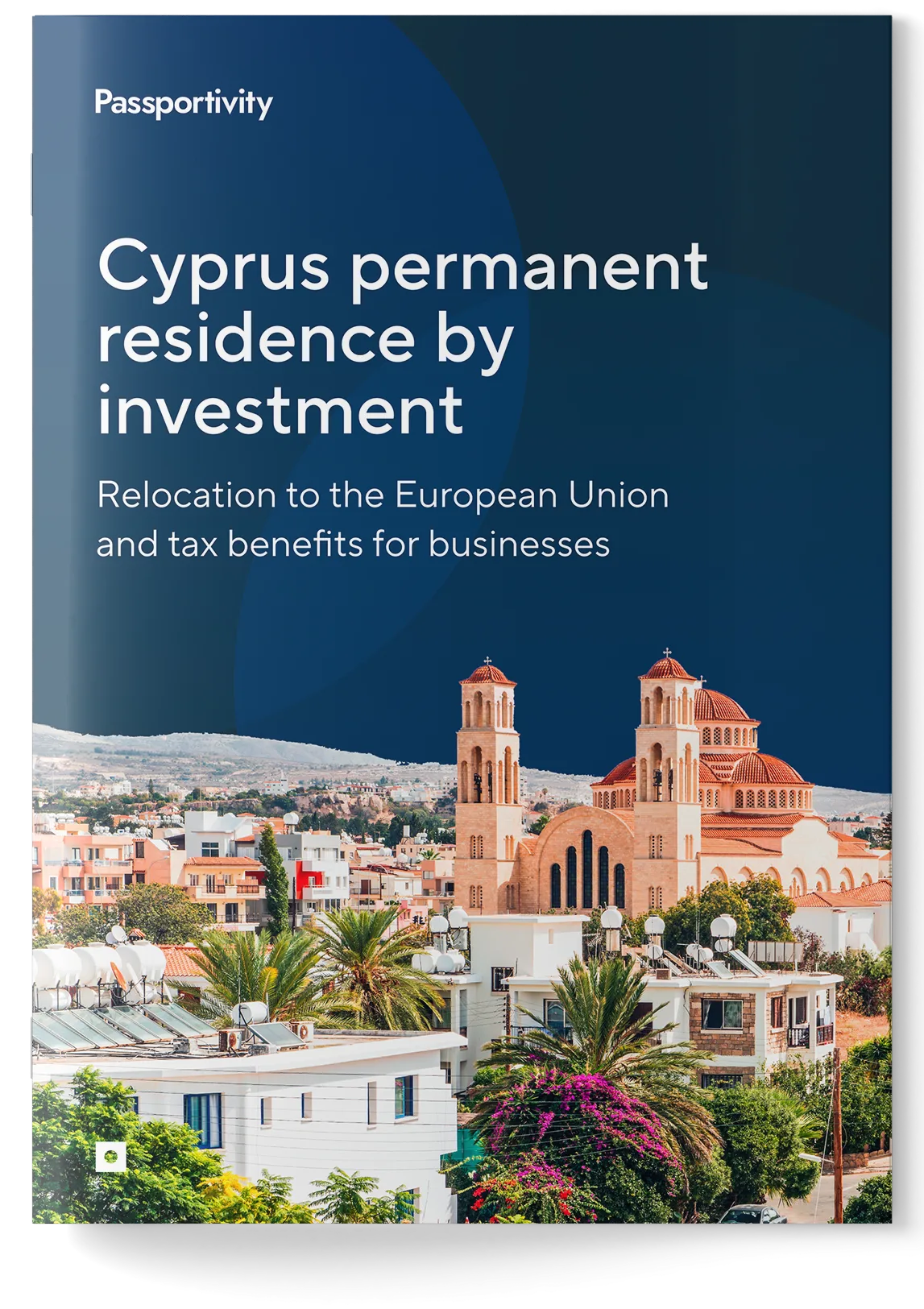
Cyprus permanent residence by investment allows foreigners to become
The
Greece
Foreign nationals become tax residents of Greece if they spend 183 days per year in the country. The counting starts from the day of entry. This rule does not apply to tourists or to individuals who travel to Greece for medical treatment.
Foreigners may apply the
- have not been Greek tax residents for seven out of the last eight years;
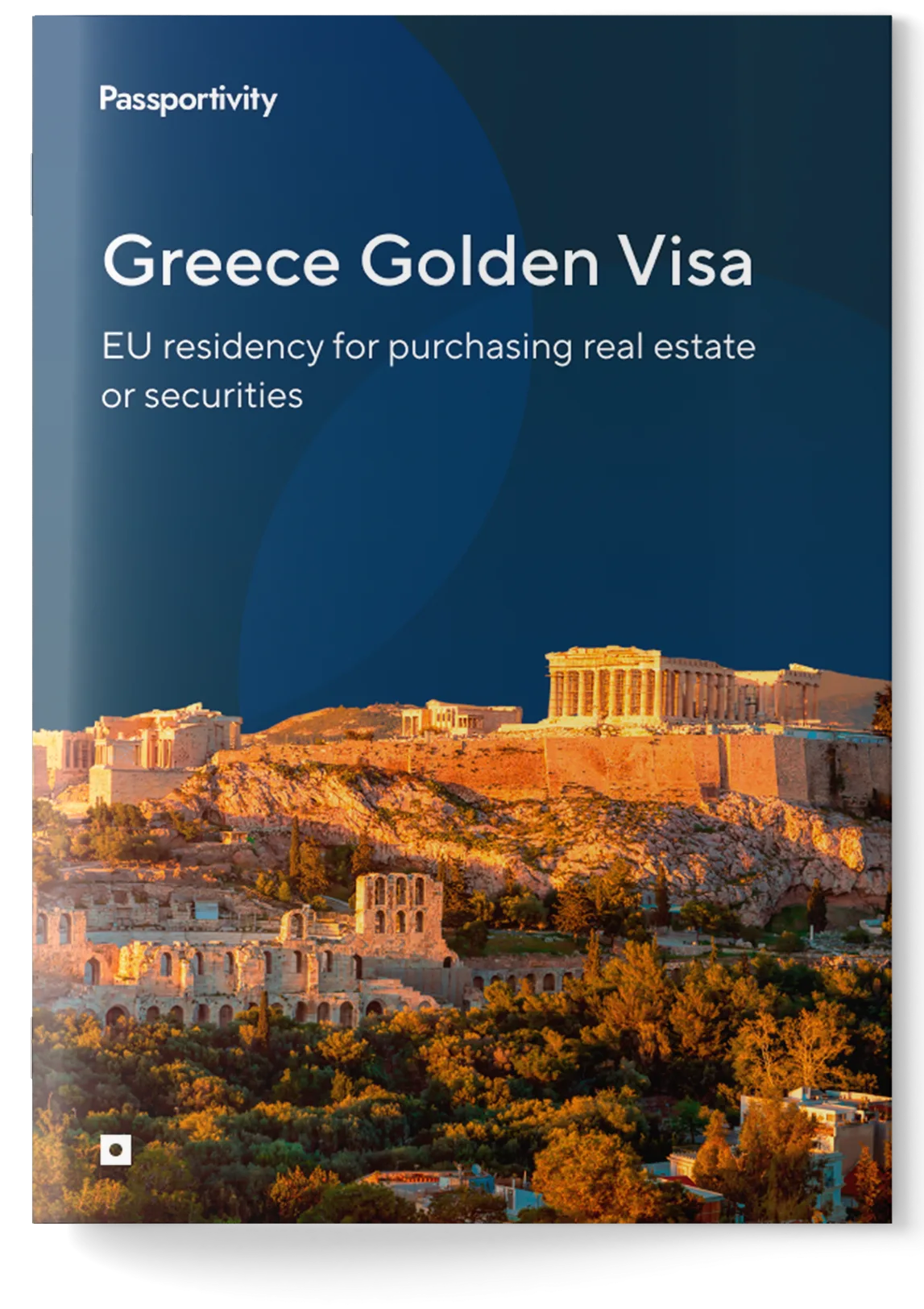
- have invested €500,000 in the Greek economy within the last three years or have obtained a Greece Golden Visa by investment.
The
The application for the regime is submitted once upon transfer of tax residence. The fixed annual tax must be paid each year to maintain the regime.
Foreign nationals with
Spain
Spain does not have a classical
A foreign national may apply for the special tax regime if they have not been a tax resident of Spain during the previous five years and meet one of the following conditions:
- have obtained an employment contract with a Spanish company as a highly qualified specialist;
- have launched a startup in Spain and manage it directly;
- hold a senior executive position in a Spanish company;
- conduct research, scientific, or innovative activities in Spain;
- have obtained a Spain Digital Nomad Visa.
Under the Beckham Law, qualifying individuals are taxed primarily at a flat rate on
The preferential status applies for six years. To switch to taxation under the Beckham Law, an application must be submitted to the Spanish tax authorities within six months from the start of employment or the registration of a startup in Spain.
Malta
Foreign nationals become tax residents of Malta if they spend more than 183 days per year in the country. Tax residence may also be obtained if Malta becomes the centre of one’s interests, for example, by opening a business, purchasing property, and visiting the country over a
Tax residence in Malta may be domiciled or
Maltese citizens born in Malta become domiciled residents automatically. Foreign nationals may also be considered domiciled residents if they:
- Demonstrate an intention to reside permanently in Malta, for example by purchasing property and relocating their family;
- Do not spend more than 183 days per year in another country.
Foreign nationals who do not intend to make Malta the centre of their interests may apply
Individuals taxed on a remittance basis in Malta may be subject to a minimum annual tax of €5,000 if they earn foreign income exceeding a statutory threshold, even if such income is not remitted.
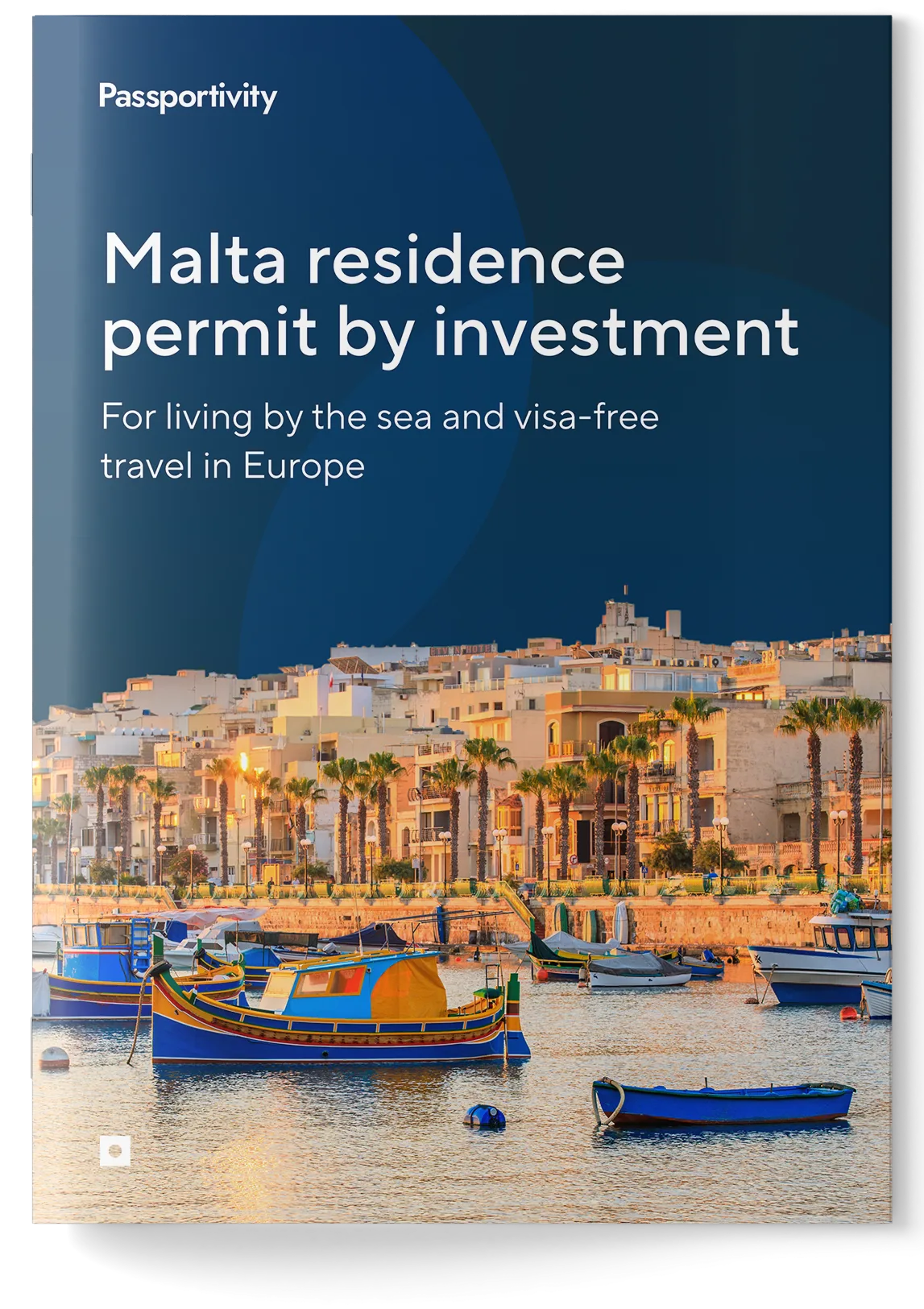
Malta residence by investment may be obtained with an investment starting from €30,000. Family members may be included in the application: spouse; financially dependent children up to 24 years old; parents over 55; grandparents; brothers and sisters.
Investors become tax residents and pay 15% tax on worldwide income remitted to Malta. This taxation system is referred to as the remittance basis.
There are no minimum stay requirements in Malta to maintain residence status. It is sufficient not to spend more than 183 days per year in another country and to pay at least €15,000 in taxes in Malta per year for the entire investor’s family.
Italy
One becomes a tax resident of Italy by spending more than 183 days per year in the country. The
A resident with
A foreign national under the
The
An Italy Digital Nomad Visa is granted to foreign nationals who work remotely for foreign companies and can confirm a monthly income of at least €2,700. Applicants must also demonstrate savings of at least €28,000 and purchase or rent property in Italy.
Digital nomads pay tax as ordinary Italian residents if they spend more than 183 days per year in the country. The personal income tax rate depends on annual income and ranges from 23 to 43%.
Ireland
Ireland does not offer a
An individual becomes an Irish tax resident if they spend 183 days or more in Ireland in a calendar year, or 280 days over two consecutive years, with at least 30 days spent in each year.
Irish tax residents who are
- income arising in Ireland;
- foreign income only if it is remitted to Ireland.
Foreign income and foreign capital gains that remain outside Ireland are generally not subject to Irish tax. However,
The remittance basis does not apply to all types of income automatically, and complex rules govern the remittance of funds, especially in cases of mixed income accounts.
Ireland does not impose a time limit on the application of the remittance basis. The regime may apply for as long as the individual remains
Inheritance and gift taxation in Ireland is based on domicile and residence status.
Ireland’s
Non-Dom tax regimes in different countries
| Country | Conditions for obtaining status | Duration of regime | Tax on foreign assets |
|---|---|---|---|
| Cyprus | Spend more than 183 days per year in the country or 60 days and meet additional conditions. Not have been a tax resident for 17 out of the last 20 years. | 17 years | No |
| Greece | Spend more than 183 days per year in the country. Not have been a tax resident for 7 out of the last 8 years. | 15 years | €100,000 per year — for a €20,000 per year — for each family member |
| Spain | Spend more than 183 days per year in the country. Not have been a tax resident for 5 out of the last 6 years. | 6 years | No |
| Malta | Spend more than 183 days per year in the country or have the centre of interests in Malta, for example by purchasing property or opening a business. | Unlimited | €5,000 per year — fixed contribution on foreign assets |
| Italy | Spend more than 183 days per year in the country. Not have been a tax resident for 9 out of the last 10 years. | 15 years | €200,000 per year — for a €25,000 per year — for each family member |
| Ireland | Spend 183 days per year in the country or 280 days over two consecutive years | Unlimited | Foreign income and foreign capital gains taxed only if remitted to Ireland |
Countries where the Non-Dom tax regime does not apply
Not all European jurisdictions continue to offer
United Kingdom
The United Kingdom has reformed the traditional
UK tax residents may apply the FIG regime if they have not been UK tax residents for 9 out of the last 10 years. Under the new regime, foreign income will not be taxed in the United Kingdom for four years. After this period, participants of the FIG regime will pay tax on their worldwide income.
Foreign nationals who were UK tax residents at the time the
Portugal
Portugal abolished the
- directors of administrative and commercial services;
- specialists in physical sciences, mathematics, engineering, and related technologies;
- doctors;
- university and higher education lecturers;
- information and communication technology specialists.
The new tax regime will apply only to individuals who became Portuguese tax residents on or after January 1st, 2024.
Tax residents who meet the conditions of the IFICI regime are exempt from tax on foreign income, except for pensions.
The IFICI regime for new tax residents applies for 10 years. To obtain the status, an application must be submitted to the Portuguese tax authorities no later than January 10th. If submitted later, the tax regime will apply only from the following year.
Andorra
Andorra does not have a
Tax on dividends and capital gains in Andorra is also fixed at 10%. For comparison, in Spain, capital gains tax ranges from 19 to 23%, and tax on dividends ranges from 19 to 47%.
Andorra residence may be obtained by investment starting at €1,000,000. An investor must also confirm an annual income of at least €52,100.
An investor may apply to renew a residence permit in Andorra provided they comply with the programme’s investment requirements and confirm the required level of passive income.
The initial residence permit is issued for two years. It is then extended under a
 Anastasia Agafonova
Lawyer in International Law
Anastasia Agafonova
Lawyer in International Law
How to obtain Non-Dom tax status: example of Cyprus permanent residence by investment
Cyprus permanent residence may be obtained by investing in one of the following options: real estate, shares in a Cypriot company, or units of Cyprus investment funds.
Below is the process of obtaining permanent residence and subsequently
Passportivity experts assist in selecting a property and provide support throughout the entire purchase process. The overall timeframe is from 12 months.
-
1—3 weeksPreparation of documents and property selection
Passportivity lawyers review the investor’s documents and provide recommendations if any information needs clarification. The investor may choose a property independently or select from a database of verified properties.
-
1—5 daysFulfilment of the investment condition
The investor purchases one or two properties with a total value of at least €300,000. In addition to the property purchase, the investor pays:
- VAT — 19% or 5% if the property is intended for personal residence;
- stamp duty — 0.15% on the amount up to €170,000 and 0.2% on the amount exceeding €170,000;
- registration fee — €70.
-
6—12 monthsSubmission of permanent residence application and processing
The investor or their authorised representative submits the documents to the Cyprus Civil Registry and Migration Department. Investor’s expenses at this stage: medical insurance — €170 per applicant.
-
1—2 monthsSubmission of biometric data
The investor and their family members travel to Cyprus to provide biometric data in person. Expenses at this stage: residence card issuance fee — €70 per applicant.
-
1—2 daysObtaining permanent residence
The investor and their family members receive residence cards.
-
2—6 monthsObtaining a Tax Identification Code
The investor relocates to Cyprus and becomes a tax resident of the country. This may be done by spending 183 days per year in Cyprus or after 60 days, provided the investor is not a tax resident of another country.
The investor registers with the Cyprus Tax Department and obtains a Tax Identification Code.
-
Up to 30 days
Confirmation of
Non-Dom statusThe investor submits Form TD038 to the Cyprus Tax Department and confirms that they have not been a Cyprus tax resident for 17 out of the last 20 years.
After the application is approved, the investor complies with the rules of the
Non-Dom tax regime and does not pay tax on income earned outside Cyprus.
Limitations of the Non-Dom regime
Not always a full exemption from tax on worldwide income. In some countries, a fixed annual contribution must be paid on all foreign assets. For example, in Malta this contribution starts from €5,000, while in Greece and Italy it amounts to €100,000 per year.
Limited duration. In most countries that offer a
Investors who are interested in
May be abolished. There are no guarantees that a government will not change its tax strategy and abolish a preferential regime. A recent example is the United Kingdom, which discontinued the
Does not override CFC rules. A controlled foreign company (CFC) is a foreign company controlled by a tax resident of another country. Some jurisdictions have laws preventing the shifting of profits to
For example, a Cyprus tax resident with
Requires periodic confirmation. Residents must submit an application to the tax authorities annually and confirm that the conditions for applying the tax regime remain satisfied.
Key facts about the Non-Dom regime
Non-Dom is a tax regime for foreigners who have recently obtained tax residence. Depending on the jurisdiction, the regime may exempt certain categories of foreign income, apply taxation only upon remittance, or replace ordinary taxation with a fixed annual charge.- Through the
Non-Dom regime, countries attracthigh-net-worth residents, investors, and qualified professionals. For example, one may apply forNon-Dom status for 17 years after obtaining Cyprus permanent residence by investment. Non-Dom status helps preserve income from dividends, capital gains, and inheritance.- To obtain the status, one must first become a tax resident by living in the country for more than 183 days per year with a residence permit.
- Some countries abolish the
Non-Dom regime in order to eliminate preferential tax conditions.
About the authors


Frequently asked questions
A tax resident with
Yes. To obtain
The duration of the
The remittance basis is a taxation system under which a tax resident must pay tax on foreign income only if it is remitted to the country of residence.
For example, investors with Malta residence permits pay 15% on income earned abroad if it is transferred to a bank account in Malta.
This depends on the tax model applied in the country: the remittance basis or the fixed tax model. The remittance basis requires a tax resident to pay tax on foreign income only if it is remitted to the country of residence.
The fixed tax model requires a resident to pay a fixed amount of tax on foreign income, regardless of whether the funds are remitted. This model applies, for example, in Greece and Italy.
The Common Reporting Standard, CRS, is an international framework for the automatic exchange of financial account information of
Even if a tax resident’s income is not subject to taxation due to the
Yes, the
Yes, the
The choice of country depends on the specific objective. If the goal is to minimise tax on passive income, Cyprus may be considered, as it applies a 0% tax rate on dividends, interest, and capital gains under the
If an investor plans to purchase real estate and travel within the Schengen Area, Greece may be considered, as it applies a fixed annual tax of €100,000 on foreign income under the
Purchasing property does not automatically change tax residence status. The
However, if the property is rented out, rental income earned in the country of residence will be subject to tax.
Read also





Contact us today
Passportivity assists international clients in obtaining residence and citizenship under the respective programs. Contact us to arrange an initial private consultation.