Case Studies
How a Family from Istanbul Obtained Greece Golden Visa
“I wanted my daughter to grow up knowing that her ambitions, opinions, and choices would never be treated as less important. My elder son had already developed a strong interest in engineering and technology. He wanted to study in this field at university, so we began looking for a school where he could complete the IB programme, strengthen his English, and prepare for admission to a technical university in Greece or elsewhere in Europe.
We needed a residence status that would allow the whole family to live in Athens while the children studied, without forcing us to move immediately or give up our business in Istanbul. The Greece Golden Visa gave us that flexibility”.

 Share
Share  Telegram
  Facebook
 LinkedIn
 X
X

 Save
Save Why the family needed an EU residence permit
Mert had spent nearly 19 years building an
They wanted Deniz and Ela to:
- attend an international school;
- develop several languages;
- grow up among children from different cultural backgrounds.
The parents were particularly interested in the International Baccalaureate, IB, because the programme would help the children prepare for applications to universities in Greece and other European countries.
Mert and Aylin had long dreamed of travelling around Europe with their children. Disneyland Paris, the castles of Bavaria, LEGOLAND in Denmark, the canals of Venice, and the Swiss Alps had been on their wish list since childhood. These trips became realistic and affordable only later in life.
Residence in Greece would make family travel easier to plan and allow Deniz and Ela to discover different countries and cultures together with their parents.
Why the family chose Greece
Mert and Aylin approached Passportivity with a plan to obtain the Greece Golden Visa. Before proceeding, the lawyers suggested comparing residence by investment options in Greece, Portugal, and Italy. The family assessed each programme against the same criteria: proximity to Istanbul, access to international education, family eligibility, type of investment, and flexibility over relocation.
Greece offered the strongest combination for their circumstances.
1. All four family members could obtain residence
The Greece Golden Visa is particularly suitable for families, as the main applicant may include their spouse and children under 21 without increasing the minimum investment amount.
Mert could include Aylin, Deniz, and Ela in the Golden Visa application. Each family member would receive a separate residence card.
Children included in the original family application may retain their residence under the applicable conditions until the age of 24. After that, they require an independent legal ground to remain in Greece, such as study, employment, or another residence category.
2. Athens was close to the family’s life in Istanbul
A direct flight between Istanbul and Athens takes around 1 hour and 30 minutes. Mert could continue managing his export company in Türkiye and travel to Greece regularly without relocating the business.
The short journey was also important for the children. The family could move gradually and organise school visits, admission interviews, and longer stays around the academic calendar.
3. Athens offered an IB pathway towards Deniz’s engineering degree
Deniz had become interested in mechanical engineering through his father’s automotive components business. He enjoyed learning how vehicle systems worked and hoped to study engineering at university before gaining experience in an international manufacturing company.
Mert and Aylin therefore looked for a school that would help Deniz strengthen his English and prepare for an engineering degree in Greece or another European country. Their priorities included the IB Diploma Programme, advanced mathematics and physics, laboratory facilities, and university admissions support.
At the time of the family’s search, Greece had 33 IB World Schools, including 27 that offered the Diploma Programme for students aged 16 to 19. A school directory listed 14 international schools in Athens and the wider metropolitan area with an IB curriculum.
As Deniz was 15, the family focused on schools where he could progress directly towards the IB Diploma and build a strong academic profile for engineering applications. Their initial shortlist included:
- International School of Athens;
- ACS Athens;
- St Catherine’s British School;
- Campion School;
- Doukas School.
International School of Athens particularly interested the parents because it offered the Middle Years and Diploma Programmes in English. Ela, who was 13, could also attend the same school, allowing both children to follow a consistent international curriculum despite their different ages.
4. Experience of friends made the move feel realistic
Two families in Mert and Aylin’s social circle had already obtained Greece Golden Visas and moved from Istanbul to Athens. One of them had worked with Passportivity to obtain residence by investment and recommended the company to the Kaya family.
This family enrolled their children in an
Their experience showed Mert and Aylin that the move did not require an immediate break with their life in Istanbul. They could obtain residence, choose a school, and relocate when the family was ready.
Their experience helped Mert understand the practical side of relocation:
- choosing a district around the school;
- arranging medical insurance;
- maintaining regular connections with Türkiye.
The friends did not present the move as effortless. They spoke openly about school admission deadlines, bureaucracy, and the time children needed to adjust. At the same time, they showed that a gradual move was possible without immediately giving up an established life in Istanbul.
For Mert and Aylin, Greece stopped being an abstract immigration option. They could see how another Turkish family had used the status to create a stable base in Athens while preserving business and personal ties at home.
Turkish nationals represented the
Most applicants invest in conversion projects, where offices, warehouses, and other commercial premises are converted into apartments.
After completion, the property may be sold or rented out under a
 Elena Garnitsarik
Head of the Legal Department
Elena Garnitsarik
Head of the Legal Department
5. Greek residence made travel around Europe easier
Turkish citizens normally require a Schengen visa for short trips to Greece and other Schengen countries.
A valid Greek residence card allows its holder to make short trips within the Schengen Area under the
Mert and Aylin had always wanted to travel around Europe with their children. Residence made it easier to plan
For the parents, travel was also part of education. They wanted the children to see that studying and living abroad involved real places and communities rather than an abstract plan for the future.
The €250,000 threshold applies across Greece to a single qualifying property, regardless of its location. It remains available for properties converted from
6. Property matched both residence and family goals
The family did not want to make an investment that existed only on paper. They preferred a tangible asset that could later serve as accommodation for the children. At the time of purchase, however, Mert and Aylin had not yet decided whether they would use the apartment themselves or rent it out. The decision depended on which international school the children would attend and how convenient the property would be for the daily journey.
Standard residential property in Attica generally requires an investment of at least €800,000. The €250,000 threshold remains available for specific properties converted into residential use and buildings qualifying for restoration.
The €250,000 threshold is not limited to specific districts. It applies across Greece, including areas where the minimum investment for standard residential property is €400,000 or €800,000.
Eligibility depends on the property itself. The route covers qualifying commercial premises converted into residential use and listed buildings undergoing restoration. An ordinary apartment that only requires renovation does not qualify.
Before the purchase, a lawyer and engineer licensed in Greece check:
- the property’s officially registered commercial or
non-residential status; - compliance with local planning, zoning, and heritage regulations;
- any requirement to obtain consent from other owners in the building;
- permits and approvals issued by the competent planning authority;
- compliance with both technical rules and Greece Golden Visa requirements.
Some locations are subject to urban planning or heritage restrictions that may limit or prohibit conversion. A property may therefore appear suitable but still fail to meet the programme conditions.
Passportivity works with lawyers and technical experts in Greece who conduct Due Diligence, verify the project’s eligibility, and check the documentation before the investor signs the purchase agreement.
Converted or restored properties may increase in value after completion and contribute to the preservation of Greece’s architectural heritage. However, capital appreciation and rental income depend on the property, location, and market conditions and are not guaranteed.
This route allowed the family to purchase a qualifying property in Athens without meeting the higher threshold for standard residential real estate.
Aylin also took part in the selection as an architect. She assessed:
- reconstruction plans;
- legal and technical documentation;
- apartment layout;
- transport links;
- distance to schools;
- potential for
long-term use or resale.
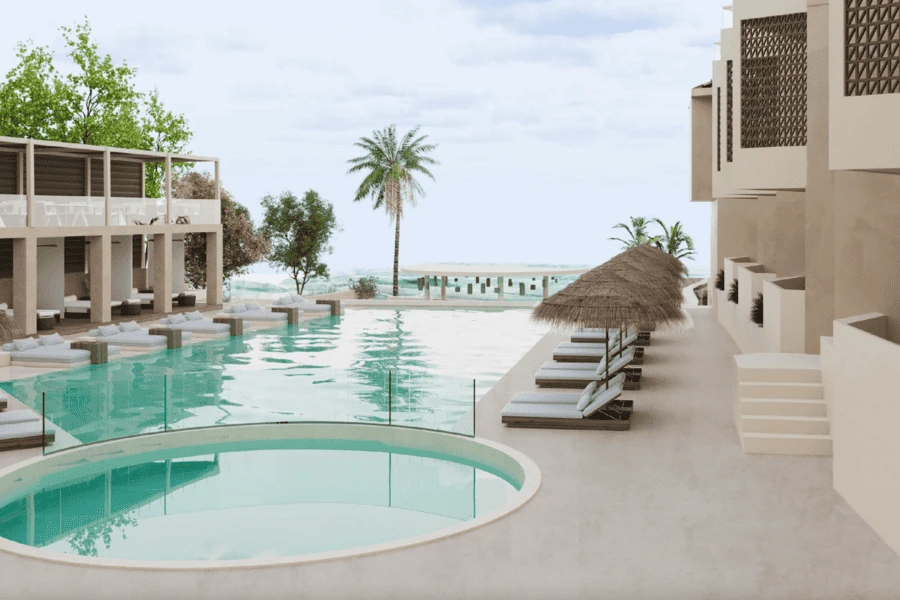
The apartment combined three functions: a qualifying Golden Visa investment, a
7. Residence cards were valid for 5 years
Greece Golden Visa residence cards are issued for 5 years and may be renewed for further
The
The status also gave them a backup place to live. The family did not have to move immediately, but they had the legal basis to relocate to Greece if their personal, educational, or business circumstances changed.
8. Family saw a possible long-term route to citizenship
Holding a Golden Visa for 7 years without actually making Greece the family’s main place of residence would not, by itself, lead to citizenship. Naturalisation requires genuine legal residence in Greece and compliance with the applicable language, integration, tax, and other requirements.
Mert and Aylin did not base their immediate decision on obtaining passports. However, the possibility of naturalisation mattered as a
Comparison of European Golden Visas
| Program | Minimum investment | Property purchase | First permit | Citizenship |
|---|---|---|---|---|
| Greece Golden Visa | €250,000+ | Yes | 5 years | 7 years |
| Portugal Golden Visa | €250,000+ | No | 2 years | 10 years |
| Italy Investor Visa | €250,000+ | No | 2 years | 10 years |
How the Kaya family obtained Greece residence
Based on Passportivity’s experience, obtaining a Greece Golden Visa usually takes at least 4 months. Mert and his family received their residence cards in 9 months.
The process took longer because the family compared several international schools, carefully selected a reconstruction property, and waited for a convenient biometric appointment.
-
1 day, September 3rd, 2025
Preliminary Due Diligence
Passportivity’s Compliance Department checked Mert’s business background, source of funds, and possible legal or reputational risks. The specialists confirmed which documents would prove the legal origin of the investment funds. No critical risks were identified.
-
2 weeks, September
8th—19th , 2025Selection of the investment route
Passportivity lawyers compared the available Greece Golden Visa options. The family chose a qualifying property converted from commercial to residential use under the €250,000 investment route.
-
2 weeks, September
22nd—October 3rd, 2025Property selection and reservation
The Real Estate Department prepared a selection of qualifying properties in Athens. Mert and Aylin chose a
two-bedroom apartment for €380,000 and signed a reservation agreement.Before the residence applications were submitted, the property’s conversion from commercial to residential use was legally completed and registered. The remaining works concerned interior finishing, furnishing, and preparation of the apartment for handover.
-
3 weeks, October
6th—24th , 2025Document preparation
The family collected passports, civil status documents, criminal record certificates, medical insurance, proof of funds, and company documents. Passportivity arranged translations into Greek and checked names and dates across all documents.
-
1 day, October 13th, 2025
Power of attorney
The process required a lawyer licensed in Greece. Passportivity works with local legal specialists who handle procedures that must be completed in the country.
Mert authorised a Greek lawyer to obtain his tax number, complete the property transaction, and submit the residence applications. This allowed him to complete most of the process remotely.
-
1 week, October
14th—20th , 2025Obtaining a Greek tax number
The lawyer obtained a Greek tax identification number for Mert. It was required to purchase and register the property.
-
3 weeks, October
27th—November 12th, 2025Property purchase
Passportivity lawyers checked the ownership documents, reconstruction permits, registered restrictions, and eligibility for the Golden Visa. Mert transferred the funds, and his authorised lawyer signed the purchase agreement.
-
1 day, November 20th, 2025
Residence application submission
Passportivity submitted applications for Mert, Aylin, Deniz, and Ela. Each family member received a temporary certificate confirming that the application was under consideration.
-
1 day, February 18th, 2026
Biometrics
Mert, Aylin, Deniz, and Ela already held valid Schengen visas, so they travelled from Istanbul to Athens without applying for additional entry documents.
Passportivity arranged the biometric appointment, where the family provided fingerprints and digital photographs for their residence cards.
-
4 months, February
19th—June 19th, 2026Approval and receiving residence cards
The Greek authorities approved all four applications. Passportivity’s lawyer collected the cards and checked the personal details. The family received Greece residence permits valid for 5 years.
What changed after the family obtained residence
The residence cards gave the Kaya family a legal basis to live in Greece for 5 years. Mert and Aylin began preparing the children for the transition to an international school. They compared IB programmes, admission requirements, tuition fees, and language support. Deniz and Ela continued improving their English while also starting to learn Greek.
After selecting the school, Mert and Aylin bought a separate property closer to it for the family’s own use. This reduced the children’s daily travel time, while the apartment purchased under the Greece Golden Visa remained an investment asset.
Passportivity continued supporting the family after the residence cards were issued. The company:
- monitored the interior finishing, furnishing, and handover schedule and maintained communication with the developer;
- helped arrange property insurance and utility contracts;
- connected the family with a professional property management company;
- prepared a schedule for renewing the residence cards;
- advised on maintaining the investment and updating family documents;
- explained which residence options the children could use after turning 24.
After the interior finishing is completed and the apartment is handed over, the family plans to place it under professional management. The management company will handle tenants and

Schedule a meeting
Help with the choice
Passportivity experts will analyse your situation and offer the most suitable solution.