Research
Türkiye Residential Real Estate Market: Statistics and Forecasts for 2026—2030

 Share
Share  Telegram
  Facebook
 LinkedIn
 X
X

 Print
Print  Share Telegram
Facebook
LinkedIn
X
Print
Share Telegram
Facebook
LinkedIn
X
Print Summary
Passportivity experts have prepared an analytical review of Türkiye’s residential real estate market. The study analyses sales dynamics, housing prices, rental yield, demand from local and foreign buyers, and the factors that will influence the market until 2030.
This study will be useful for investors who are considering buying property in Türkiye for different purposes: to preserve capital, receive rental income, or apply for citizenship by investment.
Türkiye’s real estate market is large and liquid. In 2025, about 1.7 million properties were sold in the country, of which almost 1.1 million, or 68%, were secondary housing sales. This means that most properties were bought not from developers, but from previous owners.
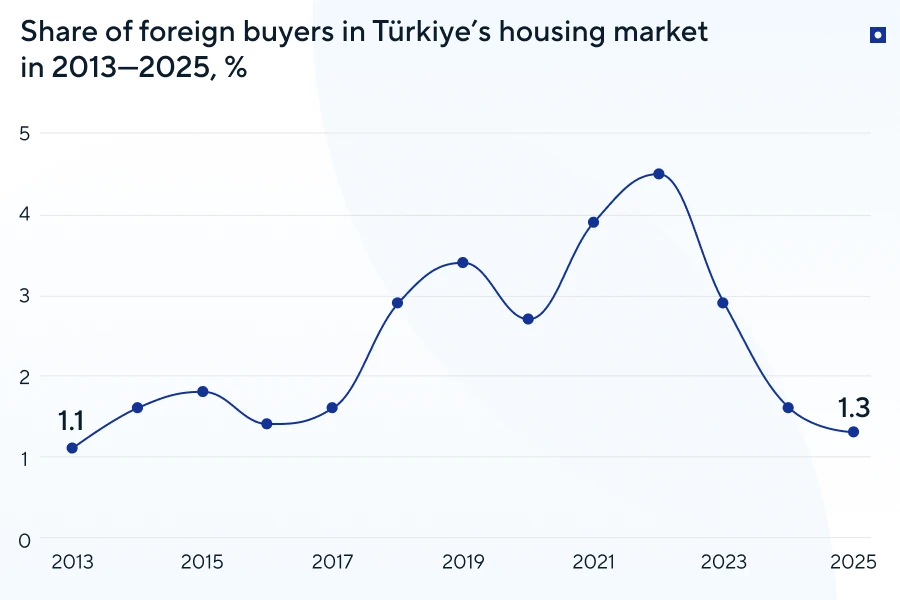
Most buyers are Turkish: they buy property for living, renting out, and protecting capital from inflation. In 2025, foreigners bought 21,534 properties, which accounted for 1.3% of all transactions.
When choosing a property, investors should assess demand from local buyers rather than interest from foreigners. They consider proximity to work, transport, universities, clinics, and social infrastructure.
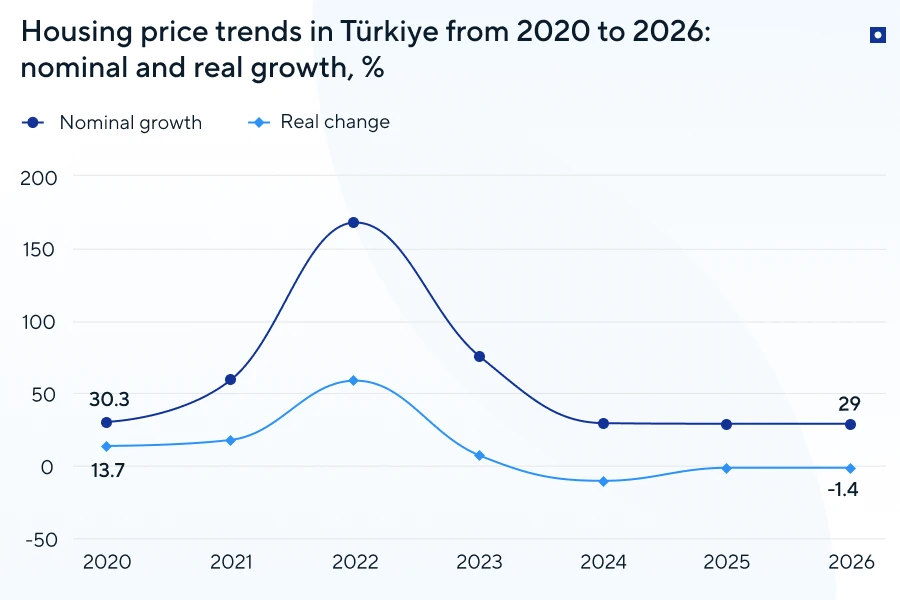
Housing prices are rising in Turkish lira, but their value in dollars may decline. In April 2026, the housing price index increased by 26.6% compared with 2025. However, inflation outpaced nominal price growth, so
Until 2027, Türkiye’s real estate market will remain dependent on domestic demand, inflation, and interest rates. According to expert forecasts, the number of transactions with foreign buyers is not expected to quickly return to the peak levels of
Properties in liquid areas of major cities and resort locations in the country will remain in demand. These areas have high rental yield, clear infrastructure, and resale potential.
5 benefits of buying property in Türkiye
Turkish property as an asset can serve several purposes: help preserve capital, generate rental income, or be used for living and leisure. Buying certain properties may also provide grounds for obtaining Turkish citizenship by investment.
1. Opportunity to obtain citizenship
Turkish citizenship can be obtained by purchasing residential or commercial property worth at least $400,000. The property must be kept in ownership for at least 3 years. The investor’s spouse and children under 18 may obtain passports together with the investor.
2. Relatively low cost
Property in Türkiye is, on average, cheaper than in major cities and popular coastal regions of southern Europe. The average price of an apartment in central Istanbul is 13,574 Turkish lira per ft², or approximately €2,755 per m². For comparison, housing in the city centre costs about €3,524 per m² in Athens, €6,700 in Lisbon, and €7,930 in Madrid.
3. Stable rental demand
Rental demand in Türkiye depends on the region. In Istanbul, Ankara, and Izmir, housing is more often rented by local residents, students, employees of companies, universities, and hospitals. In Antalya, Alanya, Bodrum, and Fethiye, housing is rented by tourists, immigrants, and buyers who spend only part of the year in the country.
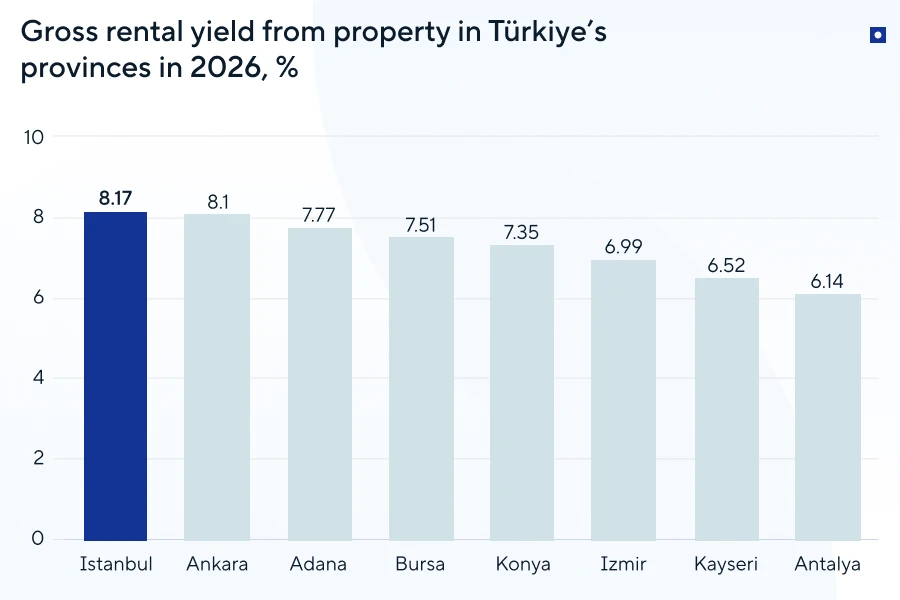
The average annual gross rental yield of property in Türkiye was 7.32% in the first quarter of 2026. The indicators in Istanbul, at 8.17%, and Ankara, at 8.10%, were above the average. For comparison, in Greece, the average gross yield by the end of 2025 was estimated at about 4.4%.
4. Large domestic market
The Turkish housing market does not depend only on foreigners. Most transactions are made by citizens and residents of the country, who buy property for living, renting out, and protecting capital from inflation. This is important for an investor: a property in an area with local demand is easier to resell not only to another foreigner but also to a Turkish buyer.
5. Opportunity to choose a property for different purposes
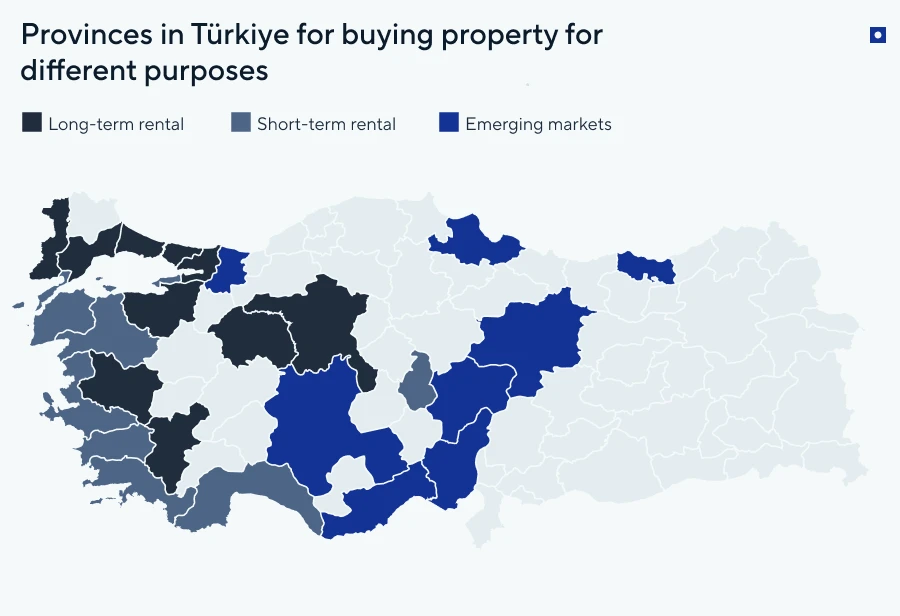
In Türkiye, it is possible to choose property for a specific purpose: living, renting out, preserving capital, or participating in the citizenship programme.
In Istanbul, property is more often considered for
Ankara and Izmir are suitable for living, studying, and renting out property
Antalya and Alanya are more suitable for buying a property by the sea, relocation, and
Mersin attracts buyers with more affordable prices and active construction. Bodrum and Muğla are chosen for leisure, buying premium property, and preserving capital.
Features of Türkiye’s real estate market
Türkiye allows foreigners to buy property in the country, but there are also restrictions. Before a purchase, checks cover the buyer’s citizenship, the property’s location, restrictions in the land registry, ownership history, and the property’s liquidity for rental or resale.
Restrictions for foreign buyers
Foreigners have the right to buy land plots, residential property, and commercial property in Türkiye if the property is located in an area where private ownership is allowed. These are most often residential and commercial areas: apartments in apartment buildings, villas on private land plots, offices, shops, apartments, and land plots for development.
Property may not be bought or rented in prohibited military zones and military security zones. In special security zones, a transaction is possible only with permission from the provincial administration. Russians and Ukrainians are subject to an additional restriction: they cannot buy properties on the Black Sea coast.
The maximum total area of property and land plots that foreigners may buy is 30 hectares. Property owned by all foreigners in one district of Türkiye must not exceed 10% of the district’s total area.
Citizens of 185 countries have the right to buy Turkish property. At the same time, the authorities do not publish a single consolidated document that lists all nationalities eligible to buy property in Türkiye. The possibility of selling a property to a specific foreigner is checked individually at the land registry and cadastre offices.
Before a transaction, it is advisable to consult a lawyer. They help check not only the documents for an apartment or villa, but also the right of a specific buyer to acquire this particular property in the chosen province or district of the country.
Opportunity to obtain citizenship by buying property
Applicants may qualify for Turkish citizenship by purchasing a residential or commercial property worth at least $400,000. The property must be kept in ownership for at least 3 years: a restriction is registered in the land registry, under which the investor undertakes not to sell the property before this period ends.
There are no requirements for the location or area of the property. However, not all properties are suitable for obtaining citizenship.
Investors cannot buy housing in prohibited military zones. They also cannot buy properties that have already been used to obtain Turkish citizenship by investment. After resale, such property can be bought only for living or renting out.
Before a transaction, the property value and its status in the land registry, ownership history, sale restrictions, and the possibility of using it in a citizenship application are checked.
How Türkiye’s real estate market changed from 2013 to 2026
Türkiye’s real estate market has gone through several stages: growth in domestic demand, a gradual increase in purchases by foreigners, overheating in
2013—2020 : domestic demand and the first foreign transactions
The real estate market mainly relied on domestic demand. From 2013 to 2020, foreigners bought from 1.1 to 3.4% of housing in the country, according to the Turkish Statistical Institute. The remaining transactions were made by local residents: they purchased properties for living, renting out, moving to major cities, or preserving capital.
Until 2012, the reciprocity principle was in force: a citizen of another country could buy property in Türkiye only if property was sold to Turkish citizens in their country. After this rule was abolished, Türkiye began to attract buyers from the Middle East, the CIS, and Europe more actively.
Sales to foreigners grew more than 3 times, from 12,181 properties in 2013 to 40,812 in 2020. But even in 2020, foreign transactions accounted for only 2.7% of all sales. Türkiye’s real estate market has always grown more due to demand from local buyers.
For an investor, this means that the liquidity of Turkish property depends not only on international demand. In areas close to business centres, transport, universities, clinics, and other everyday infrastructure, housing can be rented out or resold to local buyers and tenants.
Housing sales to foreigners in Türkiye in 2013—2020
| Year | Properties sold | Sales to foreigners | Share of foreigners |
|---|---|---|---|
| 2013 | 1,157,190 | 12,181 | 1.1% |
| 2014 | 1,165,381 | 18,959 | 1.6% |
| 2015 | 1,289,320 | 22,830 | 1.8% |
| 2016 | 1,341,453 | 18,189 | 1.4% |
| 2017 | 1,409,314 | 22,234 | 1.6% |
| 2018 | 1,375,398 | 39,663 | 2.9% |
| 2019 | 1,348,729 | 45,483 | 3.4% |
| 2020 | 1,499,316 | 40,812 | 2.7% |
2021—2022 : the market was overheated due to inflation and immigration
Property in Türkiye became a way for buyers to protect capital from inflation and the devaluation of the lira. When money quickly loses purchasing power, property is perceived as a more understandable asset: a property can be used for living, rented out, or sold later.
Immigration and growing interest in citizenship by investment also affected the market. Among foreigners with residence permits in Türkiye, the most common nationalities are citizens of Turkmenistan, Azerbaijan, Syria, Russia, Iran, Uzbekistan, Afghanistan, Iraq, Kazakhstan, and Egypt. Some foreigners rented housing, while others bought property for living, a residence permit, or citizenship.
In 2022, demand from foreigners reached its peak: they bought 67,490 properties, or 4.5% of all housing sales in Türkiye. This was a record figure for the entire period after the abolition of the reciprocity principle. Demand was especially noticeable in Istanbul, Antalya, Alanya, and Mersin.
Housing sales to foreigners in Türkiye in 2021—2022
| Year | Properties sold | Sales to foreigners | Share of foreigners |
|---|---|---|---|
| 2021 | 1,491,856 | 58,576 | 3.9% |
| 2022 | 1,485,622 | 67,490 | 4.5% |
2023—2024 : foreign demand began to decline
Türkiye’s real estate market began to change after 2022. Foreigners started buying fewer properties due to rising prices, difficulties with obtaining a residence permit, and banks’ more cautious approach to foreign clients. Some buyers also switched to other markets, such as Dubai, Greece, Spain, and Portugal.
The 2023 earthquakes became a separate factor. They did not only affect the damaged provinces but also changed buyer behaviour in other cities. In Istanbul and other large agglomerations, buyers began to pay more attention to the age of the building, construction quality, seismic safety of the area, and documents. The focus shifted not only to price, but also to the property’s resilience to risks.
In 2023, total housing sales in Türkiye declined, and sales to foreigners also decreased. Foreigners bought 35,005 properties, almost half as many as in 2022.
In 2024, the market recovered: housing sales increased by 20.6% and reached about 1.48 million properties. But foreign demand continued to decline, with sales to foreigners falling by another 32.1%.
Housing sales to foreigners in Türkiye in 2023—2024
| Year | Properties sold | Sales to foreigners | Share of foreigners |
|---|---|---|---|
| 2023 | 1,225,926 | 35,005 | 2.9% |
| 2024 | 1,478,025 | 23,781 | 1.6% |
2025—2026 : the market again relies on the domestic buyer
The housing market relied primarily on local buyers. Total sales approached 1.7 million properties, while foreigners bought only 21,534 properties. Their share fell to 1.3% of all transactions, the lowest level.
In 2026, property in the market continues to become more expensive in lira terms. In April 2026, the price index increased by 26.6%
What factors influence Türkiye’s housing market
Türkiye’s housing market is influenced at the same time by macroeconomic conditions, domestic demand, tourism, and the behaviour of foreign buyers. Therefore, the same factor may work in different ways: support interest in property, but at the same time reduce affordability or increase risks for the investor.
Inflation supports demand for property
Property in Türkiye has become a way for buyers to protect capital from inflation and the devaluation of the lira. When money quickly loses purchasing power, property is perceived as a more understandable asset: a property can be used for living, rented out, or sold later.
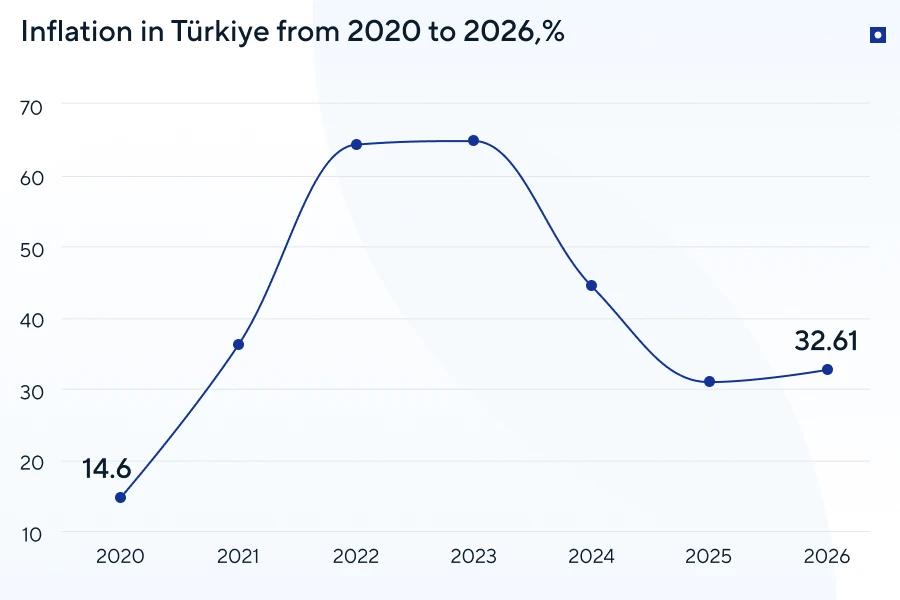
According to the Central Bank of Türkiye, consumer prices in lira increased by 36.08% in 2021, by 64.27% in 2022, and by 64.77% in 2023. Inflation then began to decline but still remained high: 44.38% in 2024 and 30.89% in 2025. In May 2026, annual inflation was 32.61%.
Some local buyers invest their savings in housing to protect themselves from rising prices. For foreign investors, property also looks more understandable than assets in lira: its value can be compared with similar properties in other countries, while returns can be calculated in US dollars or euros.
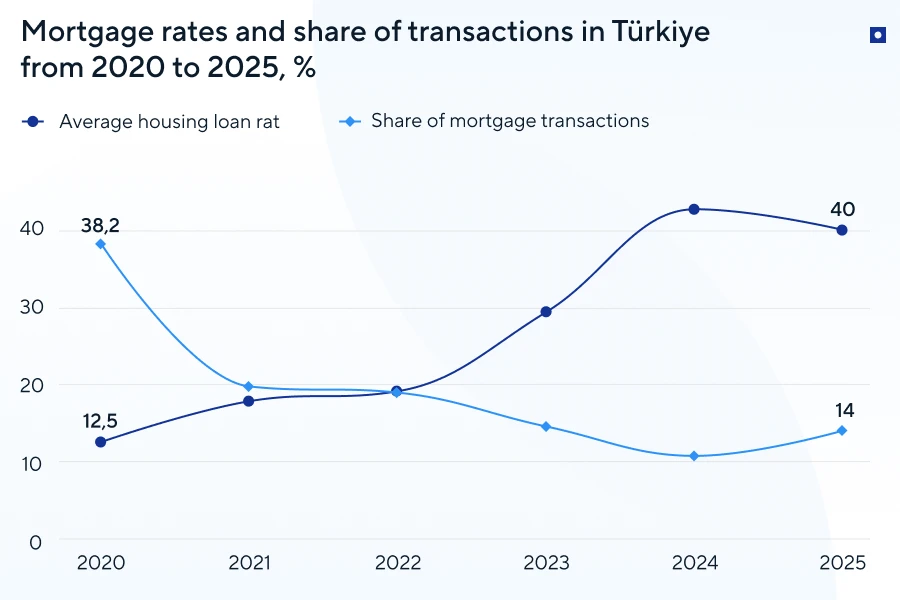
High rates limit mortgage demand
Mortgages in Türkiye are expensive due to high interest rates. For buyers, this means a higher monthly payment, and for the market, fewer transactions using credit. Some families postpone a purchase, choose a cheaper property, or wait for rates to decline.
The size of the mortgage rate also affects the speed of sales. When credit is expensive, it is harder for sellers to quickly find a buyer. Buyers also have more room for negotiation, primarily in the secondary market or in projects where the seller needs to close the transaction faster.
During periods of high rates, it is harder to sell properties that are aimed mainly at buyers using mortgages. The pool of potential buyers narrows, and the sale period increases.
Steady demand remains for apartments and houses that are affordable for buyers with their own capital. Properties located in areas with constant demand are also sought after: close to business centres, transport, universities, clinics, and social infrastructure.
Internal migration supports major cities
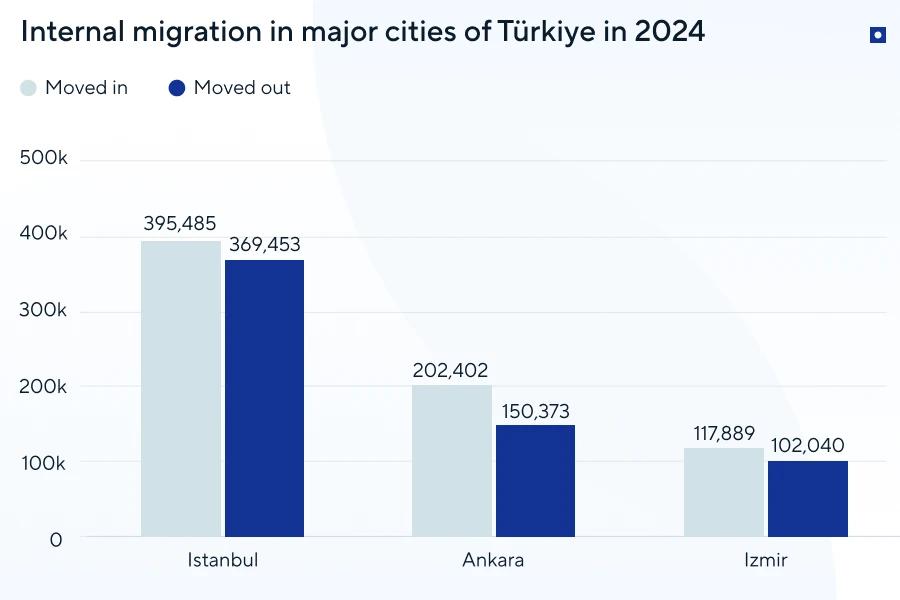
Demand for housing in Türkiye is formed not only by foreigners. Internal migration also plays a major role: local residents move between provinces for work, education, healthcare, family, a higher quality of life, or affordable housing. In 2024, 2,682,673 people moved between provinces.
Major cities receive a significant share of this flow. In 2024, 395,485 people moved to Istanbul, 202,402 to Ankara, and 117,889 to Izmir. At the same time, these cities remain major centres of population outflow: some residents leave for other provinces due to the high cost of living, expensive property, or family circumstances.
For the real estate market, not only net population growth matters but also the turnover of demand itself. When tens and hundreds of thousands of people move to a city every year, this supports rental demand, housing purchases, and demand for areas close to work, universities, hospitals, transport, and social infrastructure.
Istanbul remains the country’s main business and education centre. It concentrates companies, universities, major clinics, transport hubs, and a large share of the country’s population with purchasing power.
Ankara is the capital of Türkiye, where government institutions, offices of large companies, and universities are concentrated. Housing there is bought and rented for permanent residence, work, and study. Demand depends less on the tourist season, while the
Izmir is chosen for living by the sea without resort seasonality. Buyers and tenants are attracted by the coast, developed urban infrastructure, universities, transport, and a calmer pace of life compared with Istanbul.
Mersin attracts buyers with lower property prices, new residential projects, and the port economy, which supports employment and rental demand. For investors, this is an alternative to Istanbul, Antalya, and Bodrum, where buying property usually requires a higher budget.
Tourism strengthens demand in resort regions
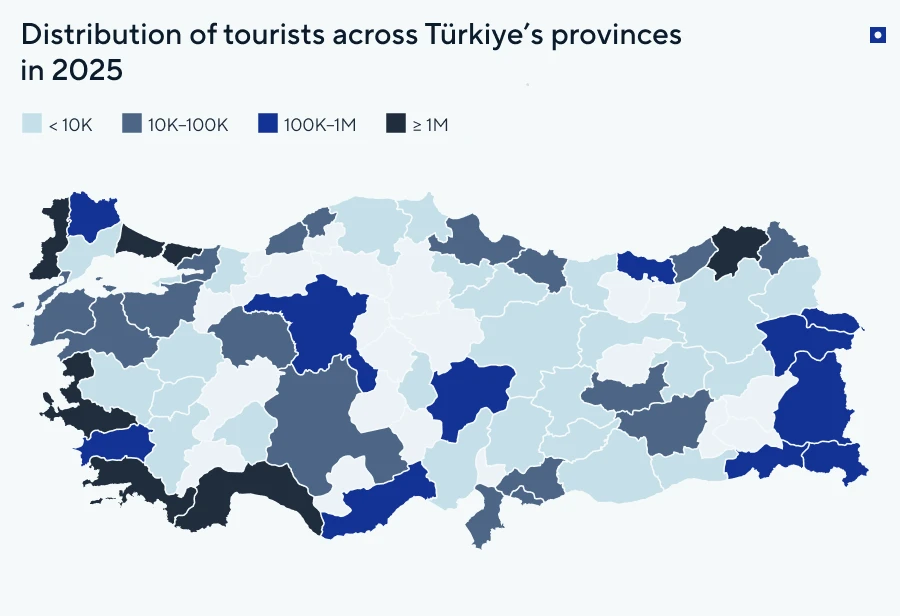
Tourism supports the housing market in Türkiye’s coastal regions. In 2025, the country received $65.23 billion from tourists, while the number of visitors exceeded 63.9 million. This flow creates demand not only for hotels but also for flats, apartments, and villas for
In resort regions, the influence of tourism is especially noticeable. From January to August 2025, Antalya received 10.95 million tourists, which accounted for 30.87% of all foreign arrivals in Türkiye. Muğla, Bodrum, Fethiye, and Marmaris received 2.5 million tourists, or 7.04% of arrivals.
In popular resort areas, a property can be rented out for the short term or medium term. The average daily rate is $319 in Bodrum, $202 in Antalya, and $167 in Marmaris. Final income depends on the season and occupancy.
In Türkiye, flats and villas close to the sea, promenades, restaurants, beaches, transport, and tourist infrastructure are especially in demand.
How demand is distributed between new builds and secondary housing
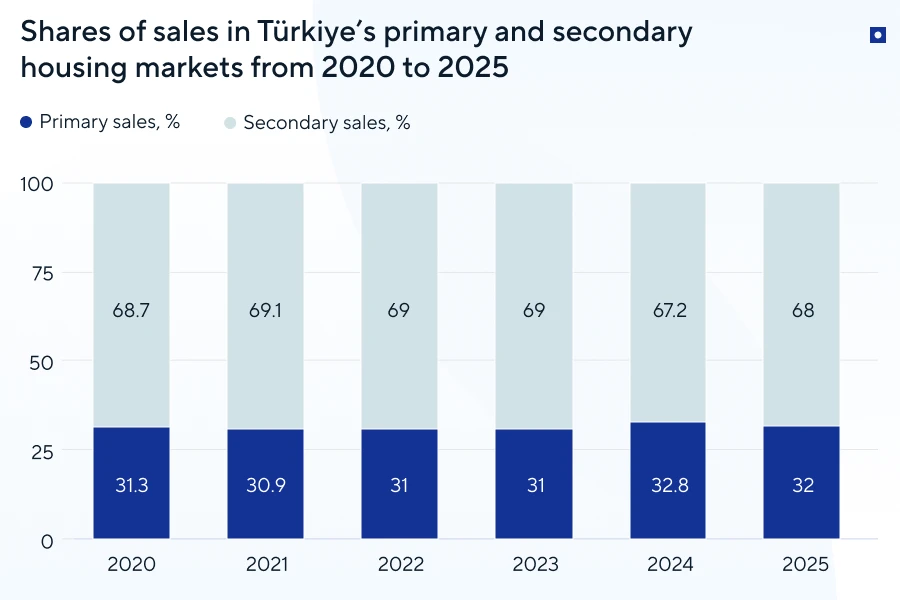
Demand for housing in Türkiye is uneven. Secondary housing is bought more often: the property has already been built, the area and infrastructure can be assessed before the transaction, and the apartment can be used faster for living or renting out. New builds are chosen for modern layouts, new engineering systems, instalment plans from developers, and lower repair costs in the first years.
New builds
New housing occupies a noticeable place in Türkiye’s real estate market, although it is behind secondary housing by the number of transactions. In 2025, 540,786 new properties were sold in the country, accounting for 32% of all housing sales. This is 11.6% more than in 2024.
Developers often offer instalment plans, discounts for full payment, flexible payment schedules,
New residential complexes are easier to sell to foreigners. The buyer does not need to navigate many private listings, compare old housing stock, or check the ownership history of the property. The developer shows a
In Antalya, Alanya, Mersin, and new districts of Istanbul, buyers often choose not just an apartment but a lifestyle format: a gated complex, landscaped grounds, service, a view, proximity to the sea, or new transport infrastructure.
Active construction may support the growth of an area if roads, metros, shopping centres, schools, hospitals, and business zones appear together with housing. But it also creates the risk of oversupply. If many similar complexes are being built in an area, it will be harder for an investor to make their property stand out, rent it out above the market, or sell it without a discount.
Secondary housing
The secondary market is the basis of housing sales in Türkiye. In 2025, 1,148,124 properties were sold in the country, accounting for 68% of all housing transactions.
Secondary housing helps understand the real price of an area. With such properties, it is easier to see how much buyers pay for an apartment or house in a specific location. It is possible to compare similar apartments in neighbouring buildings, assess room for negotiation, look at the average rental cost, and understand how quickly a property can find a tenant.
Ready housing has another advantage: it can be used immediately. The buyer can move in, rent out the property, or start renovation without waiting for construction to be completed. For an investor, this reduces the risk of project delays and allows them to check real demand faster.
What is happening to housing prices in Türkiye
Property prices in Türkiye are rising in lira, but this indicator is not enough for an investor. Inflation remains high in the country, construction costs are increasing, and the lira exchange rate remains unstable. The same property may become more expensive in lira but fail to generate a real profit after inflation is taken into account and the value is recalculated in US dollars or euros.
Nominal prices continue to rise
Nominal growth is price growth without taking inflation into account. For example, if an apartment costs 5 mln Turkish lira, and a year later similar properties are sold for 6 mln, the price has increased by 20% in lira.
According to the Central Bank of Türkiye, in April 2026, the housing price index increased by 26.6%
Several factors support price growth:
- Property remains a way to preserve capital amid high inflation. Some buyers prefer to keep their savings not in lira, but in residential or commercial properties.
- Construction is becoming more expensive: materials, labour, logistics, and project financing.
- Prices in new projects often include developers’ expectations for future inflation and the exchange rate.
Nominal price growth does not always mean that property is a liquid asset. A property may become more expensive in lira but fail to grow in foreign currency due to inflation. Therefore, before buying, it is worth assessing the price in US dollars or euros, the popularity of the area, and demand for rental or resale.
Real housing value may decline
Real value is price growth adjusted for inflation. In April 2026, Türkiye’s housing price index increased by 26.6% in nominal terms but decreased by 4.3% in real terms. Housing became more expensive in lira, but inflation grew faster. Therefore, the real value of property declined.
Property price dynamics
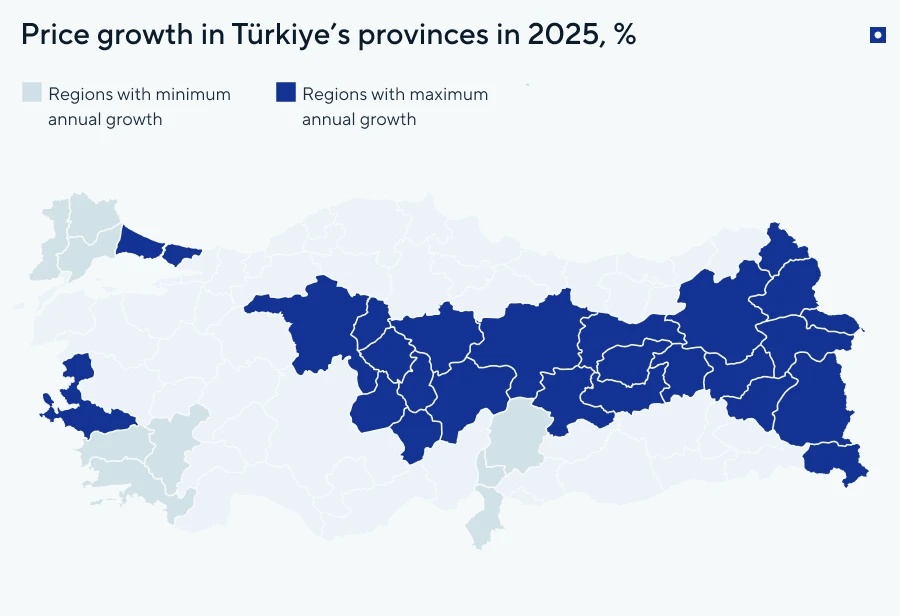
Property prices grow differently in different cities. In Istanbul, Ankara, Izmir, Antalya, Mersin, and Muğla, prices are influenced by domestic demand, tourism, foreign buyers, new construction, transport, business activity, and land scarcity.
According to the Central Bank of Türkiye, in April 2026, among the 3 largest cities, prices grew fastest in Ankara, by 29.9% compared with 2025. Growth in Izmir was 26.7%, and in Istanbul, 26.2%.
What is happening to property rent in Türkiye
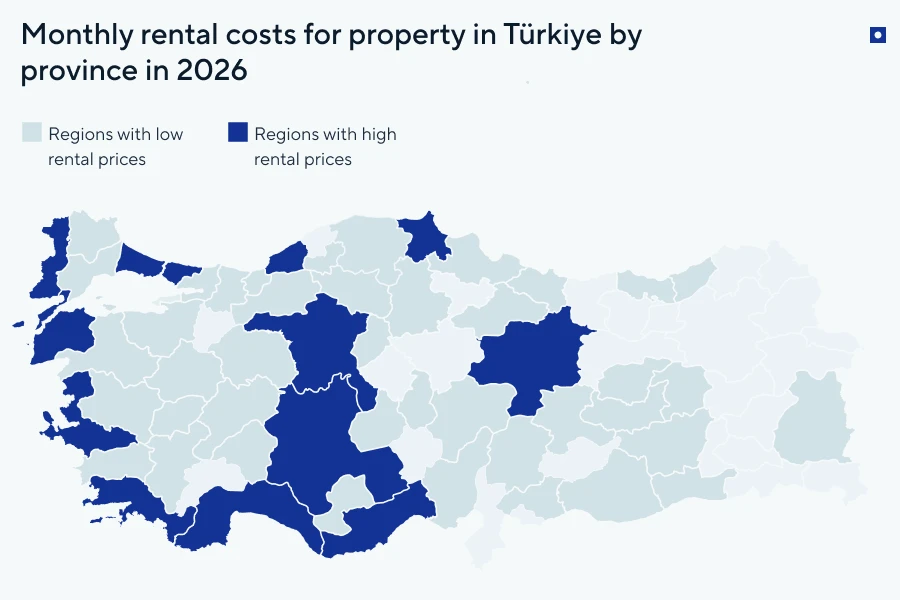
In April 2026, the rent index for new tenants increased by 31.7%
Long-term rental
The average rental cost of housing with an area of 100 m² in the fourth quarter of 2025 was the following:
- about 46,000 Turkish lira per month in Istanbul;
- 25,000 in Izmir;
- 21,000 in Ankara.
The average across Türkiye was about 22,000 lira per month. In April 2026, rental rates increased
Short-term rental
In tourist locations of Istanbul, as well as in Antalya, Alanya, Bodrum, Fethiye, and Muğla, property is more often rented out for the short term.
The potential of the
In Türkiye, renting out housing to tourists for up to 100 days requires permission from the Ministry of Culture and Tourism. For an apartment in an ordinary apartment building, the consent of all building owners may be required.
The average gross rental yield of housing in Türkiye was 7.32% per annum at the end of 2025. In Istanbul, the indicator was 8.17%; in Ankara, 8.10%; in Izmir, 6.99%; and in Antalya, 6.14%. Real yield after inflation and property maintenance costs are taken into account is usually 1.
In which cities of Türkiye property is bought most often
Demand for property in Türkiye is distributed unevenly. The country’s major cities lead by the total number of transactions: Istanbul, Ankara, and Izmir. In 2025, 280,262 properties were sold in Istanbul, 152,534 in Ankara, and 96,998 in Izmir. From January to April 2026, 23,852, 111,680, and 7,215 properties were sold in these cities, respectively.
Among foreign buyers in 2025, Istanbul, Antalya, and Mersin were the leaders. This shows the difference between the two markets: local buyers more often choose cities for living, work, and
Istanbul
Istanbul is Türkiye’s main real estate market by transaction volume. In 2025, 280,262 residential properties were sold there, of which 7,989 were sold to foreigners. This is more than in Ankara and Izmir combined and shows the scale of domestic demand.
From January to April 2026, 23,852 homes were sold in Istanbul. Of these, 689 properties were bought by foreigners.
For an investor, Istanbul is interesting for its liquidity. The city has a large choice of tenants and buyers: company employees, students, families, entrepreneurs, foreigners, and expats. Apartments in the city are in demand among both foreigners and locals.
Ankara
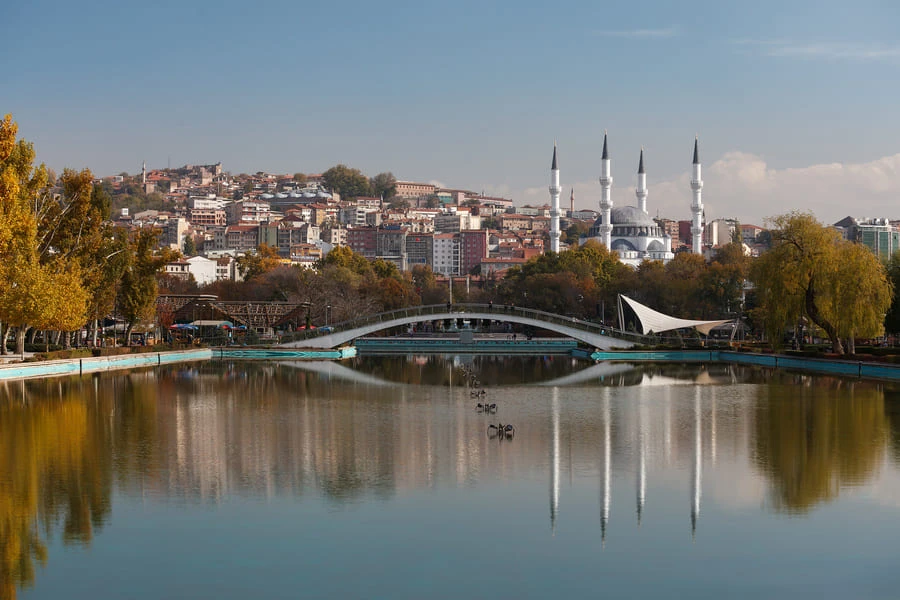
In 2025, 152,534 properties were sold in Ankara, 769 of them to foreigners. From January to April 2026, 111,680 homes were sold, of which 56 were bought by foreigners.
In Ankara, housing is bought and rented primarily for work, study, and permanent residence. The main demand is formed by employees of government institutions and companies, students, lecturers, and families who move to the capital from other regions of Türkiye.
Izmir
The city ranks third by the total number of transactions: in 2025, 96,998 properties were sold there, of which 389 were bought by foreigners. From January to April 2026, 7,215 homes were sold, 18 of them to foreigners.
Izmir is more often chosen for
Antalya
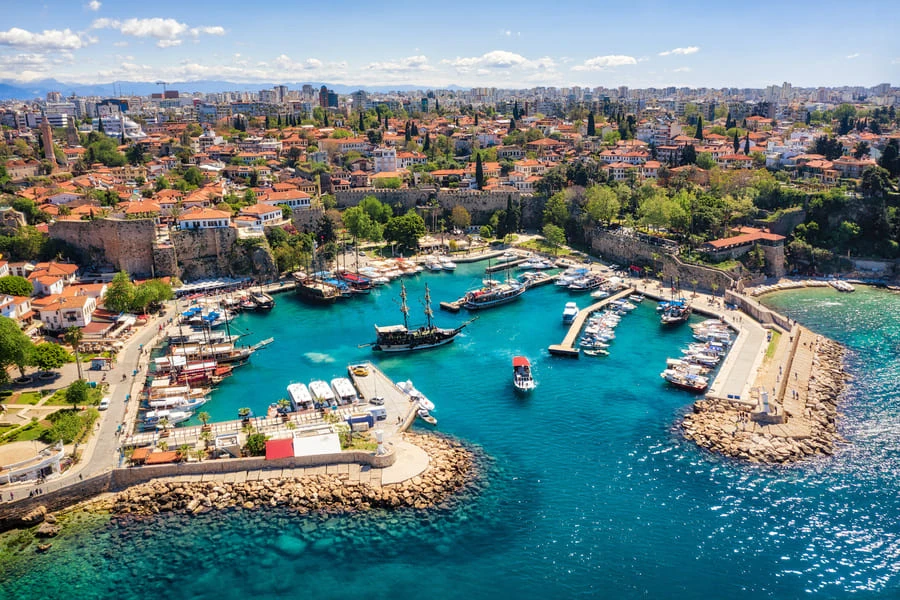
Antalya is one of the main markets for foreign buyers. In 2025, 86,730 residential properties were sold in the province, of which 7,118 were bought by foreigners, accounting for about 8.2% of all transactions. From January to April 2026, 6,165 homes were sold, 471 of them to foreigners.
For property buyers in Antalya, the sea, warm climate, tourist infrastructure, international schools, services for expats, and the opportunity to rent out the property are important. For some buyers, properties are at the same time housing for themselves, an asset for rental, and a tool for relocation.
Mersin
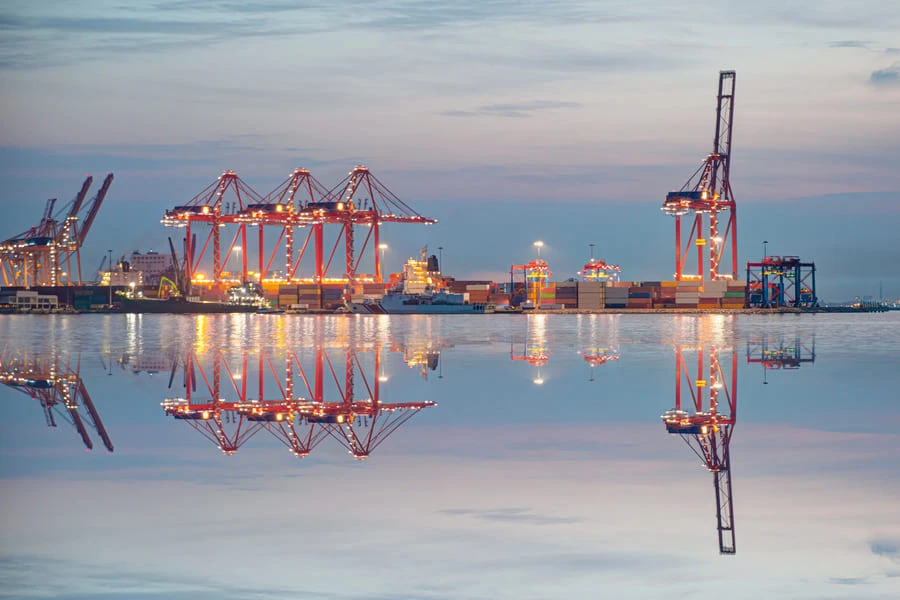
Mersin has become a notable destination for foreign buyers: in 2025, they bought 1,800 properties out of 57,821. The city became one of the top 3 provinces with the highest foreign demand after Istanbul and Antalya.
From January to April 2026, 4,241 homes were sold in Mersin, of which 119 were sold to foreigners.
Mersin attracts investors with more affordable property prices compared with Istanbul, Antalya, and Bodrum. New residential projects are being built in the city, infrastructure is developing, and the port economy creates jobs in logistics, trade, and services. The city is considered by buyers who need a lower purchase budget.
Property affordability may create a risk of overheating in certain areas. New complexes are being actively built in Mersin, and part of the supply is aimed at foreigners. If many similar apartments appear in an area, it becomes harder for an investor to make their property stand out for rental and resale.
Property liquidity in Mersin is lower than in Istanbul and Antalya. There is less international demand, weaker tourist recognition, and a higher risk that the property will have to be sold at a discount if the market becomes oversupplied with similar new builds.
Muğla
In 2025, 23,963 residential properties were sold in Muğla province. Of these, 389 properties were bought by foreigners, accounting for about 1.6% of all transactions in the province. From January to April 2026, 1,745 properties were sold, 27 of them to foreigners.
In Muğla, buyers often purchase villas, houses by the sea, and properties with views, privacy, a land plot, and the possibility of using the property for leisure or seasonal residence.
The main value of property in Muğla is not always rental yield. For some buyers, this purchase provides an opportunity to live by the sea, preserve capital, and own a property in a prestigious location.
Premium property does not equal stable yield. A villa may be expensive and liquid for a narrow audience, but renting it out all year round can be difficult. Income depends on the season, service level, management company, privacy, property condition, view, access to the sea, and the specific area.
Number of real estate transactions in Türkiye in 2025
| Province | Total transactions | Transactions with foreigners |
|---|---|---|
| Istanbul | 280,262 | 7,989 |
| Antalya | 86,730 | 7,118 |
| Mersin | 57,821 | 1,800 |
| Ankara | 152,534 | 769 |
| Izmir | 96,998 | 389 |
| Muğla | 23,963 | 389 |
How to buy property in Türkiye: step‑by‑step process
Buying property in Türkiye takes place in several stages: the buyer chooses a property, checks the documents, signs a preliminary agreement, makes an advance payment, pays for the property, and registers ownership in the land registry.
When buying properties worth at least $400,000, investors can obtain Turkish citizenship. Licensed citizenship programme agents, such as Passportivity, help choose a property and prepare documents. On average, investors obtain a Turkish passport in 12 months or more.
-
Choosing a property
Passportivity real estate specialists select several properties based on the purpose of purchase, budget, and investor’s requirements. We help choose a property from a verified database of developers.
-
Legal check of the property
A Passportivity lawyer checks the property data in the land registry, the seller’s ownership right, and the presence of debts, seizures, pledges, court disputes, and sale restrictions.
If the buyer chooses a new build, the lawyer additionally checks the developer, construction permits, completion dates, instalment terms, and the parties’ liability in case of project delays. If the property is intended for obtaining citizenship, the lawyer checks whether it qualifies by value, status, and history of previous transactions.
-
Signing a preliminary agreement
Passportivity lawyers check the preliminary agreement. It records the price, payment deadlines, advance payment amount, refund procedure, property characteristics, handover deadlines, and obligations of the parties.
The buyer signs the agreement and makes an advance payment, usually $1,000 to 5,000.
The seller or developer reserves the property for the buyer for the agreed period and confirms the transaction terms.
-
Preparing documents and making payment
Passportivity lawyers help obtain a Turkish tax number and translate documents.
The bank, seller, or developer confirms the payment details. In new builds, the buyer may pay according to the instalment schedule. In the secondary market, the main amount is more often transferred before ownership registration or on the day of the transaction.
-
Signing the main agreement
The Passportivity lawyers check that the main agreement matches the preliminary agreement: the parties’ liability must not change without the buyer’s consent.
The buyer signs the main agreement and pays for the property. The seller or developer confirms receipt of payment and prepares documents for the transfer of ownership.
-
Registering ownership
The transfer of ownership from the seller to the buyer is registered in Türkiye’s land registry.
The buyer receives TAPU, the title deed. From this moment, they become the official owner of the property. The lawyer checks that the data in TAPU is correct.
If the property is bought for citizenship, the obligation not to sell the property for 3 years is recorded in the land registry.
-
Receiving the keys
The buyer receives the keys and checks the condition of the apartment or villa, meters, furniture, appliances, and equipment if they were included in the agreement.
The seller or developer hands over the property, utility documents, and information about complex maintenance.
Forecast for Türkiye’s real estate market until 2030
Türkiye’s residential real estate market may grow from $71.11 billion in 2025 to $90.49 billion by 2030, according to a forecast by the analytics company Mordor Intelligence. The compound annual growth rate is estimated at 6.68%. This suggests that the market is likely to remain active.
Until 2030, the market will depend more on local buyers. For example, in 2025, 1,688,910 residential properties were sold in Türkiye, of which only 21,534 were sold to foreigners.
Prices in Türkiye will continue to rise in lira, but this does not always mean growth in the real value of property. Nominal growth will be supported by inflation, expensive construction materials, rising wages in construction, and developers’ expectations for the exchange rate.
In March 2026, the construction cost index increased by 27.24% compared with March 2025. This is especially important for new builds: the more expensive materials, labour, and financing become, the higher the starting prices in new residential complexes.
A property may become more expensive in lira but fail to grow in US dollars and euros or lag behind inflation. In April 2026, the housing price index increased by 26.6%, but after inflation was taken into account, it decreased by 4.3%.
If inflation slows down, mortgages may become more affordable, and demand from local buyers may become more stable. The Central Bank of Türkiye forecasts that inflation will be 26% by the end of 2026, 15% by the end of 2027, and 9% by the end of 2028.
Istanbul will remain the main location in Türkiye’s real estate market until 2030. This is proven by statistics from recent years: in 2025, 280,262 residential properties were sold in the province, which is more than in Ankara and Izmir combined. In April 2026, 23,852 properties were bought in the city, more than in any other region of the country.
Demand for property is formed by employees of business centres, universities, and clinics, as well as families who move from smaller cities and provinces.
Antalya will remain one of the
Key points about Türkiye’s real estate market
- Türkiye’s real estate market relies on domestic demand. In 2025, 1,688,910 houses and apartments were sold in the country, while foreigners bought only 21,534 properties, or 1.3% of all transactions.
- Buying property in Türkiye may provide grounds for obtaining citizenship. To do this, it is necessary to buy a property worth at least $400,000.
- Foreign demand declined after the 2022 peak. At that time, foreigners bought 67,490 properties, or 4.5% of all housing sales in Türkiye. By 2026, the figure had decreased by more than 3 times.
- Prices continue to rise in lira, but the real value of housing may decline. In April 2026, the housing price index increased by 26.6% in nominal terms but really decreased by 4.3% — after inflation was taken into account.
- The rental market depends on the model:
long-term orshort-term . In Istanbul, Ankara, and Izmir, rental demand is supported by office employees, students, and local residents. In Antalya, Alanya, Fethiye, and Muğla, income depends more on the season. - Istanbul remains the largest and most liquid market. Ankara and Izmir rely more on domestic demand, while Antalya and Alanya rely on tourism and immigration.
Sources for the analytical report
- Rules for buying property by foreigners and conditions for obtaining Turkish citizenship by investment, official investment portal Invest in Türkiye
- Explanations on buying property by foreigners in Türkiye, Your Key Türkiye portal
- Answers to questions about buying property by foreigners, the list of permitted countries, and citizenship restrictions, Your Key Türkiye portal
- Land Registry Law No. 2644, Mevzuat legal portal
- Types of residence permits in Türkiye and grounds for
short-term residence permits, Directorate of Migration Management of the Ministry of Interior of Türkiye - Housing sales statistics in Türkiye, Turkish Statistical Institute TurkStat
- Housing price index and rent index for new tenants, Central Bank of Türkiye
- Methodology of the housing price index, Central Bank of Türkiye
- Inflation data in Türkiye, Central Bank of Türkiye
- Construction cost index, Turkish Statistical Institute TurkStat
- Methodology of the rent index for new tenants, Central Bank of Türkiye blog
- Comparative statistics on gross rental yield in Turkish cities, Global Property Guide
- Analysis of Türkiye’s residential real estate market, Global Property Guide
- Data on property costs in cities around the world, Numbeo portal
- Statistics on foreign tourists by month and province of Türkiye for 2025, Ministry of Culture and Tourism of Türkiye
- Tourism statistics of Türkiye, Ministry of Culture and Tourism of Türkiye
- Data on Türkiye’s tourism revenue for 2025, Anadolu Agency citing TurkStat
- Internal migration statistics in Türkiye for 2024, Daily Sabah citing TurkStat
- Study of the impact of seismic risk on Istanbul’s housing market, Central Bank of Türkiye
- Explanation of the law on
short-term housing rentals in Türkiye, Esin Attorney Partnership - Law No. 7464 on
short-term housing rentals for tourism purposes, Mevzuat legal portal
Request Expert Commentary or Custom Research
Are you a journalist or an analyst, or do you work with high-net-worth individuals and need verified data, expert comments on investment migration, or market research for a specific task? We are ready to help.

Elena Dukach
Chief Executive Officer
Frequently asked questions
The choice of city depends on the purpose of purchase. Istanbul, Ankara, and Izmir are more often suitable for
Antalya and Alanya are more suitable for investors who rely on the sea, relocation, tourist demand, and
Mersin may be interesting due to more affordable prices and active construction, but an investor needs to assess the area, competition from new complexes, and resale liquidity more carefully.
Muğla is suitable for buyers with a high budget who are looking for a villa, a property by the sea, or property for personal use and capital preservation. However, a premium price does not guarantee a stable rental yield: the result depends on the specific location, season, and quality of property management.
Yes, Turkish citizenship by investment can be obtained by buying property worth at least $400,000. The investor buys a commercial or residential property, which must be kept in ownership for at least 3 years.
The investor’s spouse and children under 18 may obtain citizenship together with the investor.
Yes, secondary property may be suitable for obtaining Turkish citizenship. An investor has the right to buy a
There are important exceptions. A property located in an area closed to foreign buyers, for example, near military facilities, is not suitable for citizenship. It is also not possible to use a property for which another foreign investor has already obtained Turkish citizenship.
Foreigners have started buying less housing in Türkiye due to rising prices, difficulties with obtaining and renewing residence permits, banks’ more cautious approach to foreign clients, and lower demand after the 2022 peak. Some buyers have also switched to other markets, such as Dubai, Greece, Spain, and Portugal.
In 2022, foreigners bought 67,490 properties in Türkiye, or 4.5% of all housing sales. In 2025, the figure fell to 21,534 properties, while the share of foreign buyers decreased to 1.3% of the market.
A decline in the number of transactions among foreigners does not mean that Türkiye’s real estate market has stopped being liquid. The main demand is still formed by local buyers.
There is no single answer: the choice depends on the purpose of purchase. A new building may be more convenient if the investor wants an instalment plan from the developer, a new complex, a management company, a furniture package, and a property that is easier to rent out or use for living immediately after receiving the keys.
Secondary housing is usually clearer for assessment: the property has already been built, and it is possible to check the area, the building’s condition, rent, neighbouring transactions, and real liquidity. In 2025, the secondary market accounted for 68% of all housing sales in Türkiye, so it better shows the market price in a specific location.