

 Real estate
 Reading time: 10 min
 St Lucia Citizenship by Investment Through Real Estate: Approved Property Guide
St Lucia grants citizenship to investors who buy qualifying property in an approved real estate project. The minimum investment is $240,000, and most available options are linked to resort developments: hotel shares, branded residences, or villas.
The property must be held for at least 5 years. After that, the investor can resell it and keep St Lucia citizenship. During the holding period, the property may generate rental income, depending on the project terms.

 Share
Share  Telegram
  Facebook
 LinkedIn
 X
X

 Save
Save 

How St Lucia citizenship through real estate works
St Lucia has offered citizenship by investment since 2015. The programme gives foreign investors several ways to obtain a passport: a contribution to the National Economic Fund, the purchase of government bonds, investment in an enterprise project, or approved real estate.
What the investor buys. To qualify through real estate, the investor must choose a property in a
Residence and language requirements. The process does not require relocation to St Lucia. Investors do not need to live in the country before or after obtaining citizenship, and there is no language exam.
Who can apply. St Lucia citizenship by investment is available to foreign applicants over 18. The investor must be in good health, have no criminal record, confirm legal income, and pass Due Diligence checks.
The investor can add close family members to the application:
- a spouse;
- financially dependent children up to and including 30, without children of their own;
- financially dependent parents of the investor or spouse, aged 55 or older;
- siblings of the investor, up to and including 17, with consent from a parent or guardian.
Each family member must meet the programme requirements and pass the required checks. After approval, the investor completes the real estate purchase and pays the applicable government fees.
What real estate qualifies for St Lucia citizenship
Foreigners can buy residential or commercial property in St Lucia. A standard property purchase is open to
Citizenship by investment has a stricter rule. The investor cannot buy any property on the open market and use it for a citizenship application. Only real estate projects approved under the St Lucia Citizenship by Investment Programme qualify.
Approved real estate usually means premium tourism property: hotels, resort residences, villas, or boutique developments. The minimum qualifying investment is $240,000.
As of July 2026, investors had 2 practical options among approved real estate projects: A’ILA Resorts, Villas & Residences and The Saint Lucia Canelles Resort.
A share in A’ILA Resorts, Villas & Residences
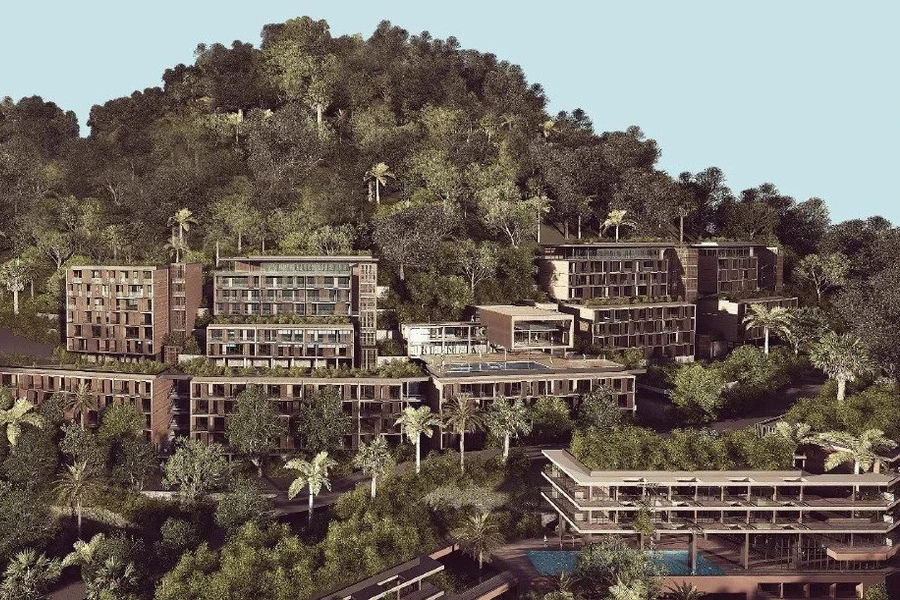
The project sits on the slopes of Mount Pimard, above Rodney Bay, one of St Lucia’s busiest resort areas. Beaches, a yacht marina, restaurants, bars, shops, and other tourist infrastructure are located nearby.
The residences and villas are set on elevated land, so many units have panoramic views of the ocean and Rodney Bay. The project is away from dense beachfront development and the busiest parts of the resort area, which gives it a more private setting.
A’ILA is designed as a resort where owners can stay, relax, and use the surrounding infrastructure. The project includes residences and villas, several hotel formats, spa and wellness areas, fitness facilities, restaurants, retail spaces, and public amenities. The planned total capacity is around 1,300 rooms and residences.
For citizenship investors, A’ILA offers a
A share in The Saint Lucia Canelles Resort
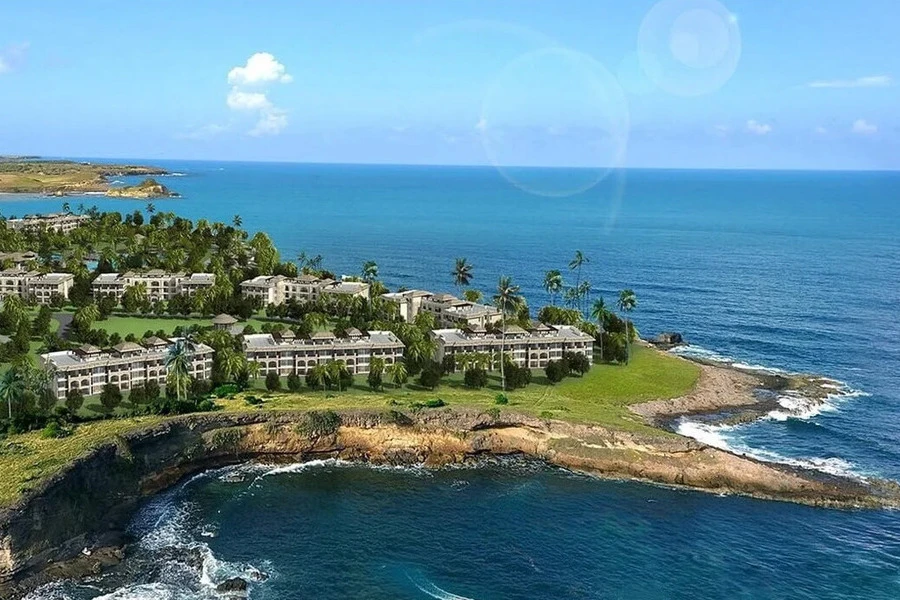
The Saint Lucia Canelles Resort is a beachfront approved real estate project that combines hotel accommodation and residential units on one site.
The project is developed by Galaxy Group. The hotels are managed by AMResorts, an international hotel company with experience in the Caribbean. This structure means that the investor does not have to manage bookings, guest services, or daily operations independently. These tasks are handled by a professional management team.
The resort includes 2 hotel brands, Dreams and Zoëtry, as well as Canelles Oceanfront Apartments. The format is designed for couples and families with children. The main facilities are located by the beach, and rooms and apartments offer sea views.
Benefits of St Lucia citizenship for real estate investors
St Lucia citizenship by investment combines access to a second passport with ownership of approved resort property. Investors may complete the process remotely, earn rental income, and benefit from a relatively low tax burden.
1. Opportunity to obtain citizenship
Foreign investors can obtain St Lucia citizenship by buying real estate in a
2. Remote process
Foreign investors do not have to travel to St Lucia to buy qualifying property. The process can be completed remotely, from selecting the project to receiving ownership documents.
The citizenship application is also prepared through a licensed agent. The investor provides documents, passes Due Diligence checks, and completes the investment after approval.
3. Rental income potential
The main source of income from resort property in St Lucia is
Rental income is seasonal. Occupancy and rental rates are usually highest during the peak tourist season, from December to April.
Tourist arrivals are growing. In November 2025, St Lucia welcomed 36,255 international visitors, 7% more than a year earlier. This was the highest November figure on record.
4. Lower transaction risk
The investor buys property in projects approved by the government of St Lucia. Approved projects are checked for compliance with construction and legal requirements.
This reduces the risk of buying from an unreliable developer or investing in a project that does not meet the citizenship programme rules.
5. Relatively low tax burden
St Lucia does not charge capital gains tax on real estate sales. If the property increases in value and the owner sells it, the capital gain itself is not taxed.
For comparison, Spain taxes profit from real estate sales at 19% for
St Lucia also has no inheritance tax and no separate annual national property tax. During ownership, the property owner pays an annual municipal tax. For residential property, the rate is 0.25% of the property’s market value.
Documents required for St Lucia real estate citizenship
The document package depends on the buyer’s goal. An investor who applies for St Lucia citizenship through real estate prepares a full
Documents for citizenship
Passportivity lawyers prepare a personalised list of documents for the investor and family members. They certify copies, complete application forms, prepare affidavits, and assemble the file for submission to the St Lucia Citizenship by Investment Programme.
The main document package usually includes:
- all valid passports;
- photographs;
- a CV;
- birth certificates for all applicants;
- marriage or divorce certificates;
- proof of legal income;
- university diploma;
- military ID, if applicable;
- police clearance certificate;
- proof of residential address;
- bank statements for the previous 6 months;
- bank reference letter;
- professional reference.
Documents that are not in English must be submitted with an English translation. The translation must cover the entire document, including stamps, seals, signatures, and letterheads. A certified translator prepares the translation, and a copy of the translator’s certificate, licence, or diploma is added to the document package.
Alien Landholding Licence for buying property without citizenship
An investor who does not plan to apply for St Lucia citizenship and buys property for personal use or investment must obtain an Alien Landholding Licence. This licence gives a foreign buyer the right to own real estate in St Lucia.
A lawyer prepares the document package for the licence application. It usually includes:
- a passport copy;
- proof of residential address;
- police clearance certificate;
- bank reference letter;
- signed purchase agreement;
- cadastral details of the property;
- proof of source of funds, if required.
The licence is obtained after the purchase agreement is signed but before the transaction is fully completed. The process usually takes
The licence is issued for a specific property. If the investor chooses another property, they need to apply for a new licence.
Step-by-step process: how to get St Lucia citizenship by buying real estate
The investor applies through a licensed agent of the St Lucia Citizenship by Investment Programme, such as Passportivity. The company’s lawyers explain the requirements, prepare the application, and support the investor at every stage, from document collection to passport issuance.
The process is completed remotely and usually takes about 10 months.
-
Property selection
The investor chooses real estate in a project approved by the government of St Lucia. Passportivity experts help compare available options and select a property that fits the investor’s budget, goals, and family application.
-
Document preparation
The investor prepares documents for both the citizenship application and the property purchase. For the real estate transaction, the basic documents include a passport and a sale and purchase agreement.
Passportivity lawyers translate documents into English where required, certify copies with a notary, complete application forms, and prepare the file for submission.
-
Deposit payment
After choosing the property, the investor pays a deposit. It is usually 10% of the property value.
-
Sale and purchase agreement
After the citizenship application is approved, the investor signs the main sale and purchase agreement and transfers the remaining amount for the property.
-
Ownership documents
When the transaction is completed and the transfer of ownership is registered with the St Lucia Land Registry, the investor receives documents confirming ownership or share ownership in the project.
-
Passport issuance
Document issuance usually takes
4—5 weeks after approval and completion of the required payments. Once citizenship is registered, the investor receives a registration certificate number and a National Insurance number.Passports are usually issued within a week. The investor receives the passports and registration certificate by courier at the address stated in the application.
-
Passport renewal
A St Lucia passport is valid for 5 years. After expiry, it must be renewed. The renewal process can be completed remotely.
The renewal application should be submitted no later than 3 months before the passport expiry date.
Passportivity stays in contact with the investor after citizenship is granted and can assist with passport renewal when the document is close to expiry.
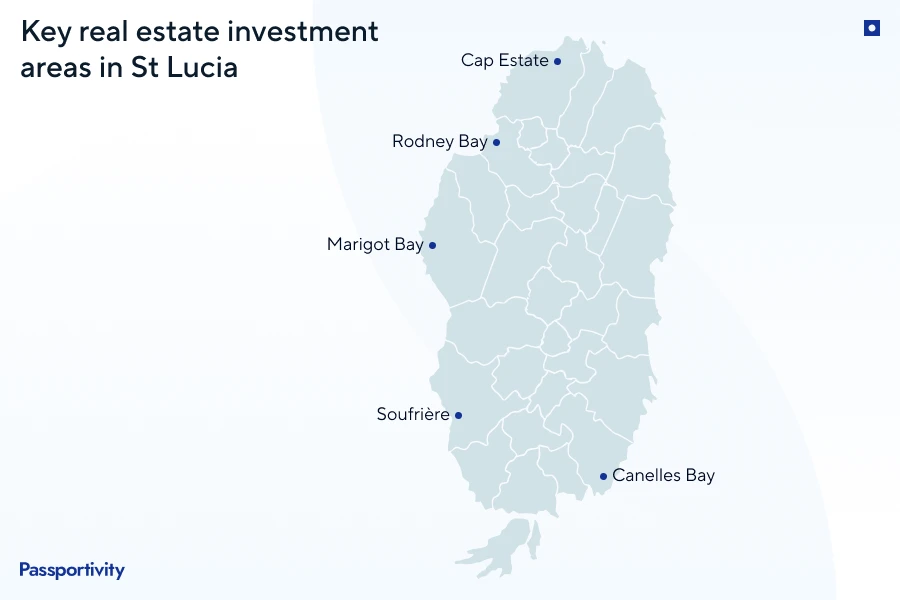
Best locations in St Lucia for real estate investment
St Lucia’s strongest real estate locations are usually linked to tourism, beaches, marinas, resort infrastructure, and scenic views. For investors, the location matters not only for lifestyle but also for rental demand and future resale potential.
Rodney Bay is one of the island’s main resort and leisure areas. It has beaches, a marina, restaurants, bars, shops, and tourist services. The area is suitable for investors who want property close to established infrastructure and
Canelles Bay is located on the
Cap Estate is known for private villas, golf, sea views, and premium residential projects. Property in this area is usually chosen by buyers who want a quieter setting, more privacy, and access to the north of the island.
Soufrière is one of the most recognisable parts of St Lucia because of the Pitons, rainforest views, mineral springs, and boutique hotels. The area is attractive for luxury tourism and
Marigot Bay is a sheltered bay on the west coast with strong yachting and leisure appeal. Investors often consider it for boutique hospitality, waterfront property, and rental demand from travellers looking for a quieter, more secluded location.
Popular areas can be attractive for regular property investment. For citizenship by investment, however, only specific
St Lucia real estate market overview
St Lucia does not have a single public residential price index, so buyers usually assess the market through current listings and local agency data. In 2026, condos and smaller apartments typically cost $200,
Price per square metre. Approved resort property is usually priced higher than standard residential property because the price includes the project format, resort infrastructure, management model, and citizenship eligibility. At A’ILA Resorts, Villas & Residences in Rodney Bay, a
A
Listing examples outside approved resort projects show a wider price range. Realty St Lucia lists a 267 m² property in Beausejour, Gros Islet, for $500,000 (≈ 2,869 ft²), equivalent to about $1,880 per m².
The agency also lists a 319 m² villa in Cap Estate for $995,000 (≈ 3,431 ft²), equivalent to about $3,120 per m², and a 232 m² villa in Marigot Bay for $1.5 million (≈ 2,500 ft²), equivalent to about $6,460 per m².
Taxes and costs of buying and owning property in St Lucia
Annual property tax. Residential property in St Lucia is taxed at 0.25% of its market value a year. The tax is charged regardless of whether the owner uses the property personally or rents it out.
Investors who buy approved resort property for St Lucia citizenship usually do not manage
Property insurance is not mandatory by law in St Lucia, but most owners arrange it because of the island’s climate risks. Policies usually cover damage caused by tropical storms and hurricanes, heavy rain and flooding, as well as fire and household accidents. For properties located on hillsides, landslide risk may also be included.
In resort complexes, insurance is often required for participation in the rental programme. Without an active policy, the management company may refuse to include the property in rental operations.
The average cost of residential property insurance is around 0.2% of the property’s market value a year. For example, insurance for a property worth $400,000 may cost about $800 a year.
Management fees. If the property is part of a resort or used for
The management cost depends on the project and property format. It is stated in the agreement in advance, so investors can factor it into the expected rental return before buying.
Utilities. Utility costs depend on the property type and location. For an apartment of up to 85 m², utilities cost around $105 a month, according to Numbeo.
Risks of buying real estate in St Lucia
Legal risks. Investors who buy property independently need to check that the asset is properly registered. Ownership rights must be recorded, the property should be free from pledges and disputes, and the land boundaries and buildings must be officially documented.
In practice, buyers may come across properties where some buildings are missing from the register or the ownership documents contain errors. These issues can delay the transaction or make the purchase legally unsafe.
Legal risks are lower when the investor buys real estate under the citizenship by investment programme. Only
Dependence on tourism demand. Resort property income changes throughout the year. During the high season, properties are rented more often and at higher rates. During the low season, occupancy and rental rates may fall.
Rental income should be assessed for the full year, not only for peak months. Otherwise, the actual annual return may be lower than expected.
Document inconsistencies. Even minor mistakes in transaction documents can create problems for the investor. A misspelt name, incorrect passport number, wrong property description, or mismatch between documents may delay the transaction, require new paperwork, or affect the citizenship application.
All documents need to be checked before signing, especially the sale and purchase agreement, ownership records, cadastral details, bank documents, and translations.
Climate risks. St Lucia has periods of heavy rain and tropical storms. These conditions can lead to flooding, faster wear of façades, roofs, utilities, and outdoor areas.
Climate risks affect the choice of location, insurance terms, and future maintenance costs. Properties on hillsides, near the coast, or in
Exit strategy: how to return the real estate investment
Citizenship investors can recover the investment by selling the property after the required
Finding a buyer usually takes
If the buyer is a foreigner and purchases the property outside the
A clear exit strategy should be assessed before purchase, not only before resale. The investor needs to understand who the future buyer may be, whether the property can be resold to another citizenship applicant, and how management, rental performance, and maintenance quality may affect the sale price.
Resale to a third-party buyer
The property can be sold to another private investor on the open market. Resort units and villas are usually marketed through local brokers, international property platforms, or the client base of the developer and project operator.
The resale price is determined by current market demand. It depends on the property’s location, project brand, condition, rental performance, and the development stage of the resort.
Buy-back and right of first refusal
Some projects include a
A right of first refusal, or ROFR, may also apply. In this case, the operator or developer has the first right to buy the property when the investor decides to sell. This mechanism can make the exit process faster, but the sale price may be lower than an
Longer investment horizon
Selling immediately after the minimum holding period is not always the most profitable option. In some cases, it may be better to keep the property for longer.
After
Key points about St Lucia Real Estate Citizenship
- Buying
government-approved real estate in St Lucia can qualify an investor for citizenship. - Investors usually buy a share or unit in an approved resort project. The minimum investment is $240,000.
- The property must be held for at least 5 years. After that, the investor can sell it and keep St Lucia citizenship.
Short-term rental data for St Lucia shows annual revenue of about $25,000 per property, but the actual income depends on location, seasonality, occupancy, operator terms, and property expenses.- Foreigners who buy property outside the
citizenship-by-investment programme usually need an Alien Landholding Licence.
About the authors


Frequently asked questions
The minimum real estate investment for St Lucia citizenship is $240,000. The investor must buy property from the list of projects approved by the government of St Lucia. In practice, this is usually a share in a resort complex, an apartment, or a villa within an approved development.
The property must be held for at least 5 years. After the holding period, the investor can sell the property and keep St Lucia citizenship. Family members included in the application also keep their citizenship.
Approved investment property in St Lucia can be rented out. In resort projects, rental operations are usually managed by a professional management company. The income is generated mainly through
Foreigners can buy houses, villas, apartments, land plots, and commercial property in St Lucia.
If the purchase is made outside the
A standard property purchase does not automatically lead to citizenship. To qualify for St Lucia citizenship by investment, the investor must buy real estate only in a
St Lucia property can be a good investment if the asset is located in a strong tourist area, managed professionally, and bought at a realistic price.
The most attractive properties are usually villas, resort apartments, and beachfront or
Foreign investors can obtain St Lucia citizenship by investing in approved real estate. The minimum investment is $240,000. The property must be part of a project approved by the government of St Lucia.
The investor must also meet the programme requirements, pass Due Diligence checks, and keep the property for at least 5 years after citizenship is granted.
The best location depends on the buyer’s goal. Rodney Bay and Gros Islet are suitable for buyers who want access to beaches, restaurants, nightlife, a marina, and established tourist infrastructure. Cap Estate is often chosen for private villas, sea views, and a quieter premium setting.
Soufrière and Marigot Bay are attractive for scenic property, boutique hospitality, and
For citizenship by investment, location alone is not enough. The property must be part of a
Read also




Contact us today
Passportivity assists international clients in obtaining residence and citizenship under the respective programs. Contact us to arrange an initial private consultation.