

 Residency
 Reading time: 18 min
 Malta Global Residence Programme 2026: Complete Guide to GRP Malta
Malta Global Residence Programme is a residence and tax route for
Under GRP Malta, foreign income received in Malta is taxed at 15%. The minimum annual tax is €15,000. The program also allows applicants to include eligible family members and apply for a Malta residence permit.
This article explains the Malta Global Residence Programme requirements, costs, tax rules, property options, application process, renewal conditions, and differences between GRP Malta and Malta Golden Visa.

 Share
Share  Telegram
  Facebook
 LinkedIn
 X
X

 Save
Save 

What is the Malta Global Residence Programme?
Malta Global Residence Programme, or GRP Malta, is a special tax status for
The program is often compared with other Malta residency by investment options. However, the Malta Global Residence Programme is not the same as the Malta Golden Visa. GRP Malta is primarily a tax residence program with residence permit eligibility, provided the applicant meets the program conditions.
GRP Malta in simple steps
GRP Malta gives eligible
To qualify, an applicant must:
- rent or buy qualifying property in Malta or Gozo;
- pay the administrative fee;
- obtain health insurance;
- meet compliance requirements.
After obtaining the special tax status, the applicant applies for a residence permit.
The program does not grant Malta citizenship or permanent residence automatically. It provides a route to a Malta residence permit and special tax treatment while the beneficiary continues to meet the program rules.
Legal basis of GRP Malta
The Malta Global Residence Programme is regulated by the Global Residence Programme Rules. The rules form part of subsidiary legislation under the Income Tax Act, Chapter 123 of the Laws of Malta.
The program took effect on July 1st, 2013. Applications for special tax status are administered by the Malta Tax and Customs Administration.
Who is the Malta Global Residence Programme best suited for?
The Malta Global Residence Programme is best suited for applicants who have foreign income, want a clear tax framework in Malta. It is also relevant for families and business owners who want a Malta residence permit without using the permanent residence route.
International investors with foreign income
GRP Malta is suited for investors who receive income outside Malta and plan to remit part of it to Malta. Under the program,
This may include dividends, interest, rental income, pension income, or business income from foreign sources. The applicant remains responsible for tax compliance in all relevant jurisdictions, including their country of citizenship and any other country of tax residence.
Business owners and entrepreneurs
The program is also relevant for business owners and entrepreneurs with international income. GRP Malta creates a Malta tax residence framework, while work or business activity in Malta requires separate compliance with work permit and tax rules.
The official GRP description states that beneficiaries are not precluded from working in Malta, provided they satisfy the conditions for obtaining a work permit.
Families looking for a Malta residence permit
Families use the Malta Global Residence Programme to obtain residence in Malta and live in an
Family members are included according to the program rules and residence permit requirements. Each applicant must meet the applicable documentation, insurance, and compliance conditions.
Tax-conscious applicants
GRP Malta is designed for applicants who want to structure tax residence in Malta under official rules. The special tax regime applies only while the beneficiary meets the conditions of the program.
- where their income arises;
- which income is remitted to Malta;
- whether double tax treaties apply;
- how Malta tax residence affects obligations in other jurisdictions;
- whether they meet property, insurance, and annual tax requirements.
Professional tax advice is essential before applying. Malta tax status does not remove tax obligations in other countries automatically.
5 benefits of Malta residence under the Global Residence Programme
Malta residency under the Global Residence Programme combines legal residence in Malta, special tax treatment, and access to life in an
1. Residence in Malta
The Malta Global Residence Programme gives eligible applicants a legal basis to reside in Malta. The applicant must rent or buy qualifying property and use it as their principal place of residence worldwide.
Malta is a compact country in the Mediterranean. Its territory covers 316 km², and its population is around 574,250 people. This makes the country easier to navigate than larger EU states, especially for families who want schools, healthcare, banks, and government offices within a short distance.
Malta is also an EU Member State. It joined the EU on May 1st, 2004, entered the euro area on January 1st, 2008, and has been part of the Schengen Area since December 21st, 2007.
2. Schengen Area travel
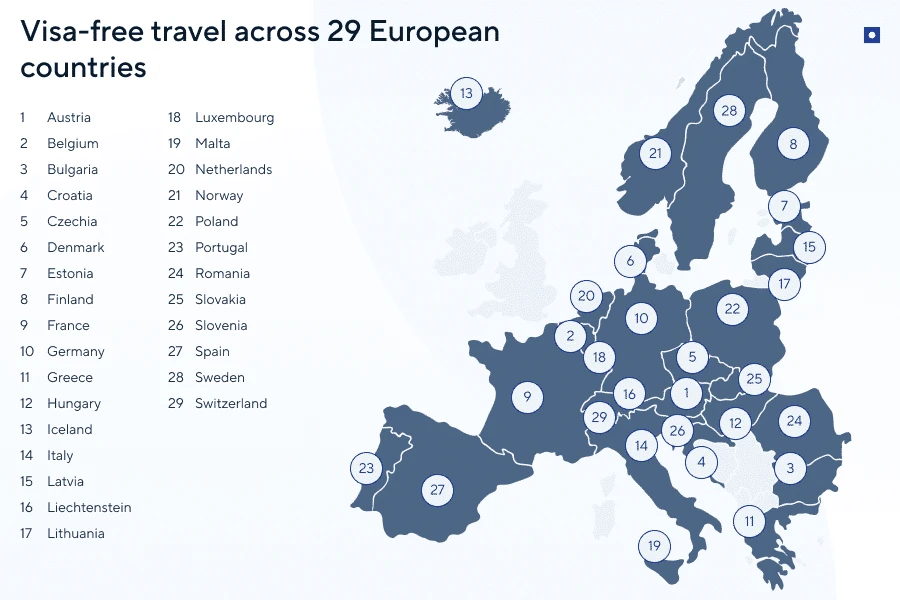
A Malta residence permit allows the holder to travel within the Schengen Area for short stays
[348]
Source: Schengen travel, European External Action Service
. The general Schengen rule allows stays of up to 90 days in any
This benefit is useful for investors who travel across Europe for business, family visits, medical care, or leisure. It does not give the right to settle, work, or study
3. Tax treatment
GRP Malta provides a special tax regime for
Other income taxable in Malta, including
Foreign income that is not remitted to Malta may fall outside Maltese taxation under the program. However, the result depends on the applicant’s tax residence, domicile, income structure, and tax obligations in other countries.
4. Family inclusion
The Malta Global Residence Programme allows the main applicant to include family members. This makes the program relevant for families who want one residence strategy rather than separate applications for each relative.
Under the GRP Malta tax rules, the 15% tax rate and the €15,000 minimum annual tax may cover:
- spouse;
- minor children, including children in the care and custody of the beneficiary or spouse;
- adult children who cannot maintain themselves because of serious illness or disability.
Other dependants may also be linked to the beneficiary, but their income is taxed separately at the applicable rates.
5. English-speaking environment
Malta has 2 official EU languages: Maltese and English [349] Source: Official languages, Legislation Malta . English is widely used in administration, business, education, healthcare, and everyday services.
This is one of Malta’s strongest advantages for international families. Parents can communicate with schools and doctors in English, while business owners can use English in contracts, banking, and professional services.
Malta Global Residence Programme requirements
Malta Global Residence Programme requirements apply to the main applicant, family members, property, insurance, language skills, and compliance checks. GRP Malta is open to eligible
Requirements for the main applicant
The main applicant must not be a citizen of Malta, another EU Member State, Iceland, Norway, Liechtenstein, or Switzerland. Dual citizens are also excluded if one of their citizenships is from one of these jurisdictions.
To qualify for GRP Malta, the main applicant must meet the following conditions:
- rent or buy qualifying property in Malta or Gozo;
- use the property as their principal place of residence worldwide;
- have stable and regular resources to support themselves and their dependants without social assistance in Malta;
- hold a valid travel document;
- have sickness insurance for themselves and dependants;
- communicate in Maltese or English;
- pass the
fit-and-proper assessment; - not intend to spend more than 183 days a year in another jurisdiction;
- not be domiciled in Malta and not intend to become domiciled in Malta within 5 years of application.
The applicant also cannot already benefit from certain Maltese tax schemes, such as the Malta Retirement Programme, the United Nations Pensions Programme Rules, or the Highly Qualified Persons Rules. An applicant may apply for GRP Malta only after renouncing benefits under an incompatible scheme.
Requirements for family members
Family members may be included in the Malta Global Residence Programme application if they meet the relevant conditions. The rules distinguish between dependants who may benefit from the 15% tax rate together with the main applicant and other dependants whose income is taxed separately.
The 15% tax rate and the €15,000 minimum annual tax may cover:
- spouse;
- minor children, including children in the care and custody of the beneficiary or spouse;
- adult children who cannot maintain themselves because of a serious illness or disability.
These family members are treated together with the main applicant for the purposes of the special tax rate. This means that the minimum annual tax may apply to their
Other dependents may be connected to the beneficiary under the program, but their taxable income in Malta is assessed separately. This group includes:
- partner in a stable and durable relationship;
- children over 18 but under 25 who are not economically active;
- brothers and sisters;
- parents and grandparents;
- other direct relatives in the ascending line.
Dependants over 18 must also satisfy compliance requirements. They may need to provide a police conduct certificate and a sworn declaration on any ongoing civil or criminal proceedings.
Health insurance
The main applicant must have sickness insurance for themselves and all dependants. The policy must cover risks across the whole EU that are normally covered for Maltese nationals.
The insurance may be issued by a company licensed in Malta or by a reputable international health insurance company. A certified copy of the policy is submitted with the application.
Language requirement
The applicant must adequately communicate in one of Malta’s official languages. Malta’s official languages are Maltese and English.
If available, language certificates may be attached to the application. The Commissioner also retains the right to request an informal meeting with the applicant to check this requirement.
Due Diligence and compliance
GRP Malta includes a
The Commissioner may consider:
- applicant’s conduct;
- reputation and character;
- criminal record;
- professional or regulatory sanctions;
- bankruptcy;
- offences connected with terrorism, money laundering, crimes against humanity, or child abuse.
The Commissioner may also ask further questions before deciding on the application.
Full disclosure is important. The omissions, misleading information, or concealed information may delay the application and may be treated as evidence of untrustworthiness.
Who cannot apply
An applicant cannot apply for the Malta Global Residence Programme if they are:
- Maltese national;
- EU national;
- citizen of Iceland, Norway, Liechtenstein, or Switzerland;
- dual citizen who also holds one of the above citizenships;
long-term resident of Malta;- beneficiary of an incompatible Maltese tax program, unless they renounce that status before applying;
- unable to prove qualifying property, stable resources, insurance, language ability, or
fit-and-proper status.
The program is also not suitable for applicants who plan to spend more than 183 days a year in another jurisdiction, as this may lead to loss of special tax status.
The official Malta program websites do not publish a fixed list of restricted nationalities. Instead, Malta assesses applicants through eligibility rules, document checks, and the
Applicants from
Elena Garnitsarik
Head of the Legal Department
Investment and property options under the Malta Global Residence Programme
Applicants under the Malta Global Residence Programme choose between 2 property options: buying or renting residential property in Malta or Gozo. The property is not an optional investment. It is one of the main conditions for obtaining and keeping Malta special tax status.
Buying property in Malta
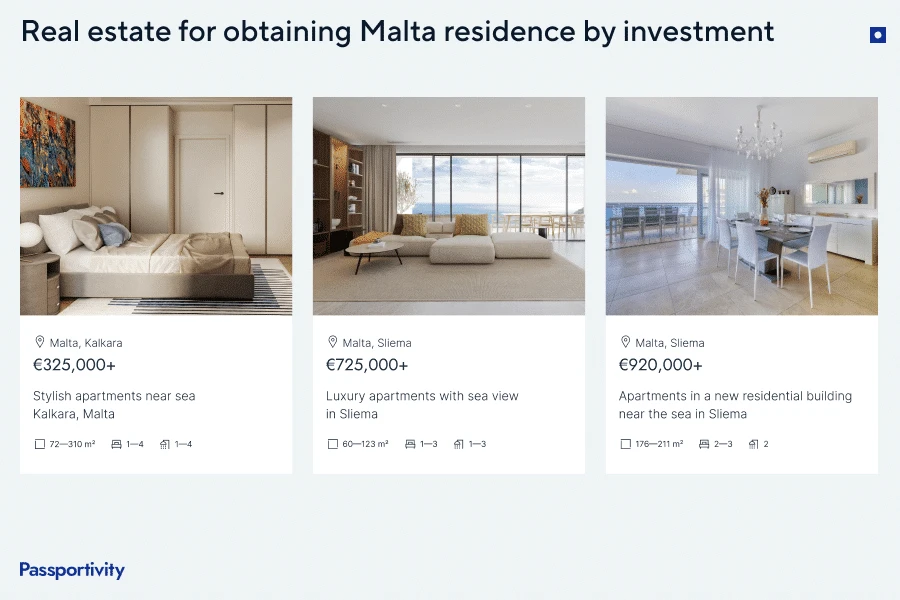
The purchase threshold depends on the property location. A qualifying property must cost at least:
- €275,000 if it is located in Malta, excluding the south of Malta;
- €220,000 if it is located in the south of Malta;
- €220,000 if it is located in Gozo.
The south of Malta is defined by an official list of localities. It includes, for example, Marsascala, Marsaxlokk, Kalkara, Vittoriosa, Żejtun, Żabbar, Tarxien, Paola, and Cospicua.
A purchased property may also qualify if it was bought before July 6th, 2013, for less than the required threshold. In this case, the applicant must declare that the property value on the application date is not below the required amount. The declaration must be supported by an independent architect valuation and architect’s plans.
Renting property in Malta
Renting is the second option under the Malta Global Residence Programme. The minimum annual rent also depends on location:
- €9,600+ a year for property in Malta, excluding the south of Malta;
- €8,750+ a year for property in the south of Malta;
- €8,750+ a year for property in Gozo.
The lease must be signed for at least 12 months. A certified lease agreement is submitted as proof. If the property is furnished, the lease must state this. Any separate agreement for furniture or similar items must also be attached to the application.
Rules for qualifying property
The qualifying property must be the applicant’s principal place of residence worldwide. This applies whether the property is bought or rented.
The property has 2 important restrictions:
- only the beneficiary, their dependants, and declared household staff may live there;
- the property must not be let or
sub-let .
The applicant does not have to own or rent the property at the moment of submitting the application. However, GRP Malta special tax status is not confirmed until the final deed of purchase or the certified lease agreement is submitted.
Main costs
Main costs under the Malta Global Residence Programme include:
- property rental: at least €8,750 or €9,600 a year, depending on location;
- property purchase: at least €220,000 or €275,000, depending on location;
- administrative fee: €6,000, or €5,500 in the specific south Malta purchase case;
- minimum annual tax: €15,000;
- health insurance: required for the main applicant and dependants.
In the first year, the minimum official outlay for the rental route starts at €29,750, before insurance, document, and professional expenses. This estimate includes the lowest annual rent of €8,750, the standard administrative fee of €6,000, and the minimum annual tax of €15,000.
Additional costs to consider
Applicants should also budget for expenses that are not fixed by the program rules. These costs vary by country, family size, and the number of documents.
Additional expenses may include:
- certified translations for documents that are not in English;
- apostille or legalisation of public documents;
- certified copies of passports and civil status documents;
- police conduct certificates;
- health insurance policies;
- property valuation and architect’s plans, if an older purchased property is used;
- professional fees for tax, property, and application support.

Tax rules under the Malta Global Residence Programme
The Malta Global Residence Programme gives beneficiaries special tax status in Malta. The main tax benefit is a 15% rate on
15% tax on foreign income remitted to Malta
The 15% rate may cover the income of:
- spouse;
- minor children, including children in the care and custody of the beneficiary or spouse;
- adult children who cannot maintain themselves because of serious illness or disability.
Other dependants may be included in the residence structure, but their income is taxed separately. This may apply to a
Foreign income not remitted to Malta
Malta applies the remittance basis of taxation to individuals who are not domiciled or not ordinarily resident in Malta. Under this approach,
This means that foreign income kept outside Malta is generally outside Maltese taxation under the remittance basis. The result depends on the applicant’s residence, domicile, income structure, and tax obligations in other countries.
Foreign capital gains
Foreign capital gains are treated differently from foreign income. Malta’s official guidance on the remittance basis states that capital gains arising outside Malta are not subject to Maltese tax, even if they are received in Malta.
The same guidance explains that proceeds of a capital nature, such as an inheritance or proceeds from the sale of a capital asset, are not treated as income for
Malta-source income
Income arising in Malta is taxed in Malta regardless of where it is received. This includes income from employment, business, professional activity, or property located in Malta.
Under the Malta Global Residence Programme, income that is taxable in Malta but not covered by the 15% rate is charged at 35%. The official guidelines give examples such as local bank interest and dividends from a company registered in Malta.
Minimum annual tax
A beneficiary of the Malta Global Residence Programme pays a minimum annual tax of €15,000
[351]
Source: GRP taxation, Malta Tax and Customs Administration
. This amount covers
The €15,000 minimum does not cover
GRP special tax status vs Maltese tax residence
GRP Malta gives the applicant special tax status. Maltese tax residence is a separate concept and depends on facts, not nationality or civil status. A person may also be tax resident in Malta and in another country at the same time.
Presence in Malta for more than 183 days in a year usually makes an individual tax resident in Malta for that year. A person who comes to Malta to establish residence may become resident from arrival, even if they spend fewer than 183 days there in that year.
GRP status also has a practical limitation outside Malta. The beneficiary may lose special tax status if they spend more than 183 days in another jurisdiction in a calendar year. This must be declared in the annual tax return.
Double tax treaties and tax planning
Malta has a broad double tax treaty network. The Malta Tax and Customs Administration states that most treaties are based on the OECD Model Tax Convention.
Double tax relief may reduce the tax due in Malta. However, under GRP Malta, relief does not remove the €15,000 minimum annual tax. If the tax calculation after relief is below this amount, the beneficiary still pays the minimum.
Tax planning should be reviewed before applying. Applicants need to check where their income arises, where it is received, which treaty applies, and whether they remain tax resident in another country.
How to get Malta residency under the Global Residence Programme
The process of obtaining Malta residency under the Global Residence Programme usually takes 6 months, provided the documents are submitted on time and the authorities do not request additional information.
Passportivity’s lawyers support the applicant at each stage of the process. They run a preliminary check, prepare a personalised document list, fill in government forms, arrange translations and notarisation, and help the applicant respond to additional requests from the Maltese authorities.
-
2 days
Preliminary Due Diligence
To prepare for the program department's review, Passportivity’s lawyers conduct a preliminary assessment of the investor's documents and evaluate potential risks.
The check is fully confidential. The investor provides only their passport. Preliminary checks reduce the risk of rejection to 1%.
-
4—5 weeksDocument collection and application submission
Lawyers prepare a list of required documents for the application. Once the investor provides the originals, lawyers translate the documents, notarise copies, and complete the forms.
At this stage, the investor pays the administrative fee, after which the document package is submitted to Malta's tax authority.
-
3—4 monthsDue Diligence
The tax authority reviews the documents of the investor and their family. During Due Diligence, additional requests may arise, which lawyers address in consultation with the investor.
-
From 2 weeks
Obtaining special tax status
Once a lawyer receives notification of application approval, the investor travels to Malta for an interview at the tax authority.
During the interview, the tax authority director personally explains the program terms to the investor. After the meeting, the director issues conditional approval for the applicant's participation. The investor pays the minimum tax and provides documents for property rental or purchase.
The investor receives tax status and a tax number within two weeks of paying the tax.
-
2+ week sResidence permit application submission
Lawyers prepare the application package, including notarised copies of personal documents, a lease declaration or property purchase agreement, a letter from the tax authority, and government forms.
The investor provides a bank statement showing a balance of at least €30,000 for the main applicant, plus €5,000 for each additional dependent.
The residence permit application must be submitted in person to the government agency Identity Malta Agency by appointment. Biometrics are also collected during this visit. The investor and their family must travel to Malta for this step.
-
6—7 weeksReceiving residence cards
Identity Malta Agency processes the application in an average of five to six weeks. Once the document review is complete, the agency sends a notification about the issuance of residence cards to the investor's Malta address. The residence cards must be collected in person.
-
After 1 year
Residence permit renewal
One year after obtaining the residence permit, the investor submits documents for renewal. This requires updating the special tax status by filing an annual tax return and paying the tax.
Specialists gather the documents and prepare the application for submission to Identity Malta Agency. After approval, the investor and family members provide new biometric data and receive new residence cards within two weeks.
Documents required for the Malta Global Residence Programme
Applicants prepare documents in 2 stages. First, they submit a GRP Malta application for special tax status to the Malta Tax and Customs Administration. After approval, they use the certificate from the Commissioner for Revenue to apply for a Malta residence permit with Identità.
Documents for the main applicant
The main applicant usually prepares personal, tax, and compliance documents. The exact list depends on the applicant’s country of residence, family structure, and property option.
The standard document package includes:
- completed Malta Global Residence Programme application form;
- bank draft for the administrative fee;
- 2 recent certified true likeness photographs;
- certified true copy of the main passport page, including the signature page;
- apostilled full birth certificate;
- apostilled full marriage certificate, if applicable;
- police conduct certificate issued no earlier than 6 months before the application date;
- sworn affidavit before a Commissioner for Oaths in Malta;
- explanation of any ongoing civil or criminal proceedings, if applicable;
- completed and signed GRP Malta questionnaire;
- additional information requested by the tax authority.
The application form states that information must be true, complete, and correct. The Commissioner for Revenue may verify the submitted information and forward it to other parties for Due Diligence purposes.
Documents that are not in English must be submitted with a certified translation. Public documents issued outside the EU usually need an apostille. If the issuing country is not a party to the Hague Apostille Convention, the document must be legalised.
Documents for family members
Family members mentioned in the application form must also provide identity and civil status documents [352] Source: GRP documents, Malta Tax and Customs Administration . The list depends on their relationship to the main applicant and their age.
For each family member, the application usually includes:
- 2 recent certified true likeness photographs;
- certified true copy of the main passport page, including the signature page;
- apostilled full birth certificate;
- apostilled marriage certificate, if applicable;
- police conduct certificate for each person over 18;
- sworn declaration on any ongoing criminal or civil proceedings for each person over 18.
Some dependants need extra documents. For example, children who are over 18 but under 25 and are not economically active must provide a declaration confirming this status.
If the police authorities in the person’s last country of residence do not issue conduct certificates, character references may be submitted instead. The official form allows references from bankers, solicitors, medical practitioners, employers, accountants, or persons of similar standing.
Property and insurance documents
Property and insurance documents prove that the applicant meets the main practical conditions of the Malta Global Residence Programme. They are also required later for the residence card stage.
For the GRP Malta application, the applicant submits:
- certified true copy of the lease agreement or final deed of purchase of qualifying property;
- architect valuation and architect’s plans if an older purchased property is used and its declared value must be confirmed;
- certified true copy of the insurance policy covering the applicant and dependants.
For the residence card application, Identità requires proof of accommodation, a copy of the certificate from the Commissioner for Revenue confirming that the applicant meets the applicable law, and a copy of comprehensive health insurance. If the applicant rents property, the lease agreement must include the landlord’s full name, ID card number, and rental address.
Applicants must submit the residence permit application while they are in Malta and before their authorisation to stay expires. Travel documents must generally have at least 8 months of validity at the time of submission.
How to renew the Malta residence permit
A Malta residence permit under the Global Residence Programme is renewed only if the beneficiary still meets the tax, property, insurance, and immigration conditions. The renewal process is linked to 2 checks: annual compliance with GRP Malta rules and renewal of the residence card with Identità.
Annual obligations
A beneficiary must submit an annual tax return. The return includes a declaration of any material changes that affect their special tax status. The Malta Tax and Customs Administration may also request supporting documents, certificates, or declarations within a specified timeframe.
Material changes must be reported through an Authorised Registered Mandatary within 4 weeks. This includes changes in the number of dependants or household staff, loss of qualifying property, loss of sickness insurance, or other events that may affect eligibility.
The beneficiary must also keep meeting the core GRP Malta conditions:
- keep qualifying property in Malta or Gozo;
- keep sickness insurance for themselves and dependants;
- avoid becoming a
long-term resident of Malta; - avoid spending more than 183 days a year in another jurisdiction;
- comply with Maltese tax obligations;
- answer official requests from the tax authority on time.
Residence card renewal
Residence card renewal is handled by Identità. Applications are submitted online through the Expatriates Unit Portal. The fee for new and renewal applications is €100, and the passport must have at least 8 months of validity at the time of submission.
For renewal, Form K requires a recent declaration from Inland Revenue confirming that the applicant still satisfies the criteria for the special tax program. If the address has changed, the applicant also provides the lease agreement professional attestation form.
Documents must be presented in English or Maltese. Identità may request additional documents before processing the renewal.
Can the Malta Global Residence Programme lead to citizenship?
GRP Malta is not a direct route to Malta citizenship. The program gives special tax status and a basis to obtain and renew a Malta residence permit, provided the applicant continues to meet the program conditions.
A Malta residence permit may help an applicant build lawful residence in the country. However, citizenship is a separate process. It is assessed under the Maltese Citizenship Act and remains at the discretion of the Minister responsible for citizenship matters.
A foreigner may apply for Malta citizenship by naturalisation on the basis of residence if they meet the legal requirements [353] Source: Citizenship routes, Community Malta Agency . The applicant must generally:
- be over 18;
- have resided in Malta throughout the 12 months immediately before the application;
- have resided in Malta for at least 4 years in aggregate during the 6 years before that
12-month period; - be of good character;
- have adequate knowledge of Maltese or English;
- be considered a suitable citizen of Malta.
Before submitting the application, the applicant needs to contact the Community Malta Agency. The Agency compiles a residence certificate and checks whether the applicant may proceed with the citizenship application.
Meeting the residence period does not guarantee approval. The Community Malta Agency states that the Minister has discretion to grant or refuse an application for citizenship by naturalisation.
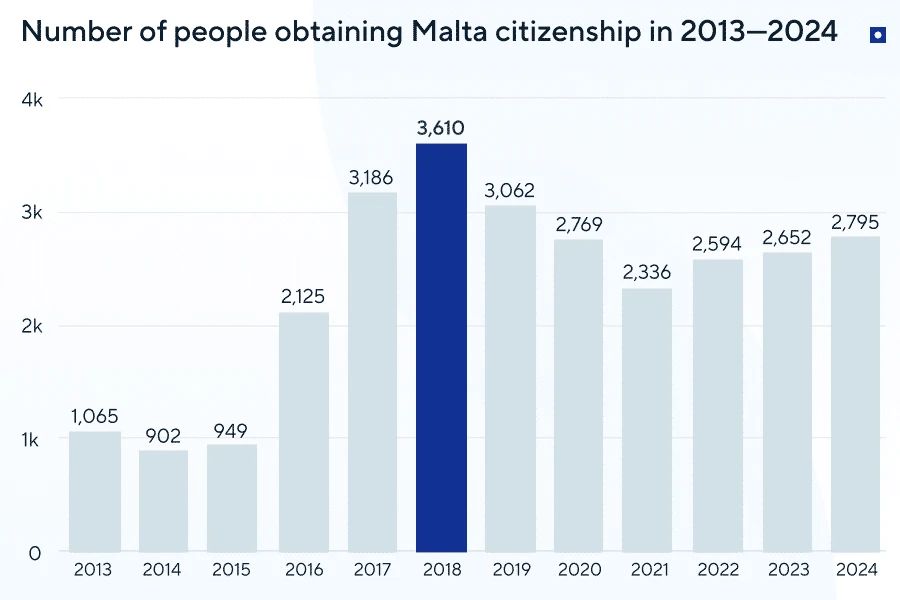
The chart below shows how many foreigners obtained Malta citizenship in recent years. It covers all legal grounds for acquiring citizenship, not only former GRP Malta beneficiaries.
Reasons for refusal and loss of GRP Malta status
GRP Malta applications are reviewed by the Malta Tax and Customs Administration. The authority checks eligibility, documents, property, health insurance, source of funds, and the applicant’s personal background.
An application may be refused or delayed if the applicant does not meet the program conditions. The main risk factors include:
- Failed Due Diligence: the Commissioner assesses the applicant’s conduct, reputation, criminal record, possible regulatory sanctions, bankruptcy, and offences connected with terrorism, money laundering, crimes against humanity, or child abuse.
- Incomplete or misleading documents: missing information stops the application from being processed, while false, omitted, or concealed information is treated as evidence of untrustworthiness.
- Insufficient financial resources: the applicant must prove stable and regular resources to support themselves and their dependants without using Malta’s social assistance system.
- No qualifying property: special tax status is not confirmed until the applicant submits a certified lease agreement or final deed of purchase.
- Health insurance issues: the applicant and dependants must have sickness insurance covering risks across the whole EU.
Public-interest concerns: the status may be denied or later withdrawn if the beneficiary’s stay affects public safety, public order, national security, territorial integrity, public health, or public morals.
Approval does not end the compliance process. The beneficiary must continue to meet the GRP Malta conditions for as long as they keep the special tax status.
The main reasons for loss of status include:
- loss of qualifying property or
EU-wide health insurance; - breach of tax or compliance obligations, including tax evasion, misrepresentation, or failure to answer official requests;
- becoming a national of Malta, another EU country, Iceland, Norway, Liechtenstein, or Switzerland;
- becoming or applying to become a
long-term resident of Malta; - spending more than 183 days in another jurisdiction in a calendar year;
- failure to report material changes through an authorised registered mandatary within 4 weeks.
The program rules require beneficiaries to submit an annual tax return and declare material changes that may affect their special tax status. False declarations may lead to penalties under the Income Tax Management Act and the Criminal Code.
Malta Global Residence Programme vs Malta Golden Visa
Malta Global Residence Programme and Malta Golden Visa are often compared because both are used by foreign applicants who want Malta residency. However, they are different routes.
Malta Golden Visa is a common market term for Malta permanent residence by investment. The official program name is the Malta Permanent Residence Programme, MPRP. It is regulated by Subsidiary Legislation 217.26 and grants permanent residency rights based on investment [354] Source: MPRP regulations, Residency Malta Agency .
The Malta Permanent Residence Programme suits applicants who need
Applicants must meet the following conditions:
- rent residential property in Malta for at least €14,000 a year and keep it for at least 5 years, or buy residential property for at least €375,000 and keep it for at least 5 years;
- make a
non-refundable government contribution of €37,000; - pay an administrative fee of €60,000 for the main applicant;
- pay €7,500 per dependant aged 18 or over, excluding the spouse;
- donate at least €2,000 to a Maltese
non-governmental organisation; - prove financial solvency: at least €500,000 in capital with €150,000 in liquid assets, or €650,000 in capital with €75,000 in liquid assets.
The main difference between two residence routes is the purpose of the route. GRP Malta is primarily a tax status with residence eligibility. MPRP is a permanent residence route with fixed investment, contribution, donation, Due Diligence, and property requirements.
Comparison of GRP Malta and Malta Golden Visa
| Criteria | Malta Global Residence Programme | Malta Golden Visa |
|---|---|---|
| Status type | Special tax status with residence eligibility | Permanent residence, with residence cards renewed every 5 years |
| Tax treatment | 15% on €15,000Minimum annual tax | No special tax regime under the program itself |
| Property requirement | Rent for at least €8,750 a year, or buy for at least €220,000 | Rent for at least €14,000 a year for 5 years, or buy for at least €375,000 and keep the property for 5 years |
| Financial requirements | €5,500 Administrative fee €15,000 Minimum annual tax | €37,000 Government contribution €60,000 Administrative fee €2,000 Donation |
Best places to live in Malta under the Global Residence Programme
The best area for GRP Malta beneficiaries depends on lifestyle, property budget, and how often the family plans to stay in the country. Under the Malta Global Residence Programme, the applicant must rent or buy qualifying property and keep it as their principal place of residence worldwide.
Sliema and St Julian’s
Sliema and St Julian’s suit applicants who want an active urban lifestyle by the sea. Sliema is associated with the seafront and city facilities, while St Julian’s is one of Malta’s main areas for tourism, restaurants, and nightlife.
This area may suit business owners, young families, and applicants who prefer to live close to offices, private clinics, international schools, restaurants, and seafront promenades. Property prices and rents are usually higher than in quieter parts of Malta.
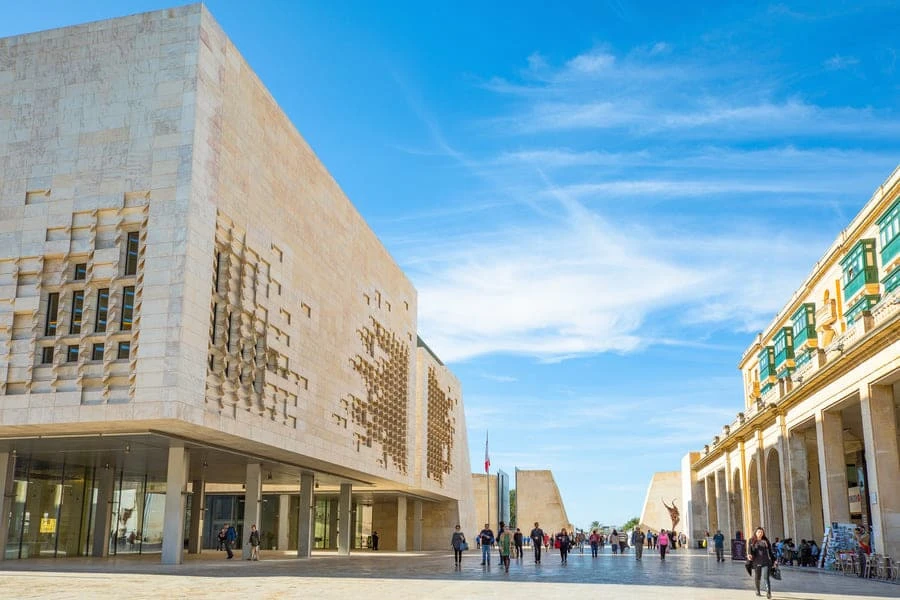
Valletta and the Three Cities
Valletta suits applicants who want to live near Malta’s administrative, cultural, and historical centre. The capital is one of Malta’s UNESCO World Heritage sites, together with the Ħ
The Three Cities — Vittoriosa, Cospicua, and Senglea — are located around the Grand Harbour opposite Valletta. Cospicua is the largest of the Three Cities, and the area is often chosen by residents who prefer historic streets, harbour views, and a quieter atmosphere than central Sliema or St Julian’s.
Mellieħa and northern Malta
Mellieħa and northern Malta suit families who want more space, beaches, and a less urban setting. The Mellieħa Local Council describes the locality as one of the larger localities in Malta and notes that it includes Manikata. It also highlights the area’s rural environment.
This area may suit applicants who want to live closer to sandy beaches, such as Mellieħa Bay, and prefer a slower rhythm of life. It is less central than Sliema or Valletta, so commuting time should be checked before signing a lease or buying property.
Gozo
Gozo suits applicants who want a quieter island lifestyle. VisitMalta describes Gozo as Malta’s sister island with natural landscapes, azure waters, and historic sites. The official tourism portal also presents it as a destination around 20 minutes away from Malta.
Gozo may be suitable for retirees, remote business owners, and families who value privacy and outdoor activities. It can also be more
Southern Malta
Southern Malta may suit applicants who want lower qualifying property thresholds and a more local environment. Under the Malta Global Residence Programme, buying property in the south of Malta starts at €220,000, while renting starts at €8,750 a year. In other parts of Malta, the thresholds are €275,000 for purchase and €9,600 a year for rent.
The south includes coastal towns and harbour areas such as Marsaxlokk, Marsaskala, and the Three Cities. It may suit applicants who prefer a less commercial setting and want to reduce property costs while meeting GRP Malta requirements.
Final thoughts on Malta residence permit by investment
- Malta Global Residence Programme is mainly a tax residence route. It gives eligible
non-EU ,non-EEA , andnon-Swiss nationals special tax status in Malta and a basis to apply for a Malta residence permit. - The main tax benefit is the 15% rate on foreign income remitted to Malta. The minimum annual tax is €15,000.
Malta-source income and other taxable income are generally taxed at 35%. - Applicants must rent or buy qualifying property. Renting starts at €8,750 a year in the south of Malta or Gozo. Buying starts at €220,000 in the same regions. The property must not be
sub-let and must remain the beneficiary’s principal place of residence worldwide. - Family members may be included, but their tax treatment differs. The 15% tax rate may cover a spouse, minor children, and adult children who cannot maintain themselves because of serious illness or disability. Other dependants may be linked to the beneficiary but taxed separately.
- GRP Malta is not the same as Malta Golden Visa. The Malta Global Residence Programme gives special tax status with residence eligibility. The Malta Golden Visa, or MPRP, is a permanent residence route with higher fixed payments and separate investment conditions.
- The program does not directly lead to citizenship. A GRP Malta residence permit may help build lawful residence in Malta, but naturalisation is a separate process. Approval remains at the discretion of Maltese authorities.
- Status depends on continuous compliance. Beneficiaries must keep qualifying property, maintain health insurance, file annual tax returns, report material changes, and avoid spending more than 183 days a year in another jurisdiction.
About the authors


Frequently asked questions
The Malta Global Residence Programme, or GRP Malta, is a special tax status for
Applicants must rent or buy qualifying property, have health insurance, pay an administrative fee, and pass compliance checks.
The minimum official outlay in the first year starts at €30,000. This includes the lowest annual rent of €8,750, the standard administrative fee of €6,000, and the minimum annual tax of €15,000.
Additional costs may include health insurance, certified translations, apostilles, notary fees,
Yes, family members may be included if they meet the program requirements. The application may cover a spouse, minor children, and certain adult children who cannot maintain themselves because of serious illness or disability.
Other dependants may also be connected to the beneficiary, such as a
GRP Malta is not a direct route to Malta citizenship. The program gives special tax status and a basis to obtain and renew a Malta residence permit.
A residence permit may help an applicant build lawful residence in Malta. However, citizenship by naturalisation is a separate process and remains at the discretion of Maltese authorities.
The core Malta Global Residence Programme rules have not changed substantially in recent years. The program is still based on Legal Notice 167 of 2013, as amended.
Recent updates that may affect applicants are mostly related to property and compliance. Malta has updated rules for private residential leases and introduced restrictions on cash payments of €10,000 or more, including linked transactions, for property purchases.
These changes matter because GRP Malta applicants must rent or buy qualifying property, keep valid documents, and comply with current legal requirements. Before applying, applicants should check the latest official rules on property, tax, and payments.
Read also




Contact us today
Passportivity assists international clients in obtaining residence and citizenship under the respective programs. Contact us to arrange an initial private consultation.