

 Life abroad
 Reading time: 13 min
 Living in Greece: What to Expect
Greece offers a Mediterranean lifestyle, affordable rents, and fresh seafood all year round. Foreigners often choose Athens, Thessaloniki, and Crete, where they can combine remote work with waterfront walks and dinners at
Greece is also known for complex bureaucracy and high taxes, which are important to consider before relocating. This article presents the full picture: advantages, disadvantages, prices, lifestyle, and the best cities for expats.

 Share
Share  Telegram
  Facebook
 LinkedIn
 X
X

 Save
Save 

15 advantages of living in Greece
Living in Greece offers more than warm weather and Mediterranean scenery. The country combines a relatively affordable cost of living with access to healthcare and education, favourable residence and tax options, and a high level of safety. Here are 15 key advantages of making Greece your home.
1. Quality of life
Greece combines a mild Mediterranean climate, access to the sea and nature, good urban infrastructure in major cities, and a relaxed pace of life.
Greece ranks 34th out of 193 countries and is classified as a country with very high human development, according to the UNDP Human Development Report 2025. This reflects the country’s achievements in health, education, and income.
Athens also performs well in international city rankings. The Greek capital ranked 28th in the 2026 Europe’s Best Cities Report. Athens stood out for health, ranking 3rd worldwide, as well as for biking and walkability in the separate 2026 World’s Best Cities Report.
Greece is particularly attractive to people planning retirement abroad. International Living named it the world’s leading retirement destination for 2026 [178] Source: International Living — 2026 Annual Global Retirement Index . The assessment considered housing, living costs, healthcare, climate, infrastructure, residence options, and the experience of settling into a new community.
2. Relatively affordable cost of living
Renting a
A family of four spends around €2,800 per month in Greece, excluding rent, according to the Numbeo database. The same family would spend approximately €3,200 in Italy and €3,500 in Germany.
3. Safety
Greece has a lower perceived level of crime than France, Italy, and the UK, according to Numbeo’s 2026 Crime Index. Greece scores 46.2, compared with 55.8 for France, 48.3 for the UK, and 47.3 for Italy.
Violent crime is relatively uncommon in Greece. In smaller towns and on the islands, residents may leave their homes or cars unlocked. The main risks involve petty theft in tourist areas, particularly around central squares and on the metro.
Greek police maintain a visible presence in tourist areas and major cities. Officers also patrol airports and passenger terminals. Travellers who need assistance can contact the Tourist Police, whose officers speak English.
4. Fast route to residence
Wealthy foreign nationals can obtain a Greek residence permit by investment, also known as the Greece Golden Visa. The process takes at least 4 months, and the minimum investment is €250,000.
5. Path to a second passport
Foreign nationals become eligible to apply for Greek citizenship after 7 years of legal residence in the country.
Holding a Greek passport allows
6. Established expat community
Greece has a sizable international population. In 2024, around 1.1 million
International residents are concentrated mainly in Attica, Central Macedonia, and Crete.
7. Preferential taxation for new residents
Greece offers special tax regimes to individuals who transfer their tax residence to the country.
Eligible
The regime may be extended to a spouse, civil partner, direct ascendants, and direct descendants for an additional €20,000 per person.
Foreign pensioners may pay tax at a flat rate of 7% on all
Employees and sole traders relocating to Greece may receive a 50% exemption on qualifying
8. Access to healthcare
Residents insured under Greece’s statutory health system have access to public hospitals and health centres, as well as private healthcare providers contracted with EOPYY. The system covers primary care, diagnostic tests, specialist outpatient services and hospital treatment, although
Greece also has a substantial private healthcare sector, particularly in Athens and Thessaloniki. Alongside this combination of public and private provision, the country records life expectancy above the EU average. Life expectancy at birth in Greece was 81.9 years in 2024, compared with 81.5 years across the EU, according to the latest Eurostat data.
9. Free public education
Public
Children who do not have sufficient
10. Mediterranean climate
Greece has around 300 sunny days a year. Winter temperatures rarely fall below +10°C, while summer temperatures usually range between +28°C and +35°C. Sea breezes make the heat easier to tolerate than in continental Europe.
The Greek climate may be beneficial for people with joint, respiratory, or cardiovascular conditions. Mild winters, warm and dry summers, and stable temperatures may ease arthritis symptoms. Sea air may also make breathing more comfortable for some people with asthma.
The pleasant climate encourages an active lifestyle. Local residents spend much of their time outdoors, walking, cycling, exercising, or relaxing by the sea.
11. Hospitality of locals
Hospitality is an important part of Greek culture. Its roots date back to ancient times, when the principle of φιλοξενία, meaning ‘love of strangers’, was considered a moral duty.
In everyday life, openness towards foreigners is reflected in small gestures. Neighbours offer coffee, shopkeepers greet regular customers by name, and owners of
12. Travel across Europe
Several neighbouring countries are only a few hours away from Greece. A flight from Athens to Rome or Vienna takes around 2 hours, while a flight to Paris takes approximately 3 hours.
Several major and
Greek residence permit holders can travel to other Schengen Area countries without obtaining separate visas. They may spend up to 90 days there within any
13. Historical and cultural heritage
Greece has thousands of archaeological sites, ancient theatres, monasteries, and museums. Athens is home to the Acropolis, the Parthenon, and the Ancient Agora. Thessaloniki has Byzantine churches, Roman arches, and Ottoman monuments. Minoan palaces and Venetian fortresses remain preserved on Crete and Rhodes.
14. Mediterranean cuisine
Greek cuisine is based on vegetables, herbs, pulses, fish, seafood, olive oil, yoghurt, and cheese. Locally produced food is available even in small shops. In summer, markets offer a wide selection of fresh fruit, including figs, peaches, watermelons, melons, and grapes.
Annual studies indicate that the Mediterranean diet may help prevent cardiovascular disease and certain types of cancer, as well as support cognitive health. Research by Spanish scientists suggests that this eating pattern may reduce the risk of strokes and heart attacks by almost one third.
15. Easy access to beaches and nature
Living in Greece provides regular access to beaches, mountains, forests, and islands. Residents combine everyday life with swimming, sailing, hiking, cycling, and other outdoor activities for much of the year.
Hundreds of Greek beaches receive the Blue Flag award, as they meet requirements covering
Disadvantages of living in Greece
Living in Greece comes with some practical challenges. High taxes, slow bureaucracy, and transport disruptions can make everyday life less convenient, particularly for newcomers. Here are the main disadvantages to consider before moving to Greece.
1. High taxes
Greece applies progressive taxation to employment and pension income. Starting 2026 tax year, standard marginal rates range from 9% on the first €10,000 of taxable income to 44% on income above €60,000. Income of €40,
Social security contributions depend on employment status and insurance coverage.
The corporate income tax rate is 22%.
2. Cold homes in winter
Many regions of Greece do not have the central heating systems commonly used in countries with colder climates. During winter,
Most flats and houses are heated with electric appliances, air conditioning units, or gas boilers, which may result in high electricity bills. Building insulation also often falls below Northern European standards. Walls may be thin, window frames are not always airtight, and insulated façades are uncommon.
3. Frequent strikes
Greek trade unions regularly organise protests that may disrupt public transport, schools, hospitals, and tax authorities. Strikes are often announced only one day in advance or held without prior notice, causing inconvenience for local residents.
Ferry services to the islands may be cancelled during strikes by port workers. Protests by air traffic controllers may also lead to delayed or cancelled flights.
4. High unemployment rate
Greece’s unemployment rate was around 8% as of June 2026, compared with 6.0% across the EU. Youth unemployment stood at 19.5%. In regions dependent on tourism, employment is unstable and varies by season.
The situation is more challenging for foreign nationals. Most vacancies require knowledge of Greek, particularly in administrative,
IT, finance, marketing, and tourism are among the exceptions, as some roles in these sectors are available to
5. Bureaucracy
Greece is known for its complex bureaucracy and the slow pace of government institutions. Obtaining documents, registering a business, or applying for a tax identification number may take weeks or even months.
Applicants often need to attend appointments in person, provide notarised copies and translations, and make repeat visits because of minor inconsistencies in their documents.
Even basic procedures may take longer than expected. These include setting up an Internet connection, opening a bank account, and submitting an application to a municipality. Not all services are available online, and digital platforms may be unreliable. Applications may be lost, officials may redirect applicants to other departments, and deadlines are not always met.
The relaxed pace of life may seem like part of the country’s southern charm to tourists, but it can become challenging in everyday life. The Greek word αύριο, meaning ‘tomorrow’, may sometimes mean ‘next week’ or ‘at some point later’. Tradespeople, contractors, and service staff may also arrive late, miss appointments, or delay their work.
Best places for expats to live in Greece
Athens is the capital and largest city of Greece, with a population of around 3.2 million. It is the country’s main economic, cultural, and business centre. Expats working in IT, education, business, tourism, and the creative industries often move there.
The city is home to the offices of international companies such as Google, Microsoft, Deloitte, and Meta, startup incubators including Found.ation and The Cube Athens, as well as international schools and universities.
Athens has 3 metro lines, suburban trains, buses, trolleybuses, and trams. The city is served by 2 ports, Piraeus and Rafina, with ferry connections to the islands. Athens International Airport Eleftherios Venizelos is around 40 minutes from the city centre and offers direct flights to Europe, Asia, and the US.
The Greek capital combines the energy of a large city with a relaxed Mediterranean pace of life. Residents can work in modern business centres and have dinner at a
Thessaloniki is Greece’s
The city is more compact than Athens but offers all the essential infrastructure. It has an international airport, Thessaloniki Airport Makedonia, an extensive bus network, and a metro system under active development. Residents also have access to private and public hospitals, large shopping centres, and sports facilities.
Life in Thessaloniki is more relaxed than in the capital. Residents often spend their time on the waterfront or in the city’s many cafés and welcoming restaurants. The city centre combines pedestrian streets, historical landmarks, shops, and cultural spaces.
Thessaloniki often appeals to those who want to live in a major city without the intensity of the capital. The cost of living is lower, and the city has more green spaces.
Heraklion is the largest city on Crete and one of the most convenient places to live in southern Greece. It has public and private hospitals, schools, a university, a major port, and an international airport with flights to Athens, Thessaloniki, and EU countries. The city also has Lidl, AB, and Sklavenitis supermarkets, farmers’ markets, coworking spaces, gyms, cafés with
Life in Heraklion moves at a relaxed pace, and the climate is mild. Winter temperatures rarely fall below +12°C, while summer temperatures remain close to +30°C. Sea breezes make the heat easier to tolerate. People spend much of the year outdoors, dining on terraces, walking along the coast, exercising, and visiting beaches.
Rhodes is a large island in the Aegean Sea that is popular with tourists and expats. Residents enjoy a warm climate throughout the year, scenic natural surroundings, and access to essential urban amenities.
Rhodes has a calm and unhurried pace of life. The island is filled with tourists in summer. In winter, it becomes quieter and develops a more intimate, homely atmosphere. In the evenings, local residents walk along the waterfront and meet in tavernas and
Rhodes appeals to those looking for an environmentally clean place by the sea, with lower prices than in the capital and opportunities to combine work and leisure. Residents maintain an active lifestyle throughout the year, with sailing, surfing, hiking, and trips around the island among the popular activities.
Larissa is a
The city centre is almost entirely pedestrianised, with numerous shops, small parks, and welcoming squares. Local residents spend much of their time in cafés and gather in bars and restaurants in the evening.
The city is surrounded by parks, gardens, and woodland. The Pineios River is nearby, while Mount Olympus and the Aegean coast are less than an hour away by car.
Cost of living in Greece
A single person needs around €795 per month for a comfortable life in Greece, excluding rent. A family of four spends approximately €2,750. Average expenses are higher in Athens at €850 for one person and around €3,000 for a family of four, according to Numbeo.
Food prices in Greece as of
- 1 litre of milk — €1.50;
- loaf of bread — €1.30;
- 1 kg of rice — €2.40;
- 12 eggs — €3.90;
- 1 kg of local cheese — €12.20;
- 1 kg of chicken fillets — €9.10;
- 1 kg of tomatoes — €1.90;
- 1 kg of apples — €1.90;
- 1 kg of potatoes — €1.10;
- 1 kg of onions — €1;
- 0.5 litres of local bottled beer — €1.70;
- 1.5 litres of water — €0.80.
A meal for one person in a café costs around €15. Dinner for two at a good restaurant costs approximately €50.
Utility costs depend on electricity consumption. Owners of an 85 m² flat pay around €191 per month for basic services, including electricity, heating, cooling, water, and waste collection. Expenses increase when air conditioning units, heaters, and dehumidifiers are used regularly.
An unlimited Internet plan costs around €30 per month. A mobile plan with calls and 10 GB of data costs approximately €22.
Education for children. Public
Property in Greece
Property prices in Greece continue to rise. In the first quarter of 2026, Apartment prices increased by 5.7% year on year, according to the Bank of Greece. The increase reached 5.2% in Athens and 6.4% in Thessaloniki [180] Source: Bank of Greece — Indices of residential property prices: Q1 2026 .
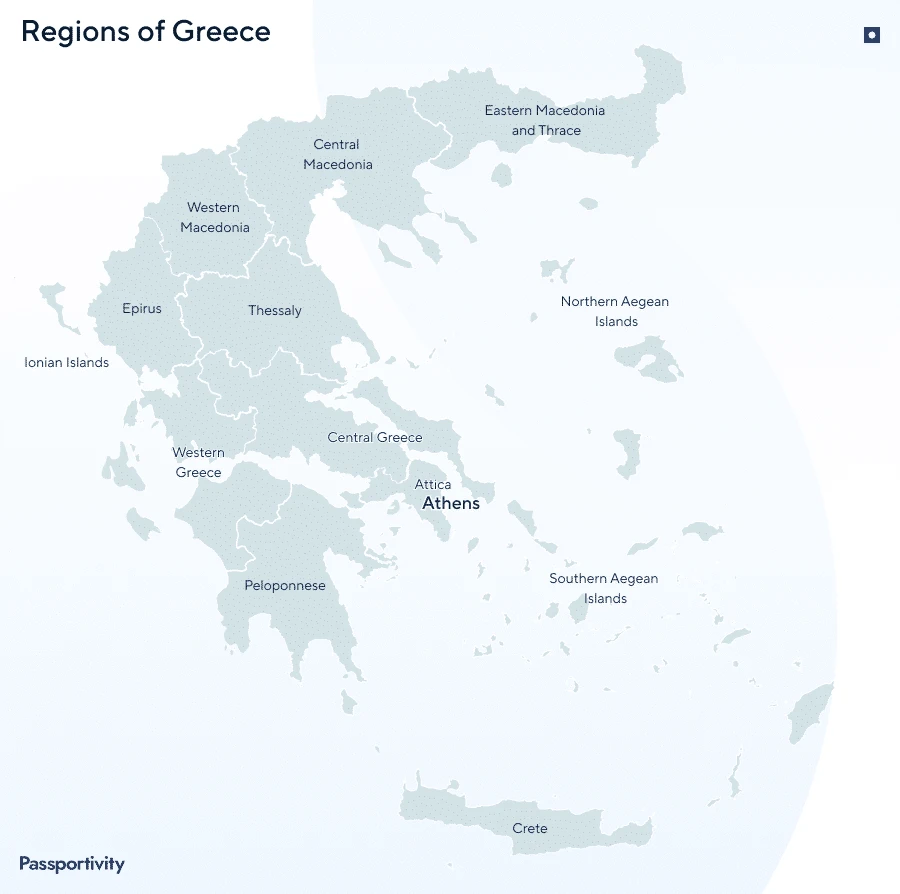
Average asking prices vary by region [181] Source: Indomio — Property price data in Greece :
- Aegean Islands — €3,626 per m²;
- Attica — €3,173 per m²;
- Crete — €2,565 per m²;
- Thessaloniki — €2,373 per m²;
- Thessaly — €1,455 per m².
Rental prices in Greece are also rising. In June 2026, the average asking rent reached €10.67 per m² per month, up by 3.79% year on year.
Attica is the most expensive region, with an average asking rent of €12.45 per m², while Macedonia is the most affordable at €6.39 per m².
In the Thessaloniki region, the average asking rent is €9.02 per m² per month. Rates are higher in Thessaloniki Municipality at €9.66 per m² and lower in the suburbs at €7.85. In central Thessaloniki, the average reached €10.95 per m².
A
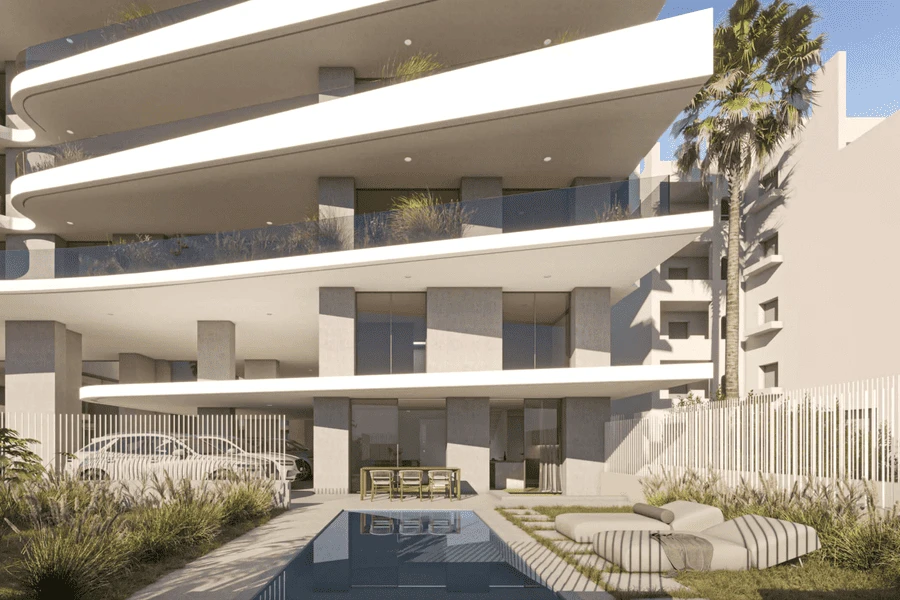
Buying a house vs. renting a house in Greece
The choice of whether to rent or buy a property depends on the planned length of stay, available capital, preferred location, and willingness to manage a property.
Upfront and regular costs
Renting has lower initial costs, while buying requires more capital and creates
Tenants normally pay the first month’s rent, a security deposit equal to 1 or 2 months’ rent, and sometimes an estate agent’s fee. They also cover utilities and shared building charges specified in the agreement.
Buying requires the full purchase price or a mortgage deposit. Buyers also pay property transfer tax at an effective rate of approximately 3.09%.
Additional costs may include legal Due Diligence, technical inspections, notarisation, registration, estate agent’s fees, insurance, and renovation.
For example, the average price in Thessaloniki was €2,667 per m² in the first quarter of 2026. A 70 m² flat therefore cost around €186,690, with approximately €5,769 payable in property transfer tax and the municipal levy.
Owners also pay ENFIA, an annual property tax with a base rate of €2 to 16.20 per m², depending on the property’s official zone value, size, age, floor, use, and other characteristics. They also often cover maintenance costs and major repair expenses.
Flexibility and location
Renting allows newcomers to test a neighbourhood before choosing a permanent home. Tenants can relocate more easily if their work, school requirements, or lifestyle preferences change.
Buying provides greater housing stability but limits flexibility. Selling a property may take time and involves legal, technical, and registration procedures.
Property prices and rents vary significantly by location. Athens, particularly its central and southern districts, and popular Aegean islands are generally among the most expensive areas. Crete and Thessaloniki also tend to be more expensive than smaller cities and less
More affordable housing is usually available in Thessaly, Central Greece, inland Macedonia, and smaller towns.
Rental housing on popular islands may also be seasonal. Some landlords offer
Housing condition and legal checks
Tenants should inspect heating, air conditioning, insulation, humidity, plumbing, windows, and appliances. The tenancy agreement should specify the rent, deposit, duration, utility costs, repair obligations, and termination terms.
Buyers need more extensive checks. A lawyer verifies ownership rights, mortgages, liens, and legal restrictions. An engineer examines building permits, registered alterations, planning compliance, and the property’s technical condition.
These checks are especially important for older buildings and converted commercial properties. A lower purchase price may be offset by renovation costs and higher energy bills.
Renting limits exposure to major repairs. Buying gives the owner greater control over renovations and
Residence by investment
Renting does not qualify an applicant for the Greece Golden Visa. However, it may be a practical option while the applicant studies the market and chooses a suitable property.
A purchase provides a route to residence by investment. The minimum investment is €800,000 in greater Athens, greater Thessaloniki, Mykonos, Santorini, and islands with more than 3,100 residents. The threshold is €400,000 in other locations.
A separate €250,000 threshold applies to certain commercial properties converted into residential accommodation and qualifying historic buildings. Properties purchased under the program cannot be used for
Which option is more suitable
Renting generally suits newcomers, remote workers, and people with uncertain or
Many newcomers rent for the first 6 to 12 months before choosing a city, neighbourhood, and property to purchase.

Buying a property is a popular choice for investors who receive a golden visa to Greece
How to move to Greece
The Golden Visa is available through an investment of €250,000+. Investors choose one of 9 options:
- Purchasing property worth at least €250,000, 400,000, or 800,000, depending on the type and location of the property.
- Leasing a hotel or tourist residence for 10 years with an investment of at least €400,000.
- Purchasing a
10-year timeshare in a tourist residence for at least €400,000. - Acquiring inherited or gifted property worth at least €400,000.
- Investing at least €350,000 in mutual or alternative investment funds.
- Opening a
fixed-term deposit of at least €500,000 with a Greek bank. - Purchasing government bonds worth at least €500,000.
- Investing at least €500,000 in the share capital of Greek companies.
- Purchasing company shares or government bonds worth at least €800,000.
Investors aged over 18 are eligible to apply for residence if they have a legal source of income and no criminal record. Close family members may also obtain residence, including the investor’s spouse, parents, and financially dependent children up to and including the age of 20.
The standard list of documents for the Greece Golden Visa are submitted to the Ministry of Migration and Asylum, including:
- passport;
- Golden Visa application;
- health insurance;
- proof that the investment was made legally;
- medical certificate;
- proof of the source of income;
- marriage certificate, if applicable;
- children’s birth certificates, if applicable;
- proof of payment of government fees.
The residence permit card is valid for 5 years. It may then be renewed an unlimited number of times for the same period. Residents submit a renewal application to the Ministry of Migration and Asylum 2 months before the permit expires.
Mert is an entrepreneur from Türkiye who obtained Greek residence permits for his family to provide his children with access to international education while preserving the flexibility to gradually relocate to Athens. The permits also granted greater freedom of travel throughout the Schengen Area.
The family obtained Greece Golden Visas by purchasing a property in Athens that had been converted from commercial to residential use. The total expenses amounted to €414,000, and the process took 9 months.
After securing residence, Mert and his wife began choosing an international school for their children and decided to place the investment property under professional management.
 Mert Kaya
Owner of an export company
Mert Kaya
Owner of an export company
How to obtain a residence permit in Greece
The residence permit process takes at least 4 months. The Ministry of Migration and Asylum may reject an application if the applicant provides false information about themselves or their family, has a criminal record in any country, or cannot prove that their income is legal.
-
Preliminary Due Diligence
A Passportivity Compliance Department specialist reviews the applicant’s financial history, examines their documents, and assesses potential risks. The investor only needs to provide a copy of their passport.
The procedure helps identify possible grounds for refusal and reduce the risk of rejection to 1%.
-
Choosing an investment option
The most popular option is purchasing property worth at least €250,000. Investors may also purchase securities or open a bank deposit.
-
Preparing the documents
The investor prepares the required documents, including a passport, proof that the investment condition has been met, proof of income, health insurance, and a medical certificate.
Passportivity lawyers make copies, translate the documents into Greek, and arrange notarisation.
-
Visiting Greece
Investors who choose to purchase property may travel to Greece to select a property. The process may also be completed remotely.
In this case, the investor grants power of attorney to a lawyer in Greece. The lawyer acts on the investor’s behalf when purchasing the property and applying for residence.
-
Obtaining a tax identification number
A lawyer submits the application and supporting documents required to obtain a Greek tax identification number. The number is necessary for transactions such as purchasing property.
-
Meeting the investment condition
The investor completes the chosen investment. For example, they sign a property purchase agreement or transfer the required funds.
-
Applying for residence
The investor or their representative submits the application online through the official website of the Greek migration authority.
The investor receives a certificate allowing them to remain in Greece while the application is being processed. The certificate is valid for 1 year.
-
Providing biometric data
The applicant provides photographs, fingerprints, and a signature.
-
Obtaining residence permit cards
The investor’s documents are reviewed within at least 4 months. After the application is approved, the investor receives a Greek residence permit card.
The permit allows the investor to live in Greece and travel freely within the Schengen Area.
Key points about living in Greece
- Greece offers a Mediterranean climate, a relatively affordable cost of living, safety,
high-quality food, a rich cultural heritage, and an established expat community. Greek residents may also travelvisa-free within the Schengen Area. - Disadvantages include high taxes, a lack of central heating in winter, frequent strikes, complex bureaucracy, and the slow pace of government institutions.
- Expats choose both major cities, such as Athens and Thessaloniki, and smaller destinations, including Heraklion, Larissa, and Rhodes.
- Wealthy foreign nationals obtain residence by purchasing property or securities, investing in a business, or placing capital in a Greek bank. The minimum investment is €250,000.
- Residence is also available to the investor’s family members, including their spouse, parents, and children up to and including the age of 20.
About the authors


Frequently asked questions
Living in Greece offers many advantages. The country has a mild climate, a relatively affordable cost of living compared with Western Europe,
Greece is part of the Schengen Area, which makes travelling across Europe easier, while its location allows residents to reach many destinations on short flights.
Foreigners are also attracted by the relaxed pace of life, welcoming atmosphere, and established expat communities in major cities and on the islands.
Yes, particularly for those seeking a balance between moderate expenses, a high quality of life, and a mild climate. Greece may suit young professionals, freelancers, families, and retirees.
Potential difficulties include bureaucracy, a lack of central heating in winter, and slow administrative processes.
Greece has a relatively low cost of living. A single person spends around €795 per month, excluding rent. A family of four spends approximately €2,750.
A
Southern Greece has the mildest climate, particularly Crete and Rhodes. Winter temperatures there rarely fall below +12°C, while summer temperatures usually range between +28°C and 32°C. Rainfall is limited, and the islands have more than 300 sunny days a year.
Winters are colder in northern Greece, including Thessaloniki and Larissa, where
Life in Greece moves at a relaxed pace. People spend considerable time outdoors, meet in cafés, walk along waterfronts, and regularly gather for family meals.
The working environment is generally less intense than in northern countries. Leisure, food, and informal socialising play an important role in everyday life. Many shops close during the afternoon for a siesta, while administrative procedures may take longer than expected.
Read also



Contact us today
Passportivity assists international clients in obtaining residence and citizenship under the respective programs. Contact us to arrange an initial private consultation.