

 Residency
 Reading time: 15 min
 Panama Golden Visa and other routes to permanent residence: requirements and benefits
The Panama Golden Visa allows foreign investors to obtain permanent residence in the country through investment. The minimum real estate investment is $300,000, while other options include securities and a
Panama permanent residence can suit investors seeking a
This article explains how to get permanent residence in Panama by investment, what requirements apply, which alternative routes are available, and whether permanent residence can later lead to citizenship.

 Share
Share  Telegram
  Facebook
 LinkedIn
 X
X

 Save
Save 

What is the Panama Golden Visa
Panama Golden Visa is the common name for Panama residence by investment route. It allows a foreign investor to obtain Panama permanent residency by making an investment in the country’s economy.
The official immigration route is the Qualified Investor category. It was introduced by Executive Decree No. 722 of October 15th, 2020 [29] Source: Investor category, Official Gazette of Panama , and later amended by Executive Decree No. 193 of October 15th, 2024 [30] Source: 2024 amendments, Official Gazette of Panama .
Applicants may qualify through one of 3 investment options:
- Real estate investment of at least $300,000.
- Securities investment of at least $500,000.
Fixed-term bank deposit of at least $750,000.
The investment must come from abroad and remain in place for at least 5 years.
Panama permanent residency gives the holder
Panama Qualified Investor Visa may be relevant for:
- internationally mobile investors who want Panama permanent residency through a clear investment route;
- business owners who work with USD assets or Latin American markets;
- families who want to include a spouse, dependent children, and qualifying parents in one application;
- investors who prefer real estate, securities, or bank deposit options rather than an active business requirement;
- applicants who are considering permanent residence in Panama as part of wider residence and tax planning.
Panama residence does not automatically make the holder a tax resident. Tax residence is determined separately and depends on physical presence, economic ties, and other factors.

7 benefits of Panama permanent residency
For investors comparing permanent residency Panama options, the main benefits are legal stability, access to a dollarised economy, investment diversification, and the option to make Panama a future base for family, business, or retirement.
1. Direct permanent residency by investment
Panama Qualified Investor Program is one of the few residence by investment routes in Latin America that grants permanent residency at the first stage. The investor does not need to renew a temporary residence permit before obtaining
The official route allows applicants to invest in real estate, securities, or a
2. Faster process than many standard immigration routes
The Panama Qualified Investor route has a special
Investors can start the application through a local lawyer while living abroad, then travel to Panama to complete immigration registration and receive their Panama permanent residence card after approval.
3. Access to a USD-based economy
Panama uses the balboa, which is pegged to the US dollar at 1:1, and US dollars circulate as legal tender. This reduces currency conversion risk for investors whose assets, income, or business operations are already denominated in US dollars.
4. Territorial tax system for international planning
Panama’s tax system is based on the territorial principle. The Directorate General of Revenue states that taxable income is calculated after subtracting exempt,
5. Strategic location for business and travel
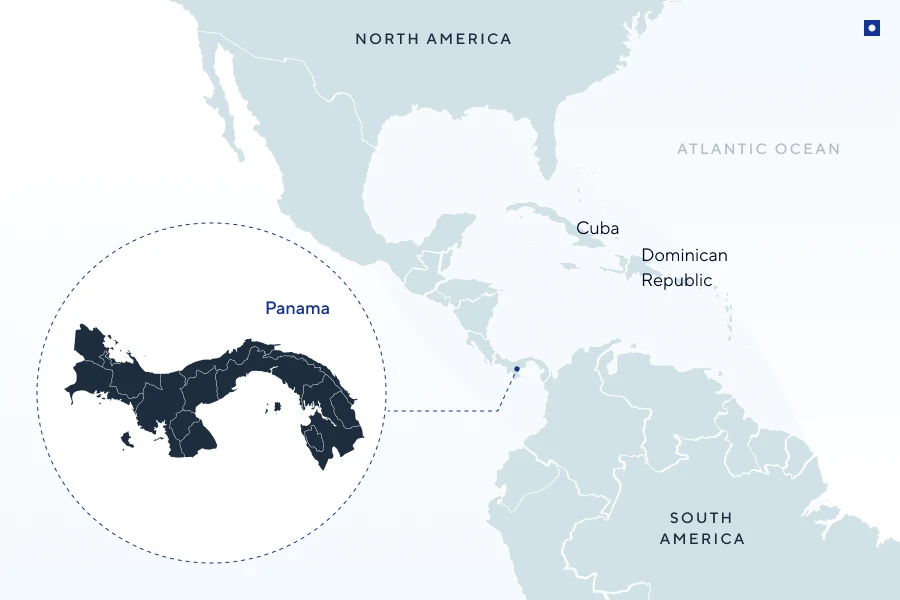
Panama is a transport and logistics hub between North America, South America, the Caribbean, and Europe. Tocumen International Airport handled 12,766,909 passengers between January and August 2024, which was 9.16% more than in the same period of 2023.
73% of travellers used Tocumen as a connection point, and flights served 86 direct destinations in the Americas and Europe [33] Source: Airport traffic, Tocumen International Airport .
This makes permanent residence in Panama useful for investors who travel frequently across the Americas. It also helps families who need regular access to the US, Colombia, Costa Rica, Mexico, or other regional destinations.
6. Potential route to naturalisation
Panama permanent residency will support a naturalisation application. Under the Constitution, foreigners may request Panamanian citizenship after 5 years of continuous residence, provided they meet the legal requirements, including Spanish language knowledge and basic knowledge of Panama’s geography, history, and political organisation [34] Source: Naturalisation rules, Constitution of Panama .
7. Residence in a service-based regional economy
Panama’s economy is closely linked to logistics, finance, aviation, trade, and tourism. The Panama Canal remains one of the country’s key assets.
In fiscal year 2024, the Canal reported:
- nearly 4.99 billion PAB in revenue;
- 9,944
deep-draft transits; - 423 million tons transported despite
drought-related restrictions [35] Source: Canal results, Panama Canal Authority .
The wider economy showed resilience after the closure of the Cobre Panamá copper mine. The IMF reported that GDP growth slowed from 7.3% in 2023 to 2.9% in 2024. However,
Panama permanent residency requirements for investors
Panama permanent residency requirements for qualified investors combine personal eligibility, and financial compliance.
Requirements for the main investor
The Panama Qualified Investor Visa is open to foreign nationals who invest in Panama and pass immigration and financial checks.
The main investor provides evidence of the following:
- age of 18 or older;
- investment in real estate, securities, or a
fixed-term bank deposit; - foreign origin of the invested funds;
- lawful source of wealth and funds;
- clean criminal record;
- financial solvency;
- valid health insurance accepted in Panama;
- investment documents that match the selected route.
Banking compliance plays a central role in the process. A Panama bank, brokerage firm, or other regulated institution reviews the applicant’s profile before the investment is made. The review usually covers bank statements, tax records, business documents, contracts, dividend records, sale agreements, inheritance papers, and investment account statements.
Elena Garnitsarik
Head of the Legal Department
Source-of-funds and banking requirements
Panama permanent residence requirements include proof that the investment capital was transferred from abroad. The applicant submits banking, legal, or financial documents that show the route of funds and their foreign origin.
Supporting documents usually include one or several of the following:
- bank letter confirming the transfer or receipt of funds;
- foreign bank statement certificate;
- local bank statement showing the incoming transfer;
- notarised confirmation from the recipient of funds;
- bank certification confirming that the investment funds came from a foreign account.
The applicant’s financial history is reviewed for consistency. Large transfers, unexplained cash flows, unclear ownership structures, or missing tax documents increase the risk of delays at the banking stage.
Family members eligible for Panama permanent residence
The Panama Qualified Investor Program allows family members to join the main applicant. Each dependent prepares an individual document package and pays the applicable government fees.
The following family members are usually eligible:
- spouse;
- children under 18;
- unmarried adult children who are financially dependent and study
full-time ; - financially dependent parents.
Family members confirm their relationship to the main applicant, while adult dependents also prove financial dependency. Children over 18 usually submit documents from an educational institution.
If the investment is held in
Panama qualified investor program: 3 options
Panama Qualified Investor Program offers 3 investment options for obtaining Panama permanent residency.
1. Real estate investment
Real estate is the
Key conditions of this investment option are:
- property is registered with the Public Registry of Panama;
- title is free of liens and encumbrances for the investment amount;
- funds are transferred from abroad through the banking system.
For example, an investor buys an apartment in Panama City for $420,000. He pays $300,000 with
2. Securities investment
The securities option requires an investment of at least $500,000. The investment must be made through a Panamanian securities house licensed by the Superintendence of the Securities Market.
This route suits investors who prefer financial instruments to direct property ownership. It may also be more practical for applicants who do not plan to use or rent out a property in Panama.
3. Fixed-term bank deposit option
This route requires at least $750,000. The funds are placed with a bank licensed to operate in Panama.
Key conditions are:
- funds must remain unencumbered for the full holding period;
- bank issues certificates confirming the deposit amount, term and compliance with program requirements.
This option may suit conservative investors who prefer a bank deposit to real estate or securities. However, it has the highest capital threshold under the Panama qualified investor visa.
Government fees and additional costs
Applicants pay two official government fees when applying for permanent residence under the Panama Qualified Investor Program.
The official government fees include:
- $5,000 to the National Treasury for the main applicant;
- $5,000 to the National Migration Service for the main applicant;
- $1,000 to the National Treasury for each dependant;
- $1,000 to the National Migration Service for each dependent.
Additional expenses depend on the applicant’s family composition, country of document issue, and investment route, and include document apostille or legalisation, certified translations, medical certificates, health insurance, bank fees, brokerage fees,
Expenses under the Panama Qualified Investor Program
| Investment option | Minimum investment | Government fees for main applicant | Government fees per dependant | Indicative budget for a family of 3 |
|---|---|---|---|---|
| Real estate | $300,000 | $10,000 | $2,000 | $316,000+ |
| Securities | $500,000 | $10,000 | $2,000 | $516,000+ |
| $750,000 | $10,000 | $2,000 | $766,000+ |
Documents for the Panama Qualified Investor Visa
The document package depends on the family composition and the selected investment route. Foreign documents are apostilled or legalised and translated into Spanish where required.
The standard package includes:
- valid passport for the investor and each dependant;
- police clearance certificate;
- medical certificate issued in Panama;
- health insurance valid in Panama;
- proof of financial solvency;
- documents confirming lawful source of funds;
- proof of foreign transfer of investment funds;
- investment evidence, such as property title, brokerage certificate, or bank deposit certificate;
- marriage certificate, if a spouse is included;
- birth certificates for children;
- proof of dependency for adult children or parents.
The immigration authority or the financial institution reviewing the file can request additional documents. This often happens when the applicant has several sources of wealth, complex business ownership, or documents issued in several jurisdictions.
How to get permanent residency in Panama by investment step-by-step
Obtaining a Panama Qualified Investor Visa takes around 4 months. The process combines banking compliance, execution of the investment, and immigration review by the competent authorities. While several stages may be completed remotely, certain formalities require the applicant’s presence in Panama.
-
2 days
Preliminary Due Diligence
Passsportivity conducts a fully confidential Due Diligence check to verify any circumstances screening the applicant from participation in the Panama Qualified Investor Programme.
-
2+ week sPreparation of documents
The collection of documents is carried out remotely. A lawyer coordinates the preparation to ensure compliance with local requirements.
-
2+ month sInvestment
Proof of investment is required before the immigration filing can proceed. Applicants transfer funds to Panama via the chosen route:
- complete the real estate purchase;
- fund the securities account;
- open the
fixed-term deposit.
-
1—3 monthsApplication submission and approval
With investment proof and legalised civil documents in hand, the lawyer submits the complete application file to the National Immigration Service, accompanied by forms, government filing fees, and the investment certification from the Ministry of Commerce and Industries.
After submission, the application enters official review. Investors typically receive initial approval and a provisional residence status within
30—90 days. The process then proceeds directly towards permanent residence. -
Up to 4 months
Issuing a permanent residence card
The applicant must be present in Panama at this stage to complete formalities and obtain resident identification documents, including the
E-c édula.Investors receive the
E-c édula, the national foreign resident ID card. The card must be renewed every 10 years.
Renewal and maintaining permanent residence in Panama
Panama permanent residence obtained through the Panama Qualified Investor Visa is granted indefinitely. The immigration status itself is not renewed every year. The investor keeps the status by complying with the program conditions during the first 5 years and avoiding long periods outside Panama.
What needs renewal
The physical resident card is renewed separately. The
Card renewal is handled through the Tribunal Electoral. The applicant attends the relevant office, provides their resident ID number, and updates their identification document.
Conditions for maintaining Panama permanent residence
For the first 5 years, the investor keeps the qualifying investment active. If the investment stops meeting the program rules before the
The Ministry of Commerce and Industries monitors compliance during the
Annual investment confirmation
The documents for annual confirmation depend on the investment route.
For real estate, the investor normally keeps property registry documents and evidence that the qualifying amount remains free of liens. If the property was purchased through a
For securities, confirmation comes from the licensed Panamanian brokerage firm and, where required, the securities regulator. The documents confirm the investor’s name, the portfolio value, the securities held, and the custodian entity.
For a
Visits to Panama and long absences
The Panama Qualified Investor Visa does not set a minimum annual stay requirement. In practice, the resident should enter Panama at least once every 2 years.
Panama’s migration rules allow the National Migration Service to cancel residence if a permanent resident stays outside the country for more than 2 years without justified and authorised absence. A resident who has been outside Panama for more than 2 years and up to 6 years can request rehabilitation of the permanent residence permit.
The rehabilitation request is filed within 30 business days after entering Panama. The applicant provides the resolution that granted permanent residence or a copy of the permanent resident card, passport pages, authenticated resident card copy, a notarised sworn statement explaining the absence, and a filing through a legal representative.
If the absence exceeds 6 years, the foreign national starts a new immigration process under the rules in force at that time.
After the 5-year holding period
After 5 years, the Panama permanent residence status is no longer tied to the original holding period under the Qualified Investor route. The investor can review the asset as a regular investment decision.
Before selling, withdrawing, or restructuring the asset, the investor should confirm that the
Summary of renewal and maintenance rules
| Item | Rule | Timing |
|---|---|---|
| Permanent residence status | Granted indefinitely under the Qualified Investor category | No annual renewal |
| Renewed as an identification document | Every 10 years | |
| Qualifying investment | Kept compliant under the selected route | First 5 years |
| Investment confirmation | Sent to the National Migration Service through the Ministry of Commerce and Industries | Annually during the |
| Visits to Panama | Recommended to avoid | At least once every 2 years |
| Absence over 2 years | Rehabilitation procedure applies | Within 30 business days after |
| Absence over 6 years | New immigration process applies | Under current rules at the time of filing |
Common reasons for delays or rejection of Panama Golden Visa application
Applications for the Panama Qualified Investor Visa are usually delayed at the compliance or document review stage. The most common issue include:
- incomplete
source-of-funds file: missing tax returns, unclear bank transfers, unexplained asset sales, or documents that do not show how the investment capital was accumulated; - expired or incorrectly legalised civil documents;
- police clearance certificates issued in the wrong country;
- inconsistent spelling of names across passports, certificates, and bank records;
- delayed bank onboarding in Panama;
- property, securities, or bank deposit documents that do not fully match the program rules.
Rejection risks are higher where the applicant has a criminal record, submits false or inconsistent documents, or uses a
Other investment options for permanent residence in Panama
Panama offers several
Reforestation Investor Visa in Panama
The Reforestation Investor Visa is designed for foreigners who invest in forestry, reforestation, forest plantation, or other activities authorised by the Ministry of Environment [38] Source: Forestry investment, National Migration Service of Panama .
The route has two investment thresholds:
- $100,000+ in reforestation or forest plantation activities;
- $350,000+ for the route that allows the applicant to opt for permanent residence under the automatic procedure.
For each dependent, the investor adds $2,000 to the investment amount. The investment can be made personally or through a legal entity. The applicant provides documents confirming the investment, the forest registry, the company’s existence, and the property where the project is carried out.
To keep permanent residence, the investor retains the forestry investment for at least 5 years. If the investment ceases to exist before the end of this period, the National Migration Service can cancel the residence status. Annual proof of investment is submitted from the date when permanent residence is approved.
This option can suit applicants who want an investment linked to land use and environmental projects. It is less universal than the Panama Qualified Investor Visa because the asset depends on a specific regulated activity.
Business investment routes to Panama permanent residence
Panama also has business investment routes for applicants who invest in a Panamanian company
[39]
Source: Business investor, National Migration Service of Panama
. The main general business route is the
Under this category, the foreigner invests at least $160,000 in a company. The applicant is a shareholder and officer of the same company. If dependents are included, the investment increases by $2,000 per dependant.
The route starts with a
Other special
These routes are tied to specific sectors or legal regimes rather than a general residence by investment program.
Investor visas compared
| Visa | Minimum investment | Residence result | Best suited for | Key limitation |
|---|---|---|---|---|
| Qualified Investor Visa | $300,000+ | Direct permanent residence | Investors who want a clear | Higher capital threshold and |
| Reforestation Investor Visa | $100,000+ | Temporary or permanent route | Investors interested in forestry, | Narrow asset class and |
| $160,000+ | Permanent residence in 2 years | Entrepreneurs who plan to operate a company in Panama | Requires business substance, tax records, and local employees | |
| Special business categories | Depends on the specific category and legal regime | Depends on the category | Investors entering Panama through a regulated sector, such as | Rules vary by sector and are less universal than the Qualified Investor route |
Non-investment ways to get permanent residency in Panama
Panama has several routes to permanent residence besides the Panama Qualified Investor Visa. Some are genuinely
Pensionado Visa for retirees
The Pensionado Visa is designed for foreign retirees who receive a lifetime pension. The minimum pension is $1,000 per month [41] Source: Retirement benefits, Embassy of Panama . If dependants are included, the applicant adds $250 per month for each dependant.
Panama reduces the required pension to $750 per month if the applicant buys property in Panama worth more than $100,000. Spouses can combine their pensions to meet the $1,000 monthly threshold.
The Pensionado permit is granted indefinitely and does not require extension. Dependent children usually hold temporary status until the age of 25 if they study
Panama grants discounts to retirees, pensioners, and older residents under Law 6 of 1987. Panama lists benefits that cover utilities, transport, healthcare, entertainment, hotels, and selected financial services:
- 50% — entrance to cinemas, cultural events, and sports events; hotels from Monday to Thursday;
- 30% — bus, train, and boat fares; hotels on weekends;
- 25% — utility bills; airline tickets;
- 20% — doctors’ bills; professional and technical services;
- 15% — loans in the retiree’s name; hospital services where no insurance applies; dental and eye exams;
- 10% — medicines;
- 1% — reduction on home mortgages for a personal residence.
Professional Employment Visa
The Professional Employment Visa is commonly used to describe Panama’s Foreign Professional residence route. It is open to foreign nationals with a university degree, provided the profession is not reserved by the Constitution or law for Panamanian nationals.
The applicant brings an apostilled or authenticated diploma. If the diploma was issued abroad, official homologation is required. The route first grants provisional residence; permanent residence is requested later with a reduced document package.
This route can suit qualified professionals who plan to build a career in Panama.
Self-Economic Solvency Visa
The
The
The real estate route also uses a $300,000 threshold. Property worth more than the required amount can be partly financed through a local mortgage if the qualifying amount is paid and remains compliant.
A mixed option combines real estate and a
Friendly Nations Visa
The Friendly Nations Visa is available to nationals of countries that Panama recognises as having friendly, professional, economic, and investment relations with the country
[42]
Source: Friendly Nations, Official Gazette of Panama
. The route starts with a
The applicant proves an economic or professional link to Panama. The official rules allow this link through:
- employment with a Panamanian company;
- real estate investment of at least $200,000;
fixed-term bank deposit of at least $200,000 for at least 3 years.
The real estate purchase or
This option is relevant for applicants from eligible countries who prefer a lower investment threshold than the Panama Qualified Investor Visa or who already have employment in Panama.
Eligible countries for the Friendly Nations Visa
| Region | Eligible countries and territories | Notes |
|---|---|---|
| North America | Canada, United States of America, Mexico | Nationals can apply under the Friendly Nations category if they also meet economic or professional link requirements |
| Central and South America | Argentina, Brazil, Chile, Costa Rica, Paraguay, Peru, Uruguay | The list is based on Executive Decree No. 226 of July 20th, 2021 |
| Europe | Andorra, Austria, Belgium, Croatia, Cyprus, Czech Republic, Denmark, Estonia, Finland, France, Germany, Greece, Hungary, Ireland, Latvia, Liechtenstein, Lithuania, Luxembourg, Malta, Monaco, Montenegro, Netherlands, Norway, Poland, Portugal, San Marino, Serbia, Slovakia, Spain, Sweden, Switzerland, United Kingdom | The official list uses the legal country names in Spanish |
| Australia, Hong Kong SAR of China, Israel, Japan, New Zealand, Singapore, South Korea | Hong Kong is listed as a Special Administrative Region of the People’s Republic of China | |
| Africa | South Africa | South Africa is the only African country listed in the decree |
Life in Panama for permanent residents
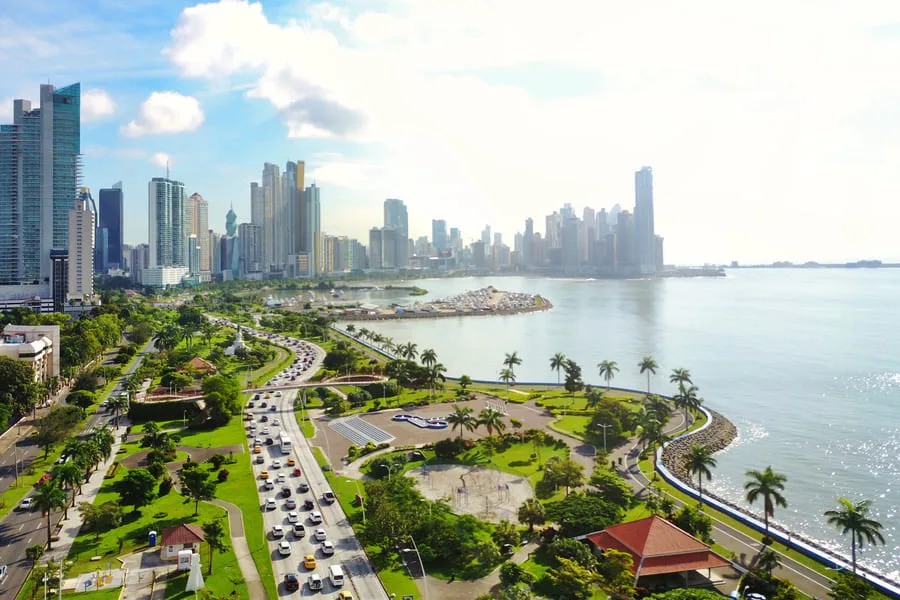
Panama permanent residents can live in the country
Panama City is the business and infrastructure centre. Smaller locations, such as Boquete, Coronado, Pedasí, and David, are usually chosen for a quieter pace of life.
Cost of living in Panama
Living costs depend mainly on location, housing, school fees, healthcare, and lifestyle. Panama City is usually the most expensive option, especially in central districts with international schools, private hospitals, and premium residential buildings.
Official inflation data points to relative price stability [43] Source: Price levels, National Institute of Statistics and Census of Panama . Panama’s statistics institute reported an annual CPI of −0.1% for 2025 compared with 2024, and CPI of 1.1% for April 2026. This does not show the cost of an expatriate household, but it helps assess general price movement in the country.
A family relocating to Panama usually budgets separately for:
- rent or property maintenance;
- private health insurance;
- school fees, if children attend private or international schools;
- car, fuel, parking, or
ride-hailing ; - domestic help, leisure, and travel.
Permanent residents who buy property should also consider homeowners’ association fees, utilities, property tax exposure, maintenance, and insurance.
Healthcare and insurance
Panama has public healthcare services and a developed private healthcare sector, especially in Panama City. For foreign residents, private insurance is usually the most practical option because it gives access to private clinics, shorter waiting times, and
The World Bank notes that Panama has been working with MINSA, the Ministry of Health, to strengthen primary healthcare, financial protection, service delivery networks, and telemedicine after
For permanent residents, health planning usually includes:
- local or international private medical insurance;
- access to private hospitals in Panama City;
- emergency coverage outside Panama City;
- medicine availability and prescription rules;
- insurance terms for
pre-existing conditions.
Retirees under the Pensionado route also benefit from statutory discounts on medical consultations, medicines, hospital services, dental care, and eye exams, if they meet the legal conditions.
Education and family relocation
Panama is suitable for families who want access to private, bilingual, or international education. Most international school options are concentrated in Panama City and nearby areas.
The Ministry of Education records foreign students in Panama’s education system. In the 2023 academic year, Panama registered 8,398 foreign students in public schools and 9,744 foreign students in private schools [44] Source: Foreign students, Ministry of Education of Panama .
For family relocation, the most convenient residential areas are usually those close to schools, hospitals, offices, and main transport routes. This is one of the reasons why Costa del Este, Clayton, Punta Pacifica, San Francisco, and Santa María are often considered by international families.
Safety, infrastructure and transport
Panama has strong infrastructure for regional travel and business. Tocumen International Airport handled 1,757,658 passengers in January 2025, a 22% increase compared with January 2024.
Panama City also has a metro system [45] Source: Metro network, Metro de Panamá :
- line 1 connects Albrook with San Isidro and carries around 240,000 to 280,000 users per day;
- line 2 adds 21 km of elevated track and connects the eastern part of the metropolitan area, including access to Tocumen Airport through the airport branch.
Safety depends heavily on the district. The UK Foreign Office highlights higher crime areas in Panama City, including San Miguelito, El Chorrillo, Río Abajo, 24 de Diciembre, Santa Ana, and Juan Díaz [46] Source: Safety advice, UK Foreign Office .
Best places to live in Panama
| Location | Best suited for | Main advantages | Key consideration |
|---|---|---|---|
| Panama City | Investors, business owners, families, frequent travellers | Best access to private hospitals, schools, banks, offices, shopping, and international flights | Higher housing costs and traffic |
| Costa del Este | Families and executives | Modern residential buildings, business district, schools nearby, secure environment | Premium property prices |
| Punta Pacifica and San Francisco | Professionals and families who want central living | Close to hospitals, restaurants, offices, and shopping centres | Dense traffic and higher rent |
| Clayton | Families with children | Green environment, international schools, quieter residential feel | Less central for nightlife and business districts |
| Coronado | Retirees and | Pacific beach lifestyle, gated communities, shops, and clinics | More |
| Boquete | Retirees and remote workers | Cooler climate, mountain lifestyle, established foreign community | Limited |
| David | Lower costs than Panama City, access to regional services | Fewer international school and hospital options | |
| Pedasí | Quiet coastal lifestyle | Beaches, | Less convenient for frequent international travel |
Can permanent residency in Panama lead to citizenship?
Panama permanent residency can lead to citizenship by naturalisation, but the process is not automatic. A permanent resident applies separately and the authorities assess whether the applicant meets the legal requirements.
Residence period before naturalisation
The standard residence period is 5 consecutive years in Panama. The applicant also confirms Spanish language knowledge and basic knowledge of Panama’s geography, history, and political organisation [47] Source: Citizenship procedure, National Migration Service of Panama .
A shorter
Passport, dual citizenship and legal considerations
Citizenship by naturalisation grants access to a Panama passport only after approval. Permanent residence alone does not change the applicant’s nationality or grant
Panama’s Constitution requires applicants for citizenship by naturalisation to declare their wish to naturalise and expressly renounce their previous nationality. It also states that naturalised Panama nationality can be lost on the same grounds as other nationality forms, including express or tacit renunciation.
For this reason, Panama citizenship is not a simple dual citizenship route. Applicants should check their current country’s rules before applying, especially if it restricts dual nationality or treats a foreign naturalisation oath as citizenship loss.
Final thoughts about Panama Golden Visa
- Panama Qualified Investor Visa grants permanent residence directly. Applicants do not first hold a temporary residence permit. The minimum investment starts at $300,000 in real estate.
- The investment is maintained for 5 years. This rule applies to all 3 options: real estate, securities, and a
fixed-term bank deposit. Early sale, withdrawal, or encumbrance can affect residence status. - Panama permanent residency is flexible. There is no minimum annual stay requirement under the Qualified Investor route. However, residents should avoid long absences and visit Panama at least once every 2 years.
- The status does not automatically create tax residence. Panama residence and Panama tax residency are determined under different rules. Investors remain responsible for tax obligations in their country of citizenship or current tax residence.
- Other routes may suit different applicants. Pensionado Visa, Friendly Nations Visa, Foreign Professional residence,
Self-Economic Solvency, Reforestation Investor Visa, and business categories can be relevant depending on income, nationality, profession, or business plans. - Permanent residence can support a future citizenship application. Naturalisation is generally possible after 5 years of residence, provided the applicant meets legal requirements. Citizenship is not automatic, and Panama’s rules on renouncing previous nationality require separate legal review.
About the authors


Frequently asked questions
Yes. Panama Golden Visa is the common name for the Panama Qualified Investor Visa. It is a residence by investment route that allows foreign investors to obtain Panama permanent residency by investing in real estate, securities, or a
The official immigration category is the Qualified Investor Visa, not “Golden Visa”. The term Panama Golden Visa is mainly used by investors and international advisers when comparing residence by investment programs.
The minimum investment starts at $300,000. This amount applies to the real estate option under the Panama Qualified Investor Visa.
The 3 investment options are:
- $300,000+ in real estate;
- $500,000+ in securities;
- $750,000+ in a
fixed-term bank deposit.
Applicants also pay government fees and cover additional expenses, such as document legalisation, translations, health insurance, bank fees, and professional fees.
To get permanent residency in Panama through the Qualified Investor Visa, an applicant completes investment and files a residence application with the National Migration Service.
The investor needs to prove the lawful source of funds, pass banking compliance, and provide documents confirming that the investment meets the program rules.
Yes. Panama has
Some other routes are not part of the
The Panama permanent residency process through the Qualified Investor Visa usually takes around 4 months, provided the documents are complete and the authorities do not request additional information.
Some stages can take longer. Banking compliance,
Panama permanent residency can lead to citizenship by naturalisation, but it does not guarantee citizenship. A permanent resident generally becomes eligible to apply after 5 years of residence.
The applicant needs to meet legal requirements, including Spanish language knowledge and basic knowledge of Panama’s geography, history, and political organisation. Naturalisation is a separate process and depends on the decision of the Panamanian authorities.
The Panama permanent residency card is the identity document that confirms a foreigner’s permanent resident status in Panama. It is used for administrative procedures, banking, contracts, property matters, and interactions with public authorities.
The immigration status is granted indefinitely under the Qualified Investor category. The physical card is renewed separately. In practice, the
Read also



Contact us today
Passportivity assists international clients in obtaining residence and citizenship under the respective programs. Contact us to arrange an initial private consultation.