

 Life abroad

 Reading time: 11 min
Safest countries in the world: where to move with your family
Iceland, New Zealand, and Switzerland are the safest countries according to the Global Peace Index. Estonia has a healthy environment, while Portugal offers attractive living conditions for families planning to relocate.
Low crime rates, political stability, access to quality healthcare, and a healthy environment are among the key factors to consider when choosing a safe country for family life.

 Share
 Telegram
 Facebook
 LinkedIn
 X

 Save


How to choose a safe country to relocate to
Many factors affect how safe people feel in their country of residence, from local culture to national values. One of the main factors is the standard of living. Countries with lower living standards generally have poorer environmental conditions and healthcare systems, as well as higher crime rates.
The following factors help assess how safe a country is.
1. Crime rate
Crime rate is one of the clearest indicators of safety. The number of thefts and murders recorded by local police, along with reports of violence, helps assess whether residents can safely walk home late at night or let their children go out alone.
2. Cultural differences
Some countries have cultural and religious traditions that shape local lifestyles but may cause discomfort for foreigners.
For example, women in Egypt face greater difficulties finding employment than men. In some parts of Türkiye, traditional expectations around women's clothing remain strong. Although wearing shorts or short skirts is not prohibited, women may feel uncomfortable because of unwanted attention from local residents.
3. Environmental conditions
More countries are investing in environmental protection by recycling waste and developing greener transport and energy sources. For instance, EU investment in environmental protection reached €79 billion in 2025 [1] Source: The latest data on environmental protection spending and investments in the EU are published on the Eurostat website . Meanwhile, renewable sources accounted for 54.1% of the EU’s electricity generation in the second quarter of 2026, with Latvia leading at 97.7%, followed by Denmark at 94.3% and Croatia at 92.2% [2] Source: The share of electricity generated from renewable sources across EU countries in the second quarter of 2026 is reported on the Eurostat website .
Environmental quality is another important factor when choosing a country, as it directly affects living standards, including urban comfort, air and water quality, and the prevalence of diseases.
4. Involvement in armed conflicts
Countries involved in armed conflicts have significantly lower levels of safety.
In 2026, the number of active
5. Friendliness of local residents
Expats in some countries face discrimination, from unfriendly looks to being charged higher prices for services. Local attitudes towards foreigners may cause discomfort and feelings of isolation.
Foreigners are generally well received in multicultural countries. For example, more than 80% of the UAE's population consists of expatriates, so an Indian or Chinese accent when speaking English is unlikely to attract attention.
6. Quality of healthcare
Access to medical care is another important factor in feeling safe. It depends on the cost and availability of healthcare services and the qualifications of medical professionals.
Some countries have advanced healthcare systems, but medical services can be expensive. In Switzerland, for example, the average annual basic health insurance premium for an adult reached around CHF 5,600, or €6,100 in 2026, with additional costs for treatment
[3]
Source: Average basic health insurance premiums in Switzerland for 2026 are published on the website of the Swiss Federal Office of Public Health
. In the US, half of adults aged
Before relocating, it is important to understand how the healthcare system works and what medical insurance covers.
7. Transparent residence permit application process
A residence permit allows foreigners to enter a country and remain there while their permit is valid, subject to applicable entry and residence rules. In some countries, foreigners may wait months for their residence permits to be renewed and may be unable to travel abroad during this period.
In Spain, for example, foreigners renewing their residence cards may face appointment delays and need special authorisation to leave and
A clear and efficient application process provides greater certainty and helps residents plan their lives months or years ahead.
Safest countries in the world
Iceland, New Zealand, and Switzerland rank among the safest countries in the world, according to the Institute for Economics & Peace. Each year, the Institute publishes the Global Peace Index, the most comprehensive analysis of peacefulness across countries.
The ranking assesses 23 indicators in three areas:
- Societal safety and security, including crime rates, terrorist activity, political stability, and the number of refugees and internally displaced people.
- Ongoing domestic and international conflicts, including the extent and duration of involvement.
- Militarisation, including access to weapons, military expenditure, and relations with neighbouring countries.
European countries account for 7 of the 10 safest countries in the overall ranking. One of them is Portugal, where, by investing at least €250,000, foreigners can obtain a residence permit.
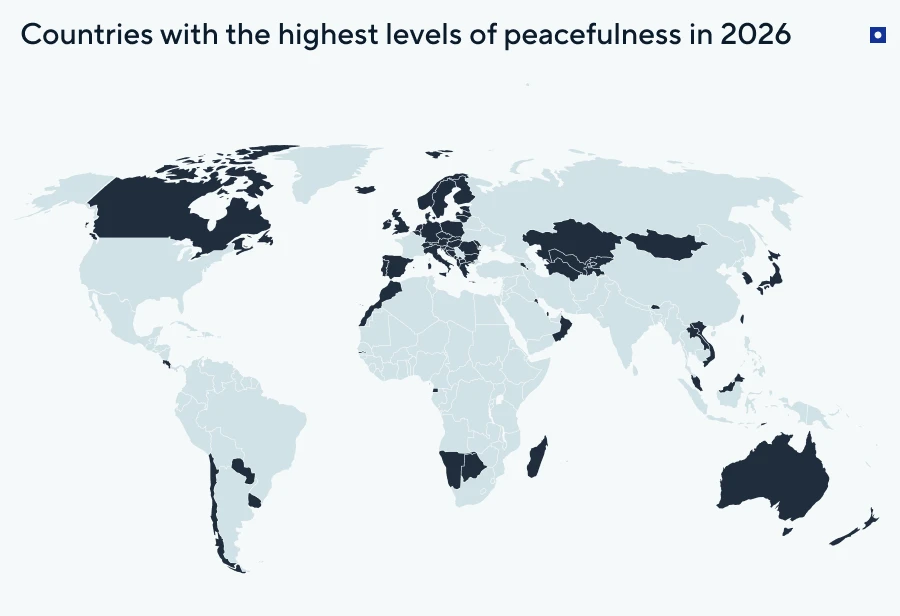
Safest countries in Europe
Overall, Europe is the safest region in the world, and Iceland, Switzerland, and Ireland are among the safest countries, according to the Global Peace Index 2026. Political stability, low levels of violent crime, and peaceful international relations contribute to their high rankings.
Iceland
Iceland ranks 1st in the world. The country has low crime rates, strong social cohesion, and no standing army. It has maintained its position as the most peaceful country for 19 consecutive years.
Switzerland
Switzerland ranks 3rd globally. The country is known for its political stability, developed public services, and high standard of living. Its
Slovenia
Slovenia ranks 4th worldwide. Its strong performance reflects a high level of public safety and security, alongside low levels of conflict and militarisation and a stable political environment. Slovenia improved 2 places from the previous year, largely due to better results in the safety and security category.
Other European countries ranking in the top 10 include Ireland, Austria, Portugal, and Finland.
Safest countries in the Americas
The countries in the Americas differ in their living standards, public services, and crime rates, so families need to consider local conditions before relocating.
Canada
Canada is the safest country in the Americas and the 14th safest country in the world. It has established democratic institutions, a developed healthcare system, and a multicultural population. Foreign families also have access to public education, although healthcare and other services vary between provinces.
Uruguay
Uruguay lies on the Atlantic coast of South America, between Brazil and Argentina. It ranks 1st in Latin America and the Caribbean. The country has stable democratic institutions and relatively low levels of armed conflict. However, crime remains a concern in some urban areas, particularly in parts of Montevideo.
Costa Rica
Costa Rica is located in Central America, between Nicaragua and Panama. It has a long tradition of democratic government and abolished its standing army in 1948. The country’s national parks, tropical climate, and biodiversity attract foreign residents. Travellers and expats should nevertheless take precautions against theft and violent crime in certain areas.
By comparison, the US ranks 20th among countries in the Americas and 134th globally in the same index.
Safest countries in Asia and the Pacific
Asia and the Pacific include some of the world's most developed and safest destinations for living and travelling. Modern infrastructure, effective public services, and low crime rates contribute to everyday security in several countries. New Zealand, Singapore, and Japan are among the world's 10 most peaceful countries.
New Zealand
New Zealand ranks 2nd worldwide. The country has a stable political system, low levels of armed conflict, and strong public institutions. Families also value its natural environment, education system, and opportunities for outdoor activities.
Singapore
Singapore ranks 8th globally. The
Japan
Japan ranks 10th worldwide. The country has low levels of violent crime, efficient public transport, and
Safest countries in the Middle East
The Middle East is one the world's least peaceful regions. Armed conflicts, military attacks, and political tensions pose significant security risks, even in countries with low crime rates. However, Gulf countries such as Qatar, Kuwait, Oman, and the UAE rank among the most peaceful in the region, despite ongoing geopolitical tensions.
Qatar
Qatar is among the safest countries in the region due to its low crime rates, strict law enforcement, and developed public infrastructure. Surveillance systems and a strong police presence contribute to public safety.
Kuwait
Kuwait has relatively low levels of violent crime and a developed public service system. Strict laws and established government institutions help maintain public order. Nevertheless, its geographical proximity to
Oman
Oman is known for its political stability and peaceful diplomatic relations with neighbouring countries. The government prioritises dialogue and conflict resolution, while low levels of violent crime contribute to everyday safety.
UAE
The UAE maintains high levels of public safety through strict law enforcement, extensive surveillance systems, and modern infrastructure. Violent crime is relatively uncommon. Regional geopolitical developments may also affect security.
Foreigners can obtain UAE residence by purchasing property. The minimum investment depends on the validity of the residence visa:
2-year visa — no minimum property value.10-year Golden Visa — a property worth at least AED 2 million, approximately $545,000.
Safest countries in Africa
Safety conditions differ significantly across Africa, with armed conflicts and political instability affecting some regions more than others. Mauritius, Botswana, and Namibia are among the continent's more peaceful countries due to their relatively stable political systems and low levels of armed conflict.
Mauritius
Mauritius leads the regional ranking, placing 18th worldwide. The island nation has a stable democratic system, relatively low levels of violent crime, and peaceful international relations. Most reported crimes affecting visitors are
Botswana
Botswana is known for its political stability and established democratic institutions. The country has experienced relatively few internal armed conflicts and maintains peaceful relations with neighbouring states. However, property crime and access to healthcare remain important considerations, particularly outside major cities.
Namibia
Namibia has a stable political system and relatively low levels of political violence. The country maintains peaceful relations with neighbouring states and has a low population density. However, theft and other forms of crime remain concerns in urban areas, while access to healthcare and emergency services can be limited in remote regions.
Countries with the best environmental conditions
European countries have some of the best environmental conditions in the world. Researchers at Yale University assessed environmental performance in 177 countries using 47 indicators, ranging from climate change and air quality to biodiversity and waste management.
Estonia
Estonia has low levels of harmful emissions, including methane and carbon dioxide. Waste recycling is regulated at the national level. Researchers predict that Estonia may achieve
Luxembourg
Luxembourg has clean air and rivers. The government prioritises wastewater treatment and the development of renewable energy sources, such as wind and solar power. Public transport in Luxembourg is free, which helps reduce car use. Some vehicles are also electric.
United Kingdom
The United Kingdom has
Top 10 countries with the best environmental conditions
| Rank | Country |
|---|---|
| 1 | Estonia |
| 2 | Luxembourg |
| 3 | United Kingdom |
| 4 | Finland |
| 5 | Netherlands |
| 6 | Germany |
| 7 | France |
| 8 | Norway |
| 9 | Sweden |
| 10 | Austria |
Countries with low crime rates
Crime rates are generally lower in European and Asian countries, while South America and Southern Africa have some of the highest crime rates. Numbeo assesses crime and safety levels worldwide each year based on two factors: residents’ perceptions of safety and the prevalence of crime.
Andorra
Andorra has only around 70 prisoners in a population of approximately 89,000 in January 2025. Police patrol the streets around the clock, and fines for traffic violations can reach several thousand euros.
The country can only be entered or exited through France or Spain. Unlike its neighbours, it is not a member of the European Union, so travellers undergo thorough border checks.
Andorra offers Golden Visas to foreigners who invest at least €400,000 in the country's economy. The initial residence permit is valid for 2 years, followed by renewals of 2 and 3 years. Subsequent renewals are granted for
UAE
The UAE maintains a high level of safety through extensive surveillance and strict law enforcement. Even minor offences, such as swearing or drinking alcohol in public, can result in penalties. Smart cameras installed on busy streets help authorities identify offenders.
Qatar
Qatar maintains low crime rates through strict laws and severe penalties, particularly for
Top 10 countries with the lowest crime rates
| 1 | Andorra |
| 2 | UAE |
| 3 | Qatar |
| 4 | Taiwan |
| 5 | Macao |
| 6 | Oman |
| 7 | Isle of Man |
| 8 | Hong Kong |
| 9 | Armenia |
| 10 | Japan |
Safest countries for women
Women in Nordic countries face less discrimination and generally enjoy high levels of safety, according to the Women, Peace and Security Index 2025/26. It assesses women's safety, access to education and employment, legal rights, and healthcare.
In the index, some countries share the same position, such as Norway and Sweden, or Austria and New Zealand, because they received the same total score.
Denmark
In Denmark, women benefit from strong legal protections, access to healthcare, and employment opportunities. Around 85% of women report feeling safe walking alone in their neighbourhoods at night. Women also hold 43.6% of seats in the national parliament, ensuring that women's perspectives are represented in political
Iceland
Iceland has strong legal protections against discrimination and violence and provides access to healthcare and support services for victims of violence. Around 83.7% of women aged 25 to 64 are employed, one of the highest rates among developed countries.
Norway
In Norway, around 86% of women feel safe walking alone at night. The country also has one of the lowest maternal mortality rates in the world, at just 1 death per 100,000 live births, reflecting its high standard of maternal healthcare.
Sweden
Sweden shares the 3rd place with Norway. The country has a strong legal system that protects women's rights and provides access to justice. Women can seek help from specialised support centres and national helplines if their safety is threatened.
The safest countries for women
| Rank | Country |
|---|---|
| 1 | Denmark |
| 2 | Iceland |
| 3 | Norway |
| 3 | Sweden |
| 5 | Finland |
| 6 | Luxembourg |
| 7 | Belgium |
| 8 | Netherlands |
| 9 | Austria |
| 9 | New Zealand |
Safest countries for LGBTQ+ people
Spain, Malta, and Iceland offer some of the strongest legal protections for LGBTQ+ people in Europe. According to the Rainbow Map 2026 by
Spain
Spain ranks 1st in the Rainbow Map 2026, with a score of 89%.
Spain offers residence options for digital nomads and financially independent individuals:
- Digital Nomad Visa — for remote workers employed by foreign companies or working with foreign clients and earning €2,850+ per month.
Non-Lucrative Visa — for individuals with passive income of €2,400+ per month who wish to live in Spain without working.
Malta
Malta recognises
Iceland
In Iceland,
Top 10 safest countries for LGBTQ+ people
| Rank | Country |
|---|---|
| 1 | Spain |
| 2 | Malta |
| 3 | Iceland |
| 4 | Belgium |
| 5 | Denmark |
| 6 | Finland |
| 7 | Germany |
| 8 | Norway |
| 9 | Sweden |
| 10 | Luxembourg |
Most dangerous countries in the world
Political instability, high crime rates, natural disasters, and dangerous wildlife can pose serious risks to residents. These threats vary by country and should be considered when choosing a place to live.
Armed conflicts and political instability
Yemen, Sudan, and Afghanistan are some of the world's least peaceful countries, according to the Global Peace Index. Armed conflicts, political instability, easy access to weapons, and terrorist activity pose serious threats to residents.
High crime rates and gang violence
Venezuela, Papua New Guinea, and Haiti have some of the highest crime rates in the world, according to Numbeo. Political instability, corruption, and violent crime contribute to security concerns, while organised gang activity poses additional risks in some areas.
Natural disasters
Countries in Africa, Oceania, and Southeast Asia face natural hazards, including earthquakes, tsunamis, and tropical storms. The Philippines also has active volcanoes, which pose risks of eruptions and landslides.
Dangerous wildlife and tropical diseases
Australia and some countries with tropical climates are home to venomous insects and dangerous animals. In parts of South America and Asia, certain mosquito species transmit dengue fever.
Some countries take preventive measures to protect residents. For example, Singapore uses insecticides in urban areas to control mosquito populations and reduce the risk of disease transmission.
Best countries to move to with your family
When choosing a country to relocate to with family, safety, healthcare, education, and quality of life are key considerations. Families planning to settle abroad permanently may also consider the prospects of obtaining citizenship.
Malta offers a Mediterranean climate, a relatively safe environment, and a high standard of living. English is one of the country's official languages, making it easier for foreign families to communicate and settle in. Malta also has international schools and a developed healthcare system.
Wealthy foreigners can get permanent residence in Malta by purchasing property worth at least €375,000 or renting a home for at least €14,000 per year, alongside making the required government contributions and payments. Eligible family members can also obtain permanent residence.
A Qatari family wanted to secure the right to live in Europe without giving up their life in Qatar. They explored several residence by investment options before choosing the Malta Permanent Residence Programme. Starting at €99,000, it grants permanent residence permits from the outset without requiring applicants to relocate.
With Passportivity’s assistance, all 5 family members received their residence cards in around 9 months.
 Fahad
Switzerland ranks among the leading countries for environmental quality and women's perceptions of safety. High living standards, neutrality in international conflicts, and strict social regulations contribute to a stable and peaceful environment.
Foreigners can relocate to Switzerland and apply for citizenship after 10 years of residence, provided they meet the eligibility requirements.
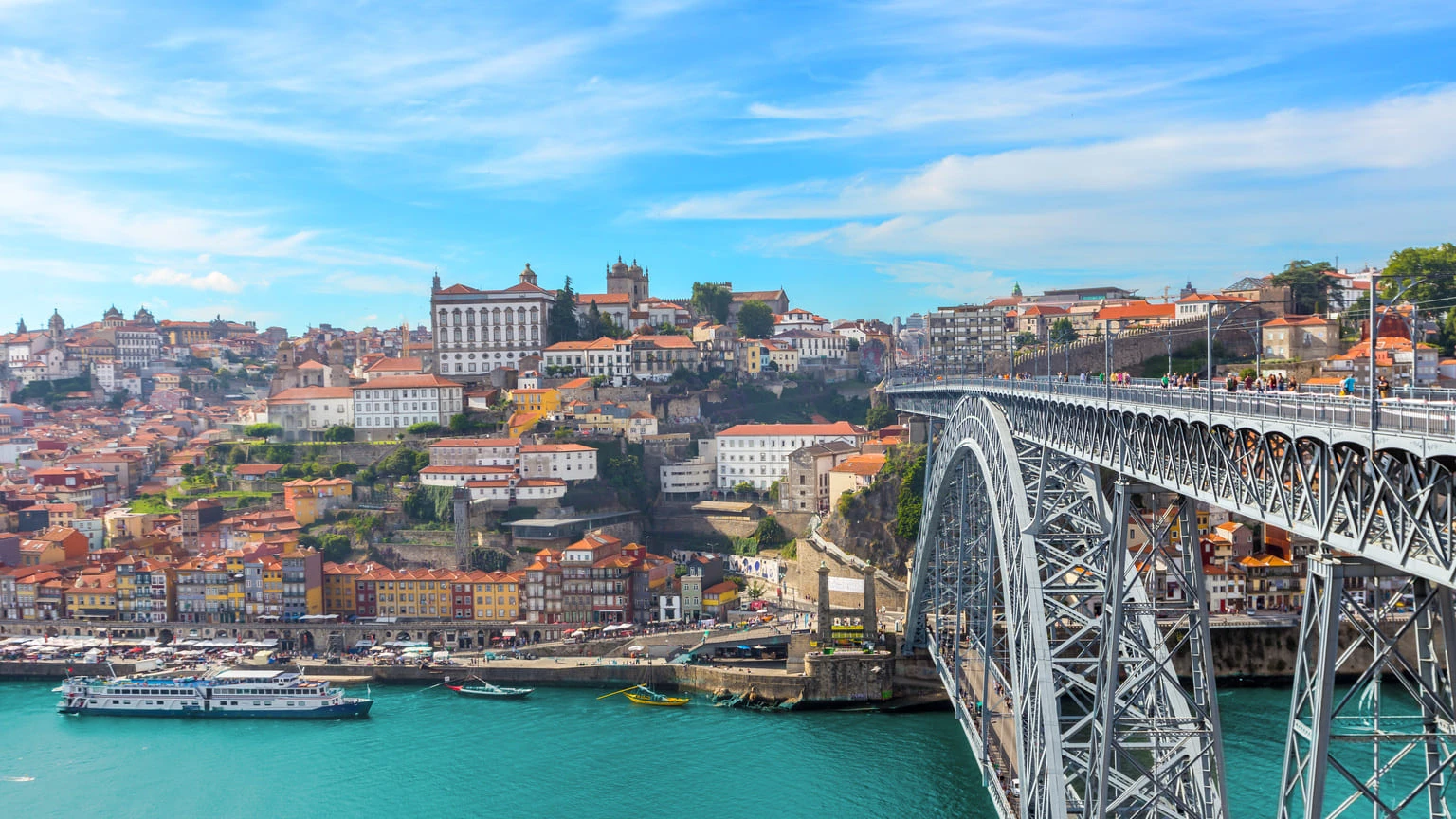
Portugal offers a high standard of living and comfort for expats. The country is not involved in international armed conflicts, and local residents are generally welcoming towards foreigners.
Portugal is also a popular retirement destination. Foreigners with passive income, including pension, can obtain residence and move closer to the ocean through the Portugal D7 Visa.
Luxembourg is a small European country bordering Germany, France, and Belgium. Its compact territory makes it easier to maintain public order. High living standards, quality education, and strong social welfare systems also contribute to the country's safety.
Spain attracts families with its warm climate, developed healthcare system, and wide range of educational opportunities. The country offers a relaxed lifestyle, access to beaches and nature, and
Financially independent foreigners can obtain residence in Spain through the
New Zealand ranks 2nd in the Global Peace Index. The country has low levels of violence and maintains peaceful relations with its neighbours. Tourism is one of its major sources of income, and local residents are generally welcoming towards foreign visitors.
Canada offers expats a strong sense of safety and a high level of life satisfaction. Integration into local society is relatively easy thanks to the country's multicultural population and welcoming attitude towards foreigners.
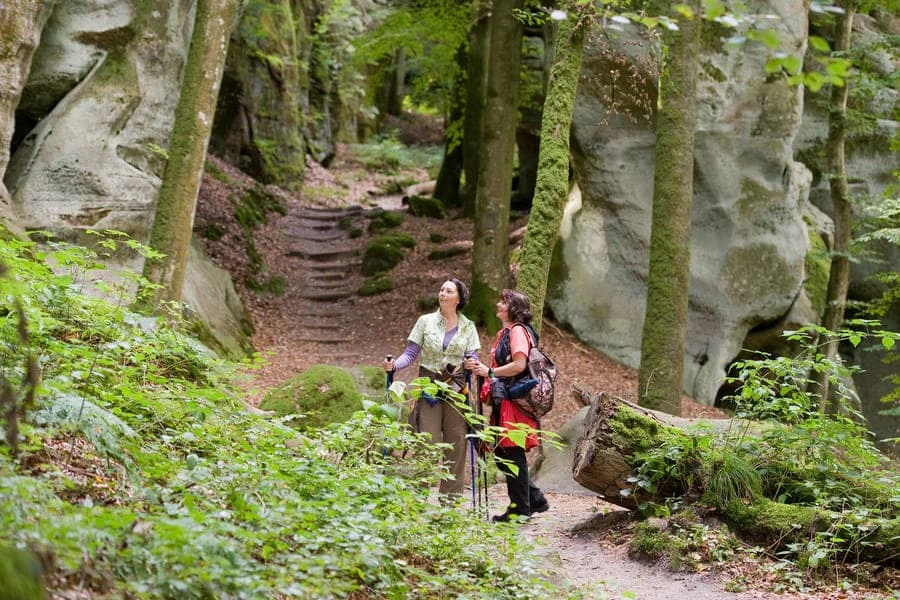
Denmark attracts foreigners seeking a higher standard of living and hygge — a sense of comfort, wellbeing, and contentment. The country has low crime rates, including low levels of violence against women, and some of the best environmental conditions in the world.
Norway is another Scandinavian country known for its high living standards, strong public institutions, and generally high levels of safety. Public attitudes towards immigrants are largely positive, with most Norwegians recognising their contributions to society.
Hungary attracts investors and their families seeking economic stability. The country has low unemployment, a relatively affordable cost of living, and living standards comparable to those in other European countries. Foreigners can relocate to Hungary by establishing a company and obtaining a National Card.
Where to travel with children: safest cities to visit
US travel insurance company Berkshire Hathaway Travel Protection, BHTP, has identified the safest cities for travellers in 2026. The ranking is based on travellers' opinions and additional safety data, taking into account crime rates, transport safety, health risks, and other factors.
Copenhagen ranks 1st for transport safety, while Reykjavik leads in safety from violent crime. Honolulu received the highest rating for health and emergency response measures. Sydney and Amsterdam also rank among the 10 safest cities overall.
Choosing a safe destination is the first step towards travelling with children. Preparing for the trip in advance helps minimise risks and make the experience more enjoyable for the whole family.
1. Arrange medical insurance. Travel medical insurance is often a requirement for international travel. It is also advisable to bring a
2. Learn about local culture in advance. Local traditions and laws may differ from those in the traveller's home country. For example, tourists in the UAE are advised to avoid eating in public during daylight hours in Ramadan.
3. Prepare children for the trip. Explain basic safety rules and plan activities according to their age. For example, a
For families travelling with children, BHTP has a separate ranking of the safest cities, based on parents' experiences and how safe they felt during their trips.
Top 10 safest cities to visit with children
| 1 | Seoul, South Korea |
| 2 | Honolulu, United States |
| 3 | Copenhagen, Denmark |
| 4 | Hong Kong, SAR China |
| 5 | Barcelona, Spain |
| 6 | Dubai, UAE |
| 7 | Paris, France |
| 8 | San Francisco, United States |
| 9 | Reykjavik, Iceland |
| 10 | London, United Kingdom |
Key takeaways about the safest countries in the world
- When choosing a safe country to live in, consider crime rates, cultural differences, environmental conditions, healthcare quality, and political stability.
- Iceland, New Zealand, and Switzerland are recognised as the safest countries to live in.
- European countries such as Portugal and Switzerland rank highly for safety and offer residence options for the whole family by investment.
- Estonia and Luxembourg rank among the leading countries for environmental quality and safety. Andorra has one of the lowest crime rates in the world.
About the authors


Frequently asked questions
The Property Rights Alliance assesses countries annually based on their protection of property rights and other individual rights. In 2026, Norway ranked first, followed by Sweden, Denmark, Singapore, and Germany.
Iceland ranks as the most peaceful country in the world according to the Global Peace Index 2026. It has maintained its leading position for 19 consecutive years thanks to low crime rates, political stability, and the absence of armed conflicts.
Denmark, Iceland, Norway, and Sweden rank among the safest countries for women. These countries have strong protections for women's rights, high levels of gender equality, and low levels of
Denmark, South Korea, and the United States are among the safest destinations for families travelling with children, according to travel insurance company BHTP. Spain, the UAE, and Iceland are also popular options, offering
Portugal, Greece, and other European countries offer residence by investment programmes that allow investors to include family members, such as spouses and children, in their applications.
Depending on the programme, parents, grandparents, and siblings may also qualify for residence permits.
Countries with high living standards and access to quality education, such as Canada, Australia, and New Zealand, are attractive options for families planning to relocate.
These countries offer immigration programmes for families, along with safety, stability, and social benefits.
Iceland is considered the safest country in Europe. It leads in peacefulness, safety, and social stability.
Andorra recorded the lowest crime rate in the world in 2026. This small country in the Pyrenees maintains a high level of safety thanks to its geographical location, small population, and border controls, which help authorities prevent and tackle crime.
Greece and Portugal allow investors to include children over 18 in their residence permit applications.
In Greece, financially dependent children up to and including the age of 20 may qualify for a Golden Visa. In Portugal, children up to and including the age of 26 may qualify, provided they are enrolled in higher education.
Denmark, Norway, Finland, Sweden, and New Zealand rank among the leading countries for human rights protection.
These countries perform well in areas such as access to justice, protection of fundamental rights, and the enforcement of laws.
Spain, Uruguay, and Chile are among the safest
Spain may appeal to digital nomads and financially independent individuals, as it offers dedicated residence options for both groups.
New Zealand, Ireland, Malta, and Singapore are among the safest
Malta is especially attractive to UK citizens moving abroad, thanks to its Mediterranean lifestyle, established expat community, and range of residence options.
In Singapore, English is one of 4 official languages and is widely used in education, business, and everyday communication, making it easier for
Portugal, New Zealand, Canada, and Malta are among the best countries for Americans looking to relocate. They offer political stability, a high quality of life, developed infrastructure, and access to quality healthcare.
As a general rule, foreigners must live in a country for several years before applying for citizenship. They must also usually demonstrate language proficiency, financial stability, and integration into local society.
Alternatively, some countries offer citizenship by investment programmes that allow eligible families to obtain a second passport without
Read also


Contact us today
Passportivity assists international clients in obtaining residence and citizenship under the respective programs. Contact us to arrange an initial private consultation.