

 Second citizenship
 Reading time: 11 min
 St Kitts and Nevis Citizenship by Investment: 2026 Guide
The St Kitts and Nevis citizenship by investment programme ranks at the top of the independent CBI Index. This programme compares favourably across several key criteria, including the minimum investment threshold, processing timeframe, freedom of movement, and quality of life.
The article explores how these elements come together in practice and what legal and practical considerations investors should account for.

 Share
Share  Telegram
  Facebook
 LinkedIn
 X
X

 Save
Save 

St Kitts and Nevis CBI: key takeaways
St Kitts and Nevis citizenship by investment is one of the world’s
What investors should know at a glance:
- minimum investment starts at $250,000, depending on the chosen route;
- applicants may choose between public benefit projects, government contributions, or real estate;
- family members can be included in one application, subject to programme rules;
- processing time is roughly 6 months, depending on the investment option and Due Diligence outcomes;
- dual citizenship is permitted.
The programme is administered by the Citizenship by Investment Unit, CIU, a government authority responsible for reviewing applications, conducting Due Diligence, and issuing approvals on behalf of the state.
St Kitts and Nevis citizenship by investment is grounded in national legislation, including:
- Constitution of Saint Christopher and Nevis, which empowers the state to grant citizenship by naturalisation;
- Citizenship Act of 1984, establishing the legal basis for citizenship acquisition;
- Citizenship by Investment Act No. 11 of 2024, which sets out modern compliance standards, governance rules, and the mandate of the CIU.
This framework clarifies eligibility criteria, Due Diligence procedures, interview and biometrics submission requirements, and the roles of licensed agents. It also reinforces that citizenship is granted by the government only, following statutory checks and approvals.
7 benefits of St Kitts and Nevis citizenship
St Kitts and Nevis citizenship may serve as an additional planning instrument for investors who value mobility, flexibility, and
1. An increase in global mobility
St Kitts and Nevis citizens can visit 120 countries without a visa, including, for example, Schengen Area countries, Hong Kong, and Vatican City [242] Source: St Kitts and Nevis passport ranking, Immigrant Invest . A second passport can be a reliable backup should investors' travel rights be restricted due to geopolitical tensions or future regulatory changes.
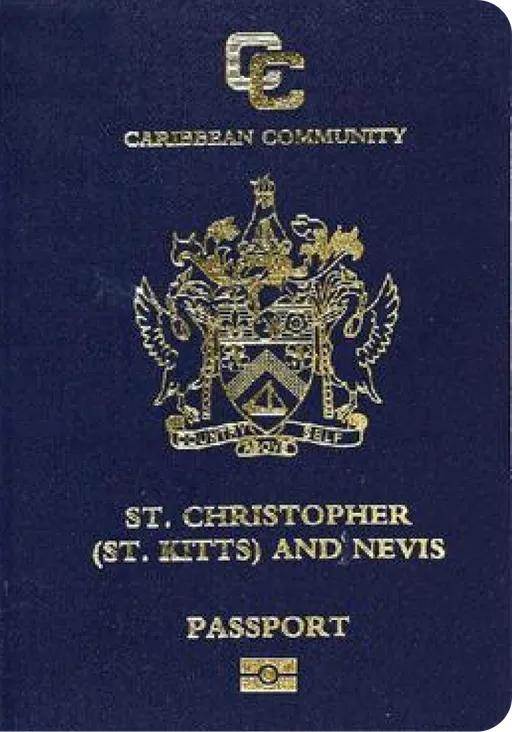
Travel with the St Kitts and Nevis passport
2. No residence or relocation requirement
The St Kitts and Nevis citizenship by investment programme does not require applicants to live in the country before or after naturalisation. This makes the programme suitable for investors who prefer to maintain their current place of residence while adding a second citizenship as part of
3. Up to 5% rental yield from real estate
Qualifying real estate projects under the St Kitts and Nevis citizenship by investment programme may generate gross rental yields of approximately
After a
4. Zero tax on personal income, dividends, and inheritance
St Kitts and Nevis does not impose national taxes on personal income, dividends, inheritance, or royalties. To support tax residence, an individual generally needs to spend at least 183 days per year in the country while remaining compliant with tax obligations elsewhere.
5. Easier access to foreign banking
Holding a St Kitts and Nevis passport may facilitate access to banking services abroad, including accounts in stable foreign currencies and regional Caribbean banks. All account openings remain subject to individual banks’ compliance and Due Diligence requirements.
6. Dual citizenship permitted
St Kitts and Nevis law allows multiple citizenship, meaning applicants are not required to renounce their existing nationality. This can simplify
7. Education opportunities within the Commonwealth
Citizens may qualify for regional tuition rates at the University of the West Indies and may apply for certain Commonwealth scholarship programmes administered through
Which investment option may fit you?
St Kitts and Nevis citizenship by investment offers several approved routes, each designed for different financial priorities and planning objectives. All options are regulated by law and administered through the Citizenship by Investment Unit, with clearly defined thresholds and procedures.
Government contribution
The government contribution route involves a
The minimum contribution starts at $250,000, making this option suitable for applicants who prefer a straightforward path without
Public Benefit Option
One of the investment options under the St Kitts and Nevis citizenship by investment programme is participation in an approved Public Benefit Project, such as the Prime Creative Arts Centre, with a minimum contribution of US $250,000.
The Prime Creative Arts Centre is a
Anton Molchanov
Deputy Head of the Legal Department
Real estate
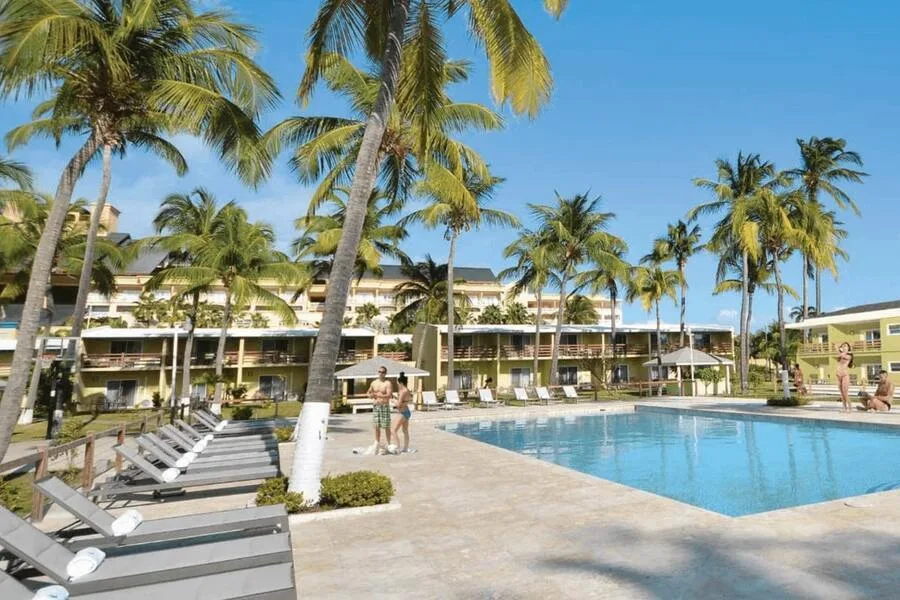
The real estate option allows investors to obtain citizenship by purchasing property in
The minimum investment is $325,000 for a share in qualifying real estate or $600,000 for a private home. Properties may be rented out, and resale is permitted after a mandatory holding period of seven years, subject to programme rules and market conditions.
Such projects are professionally managed and designed to meet both citizenship requirements and hospitality standards. While rental income may be possible, returns depend on occupancy, management, and broader market factors — and are not guaranteed.
How much does St Kitts and Nevis citizenship by investment cost?
The total cost of St Kitts and Nevis citizenship by investment depends on the chosen investment route, family composition, and applicable government fees. While all options are governed by the same legal framework, their financial structures differ in terms of upfront contributions, asset ownership, and potential
The table below outlines the indicative expenses associated with the main investment options, based on current programme rules. It is intended to provide a
Expenses under St Kitts and Nevis citizenship by investment options
| Expense item | Government contribution Public Benefit Option | Real estate |
|---|---|---|
| Minimum investment | $250,000 for a single applicant or a family of up to four | $325,000+ for real estate share $600,000+ for a private home |
| Nature of investment | Purchase of | |
| Return on investment | No financial return | Possible rental income; resale allowed after 7 years |
| Due Diligence fee | $10,000 — main applicant $7,500 — each dependant aged 16+ | $10,000 — main applicant $7,500 — each dependant aged 16+ |
| Biometric submission | $2,500+ For the investor $2,000+ For the spouse and each applicant over 16 years old $1,300+ Per each applicant up to and including 16 years old | $2,500+ For the investor $2,000+ For the spouse and each applicant over 16 years old $1,300+ Per each applicant up to and including 16 years old |
| State fee | Included in contribution structure | $25,000 — investor $15,000 — spouse $10,000 — dependant under 18 $15,000 — dependant aged 18+ |
| Application processing fee | $250 per applicant | $250 per applicant |
| Passport fee | $361 per applicant | $361 per applicant |
| Certificate of naturalisation fee | $50 per applicant | $50 per applicant |
| Indicative total cost | $263,161+ | $363,161+ |
St Kitts and Nevis citizenship requirements: eligibility, Due Diligence, interviews and biometrics
St Kitts and Nevis citizenship by investment is governed by national legislation and administered by the Citizenship by Investment Unit. Applicants must meet clearly defined eligibility criteria and successfully pass multilayer compliance checks before a decision is made.
Eligibility criteria
To apply for St Kitts and Nevis citizenship, the main applicant must:
- be at least 18 years old;
- have no criminal record;
- be in good health;
- demonstrate the lawful origin of funds used for the investment;
- meet the requirements of one of the approved investment options.
One application may include eligible family members, such as a spouse, children up to 29 inclusive, and parents over 55.
St Kitts and Nevis citizenship by investment is currently not available to nationals of Afghanistan, Belarus, Iran, Iraq, North Korea, and Russia.
Due Diligence process
All applicants undergo a comprehensive Due Diligence review, which is a central element of the St Kitts and Nevis CBI programme. Background checks are conducted by independent international firms appointed by the government and include:
- verification of identity and personal history;
- assessment of financial background and source of funds;
- checks against international sanctions and watchlists.
Due Diligence applies not only to the main applicant but also to dependents aged 16 and over. The outcome of these checks directly affects the government’s decision on granting citizenship. Due Diligence is a structured,
Anton Molchanov
Deputy Head of the Legal Department
Mandatory interviews
As part of the compliance framework, interviews are mandatory for St Kitts and Nevis citizenship by investment applicants. Interviews are conducted online. Dependants aged 16 or older are also required to attend an interview if deemed necessary during the Due Diligence stage.
Biometrics submission
Biometric data submission has been mandatory since April 2026. The investor and their family members provide a photograph and fingerprints. The officers also scan their passports.
Permanent biometric data collection centres operate in St Kitts and Nevis, the UAE, and China.
St Kitts and Nevis citizenship document checklist
Foreigners are required to provide the following documents when applying for St Kitts and Nevis citizenship by investment:
- Valid passports.
- National identity cards.
- Proof of residential address.
- Six recent
passport-size photographs. - HIV test results, issued within the last 3 months.
- Police clearance from the country of citizenship and any country lived in for over 1 year in the past 10 years.
- Employment letter stating position and salary.
- 12 months of personal bank statements.
- Statement explaining the source of investment funds.
- Bank reference letter, not older than 6 months.
- A professional reference letter from a lawyer, accountant, or notary.
- Purchase and sales agreement for a real estate option.
- Business registration or licence, if
self-employed . - Military record or exemption, if applicable.
- Marriage certificate, if applicable
- Divorce documents, if applicable.
All documents must be translated into English and properly legalised by apostille or notarisation.
How Passportivity delivers a compliant journey: step‑by‑step process
The process includes preliminary Due Diligence, collecting and legalising documents, submitting the file to the CIU, and waiting for approval before making the final investment and taking the oath. Based on Passportivity’s experience, the overall timeline is at least six months for a
-
2 days
Preliminary Due Diligence
Passportivity conducts a preliminary Due Diligence check to identify any circumstances that might lead to the denial of the application.
-
1+ month sPreparation of documents
Passportivity lawyers compile a detailed list of documents required to participate in the citizenship program. All personal documents must be submitted in the following format: a notarised copy bearing an apostille, accompanied by a notarised English translation, including the translation of the notarial certification itself.
-
6+ month sApplying for citizenship and Due Diligence
Once the documents are prepared, Passportivity submits the application to the St Kitts and Nevis CBI unit, where the Due Diligence process begins. If the CBI unit requests additional information or documents, Passportivity lawyers handle such requests after consultation with the applicant.
-
During Due Diligence
Interview
The investor attends a mandatory interview, either online or in person in St Kitts and Nevis or another location approved by the CBI unit Board of Governors. The interview is conducted by an independent professional firm commissioned by the CBI unit or by CBI unit officials. Dependants aged 16 or older may also be required to attend if deemed necessary.
-
2+ week sApproval and investment
The CBI unit notifies Passportivity of the decision on the investor’s application. Upon approval, the investor fulfils the investment requirement by making a donation to the state fund, contributing to an approved Public Benefit project, or purchasing real estate.
-
1+ day Biometric submission
Passportivity lawyers arrange the biometric submission appointment for the investor and their family. Collection points are available in St Kitts and Nevis, as well as at consulates in China and the UAE.
At the appointment, the investor and their family provide their biometric data, including photographs and fingerprints, and present their passports for scanning.
-
Expedited processing:
4—5 days. Regular processing: 2 weeksGetting a passport
Once the application is approved, the investment is completed, and all compliance checks are finalised, Certificates of Registration are issued.
How do St Kitts and Nevis passport renewals work?
Renewal is an administrative procedure and does not require a new investment or
- Adults: passports are valid for 10 years.
- Children under 16: passports are valid for 5 years.
Once a passport expires, it is simply renewed. No reinvestment, additional Due Diligence, or reassessment of eligibility is required, provided the citizenship status remains unchanged.
Investors with St Kitts and Nevis citizenship can renew their passport without travelling to the Caribbean. In practice, renewals are handled through one of the following channels:
- St Kitts and Nevis embassy, high commission, or consulate, which forwards the documents to the relevant authorities in Basseterre;
- an authorised CBI agent, who submits the renewal application remotely to the Passport Office.
Personal presence in St Kitts and Nevis is not mandatory for passport renewal. Documents can be prepared, submitted, and processed remotely, subject to standard identity verification requirements. However, all applicants must provide biometric data through collection centres in St Kitts and Nevis, the UAE, or China.
Passportivity not only assists in selecting the most suitable investment option, provides real estate examples, and submits citizenship applications to the CBI Unit. We also support clients with passport renewal, sending reminders in advance. Personal presence is not required for renewal; the service can be fully arranged through our team.
Investors who have already obtained a St Kitts and Nevis passport must submit biometric data by July 31st, 2027. Passportivity helps investors update their passports and complete the biometric data submission on time.
Anton Molchanov
Deputy Head of the Legal Department
How should you plan taxes and reporting?
St Kitts and Nevis citizenship does not automatically change an individual’s tax obligations. Tax planning depends on tax residence, source of income, and personal ties to other jurisdictions, rather than on citizenship alone.
St Kitts and Nevis does not impose personal income tax, capital gains tax, inheritance tax, or tax on dividends at the national level. However, to be treated as a tax resident, an individual generally needs to spend at least 183 days per year in the country. Investors remain responsible for complying with reporting and tax rules in all other jurisdictions where they have residence, income, or assets.
How does St Kitts and Nevis compare regionally?
Investors considering a second passport are not limited to St Kitts and Nevis. The other members of the “Caribbean Five” also consistently rank among the world’s top five CBI programmes [243] Source: CBI Index Report 2025 . These include Antigua and Barbuda, Dominica, Grenada, and St Lucia.
These Caribbean options continue to lead global comparisons, reflecting their ability to adapt to external pressure, tighten Due Diligence, and maintain investor demand.
CBI programmes comparison at a glance
| Country | Minimum investment | Processing time | Stay requirement | First passport validity | Investment return | Family inclusion |
|---|---|---|---|---|---|---|
| St Kitts and Nevis | $250,000 | None | 10 years | 7 years | Spouse, children under 25, parents over 55 | |
| Dominica | $200,000 | None | 10 years | Spouse, children under 30, parents and grandparents over 65 | ||
| Antigua and Barbuda | $230,000 | 5 days within the first 5 years | 5 years | 5 years | Spouse, children under 30, parents and grandparents over 55, siblings | |
| Grenada | $235,000 | None | 10 years | 5 years | Spouse, children under 30, parents, siblings over 18 | |
| St Lucia | $240,000 | None | 5 years | 5 years | Spouse, children under 30, parents over 55, siblings under 18 |
Living in Saint Kitts and Nevis
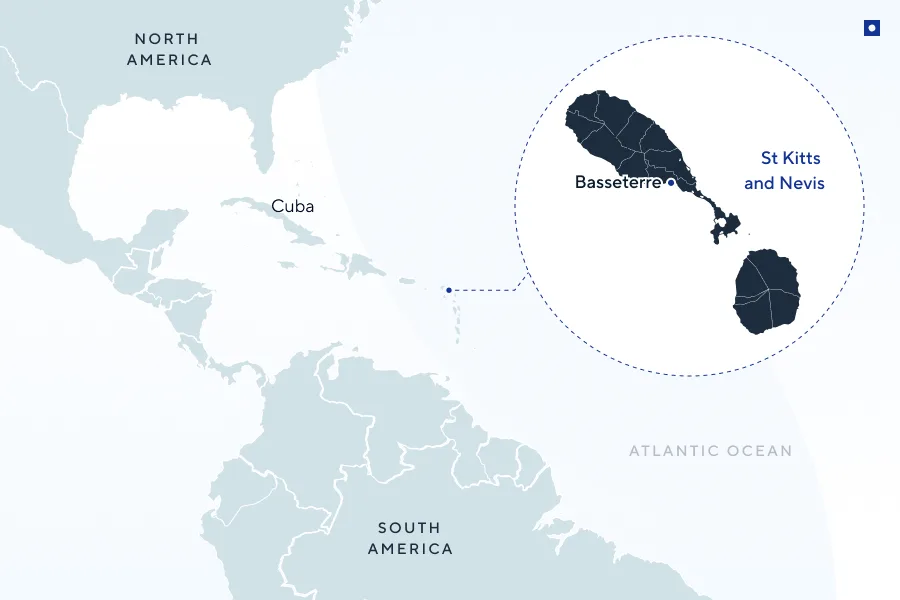
Although St Kitts and Nevis citizenship by investment does not require relocation, some investors consider spending part of the year on the islands or establishing tax residence. Life in the federation combines a
Climate and natural environment
Saint Kitts and Nevis enjoys a tropical climate
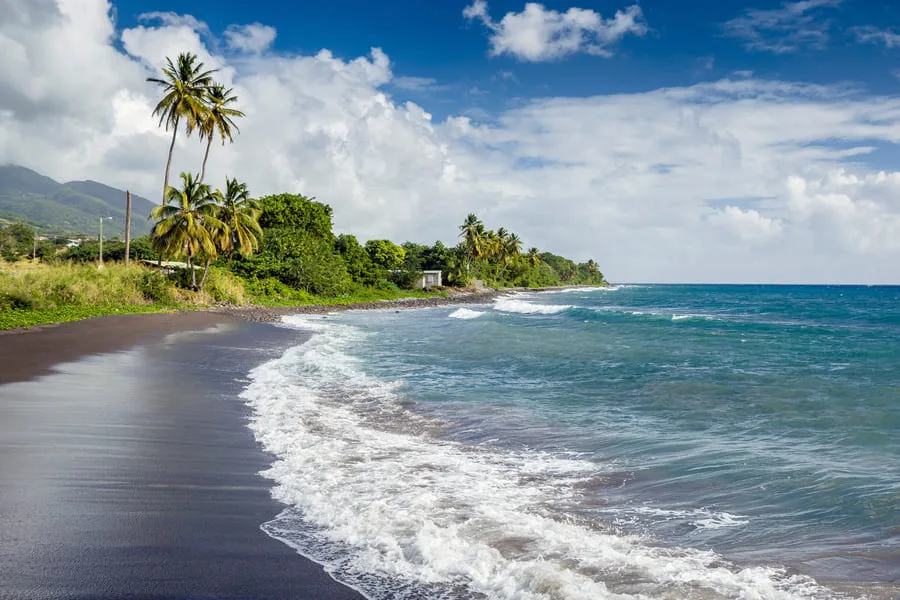
The islands are of volcanic origin, offering diverse landscapes — from golden Caribbean beaches to black volcanic sand along the Atlantic coast, mountainous rainforest areas, and coastal resorts.
Safety and community
Saint Kitts and Nevis is considered one of the more stable jurisdictions in the Caribbean. With a population of approximately 50,000 people, the country offers a
As in any country, security conditions vary by area, but residential and resort zones are typically
Healthcare system
The country has public hospitals and private medical facilities, with the main hospital located in Basseterre. For complex medical procedures, residents may travel to larger regional hubs such as the United States or neighbouring Caribbean territories.
Private health insurance is commonly used by expatriates and
Education and regional access
Saint Kitts and Nevis hosts branches of regional institutions, including the University of the West Indies network. Citizens may qualify for regional tuition rates and certain
International schools and private education options are limited but available.
Cost of living
As a small island state, Saint Kitts and Nevis relies heavily on imports. as a result, imported goods and consumer products may be more expensive than in larger economies. However, there is no personal income tax at the national level.
Living costs vary significantly depending on housing choice, imported lifestyle preferences, and proximity to resort areas.
Connectivity and business environment
The country operates under a common law legal system and maintains established banking and corporate services sectors. English is the official language, which simplifies communication and administration for international residents.
Robert L. Bradshaw International Airport provides direct connections to North America and regional Caribbean destinations, supporting business and leisure travel.
Risks and outlook for 2026—2027
St Kitts and Nevis citizenship by investment operates within an evolving international regulatory environment. While the programme has a long track record and a defined legal framework, investors should consider a number of risk factors and
Regulatory and compliance risks
Caribbean CBI programmes remain under close scrutiny from international partners, particularly the European Union [244] Source: European Commission — Investor Citizenship Schemes , the United Kingdom, and the United States. This scrutiny may result in:
- adjustments to Due Diligence standards;
- expanded interview and verification requirements;
- changes to eligible nationalities or application procedures.
Such measures are typically introduced to strengthen programme integrity rather than to suspend it, but they may affect timelines and procedural complexity.
Mobility-related uncertainty
Investment and market risks
Under the real estate route, returns depend on property performance, tourism demand, and management quality. Rental income and resale value are influenced by market cycles, regulatory conditions, and holding period requirements. Investors should not treat qualifying real estate as a guaranteed financial instrument.
Programme outlook
According to the latest analytics report by Passportivity, St Kitts and Nevis is expected to continue refining its CBI framework in
- higher transparency;
- enhanced compliance;
- closer alignment with international standards.
These developments may increase the administrative burden for applicants but are generally aimed at preserving the programme’s
For investors, a prudent approach involves assessing not only current conditions but also how regulatory and geopolitical dynamics may affect citizenship planning over time.
Exiting investments: resale and holds
Under the St Kitts and Nevis citizenship by investment programme, real estate investments are subject to a mandatory holding period, which is typically seven years. During this time, the property may be rented out, depending on the project structure and management model.
After the holding period expires, the property may be resold, including to another CBI applicant, provided it remains within an approved development and meets programme requirements. Resale value and timing depend on market conditions and are not guaranteed.
Other St Kitts and Nevis citizenship routes beyond CBI
Citizenship by investment is the most structured and predictable pathway to citizenship in Saint Kitts and Nevis. Outside the CBI programme, the country offers only limited alternative routes, each with significantly longer timelines and stricter residence requirements.
Citizenship by naturalisation after long-term residence
Foreign nationals may apply for citizenship by naturalisation after a prolonged period of lawful residence in Saint Kitts and Nevis. Under current practice, eligibility generally arises after at least 14 years of continuous legal residence, subject to the discretion of the authorities [245] Source: Naturalisation period, Citizenship Act .
Applicants are typically required to demonstrate:
long-term physical presence in the country;- integration into local society;
- good character and a clean criminal record;
- stable and lawful income.
This route is rarely used by investors, as it requires substantial relocation and does not provide a defined or accelerated timeline comparable to the CBI programme.
Citizenship through marriage
A foreign national married to a citizen of Saint Kitts and Nevis may be eligible to apply for citizenship after five years of marriage and residence. The process involves verification of the genuineness of the relationship, residence history, and background checks. Approval is discretionary and not automatic.
Citizenship by descent
Citizenship may be acquired by descent if at least one parent is a citizen of St Kitts and Nevis. This route is available only to individuals with a direct family connection and is not applicable to most foreign investors.
Final thoughts on Saint Kitts and Nevis citizenship by investment
- St Kitts and Nevis citizenship by investment offers a competitive balance of cost, timeframe, and mobility.
- With a minimum investment starting at $250,000 and processing timelines of around 6 months, St Kitts and Nevis compares favourably across key criteria used in international CBI assessments.
- Investors can choose between multiple regulated investment routes: government contributions, public benefit projects, and real estate.
- Benefits such as the absence of residence requirements, permission for dual citizenship, and access to regional education opportunities make the programme relevant for internationally mobile families.
About the authors


Frequently asked questions
The minimum investment for St Kitts and Nevis citizenship by investment starts at $250,000 for a government contribution or public benefit option. For the real estate route, the minimum is US $325,000 for a share in a qualifying property or $600,000 for a private property, plus applicable government and processing fees.
No. Citizenship is granted by the government under a legally regulated investment programme. The passport is issued after citizenship is formally approved. Investment is one requirement; citizenship decisions rest with the state following compliance checks.
The programme is structured and transparent, but it is not automatic or guaranteed. Applicants must:
- meet eligibility criteria;
- pass Due Diligence checks;
- attend mandatory interviews;
- submit complete documentation.
With professional preparation, the process is predictable, but it still requires compliance and verification.
Yes. A mandatory interview is part of the compliance framework for St Kitts and Nevis citizenship by investment. Interviews are conducted online or in person and apply to the main applicant and dependants aged 16 or older.
Under current practice, a straightforward application is generally completed in approximately 6 months, assuming all documents are in order and Due Diligence proceeds without requests for additional information.
Applications for St Kitts and Nevis citizenship are submitted remotely, but all applicants must provide biometric data. This has been a mandatory requirement since April 2026. Permanent biometric collection centres operate in St Kitts and Nevis, the UAE, and China.
Interviews can be arranged online, and applications are submitted through an authorised agent.
Caribbean programmes remain at the forefront of the investment citizenship market, with Grenada consistently ranked among the most popular Caribbean CBI options. At the same time, the geography of citizenship by investment is gradually expanding towards Africa and the Pacific region.
Vanuatu is included among the top 7 programmes in the CBI Index, reflecting sustained demand for Pacific citizenship options. The programme is often noted for its processing speed, although, as with all jurisdictions, regulatory standards and international positioning remain important considerations for
São Tomé and Príncipe ranked 10th in the Index, signalling growing investor interest in African citizenship programmes. While still at an early stage of development compared to Caribbean counterparts, the programme reflects broader geographic diversification within the CBI landscape.
St Kitts and Nevis citizenship by investment is granted only after successful completion of all compliance checks. An application may be refused if the applicant:
- provides false or misleading information;
- fails the Due Diligence review;
- cannot demonstrate the lawful source of funds;
- appears on international sanctions or watchlists.
Citizenship may be revoked if it was obtained by fraud, concealment of material facts, or misrepresentation. Revocation decisions are made by the competent authorities in accordance with national legislation.
Children born after their parents obtain St Kitts and Nevis citizenship by investment do not need to go through a new main investment application. They may be added through a
The official
The application requires the child’s birth certificate, the parent’s citizenship certificate or registration certificate, and copies of the parent’s St Kitts and Nevis passport.
Read also




Contact us today
Passportivity assists international clients in obtaining residence and citizenship under the respective programs. Contact us to arrange an initial private consultation.