Research

Cyprus Real Estate: Prices, Demand, and Market Outlook to 2031


Key takeaways
Passportivity experts have prepared an analytical overview of the Cyprus real estate market. The analysis examines price trends and property transactions, demand from local and foreign buyers, rental yields, regional differences, and factors that may affect the market through 2031.
Cyprus’s residential property market continues to grow, although trends vary considerably by region and property type. In Q1 2026, the residential property price index increased by 7.5% year on year, according to the Central Bank of Cyprus. Apartment prices rose by 10.8%, while house prices increased by 3%, according to the RICS Cyprus Property Index. The strongest price growth was recorded in Limassol and Larnaca.
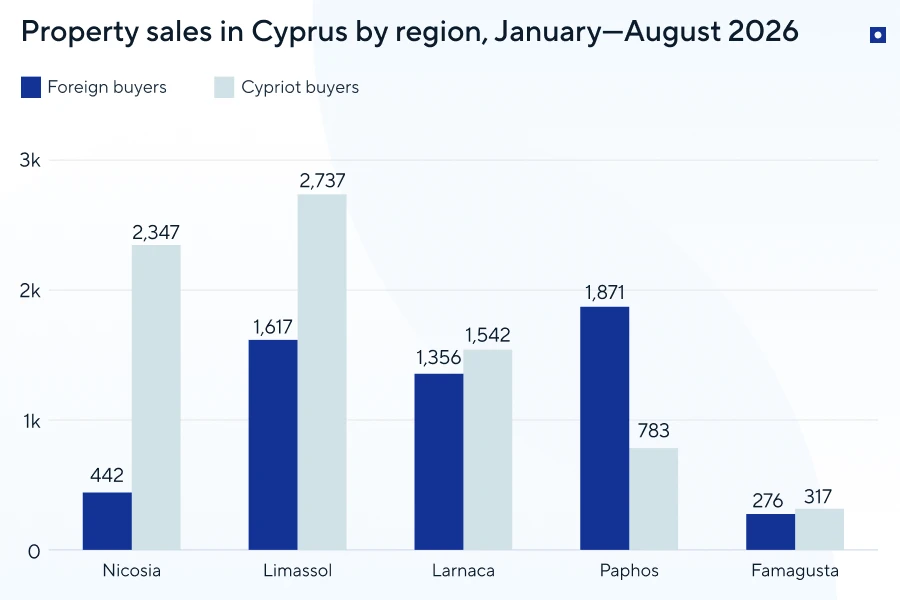
Foreign buyers remain an important part of the market, accounting for around 42% of all property transactions from January to August 2026. Their share is even higher in some regions. In Paphos, for example, foreign buyers accounted for 71% of transactions.
At the same time, housing supply is increasing. From January to May 2026, the number of residential units covered by building permits rose by 63.7% year on year.
The rental market remains active. In Q2 2026, apartment rents increased by 7.36% year on year, while house rents rose by 5.3%. The average gross rental yield was 5.51% for residential apartments and 5.82% for holiday apartments.
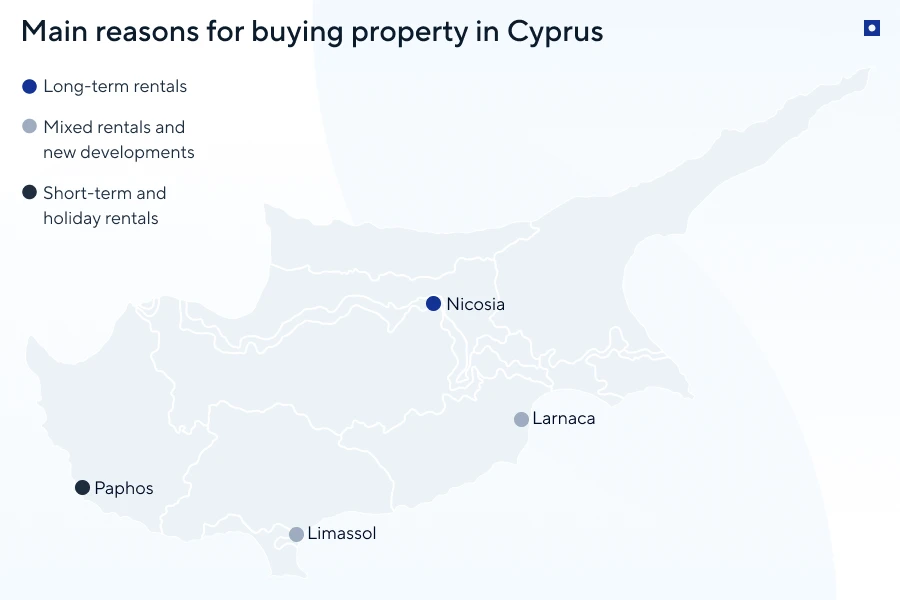
Limassol remains the largest market by number of transactions and the most expensive region for buying residential property. Paphos stands out for its high share of foreign buyers, while Larnaca has more moderate property prices and a growing number of transactions. In Nicosia, most properties are purchased by local buyers.
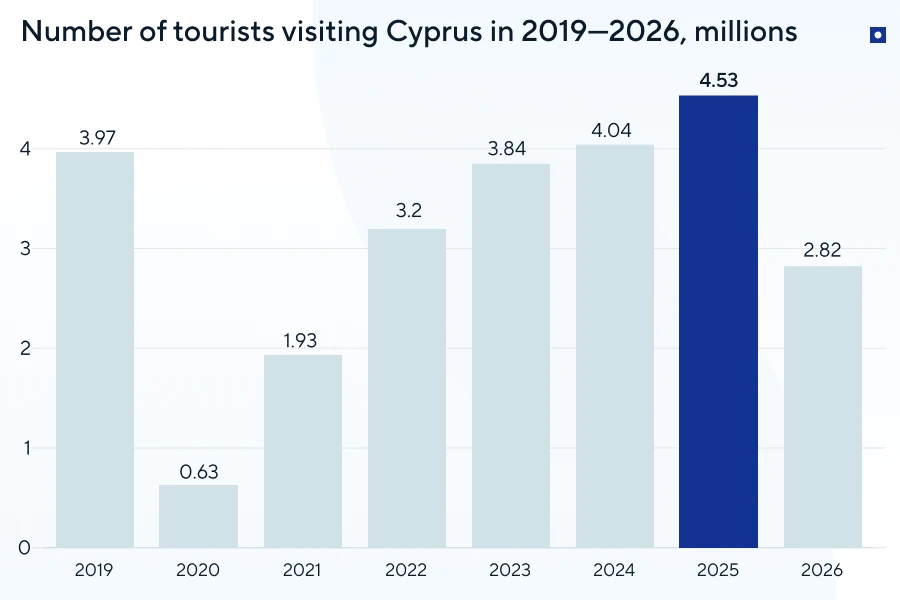
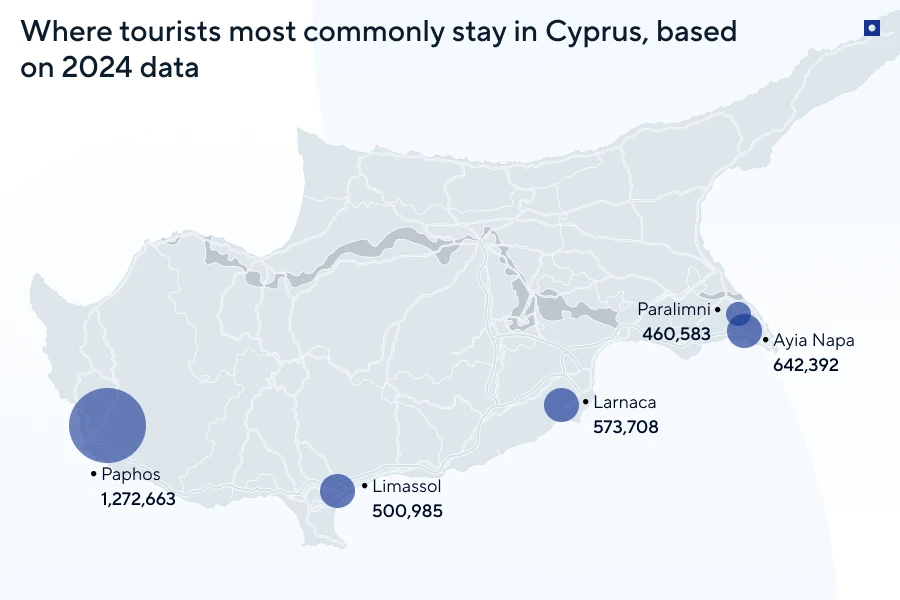
Tourism supports demand for holiday property. In 2025, Cyprus welcomed 4.53 million tourists, 12.2% more than a year earlier. Tourism has the strongest impact on Paphos, Famagusta, and the coastal areas of Larnaca and Limassol, where part of the housing stock is used for
The market is likely to continue expanding through 2031. However, the volume of new housing supply, mortgage rates, and inflation may limit the pace of property price growth.
5 benefits of buying property in Cyprus
Foreigners buy property in Cyprus for different purposes, including preserving capital, earning rental income, living in the country, or relocating. Purchasing certain real estate also allows investors to apply for permanent residence.
1. Opportunity to obtain permanent residence in Cyprus
Cyprus permanent residence is available for a property investment of at least €300,000, excluding VAT. Applicants may purchase 1 or 2 properties to meet the minimum investment requirement.
The status allows investors to relocate to Cyprus. Their family members, including a spouse and children, may also obtain permanent residence.
2. Property prices are denominated in euros
Property in Cyprus is bought, sold, and rented in euros, one of the world’s major currencies and the common currency of most EU countries. For investors, this provides an opportunity to hold part of their capital in real estate whose value is not tied to the national currency of their country of residence.
Prices vary depending on the type of property. In Q1 2026, apartment prices in Cyprus increased by an average of 4.09% year on year, while house prices rose by 3.6%. These figures are based on the RICS Property Index, which tracks different property segments across Cyprus.
Differences are also evident between regions. For example, in Q1 2026, apartment prices increased quarter on quarter by:
- 1.67% in Paphos;
- 1.24% in Famagusta;
- 0.62% in Limassol.
Price trends show that the market develops unevenly even within the same property segment. Apartment prices in some regions may grow considerably faster than in others, meaning that the national average does not reflect differences between local property markets.
3. Property is in demand among foreign buyers
Foreign buyers account for a significant share of demand for Cypriot real estate. 5,562 property sale contracts involving foreign buyers were registered with the Land Registry from January to August 2026, according to the Cyprus Department of Lands and Surveys. This accounted for around 42% of all transactions.
4. Property can generate rental income
Property in Cyprus may be rented out on a
Rental rates continue to rise. In Q2 2026, apartments recorded the strongest
In Q2 2026, the average gross yield was 5.51% per year for residential apartments and 5.82% for holiday apartments. Yields for houses were lower, at 3.01% and 2.85% respectively. The figures are provided by the RICS Cyprus Property Index.
5. Properties are available for different investment goals
In Cyprus, buyers can purchase city apartments, houses, holiday properties, or
City apartments are often considered for
Holiday properties are used for
Key features of the Cyprus property market
Cyprus allows foreigners to buy property, but restrictions apply to citizens of countries outside the European Union. These rules cover the number and type of properties that may be bought and require a separate purchase permit.
Restrictions for foreign buyers
A foreign buyer or a married couple may purchase up to 2 properties. For example, this may include 2 apartments, 2 houses, or 1 residential and 1 commercial property. Commercial real estate is subject to size limits: a shop may be up to 100 m² and an office up to 250 m². For married couples, the limit applies jointly rather than separately to each spouse.
Instead of property, a buyer may purchase a plot of land of up to 4,000 m², provided it is intended for the construction of their own home.
Buying property in Northern Cyprus
Property in Northern Cyprus involves additional legal risks. The Republic of Cyprus does not control this part of the island, and some real estate there is registered to Greek Cypriot owners who have not consented to the sale or use of their property.
Under the laws of the Republic of Cyprus, transactions involving another person’s real estate without the owner’s consent may result in criminal and civil liability. This applies not only to sales but also to renting out property, advertising it, and entering into agreements for its use.
In 2025, the Nicosia court issued several convictions in such cases. In one case, a developer was sentenced to 5 years in prison. Two other EU nationals received sentences of 2.5 years and 15 months.
Permanent residence by property investment
Cyprus operates a permanent residence by investment programme. The status is available to foreigners who invest at least €300,000 in 1 or 2 properties. Residential real estate must be purchased on the primary market. Commercial real estate may be purchased on either the primary or secondary market.
Permanent residence is granted indefinitely. Investors are not required to live in Cyprus, but they must visit the country at least once every 2 years.

How the Cyprus property market has changed
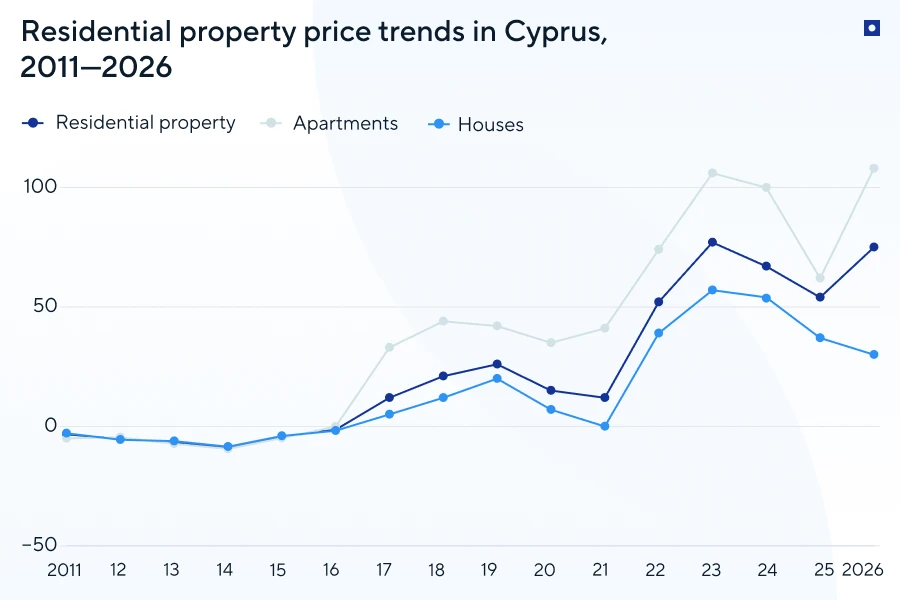
Since 2011, the Cyprus property market has gone through several stages: falling prices during the
This analysis uses two indices to assess different aspects of the market. The Central Bank of Cyprus residential property price index tracks overall changes in residential property prices, while the RICS Cyprus Property Index focuses on specific segments, including apartments and houses. as a result, reported growth rates may differ depending on the index used.
Until 2016: impact of the financial crisis
In the early 2010s, the Cyprus property market declined for several consecutive years. The average price of residential property fell by 3.3% year on year in 2011, followed by a further 5.3% decrease in 2012 and 6.5% in 2013. The Central Bank of Cyprus publishes these figures annually.
The
Changes in Cyprus residential property prices, 2011 to 2016
| Year | Average price change | Apartments | Houses |
|---|---|---|---|
| 2011 | −3.3% | −5.0% | −2.9% |
| 2012 | −5.3% | −4.6% | −5.6% |
| 2013 | −6.5% | −7.3% | −6.2% |
| 2014 | −8.8% | −9.4% | −8.5% |
| 2015 | −4.3% | −4.9% | −4.0% |
| 2016 | −1.4% | −0.1% | −1.8% |
2017—2019 : market recovery
The market began to recover in 2017, when residential property prices increased by an average of 1.2% year on year. Growth accelerated to 2.1% in 2018 and 2.6% in 2019.
Apartments saw stronger price growth than houses. In 2019, their value increased by 4.2% year on year, compared with 2% for houses.
Regional differences were already evident. In 2019, the overall property price index increased by:
- 4.7% in Limassol;
- 2.8% in Larnaca;
- 2.5% in Paphos;
- 1.6% in Nicosia.
The recovery was uneven, with coastal areas recording stronger growth.
Changes in Cyprus residential property prices, 2017 to 2019
| Year | Average price change | Apartments | Houses |
|---|---|---|---|
| 2017 | +1.2% | +3.3% | +0.5% |
| 2018 | +2.1% | +4.4% | +1.2% |
| 2019 | +2.6% | +4.2% | +2.0% |
2020—2021 : pandemic period
The
Apartments saw stronger price growth than houses. In 2021, their value increased by an average of 4.1%, while house values remained virtually unchanged. Regional trends varied considerably. In Q4 2021, apartment prices rose by 9.6% year on year in Paphos, 7.4% in Famagusta, and 6.6% in Limassol.
Changes in Cyprus residential property prices, 2020 to 2021
| Year | Average price change | Apartments | Houses |
|---|---|---|---|
| 2020 | +1.5% | +3.5% | +0.7% |
| 2021 | +1.2% | +4.1% | 0.0% |
2022—2024 : accelerating price growth
Property prices began to rise more rapidly in 2022, when the overall price index increased by 5.2%. Growth accelerated to 7.7% in 2023 and remained strong at 6.7% in 2024.
Apartment prices increased faster than house prices. In 2023, apartment prices rose by 10.6% year on year, followed by a further 10% increase in 2024.
The strongest growth was recorded in coastal areas. In Q4 2023, apartment prices increased by 22.2% year on year in Paphos, 17.2% in Larnaca, and 15.2% in Limassol. In Q1 2024, annual growth in Paphos still exceeded 20%.
Changes in Cyprus residential property prices, 2022 to 2024
| Year | Average price change | Apartments | Houses |
|---|---|---|---|
| 2022 | +5.2% | +7.4% | +3.9% |
| 2023 | +7.7% | +10.6% | +5.7% |
| 2024 | +6.7% | +10.0% | +5.4% |
2025—2026 : market stabilisation
Property prices continued to rise in 2025. In Q4, the overall residential property price index was 7.1% higher than a year earlier.
Apartment values increased by 9.6%, compared with 3.4% for houses. Particularly strong growth was recorded in:
- Limassol, at 9.9%;
- Larnaca, at 8.3%;
- Paphos, at 7.6%.
Property sales are also increasing. From January to August 2026, the Cyprus Department of Lands and Surveys registered 13,288 sale contracts, 13.7% more than in the same period of 2025. The number of contracts increased by 1,599 year on year.
The International Monetary Fund notes that the market is gradually stabilising after a period of rapid growth. According to the IMF, house price growth has moderated since 2024, while property sales growth has remained broadly stable since 2022. This does not necessarily mean that prices will stop rising, but rather that the pace of growth may become more moderate over time.
Factors affecting the Cyprus housing market
The Cyprus property market is influenced by several factors at the same time, including the state of the economy, mortgage costs, the volume of new construction, and demand from foreign buyers and tourists.
Foreign buyers support demand
Foreign buyers account for a significant share of the Cyprus real estate market. From January to August 2026, 13,288 property sale contracts were registered on the island. Of these, 5,562 involved foreign buyers, accounting for around 42% of the total.
Of the 5,562 sale contracts involving foreign buyers, 1,884 were registered by EU nationals and 3,678 by
Regional differences are evident. In June 2026, foreign buyers registered 816 property sale contracts in Cyprus. Of these:
- 289 were registered in Limassol;
- 257 in Paphos;
- 223 in Larnaca;
- 64 in Nicosia;
- 34 in Famagusta.
The share of buyers from outside the European Union is particularly high in Limassol, Paphos, and Larnaca.
Tourism affects the holiday property market
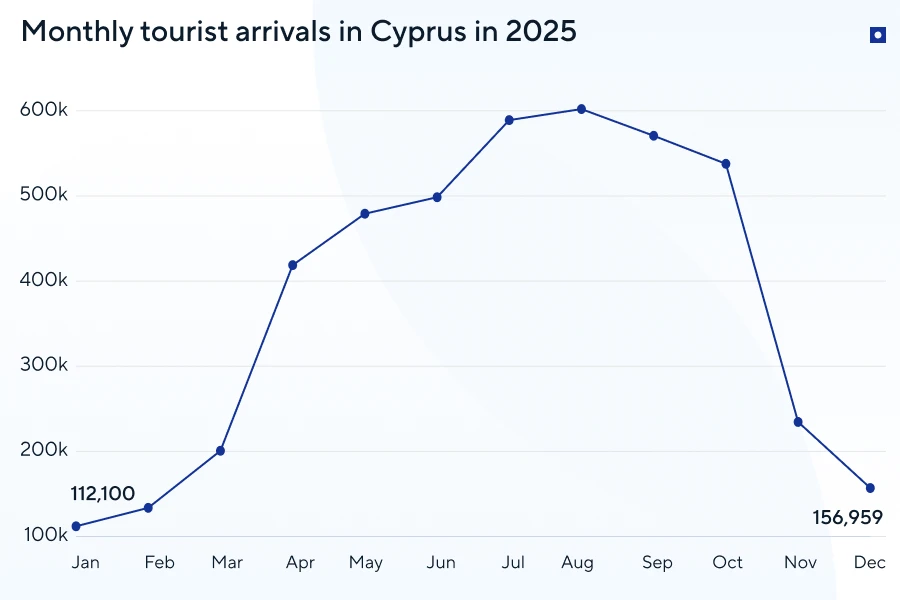
Cyprus welcomed a record 4.53 million tourists in 2025, 12.2% more than in 2024. Tourism revenue increased by 15.2% to €3.7 billion. Almost 80% of visitors travelled to Cyprus for holidays.
In 2026, tourist arrivals declined. From January to August, Cyprus received 2.82 million tourists, 7% fewer than in the same period of 2025. In August, arrivals fell by 3.3% to 581,880. However, this figure was still higher than in August 2024.
Tourist demand is particularly important for holiday apartments and houses rented out on a
Economic growth supports domestic demand
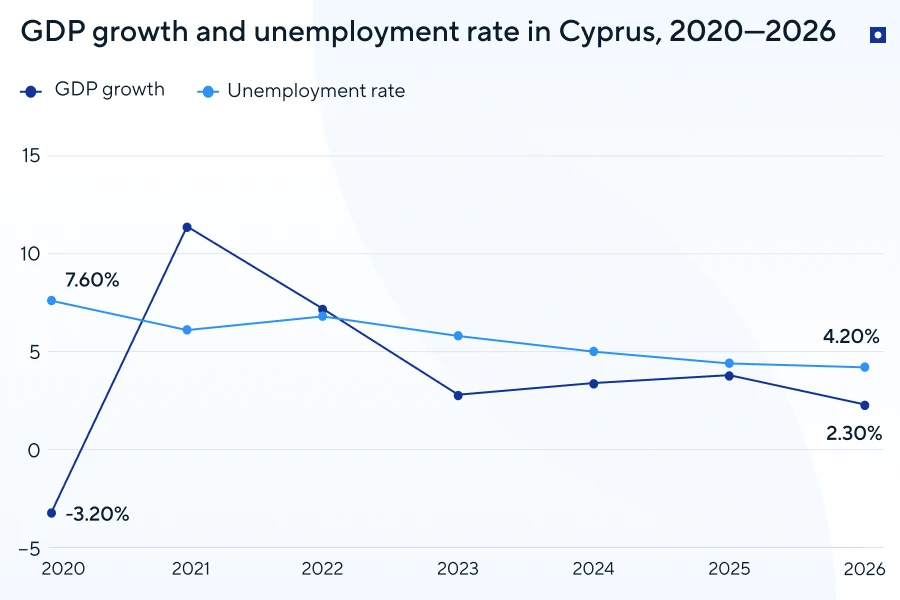
Cyprus’s GDP grew by 3.8% in 2025. The European Commission forecasts further growth of 2.3% in 2026. Unemployment is expected to fall to 4.2%, its lowest level in more than 10 years, while employment is forecast to increase by a further 1.3% by the end of 2026.
Growth in employment and incomes supports the ability of local residents to buy and rent property.
Mortgage rates affect affordability for local buyers
Housing loan costs directly affect demand from Cypriot buyers who rely on mortgages to purchase property. In March 2026, the average interest rate on housing loans was 3.86%, up from 3.45% a month earlier.
Demand for mortgages remains strong. In Q2 2026, Cypriot banks recorded an increase in net demand for housing loans, while lending conditions remained unchanged.
The structure of mortgage financing has changed. At the beginning of 2022, almost all new housing loans were issued at variable rates. By March 2026, the share of
Changes in mortgage rates in Cyprus, 2020 to 2026
| Year | Mortgage rate, % |
|---|---|
| 2020 | 2.16 |
| 2021 | 2.21 |
| 2022 | 3.34 |
| 2023 | 5.16 |
| 2024 | 4.75 |
| 2025 | 3.12 |
| 2026 | 3.86 |
Growth in construction increases supply
Construction activity in Cyprus accelerated considerably in 2026, with most of the increase coming from apartment buildings.
From January to May 2026, building permits provided for the construction of 6,667 apartments in
Residential construction grew particularly rapidly. In the first 5 months of 2026, permits provided for the construction of 8,978 residential units, compared with 5,484 a year earlier, an increase of 63.7%. The total area of new residential projects rose by 62.8% to 1.54 million m², while their value increased by 61.6% to €1.79 billion.
The increase in construction is expected to expand future supply, particularly in the apartment segment. At the same time, construction materials are becoming more expensive: in August 2026, the relevant price index was 3.39% higher than a year earlier.
Changes in residential construction in Cyprus
| Indicator | |||
|---|---|---|---|
| Building permits issued | 2,763 | 3,650 | +32.1% |
| Total area of residential projects, m² | 947,299 | 1,542,202 | +62.8% |
| Value of residential projects, € | €1.11 billion | €1.79 billion | +61.6% |
What is happening to property prices in Cyprus
Residential property prices continue to rise, although trends vary considerably by property type and region. In Q1 2026, the residential property price index increased by 2.3% compared with the previous quarter and by 7.5% year on year, according to the Central Bank of Cyprus.
Changes in apartment and house prices
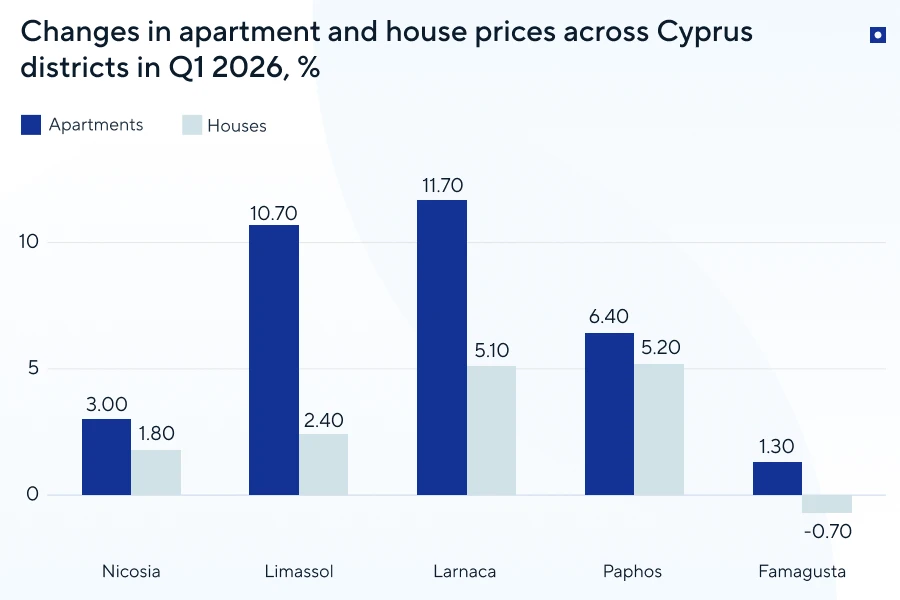
Apartment prices are rising considerably faster than house prices. In Q1 2026, they increased by 10.8% year on year, compared with just 3% for houses.
The difference is also evident on a quarterly basis. From January to March 2026, apartment prices increased by 2.4%, compared with 1.5% for houses. The overall index rose by 2.3%.
How property prices are changing across Cyprus
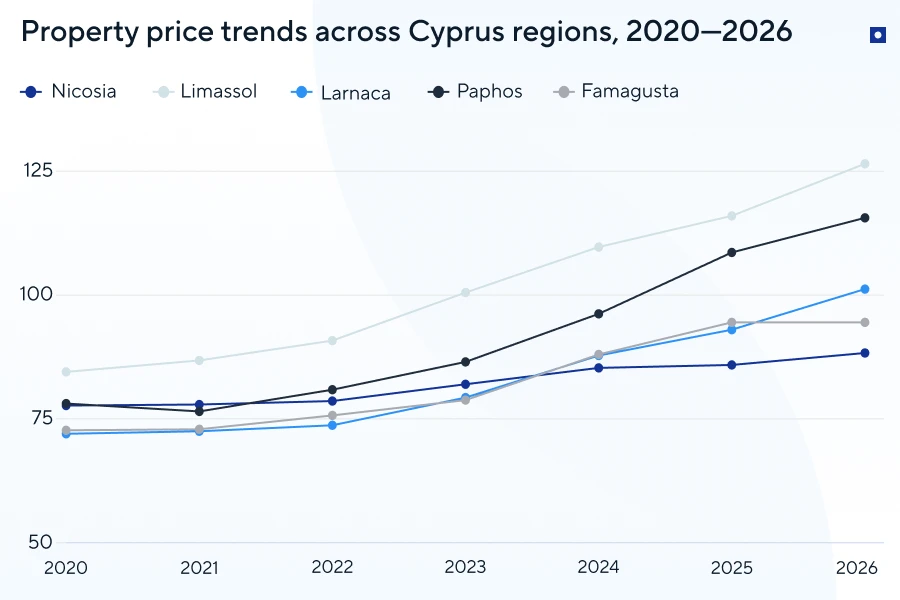
In Q1 2026, residential property prices grew fastest in Limassol and Larnaca.
- 9.1% in Limassol;
- 8.9% in Larnaca;
- 6.4% in Paphos;
- 2.8% in Nicosia.
In Paphos, prices remained largely unchanged over the quarter. A year earlier, however, the region had recorded the strongest annual growth. In Q1 2025,
- 12.9% in Paphos;
- 7.3% in Famagusta;
- 5.9% in Larnaca;
- 5.7% in Limassol;
- 0.7% in Nicosia.
Over the year, the strongest growth shifted from Paphos towards Limassol and Larnaca. The national average does not show these regional differences: prices can rise quickly in some areas while changing very little in others.
How Cyprus property prices compare with other EU countries
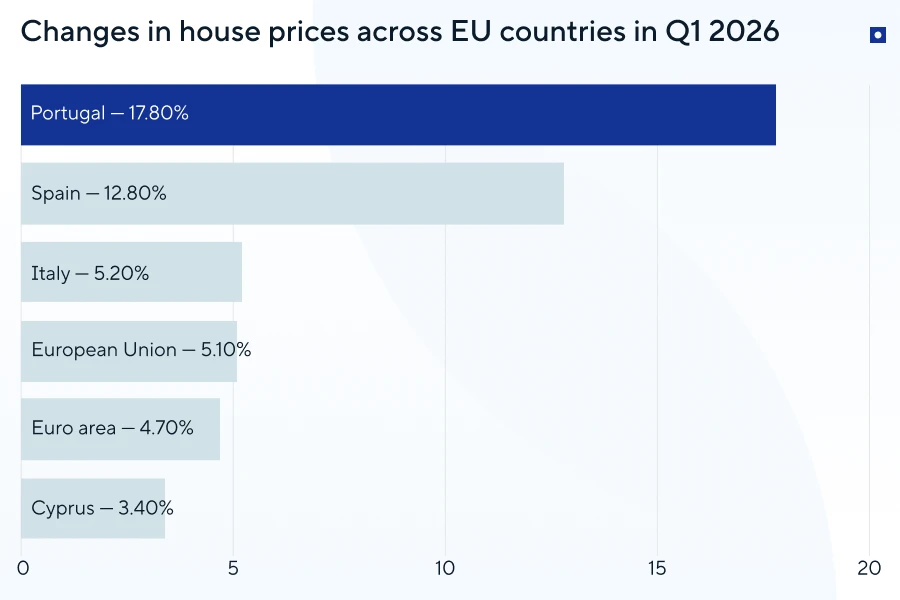
The House Price Index is used to compare property price trends across EU countries. It reflects actual transaction prices for both new and existing residential real estate. According to this indicator, property prices in Cyprus increased by 3.4% year on year in Q1 2026.
Price growth in Cyprus was below the EU average of 5.1% and the euro area average of 4.7%. The strongest increases were recorded in:
- Portugal — at 17.8%;
- Bulgaria — at 14.8%;
- Slovakia — at 14.4%.
Cyprus is neither among the
What is happening to commercial property in Cyprus
Commercial property prices are rising more slowly than residential property prices. In Q1 2026, warehouse prices increased by 3.48% year on year and office prices by 2.91%. Retail property recorded the weakest growth, at 0.72%. By comparison, apartment prices rose by 4.09% over the same period and house prices by 3.6%.
Offices and warehouses are the most dynamic segments of the commercial real estate market. In the first half of 2026, both prices and rental rates for these properties continued to increase.
Office rents are highest in Limassol, where prime properties cost around €29 per m² per month. Nicosia has the largest office market, with the greatest supply and the highest number of transactions.
Warehouse prices are rising faster than those of other commercial properties. Over the year, they increased by 3.48% and rental rates increased by 2.58%. Around 47% of available warehouse supply is located in Limassol, 33% in Nicosia, and 20% in Larnaca. The average rental rate is around €5 per m² per month.
Changes in Cyprus commercial property prices
| Property type | Q1 2025, year on year | Q1 2026, year on year |
|---|---|---|
| Warehouses | +1.04% | +3.48% |
| Offices | +2.84% | +2.91% |
| Retail property | −0.05% | +0.72% |
What is happening to the rental market in Cyprus
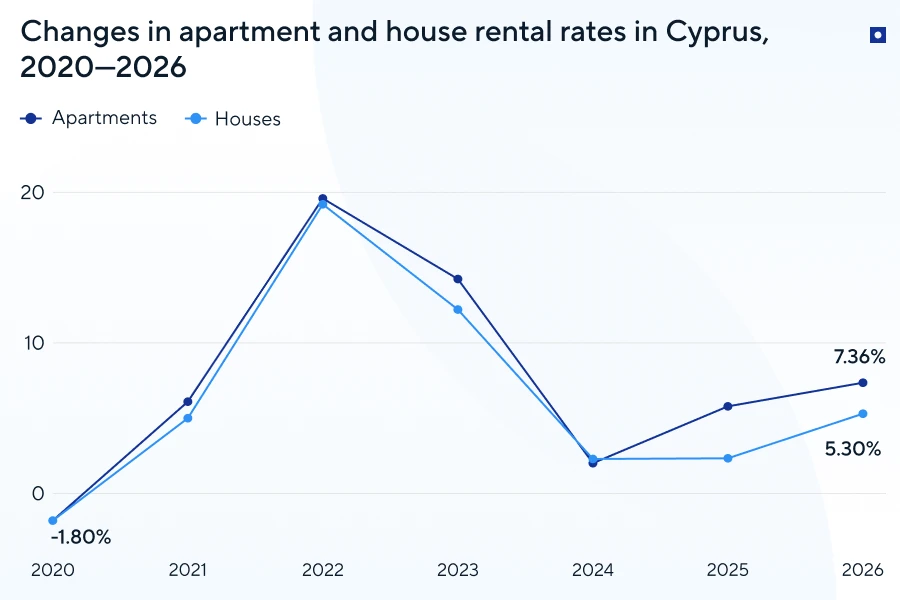
Rental rates in Cyprus continue to rise, with apartments recording the strongest growth. In Q2 2026, apartment rents increased by 7.36% year on year, while house rents rose by 5.3%.
Holiday properties also remain in demand. Over the year, rental rates for holiday apartments increased by 6.43%, while rates for holiday houses rose by 5.19%.
Long-term rentals
Rental rates are particularly high in Limassol. In summer 2026,
Monthly rents for
Students account for a notable share of tenants in Nicosia. In the 2023 academic year, 57,889 students were enrolled at higher education institutions in Cyprus, 9.4% more than a year earlier.
The average gross rental yield in Q2 2026 was 5.51% for apartments and 3.01% for houses. A year earlier, the figures were 5.41% and 2.97%, respectively.
Short-term rentals
In Q2 2026, rental rates for holiday apartments increased by 6.43% year on year, while rates for holiday houses rose by 5.19%.
Holiday apartments generated an average gross rental yield of 5.82%, compared with 2.85% for holiday houses. A year earlier, the figures were 5.75% and 2.79% respectively.
Which regions of Cyprus see the most property transactions
Cyprus regions differ not only in transaction volumes but also in total sales value. According to a Landbank Analytics study covering January to October 2025, several areas in Limassol were among the country’s largest local markets by sales value:
- Germasogeia, with €351.5 million in transactions;
- Limassol Municipality, with €274 million;
- Kourion, with €111.7 million.
Together, the three Limassol areas generated more than €737 million in property sales across around 1,600 transactions. By comparison, property sales totalled €207.2 million in Larnaca and €130 million in Nicosia.
Limassol
Limassol recorded the highest number of property transactions in Cyprus in 2026. Between January and August, 4,354 sale contracts were registered in the region. Foreign buyers accounted for 1,617 of them, or around 37%.
The region stands out for its property prices. On the secondary market in the first half of 2026, the median apartment price was €217,000, or €2,686 per m². The median house price was €325,000, or €2,221 per m².
Paphos
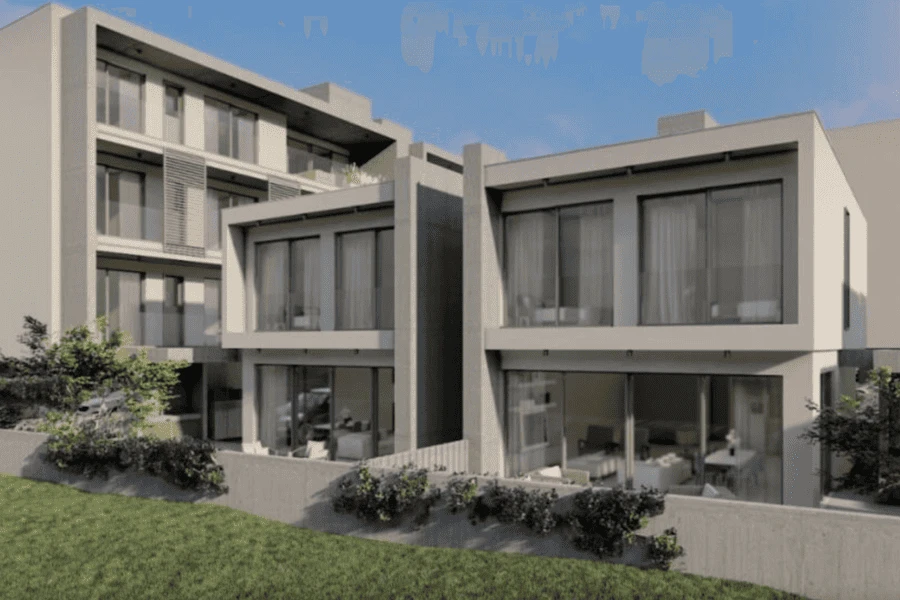
Paphos has the highest share of foreign buyers. In the first eight months of 2026, 2,654 sale contracts were registered in the region. Of these, 1,871 involved overseas purchasers, who accounted for around 71% of all transactions.
The region has a large number of
Larnaca
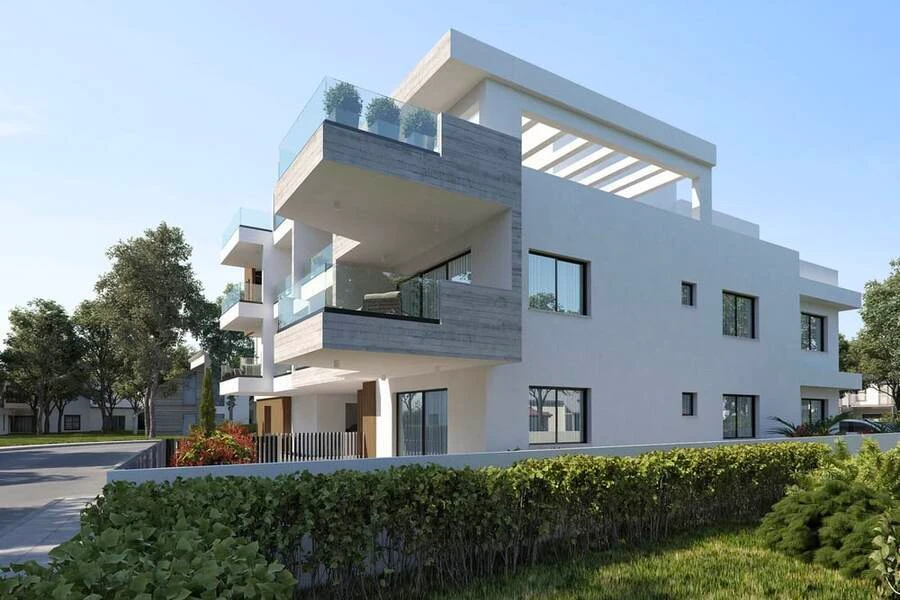
Between January and August 2026, 2,898 sale contracts were registered in Larnaca. Of these, 1,356 involved foreign buyers, accounting for around 47% of the total.
Nicosia
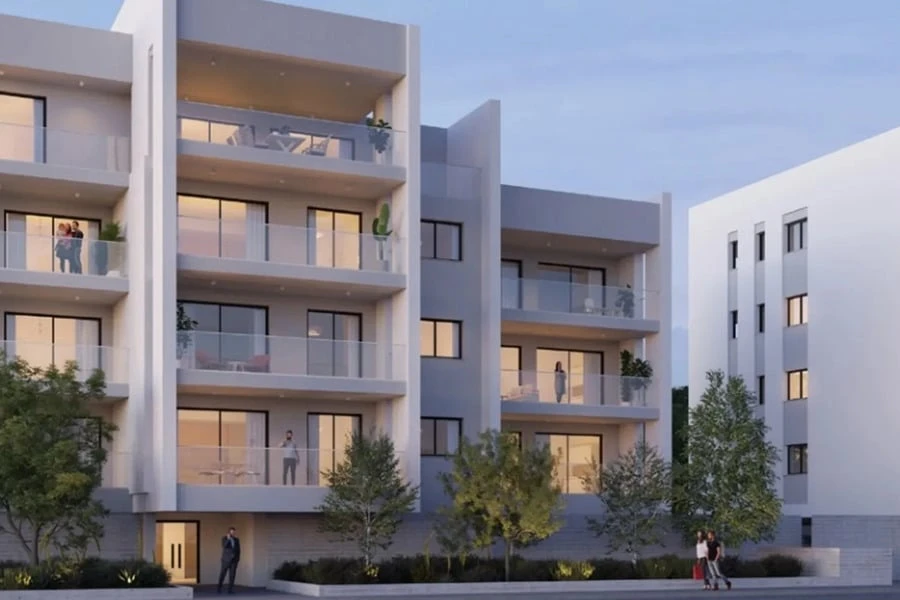
In Nicosia, between January and August 2026, 2,789 property sale contracts were registered. Foreign buyers accounted for 442 transactions, or around 16% of the total. This was the lowest share of foreign demand among the 5 regions.
Nicosia recorded the highest number of
Famagusta
Famagusta remains the smallest market by number of transactions. Between January and August 2026, 593 sale contracts were registered in the region. Foreign buyers accounted for 276 transactions, or around 47% of the total.
On the secondary market in the first half of 2026, the median apartment price was €101,000, or €1,610 per m². Houses were more expensive, with a median price of €255,000, or €1,760 per m². Around 88% of apartments were sold for no more than €150,000.
Property price comparison across Cyprus regions in 2026
| Region | Apartments, per m² | Houses, per m² |
|---|---|---|
| Limassol | €2,686 | €2,221 |
| Paphos | €1,748 | €1,886 |
| Larnaca | €1,528 | €1,425 |
| Nicosia | €1,582 | €1,443 |
| Famagusta | €1,610 | €1,760 |
How to buy property in Cyprus: step‑by‑step process
Buying property in Cyprus involves several stages: checking the property, signing the sale and purchase agreement, registering it, and transferring ownership. Citizens of countries outside the European Union must also obtain permission to purchase property.
The transaction timeline depends on the type of real estate, whether the documents are ready, and the payment terms. For
-
1—2 daysProperty selection and legal Due Diligence
The buyer selects a property, after which a lawyer checks the property documents.
For agreements signed after December 12th, 2023, the seller must attach a Land Registry certificate showing encumbrances and prohibitions. The certificate must have been issued no more than 5 working days before the agreement is signed.
-
2—3 daysProperty reservation
The parties sign a preliminary agreement and confirm the terms of the transaction. The buyer pays a deposit of
1—2 % of the property value, after which the property is taken off the market for the agreed period. -
Up to 7 days
Signing the sale and purchase agreement
The buyer and seller sign an agreement specifying the property, purchase price, payment schedule, and other transaction terms. If the property is purchased in instalments or during construction, the agreement separately sets out the payment amounts and deadlines.
Stamp duty is no longer payable on agreements signed on or after January 1st, 2026. Previously, the rate ranged from 0 to 0.2%.
If the buyer purchases a
new-build property, VAT may apply. The standard rate is 19%. A reduced rate of 5% applies to housing purchased or built as a primary residence, provided the relevant conditions are met. -
Up to 6 months after signing the agreement
Registration of the agreement with the Land Registry
The sale and purchase agreement is submitted to the District Lands Office where the property is located. This protects the buyer against the property being sold again and allows the buyer to seek transfer of ownership if the seller fails to fulfil the agreement.
The agreement must be submitted within 6 months after signing. The registration fee is €50.
-
2—3 weeksObtaining permission to purchase
Citizens of countries outside the European Union submit an application using Form COMM 145 to the District Administration where the property is located. The application is accompanied by the sale and purchase agreement, property documents, passport, and evidence of the buyer’s financial position.
No government fee is charged.
-
After the agreement conditions are fulfilled
Transfer of ownership
The buyer pays the remaining property price, and the buyer and seller complete the ownership transfer with the Land Registry.
A buyer who is a citizen of a country outside the European Union must present the permission to purchase property when registering the transfer.
When ownership is registered, the buyer pays a transfer fee if VAT does not apply to the transaction. The standard rates are:
- 3% on the first €85,000;
- 5% on the amount between €85,001 and €170,000;
- 8% on the amount above €170,000.
Where a transfer fee is due, the calculated amount is reduced by 50%. If VAT applies to the same transaction, no transfer fee is charged.
Cyprus property market outlook to 2031
The outlook is based on forecasts by the European Commission and the International Monetary Fund. For the period through 2027, we use the European Commission’s forecasts for GDP, inflation, employment, and consumption. For the period through 2031, we rely on the IMF’s
Neither organisation publishes a separate official forecast for Cyprus property prices through 2031. This section therefore assesses the conditions that may affect the market.
The economy is expected to continue growing. The European Commission forecasts Cyprus’s GDP to increase by 2.3% in 2026 and 2.7% in 2027.
The IMF provides a
Inflation is expected to ease after accelerating in 2026. The European Commission forecasts consumer price growth of 3.6% in 2026, slowing to 2.2% in 2027.
According to the IMF, average inflation is expected to stabilise at around 2% per year after 2027. More moderate price growth after 2026 may ease pressure on households’ real incomes and construction costs.
Domestic demand is expected to remain positive but grow more moderately. The IMF forecasts domestic demand growth of 4.4% in 2026 and 3.5% in 2027, followed by annual growth of around 2.
Private consumption is expected to increase by around 2.
Investment activity is expected to slow after strong growth. The IMF forecasts gross capital formation to increase by 11.2% in 2026 and 6.9% in 2027.
Growth is expected to gradually slow to 2.5% by
The labour market is expected to remain stable. The European Commission forecasts unemployment at around 4.2% in
A stable labour market supports household incomes and the ability of local residents to buy or rent property.
The main risks to the outlook are linked to the external environment. The IMF identifies geopolitical tensions, high energy prices, tighter financial conditions, and weaker external demand among the key risks. The European Commission also highlights the sensitivity of tourism to geopolitical developments.
These factors are particularly important in holiday property markets, where tourist arrivals influence
Key takeaways about the Cyprus property market
- Residential property prices continue to rise, although growth varies considerably. In Q1 2026, the Central Bank of Cyprus residential property price index increased by 7.5% year on year. Apartment prices rose by 10.8%, while house prices increased by 3%.
- Limassol remains the largest and most expensive regional market. Between January and August 2026, 4,354 sale contracts were registered there. Limassol also had the highest
secondary-market apartment prices, at around €2,686 per m². - Foreign buyers play a significant role in the market. In the first eight months of 2026, they accounted for around 42% of registered transactions. The share was highest in Paphos, at around 71%, compared with around 16% in Nicosia.
- The rental market is also growing. In Q2 2026, apartment rents increased by 7.36% year on year, while house rents rose by 5.3%. The average gross rental yield was 5.51% per year for residential apartments and 5.82% for holiday apartments.
- Rapid construction growth is increasing future supply. Between January and May 2026, the number of residential units covered by building permits rose by 63.7% year on year to 8,978. This may gradually increase competition among new properties and moderate the pace of price growth.
- Buying real estate in Cyprus provides an opportunity to obtain permanent residence, if the property is valued at €300,000+. For houses and apartments, only
new-build properties purchased directly through a developer qualify. - The Cypriot property market is likely to continue expanding through 2031, although growth may become more moderate. Economic growth, foreign buyer activity, and tourism support the market, while increasing construction, inflation, and mortgage costs are likely to affect future price trends.
Sources for the analytical report
- Cyprus Residential Property Price Index, Central Bank of Cyprus.
- Statistics on registered property sale contracts, Department of Lands and Surveys of Cyprus.
- Statistics on property sales to foreign buyers, Department of Lands and Surveys of Cyprus.
- Building permits and construction activity statistics, Statistical Service of Cyprus.
- Building permit statistics for May 2026, Statistical Service of Cyprus.
- RICS Cyprus Property Price Index, RICS and KPMG Cyprus.
- Tourism statistics for Cyprus in 2025, Statistical Service of Cyprus.
- Monthly tourist arrivals statistics, CYSTAT database.
- Comparative house price trends across EU countries, Eurostat.
- Economic forecast for Cyprus for
2026—2027 , European Commission. - Macroeconomic forecast for Cyprus through 2031, International Monetary Fund.
- Bank lending survey and mortgage demand, Central Bank of Cyprus.
- Rules for property purchases by
non-EU nationals, Ministry of Interior of Cyprus. - Rules for registering a property sale and purchase agreement, Department of Lands and Surveys of Cyprus.
- Guidance for property buyers before entering into a transaction, Department of Lands and Surveys of Cyprus.
- Cyprus permanent residence by investment requirements, Civil Registry and Migration Department of Cyprus.
- Legal risks of purchasing property in Northern Cyprus, Ministry of Foreign Affairs of the Republic of Cyprus.
- Study of regional property markets in Cyprus for
January—October 2025, Landbank Analytics.
Request Expert Commentary or Custom Research
Are you a journalist or an analyst, or do you work with high-net-worth individuals and need verified data, expert comments on investment migration, or market research for a specific task? We are ready to help.

Elena Dukach
Chief Executive Officer
Frequently asked questions
The best location depends on the rental strategy. For
For
Property prices in Cyprus depend on the region and property type. In the first half of 2026,
House prices also varied considerably, ranging from around €1,425 per m² in Larnaca to €2,221 per m² in Limassol. The final price depends on the area, property condition, proximity to the sea, and whether the property is on the primary or secondary market.
Yes, foreigners can buy property in Cyprus. EU citizens purchase property under the same conditions as Cypriot citizens, while buyers from countries outside the European Union must obtain separate permission from the District Administration.
For
Yes, buying property can make a foreigner eligible for permanent residence in Cyprus. The qualifying investment must be at least €300,000, excluding VAT. If the investor buys a house or apartment, it must be a
Commercial real estate can also qualify, including offices, shops, and hotels. In this case, the property may be either
Yes, property prices in Cyprus are rising. In Q1 2026, for example, the Central Bank of Cyprus residential property price index increased by 7.5% year on year. Apartment prices rose much faster than house prices, by 10.8% compared with 3%.
Trends vary by region. Over the same period, the overall index increased by 9.1% in Limassol, 8.9% in Larnaca, 6.4% in Paphos, and 2.8% in Nicosia. Prices in Famagusta remained almost unchanged.