

 Residency
 Reading time: 44 min
 Easiest Countries for Americans to Move To
Moving abroad is becoming a realistic option for more Americans. An estimated 3.3 million US citizens lived abroad. About 1 in 5 Americans told Gallup they would move permanently to another country if they had the opportunity.
Legal pathways range from work and
This guide compares the easiest countries for Americans to move to based on residence options, costs, taxes, healthcare, safety, and paths to permanent residence and citizenship.

 Share
Share  Telegram
  Facebook
 LinkedIn
 X
X

 Save
Save 

Why Americans move abroad
Americans move abroad for a mix of financial, political, professional, and lifestyle reasons. No single factor explains the trend. In 2025, about one in five Americans said they would move permanently to another country if they could. Gallup described this as the highest level recorded in the past two decades [1] Source: Migration intentions, Gallup .
Lower cost of living
Rising household expenses can make more affordable destinations attractive. Average annual expenditures for US consumer units reached $78,535 in 2024 [2] Source: Consumer expenditure data, BLS .
Housing accounted for 33.4% of total spending. Transportation represented 17.0%, while food accounted for 12.9%. These expenses are important when comparing relocation budgets. Moving to a less expensive country may leave more room in the budget for better housing, travel, or savings. The actual difference depends on the destination and household spending pattern.
Political and social environment
Political and social conditions can influence the decision to leave the United States. Americans’ desire to migrate has become increasingly politicized since 2017.
Americans with lower confidence in national institutions were consistently more likely to want to leave. These institutions included the government, the judicial system, the military, and election integrity.
Politics is not the only reason Americans consider moving abroad. However, it can affect how people assess their
Residence and investment opportunities
Another reason to move abroad is access to clear residence pathways. Americans can qualify through remote work, passive income, retirement, employment, family ties, or investment.
Investment programmes are particularly useful for those seeking a Plan B without immediate
For example, Portugal and Greece offer investment residence options starting at €250,000 under qualifying routes. Malta offers permanent residence through the MPRP, with the minimum required outlay starting at around €169,000 under the rental option.
Comparison of top 10 easiest destinations for Americans
| Country | Stay without visa | Residence for investors, FIPs, and digital nomads | English | Monthly cost of living | Rent of | Path to citizenship |
|---|---|---|---|---|---|---|
| Portugal | 90 days | Yes | Very high | $880 | $1,300 | 7 or 10 years |
| Malta | 90 days | Yes | Official | $900 | $1,200 | 5 years |
| Spain | 90 days | Yes | Moderate | $830 | $900 | 10 years |
| Italy | 90 days | Yes | Moderate | $1,030 | $930 | 10 years |
| Panama | 180 days | Yes | Low | $790 | $890 | 5 years |
| Greece | 90 days | Yes | High | $900 | $600 | 7 years |
| Mexico | 180 days | Yes | Very low | $700 | $900 | 5 years |
| New Zealand | 3 monts | Yes | Official | $1,000 | $1,300 | 5 years |
| Costa Rica | 180 days | Yes | Moderate | $940 | $900 | 7 years |
| Canada | 6 months | Yes | Official | $1,000 | $1,350 | 3 years of presence within the 5 years |
Safety
Safety is another factor when choosing where to live. The U.S. Department of State evaluates security risks for American citizens in destinations worldwide [3] Source: Travel advisory system, State Department . Its Travel Advisory system has 4 levels, ranging from normal precautions to a recommendation not to travel. Advisories can flag crime, civil unrest, terrorism, health risks, kidnapping, and natural disasters.
A travel advisory does not provide a complete picture of everyday life. Still, it gives Americans a consistent starting point for assessing potential destinations.
Taxes and financial planning
Moving abroad does not usually end U.S. federal tax obligations [4] Source: Tax rules abroad, IRS . U.S. citizens living abroad are generally subject to U.S. tax on their worldwide income.
Some taxpayers may qualify for the Foreign Earned Income Exclusion. The IRS also provides a Foreign Tax Credit designed to reduce certain cases of double taxation. Tax planning therefore becomes an important part of relocation. Americans need to consider both U.S. rules and the tax system of their chosen destination.
Climate and quality of life
Climate and everyday quality of life also shape relocation choices. Financial considerations are only part of the decision.
The OECD evaluates
Americans planning retirement abroad also consider climate, affordability, healthcare, and overall liveability. These factors were highlighted in an Associated Press report on international retirement moves in 2025 [6] Source: Retirement relocation factors, AP .
The priorities differ from one person to another. A country that suits a retiree may not be the best fit for a remote worker or a family.
Olga Koltsova
Investment Programs Expert
More affordable healthcare
Healthcare costs encourage some Americans to compare systems abroad. The United States has the highest healthcare spending per person among OECD countries [7] Source: Healthcare spending data, OECD .
In 2024, U.S. health spending exceeded $14,880 per person after adjustment for purchasing power. This was about 2.5 times the OECD average. The figure reflects total healthcare spending rather than a typical patient’s bill. Americans moving abroad still need to compare insurance,
Career, business, and remote work opportunities
Remote work gives some professionals more flexibility when choosing where to live. In 2025, 22.4% of people at work in the U.S. teleworked or worked from home for pay [8] Source: Telework statistics, BLS . Around 10.5% worked remotely for all their working hours.
This flexibility can make an international move more practical for some professionals. Visa and residence eligibility still need to be assessed separately for each country.
Portugal
Portugal offers several residence routes for Americans with different sources of income. Options are available for retirees, remote workers, entrepreneurs, and investors.
The country also combines a lower general price level than the US with a strong safety profile. However, housing costs have risen, especially in Lisbon and other
Why Portugal is easy for Americans to move to
Portugal has several defined pathways for legal residence. Americans can choose a route based on passive income, remote employment, entrepreneurship, or investment.
The main options relevant to this comparison are the following:
- D7 residence visa for retirees and people living on their own income;
- Digital Nomad Visa for remote employees and
self-employed professionals; - Portugal Golden Visa.
Portugal also has an established American community. At the end of 2024, 19,258 US citizens were registered as residents, according to AIMA’s Migration and Asylum Report [9] Source: Statistics, AIMA .
Visa-free stay for Americans
US citizens do not need a tourist visa for stays of 90 days or less in Portugal. Short stays are subject to the Schengen limit of 90 days within any
Residence options for US citizens
Portugal has several residence routes suitable for different relocation goals. The financial and eligibility requirements vary by route.
D7 Visa. This route is designed for retirees and people who live on their own income. Applicants need to prove sufficient income, accommodation, insurance, and other required documents.
Portugal uses the minimum monthly wage as the reference for
The family calculation uses the following proportions:
- first adult — 100%, or €920;
- each additional adult — 50%, or €460;
- each dependent child — 30%, or €276.
These amounts are official subsistence benchmarks rather than a guarantee of visa approval. The supporting income and documents are assessed as part of the application.
Digital Nomad Visa. This route is intended for employees and
The income requirement is tied to 4 Portuguese minimum monthly wages. With the 2026 minimum wage at €920, the threshold is €3,680 per month.
Applicants also need evidence of their remote employment or service relationship. AIMA requires the work to be performed for an individual or company based outside Portugal.
Portugal Golden Visa. The programme is available to
Current qualifying routes include:
- creation of at least 10 jobs;
- €500,000+ investment in eligible scientific research;
- €250,000+ investment in arts or national cultural heritage;
- €500,000+ investment in eligible
non-real-estate investment funds; - €500,000+ investment in a Portuguese company combined with job creation or retention.
For the fund route, the fund must be established under Portuguese law and have at least 5 years to maturity. At least 60% of its investments must be made in companies based in Portugal.
Golden Visa holders have a comparatively low
Family reunification is available under the Golden Visa. The initial residence permit is valid for 2 years.
Cost of living and housing
Portugal remains less expensive than the US across a representative basket of consumer goods and services. In the OECD comparison for May 2026, Portugal scored 65 when the US was set at 100.
Housing shows a different trend. The median rent for new contracts reached €9.46 per m² nationwide in the first quarter of 2026 [10] Source: Rental statistics, Statistics Portugal . This was 9.1% higher than a year earlier.
Rental costs were higher in several popular regions. For a 50 m² apartment, the corresponding monthly rent would be approximately:
- Lisbon municipality — €871 per month.
- Greater Lisbon — €719 per month.
- Algarve — €536 per month.
- Porto Metropolitan Area — €507 per month.
The national figures therefore require local comparison. Housing in Lisbon can take a much larger share of a relocation budget than housing elsewhere in Portugal.
Healthcare, safety, and lifestyle
Legal residents can obtain a Portuguese National Health Service, or SNS, user number. This gives them access to medical assistance through public SNS facilities.
An SNS number does not automatically mean that every medical expense is covered. Coverage depends on the resident’s registration data and applicable rules.
Portugal also has a strong safety profile. The U.S. Department of State classifies Portugal at Level 1: Exercise normal precautions. It mainly warns travelers to remain alert to petty theft in busy tourist areas.
Portugal ranked 7th out of 163 countries in the Global Peace Index 2026 [11] Source: Peace ranking, Institute for Economics & Peace . The index measures societal safety, ongoing conflict, and militarization.
Taxes
Immigration residence and tax residence are separate. Obtaining a Portuguese residence permit does not by itself determine every tax consequence.
Portugal generally treats a person as a tax resident after more than 183 days in the country during a relevant
Portuguese tax residents typically report income from Portugal and abroad.
Portugal’s former
The newer IFICI incentive is not a general expat tax regime [12] Source: IFICI tax incentive, Portuguese Tax Authority . It applies to specified scientific, innovative, startup, and highly qualified activities.
Eligible
Americans remain subject to US tax rules after moving to Portugal. US citizens generally report their worldwide income even while living abroad.
The United States and Portugal have an income tax treaty. Its application depends on the taxpayer’s income, residence, and individual circumstances.
Long-term residence and citizenship
Temporary residents can generally apply for permanent residence after holding temporary residence for at least 5 years. Applicants also need to meet other legal requirements.
Permanent residence applicants need to demonstrate basic Portuguese. AIMA accepts evidence corresponding to A2 level or higher, among other recognized forms of proof.
The citizenship timeline changed in May 2026. Under Organic Law No. 1/2026, nationals of countries outside the EU and the
Naturalization also involves additional integration requirements. These include knowledge of Portuguese culture, history, national symbols, civic rights, and the political system. Some implementation details require complementary regulation.
Portuguese law allows multiple nationalities. An American does not have to renounce US citizenship to acquire Portuguese citizenship under Portuguese law.
Pros of moving to Portugal
Main advantages for Americans include:
- Several residence routes.
Own-income ,remote-work , startup, and investment pathways cover different applicant profiles. - No mandatory investment for D7 or Digital Nomad applicants. These routes focus on income and other eligibility requirements instead.
- Low stay requirement for Golden Visa investors. AIMA requires 7 days in the first year and 14 days in subsequent years.
- Lower overall consumer price level than the US. OECD data place Portugal at 65 when the US is indexed at 100.
- Strong safety indicators. Portugal ranks 7th in the Global Peace Index 2026 and has a Level 1 US travel advisory.
- Path to permanent residence. Temporary residents can generally qualify after at least 5 years if they meet the requirements.
Cons of moving to Portugal
Housing has become more expensive, particularly in Lisbon and other
Some conditions have also become less favorable for newcomers. Americans now generally face a
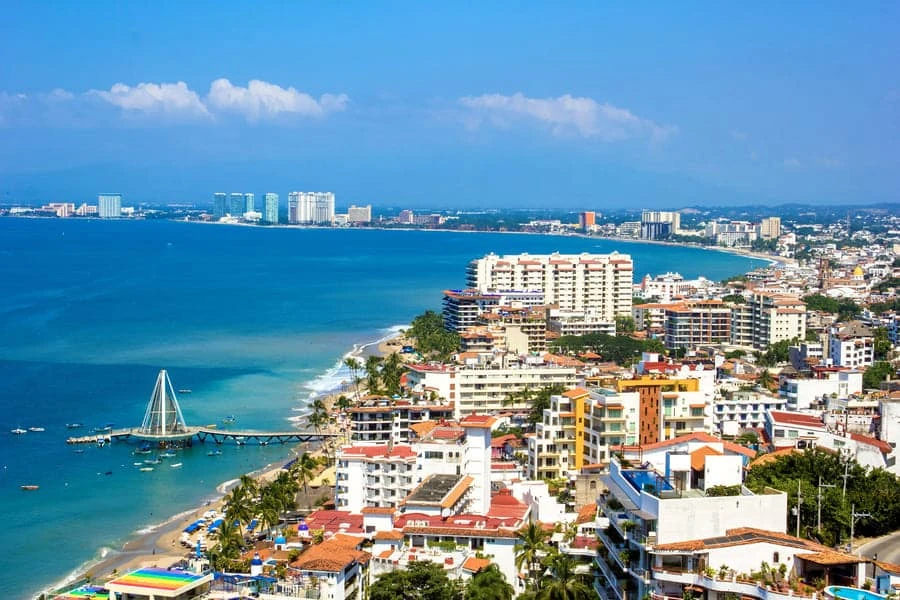
Mexico
Mexico is one of the easiest countries for Americans to move to because of its proximity to the US. It also offers relatively accessible residence options based on financial solvency.
The country already has one of the world’s largest communities of Americans living abroad. This can make relocation easier in areas with established international communities.
Why Mexico is easy for Americans to move to
Mexico combines a long permitted visitor stay with a residence route that does not always require employment or investment. Americans with sufficient income or savings can apply for temporary residence.
Mexico is also geographically convenient for maintaining connections with the US. Direct flights connect major Mexican destinations with cities across the United States.
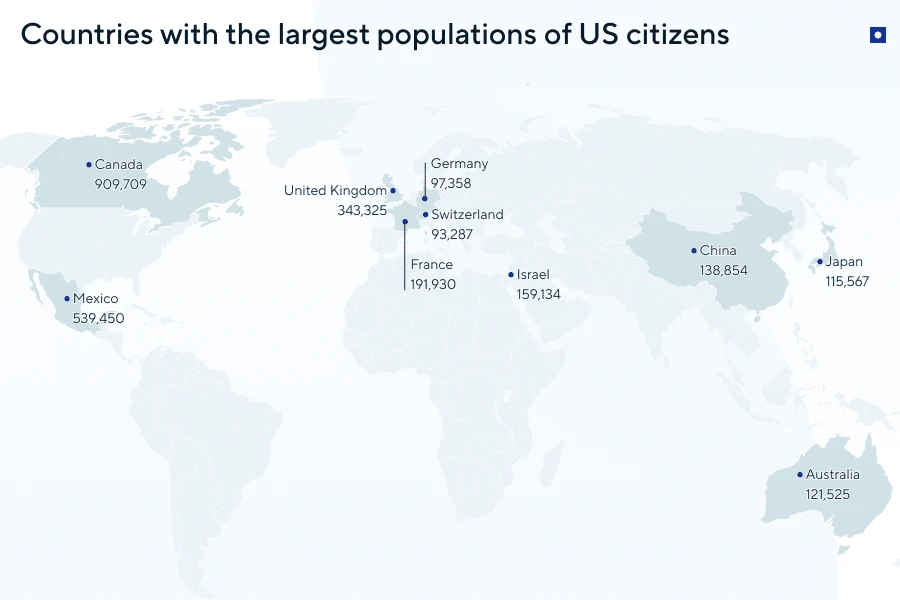
The Federal Voting Assistance Programme estimated that 539,450 US citizens lived in Mexico in 2022
[13]
Source: US citizens living in Mexico, Federal Voting Assistance Program
. This was the
Mexican statistics show an even broader connection between the two countries. In 2023, 67.8% of Mexico’s
Visa-free stay for Americans
US citizens do not need a Mexican visa for tourism or other
However, 180 days should not be treated as an automatic entitlement. Mexican immigration authorities determine the authorized period of stay when a traveler enters the country.
A visitor status does not provide the same rights as legal residence. Americans planning a permanent move generally need an appropriate residence status.
Residence options for US citizens
Temporary Resident Visa is the main option for Americans who plan to stay for more than 180 days but less than 4 years. Applicants can qualify through several grounds, including economic solvency and family ties.
Financial requirements depend on the Mexican consulate processing the application. Consulates publish their own current amounts based on the applicable calculation and exchange rate.
For example, the Mexican Consulate in San Diego requires one of the following for
- average savings or investments of at least $75,950 during the previous 12 months;
- employment or pension income of at least $4,510 per month during the previous 6 months.
These figures are an example rather than a nationwide fixed
Retirees with substantially higher financial means may qualify directly for permanent residence. The required income or assets also vary between consulates.
Cost of living and housing
Mexico generally has a lower price level than the United States. OECD comparative price data allow consumer costs between the two countries to be compared using the same basket of goods and services.
The difference depends heavily on location. Mexico City, resort areas, and destinations with strong international demand can require much larger budgets than smaller inland cities.
Property prices are also increasing. In the first quarter of 2026, the national SHF Housing Price Index rose 8.7% year over year [15] Source: Housing prices in Q1 2026, Sociedad Hipotecaria Federal .
Renting a
Buying a home can cost around $78,000 at the national median. The average appraised value of a mortgaged home was about $119,000 in the first quarter of 2026. These figures correspond to MXN 1.33 million and MXN 2.02 million respectively.
Healthcare and expat communities
Mexico has both public and private healthcare options. Foreigners legally living in the country may voluntarily join the IMSS social security system as independent or
Eligible members can receive services including:
- medical consultations;
- medicines;
- hospital treatment;
- surgery;
- emergency care;
- specialist treatment.
The large American population also means that established expat communities exist in many parts of Mexico. The scale of the community is particularly notable compared with most other destinations in this article.
Taxes
Immigration residence does not automatically determine tax residence. Mexican tax residence depends on factors including a home in Mexico and the location of a person’s center of vital interests. Mexican tax residents are generally subject to income tax on worldwide income. The top individual income tax rate reaches 35% in 2026.
Americans also remain subject to US federal tax rules while living in Mexico. The United States and Mexico have an income tax treaty that addresses the taxation of certain
Long-term residence and citizenship
Temporary residence can provide a pathway to permanent settlement. A foreigner who has held temporary residence for 4 years can generally apply to change their status to permanent residence.
Permanent residence itself has no general expiry period for an adult holder. Other routes may allow some applicants, including retirees, to obtain permanent residence earlier.
Mexican citizenship by naturalization is generally available after 5 years of legal residence immediately before the application. Shorter periods apply in certain cases defined by law. Applicants need to demonstrate Spanish proficiency. They are also tested on Mexican history and integration into the country’s culture.
Pros of moving to Mexico
Main advantages for Americans include:
- Proximity to the US. Frequent travel and maintaining family or business connections can be easier than from Europe or the
Asia-Pacific region. - Large American community. FVAP estimated more than 539,000 US citizens living in Mexico in 2022.
- Long visitors stay. Americans may be admitted for stays of up to 180 days without obtaining a Mexican visa in advance.
- Residence based on financial solvency. A local job offer or property investment is not always necessary.
- Path to permanent residence. Temporary residents can generally transition after 4 years.
- Lower general price level. Consumer costs can be lower than in the US, although the difference varies by location.
Cons of moving to Mexico
Living costs are not equally low across the country. Housing prices are rising, and popular destinations can be considerably more expensive than national averages. Financial requirements for residence also vary by consulate, so applicants need to verify the threshold before applying.
Security conditions differ significantly between Mexican states and cities. U.S. Department of State advisory levels therefore vary by destination. Spanish is also useful for immigration procedures, local services, and
Malta
Malta combines an
Malta is also highly international. At the end of 2025, 31.1% of residents were
Why Malta is easy for Americans to move to
English and Maltese are Malta’s official languages. This removes one of the main practical barriers Americans face when relocating to Europe.
Americans can choose between different residence frameworks. Two relevant options are:
- Malta Permanent Residence Programme for investors and financially secure families;
- Global Residence Programme for
non-EU nationals seeking residence and a special tax status.
Malta is also part of the EU and the Schengen Area. This makes it convenient for Americans who want a European base.
Malta is also one of the more affordable ways to obtain residence by investment in Europe. Under the rental option, the minimum required outlay starts at approximately €169,000 over the first 5 years. Unlike many European investment programs, the MPRP grants permanent residence from the outset, rather than temporary residence that must later be converted into permanent status.
Visa-free stay for Americans
US citizens do not need a visa for visits to Malta of 90 days or less. The stay counts toward the Schengen limit of 90 days within any
The Malta Permanent Residence Programme, MPRP, is a
Successful applicants receive permanent residence from the outset. The status gives them the right to settle and reside permanently in Malta.
The MPRP also allows
Applicants choose between 2 property options:
- Rent a property for at least €14,000 per year.
- Purchase a property for at least €375,000.
The property must be maintained for at least 5 years. After that period, the resident must continue to maintain residential property in Malta.
The MPRP is subject to a
A main applicant must demonstrate one of the following:
- assets of at least €500,000, including €150,000 in financial assets;
- assets of at least €650,000, including €75,000 in financial assets.
Other MPRP costs include:
- €60,000
non-refundable administration fee; - €37,000 government contribution;
- €2,000 charitable donation;
- €7,500 fee for each adult dependant, except the spouse;
- €500 residence card fee per person for a
5-year card.
A single applicant using the rental route therefore faces a minimum base outlay of €169,000 over the first 5 years. This excludes agent fees, insurance, residence cards, and other associated costs.
The base amount with a property purchase is €474,000. Property transactions and other associated expenses are additional.
The Global Residence Programme, GRP, is designed for nationals outside the EU, EEA, and Switzerland. Americans can use the programme if they meet its residence, property, financial, and tax conditions.
The GRP combines residence with a special tax framework. After approval under the tax programme, a
Applicants must rent or purchase a home. Property thresholds depend on its location.
For purchased property, the minimum value is:
- €275,000 in most of Malta;
- €220,000 in the south of Malta;
- €220,000 in Gozo.
For rented property, the minimum annual rent is:
- €9,600 in most of Malta;
- €8,750 in the south of Malta;
- €8,750 in Gozo.
A rental agreement must generally cover at least 12 months. The property must serve as the beneficiary’s principal residence.
Applicants also need stable resources and comprehensive health insurance. They must be able to communicate adequately in English or Maltese.
The GRP does not automatically provide unrestricted employment rights. Beneficiaries who want to work in Malta need to meet the applicable work permit requirements. The programme does not use the same
Cost of living and housing
Malta’s living costs have increased in recent years, particularly for housing. Location has a significant effect on the relocation budget.
The EURES Malta guide lists indicative monthly rents of around €1,025 for a
A
Property prices are also rising. Malta’s Residential Property Price Index increased by 6.7% year over year in the first quarter of 2026. Apartments recorded a 6.9% annual increase. Maisonette prices increased by 5.3%.
Healthcare, safety, and lifestyle
Malta has both public and private healthcare. The government provides comprehensive public health services to residents who meet entitlement requirements. Public healthcare includes primary care, hospitals, specialist services, and rehabilitation. Private hospitals and clinics are also widely available. Health insurance is particularly relevant to Americans applying through the MPRP or GRP. Both routes have insurance requirements.
Safety is another advantage. The U.S. Department of State gives Malta its lowest advisory level, Level 1: Exercise normal precautions.
English also simplifies everyday life. Americans can communicate with government bodies, medical providers, schools, and businesses without relying entirely on Maltese.
Taxes
The tax treatment depends on a person’s residence status, income, and programme. Obtaining MPRP status does not automatically give an investor the GRP tax treatment. Under the Global Residence Programme,
The programme also requires a minimum annual tax payment of €15,000.
Americans remain subject to US federal tax rules while living in Malta. The United States and Malta have an income tax treaty, but the treaty does not remove every US tax obligation.
Tax consequences depend on income sources, assets, remittances, and residence. Individual tax planning is therefore necessary before relocation.
Long-term residence and citizenship
MPRP applicants receive permanent residence as part of the programme. The status is separate from Maltese citizenship.
Other
GRP beneficiaries need to consider the tax consequences before changing status. The special GRP tax treatment ceases if the beneficiary becomes or applies to become a
Citizenship is a separate process. Residence in Malta does not guarantee naturalization.
Under the general residence route, an applicant must have lived in Malta throughout the 12 months immediately before applying. They also need at least 4 years of residence during the preceding
Applicants must be of good character and have adequate knowledge of English or Maltese. The final naturalization decision remains discretionary.
Malta permits dual and multiple citizenship. Maltese law therefore does not require a successful American applicant to renounce US citizenship.
Pros of moving to Malta
Main advantages for Americans include:
- Permanent residence by investment. The MPRP grants permanent status rather than starting with temporary residence.
English-speaking environment. English is an official language and is widely used in everyday life.- Residence options for different goals. Americans can consider both the MPRP and GRP.
- Schengen mobility. MPRP residents can travel within the Schengen Area for up to 90 days in any
180-day period. - International population. Almost
one-third of Malta’s residents were foreign citizens at the end of 2025. - Strong safety profile. Malta has a Level 1 U.S. Department of State travel advisory.
- Public and private healthcare. Residents have access to an established healthcare system, subject to eligibility rules.
Cons of moving to Malta
Malta is not one of the
The MPRP requires substantial assets and several mandatory payments. The GRP has lower property thresholds, but beneficiaries must maintain its tax and residence conditions. Neither programme should be viewed as an automatic route to Maltese citizenship.
Spain
Spain offers practical residence routes for Americans who work remotely or live on savings and passive income. The country also provides access to the Schengen Area and a pathway to
Why Spain is easy for Americans to move to
Americans can choose between several residence routes without making an investment. Two of the most relevant are the Digital Nomad Visa and the
The Digital Nomad Visa suits remote employees and
These routes cover different profiles, including remote workers, retirees, and financially independent applicants. Both also allow family members to apply.
Visa-free stay for Americans
US citizens can visit Spain without a visa for up to 90 days within any
The Spain Digital Nomad Visa is intended for
Employees can work only for companies based outside Spain.
Applicants need either a recognized professional qualification or at least 3 years of relevant professional experience. The foreign company must have been operating for at least 1 year.
The applicant must also show an employment or professional relationship with the foreign company. It generally needs to have existed for at least 3 months before the application. Financial requirements are linked to Spain’s minimum wage. In 2026, the minimum wage is €1,221 per month [21] Source: 2026 minimum wage, BOE .
The required monthly income are therefore:
- main applicant — €2,850;
- spouse — €1,070;
- child and each additional family member — €360.
Applicants also need appropriate health coverage and must meet Social Security requirements. A spouse or partner, dependent children, and dependent parents can qualify with the main applicant.
A Digital Nomad Visa obtained abroad can be valid for up to 1 year. An international telework residence authorization can be granted for up to 3 years and renewed for
The Spain
The visa does not authorize employment or professional activity. This also makes it unsuitable for applicants who plan to continue working online after moving.
The main applicant needs at least €2,400 per month, or €28,800 for 12 months. Each dependent requires another €600 per month, or €7,200 per year.
Applicants also need health insurance from an insurer authorized to operate in Spain. The policy must cover the risks included in the Spanish public healthcare system.
The residence permit can be renewed if the requirements continue to be met. Current rules also require the holder to have actually lived in Spain for more than 183 days during the calendar year. A renewed permit is normally valid for 2 years.
Cost of living and housing
Housing costs vary considerably across Spain. Madrid, Barcelona, and other
EURES estimates rent for a
Rent in city centers is around 25% higher in the EURES estimate. Utilities such as electricity, water, gas, and telecommunications are usually additional.
Property prices have also been rising. Spain’s Housing Price Index increased by 12.9% year over year in the first quarter of 2026
[22]
Source: Housing Price Index Q1 2026, Spanish National Statistics Institute
.
At average prices per square meter, a 50 m² apartment would cost around $135,
Healthcare and lifestyle
Spain has both public and private healthcare systems. Employees and
Public services include primary care, hospital treatment, and specialist care. Waiting times for specialists and
Private healthcare is also widely available. Some residence routes require applicants to arrange health insurance before moving to Spain.
Lifestyle and housing conditions differ substantially between regions. Americans can choose between major cities, coastal destinations, islands, and smaller inland communities.
Taxes
Immigration residence and tax residence are different. Spain generally treats a person as a tax resident if they spend more than 183 days in the country during a calendar year.
Tax residence may also arise when the main center of a person’s activities or economic interests is in Spain. Spanish tax residents generally report their worldwide income.
Some newcomers can opt for Spain’s special tax regime for inbound workers. The regime has been extended to eligible international teleworkers, but it is not automatic for every Digital Nomad Visa holder.
One condition is that the applicant generally must not have been a Spanish tax resident during the previous 5 tax periods. The regime can apply in the year tax residence begins and the following 5 tax periods.
Under the special regime, the main
- 24% up to €600,000;
- 47% on the portion above €600,000 [23] Source: Special tax regime for inbound workers, Spanish Tax Agency .
Different rates apply to dividends, interest, and certain capital gains. Individual eligibility and tax consequences depend on the applicant’s circumstances.
Americans remain subject to US federal tax rules after moving to Spain. US citizens generally continue to report worldwide income to the IRS. Spain and the United States have an income tax treaty. Treaty provisions and available tax credits can affect how double taxation is addressed.
Long-term residence and citizenship
Americans can generally qualify for
Absences are subject to limits when calculating continuous residence. Applicants therefore need to consider physical presence when planning frequent travel outside Spain.
For most US citizens, Spanish citizenship by residence requires 10 years of legal and continuous residence immediately before applying. Applicants must also meet
Spanish law generally requires an American applicant to declare that they renounce their previous nationality. US citizens are not included in Spain’s standard exemption for certain nationalities.
This Spanish declaration should not be confused with the separate US procedure for losing US citizenship. Formal renunciation under US law involves a specific process before a US diplomatic or consular officer.
Pros of moving to Spain
Main advantages for Americans include:
- Residence without investment. Both the Digital Nomad Visa and
Non-Lucrative Visa rely on eligibility and financial requirements rather than a mandatory property purchase. Remote-work route. Digital nomads can legally reside in Spain while working primarily for foreign companies or clients.- Family relocation. Both routes allow relatives to apply with the main applicant.
Long-term residence after 5 years. Legal and continuous residence can lead to indefinite residence status.- Public and private healthcare. Spain has both systems, with access depending on residence and Social Security status.
- Schengen access. Residents have a convenient base for travel within the Schengen Area.
Cons of moving to Spain
Housing requires careful budgeting. Home prices increased by 12.9% year over year in the first quarter of 2026. Rent is also higher in central and
The
Italy
Italy offers several residence routes for Americans with different income profiles. Options are available for remote professionals, financially independent people, retirees, and investors.
The country also provides access to the Schengen Area and a path to
Why Italy is easy for Americans to move to
Italy has several national visa categories that do not require a local employer. This makes the country relevant to remote workers, retirees, and people living on investment or pension income.
The main options include:
- Digital Nomad Visa for highly qualified remote professionals;
- Elective Residence Visa for financially independent applicants;
- Investor Visa for Italy for investments.
The requirements differ significantly. Applicants should first determine whether they plan to work after relocating.
Visa-free stay for Americans
US citizens can visit Italy without a visa for up to 90 days within any
A
The Italy Digital Nomad Visa is available to highly qualified
Applicants need to demonstrate professional qualifications or relevant experience. At least 6 months of prior experience in the activity is also required.
Current official guidance requires annual income of approximately €32,400 from lawful sources. Applicants also need suitable accommodation and health insurance valid in Italy.
Remote employees face additional employment and salary requirements. Digital nomads and remote workers must apply for a residence permit after arriving in Italy.
The residence permit is generally issued for 1 year and can be renewed. The applicant must continue to meet the relevant work, accommodation, and insurance requirements.
The Elective Residence Visa is intended for people who want to live permanently in Italy without working. It is particularly relevant to retirees and financially independent Americans.
Applicants need substantial and stable resources from sources other than employment. These may include pensions, annuities, investments, rental income, and other private resources.
There is no single fixed income threshold applied identically by every Italian consulate. The Italian Consulate in New York states that family applications typically require around €31,160 per person.
Applicants also need
The Italy Investor Visa for Italy is designed for
Investment options include:
- €250,000+ in an innovative Italian startup;
- €500,000+ in an Italian company or venture capital fund;
- €1 million+ as a philanthropic donation;
- €2 million+ in Italian government bonds.
The Investor Visa is not a property investment programme. Purchasing an apartment or house alone does not qualify for this route. The government committee normally assesses a complete application for the Nulla Osta within 30 days. Approval is not guaranteed.
After entering Italy, the investor must make the declared investment within 3 months. The initial investor residence permit is valid for 2 years. The permit can then be renewed for another 3 years. The investment must be maintained throughout the required period.
Cost of living and housing
Housing costs vary sharply between northern and southern Italy. Large cities and tourist destinations generally require the largest budgets.
EURES estimates that a
Buying property has also become more expensive. Italian house prices rose 5.2% year over year in the first quarter of 2026
[25]
Source: House prices 2026, ISTAT
.
A 50 m² apartment would cost roughly $118,
Regional differences make national averages less useful for relocation planning. Milan and Rome require a different budget from smaller cities in Sicily, Calabria, or Puglia.
Healthcare and lifestyle
Italy operates the Servizio Sanitario Nazionale, SSN, alongside an extensive private healthcare sector. Legally resident foreigners can access healthcare according to their residence and registration status.
Eligible residents register with the health service and receive a health card. They can then choose a general practitioner and use public healthcare services. Some visa categories require private medical insurance before residence is granted. Applicants should check their specific residence route before relying on SSN access.
Lifestyle also varies considerably by region. Americans can choose between major cities, Alpine areas, Mediterranean coasts, islands, and smaller historic towns.
Italy currently has a Level 2: Exercise increased caution advisory from the U.S. Department of State due to terrorism risks. Pickpocketing is another concern in crowded tourist locations.
Taxes
Immigration residence and tax residence are separate. Italy generally considers an individual tax resident when at least one statutory residence condition applies for most of the year. This normally means at least 183 days, or 184 days in a leap year [26] Source: Tax residence rules, Italian Revenue Agency . Physical presence, habitual residence, domicile, and registration can all be relevant.
Italy offers special tax regimes to some new residents.
The regime can apply for up to 15 years. Applicants generally need to have been
A separate regime exists for foreign pensioners. It taxes eligible
These tax regimes are separate from residence permits. Receiving an Italian visa does not automatically make an applicant eligible for a special tax treatment.
Americans also remain subject to US federal tax obligations after moving. The United States and Italy have an income tax treaty.
Long-term residence and citizenship
Italian citizenship requires a longer stay for most Americans.
Naturalisation applicants generally need Italian at B1 level. Citizenship is granted through a separate procedure and is not automatic after 10 years.
Italy recognizes multiple citizenships. Americans who naturalize in Italy are not required by Italian law to give up their US citizenship.
Pros of moving to Italy
Main advantages for Americans include:
- Several residence routes. Remote workers, retirees, financially independent people, and investors have different options.
- Digital Nomad Visa. Highly qualified Americans can legally work remotely while residing in Italy.
- Residence without investment. Elective Residence applicants qualify through financial resources rather than a mandatory investment.
- Investor Visa from €250,000. Investment in an innovative startup has the lowest threshold.
- EU
long-term residence after 5 years. Residents can move toward permanent settlement. - Special tax regimes. Certain retirees and
high-net-worth newcomers can access dedicated tax frameworks. - Dual citizenship permitted. Italian law recognizes multiple nationalities.
Cons of moving to Italy
Housing can be expensive in Milan, Rome, Florence, Venice, and other
The residence routes are also quite specialized. The Elective Residence Visa prohibits work, while the Digital Nomad Visa is limited to highly qualified professionals. Most Americans also need 10 years of legal residence before becoming eligible for citizenship.
“I wanted to move to Tuscany with my wife while staying connected to Europe’s technology sector. Passportivity suggested a route through Italy’s Investor Visa with a €250,000 investment in an innovative Italian startup.
9 months later, we both obtained Italian residence permits. Passportivity guided us through the entire process, and the total case budget came to €265,950.”
 Michael Brooks, 52
Former
Michael Brooks, 52
Former Panama
Panama offers
Two routes are particularly relevant for Americans. The Pensionado Visa suits people with a lifetime pension, while the Qualified Investor Visa provides direct permanent residence through investment.
Why Panama is easy for Americans to move to
US citizens can spend up to 180 days in Panama without obtaining a tourist visa. This gives prospective residents time to explore the country before committing to relocation.
Panama also has residence routes that lead directly to permanent status. Retirees can qualify through pension income, while investors can obtain permanent residence through real estate or financial investments.
Visa-free stay for Americans
US tourists can stay in Panama for up to 180 days without a visa. The U.S. Department of State states that this limit is strictly enforced.
Travelers must have a passport valid for at least 3 months beyond arrival. They may also need proof of at least $500 and a return or onward ticket.
The Qualified Investor Visa grants permanent residence directly to foreigners who make an investment with funds originating abroad.
Current investment options are:
- $300,000+ in real estate;
- $500,000+ in securities through the regulated Panamanian securities market;
- $750,000+ in a
fixed-term deposit with an authorized Panamanian bank.
The real estate route can include completed property or a purchase arrangement. The investment must generally be maintained for at least 5 years.
The programme can include spouses, children, and parents. MICI also requires the investor to visit Panama at least once every 2 years to maintain permanent residence.
MICI describes the processing period as approximately 30 business days under the specialized procedure. This is an indicative timeframe rather than a guarantee of approval.
Demand for the programme has increased. Between July 2025 and June 2026, MICI issued 268 Qualified Investor certificates backed by $113.6 million in investments. Real estate accounted for 87.3% of certificates during that period.
The Pensionado Visa is intended for foreigners who receive a lifetime pension [27] Source: Pensionado residence requirements, National Migration Service of Panama . The pension may come from a foreign government, international organization, or private company.
The main applicant must generally receive at least $1,000 per month for life. An additional $250 per month is required for each dependent. The minimum pension can fall to $750 per month if the applicant owns property in Panama worth more than $100,000.
Spouses can combine their pensions to reach the $1,000 threshold. Dependent children can generally remain included until age 25 if they are
The residence permit is indefinite and does not require renewal. This makes the Pensionado route particularly relevant to American retirees seeking permanent relocation.
Cost of living and housing
Living costs depend strongly on location and lifestyle. Panama City generally requires a larger housing budget than smaller cities and inland areas.
Consumer prices remained relatively stable during 2025 but accelerated in 2026 [28] Source: Consumer prices through June 2026, National Institute of Statistics and Census . Panama’s urban Consumer Price Index was 2.3% higher year over year in June 2026.
Housing is also changing. The total number of registered properties fell by 2.8% in 2025, while the apartment segment grew by 11.1%. The figures come from Panama’s National Institute of Statistics and Census.
A
Americans considering the Qualified Investor route should separate immigration requirements from market value. A $300,000 investment threshold does not mean every suitable home in Panama costs that amount.
Healthcare and lifestyle
Panama has a mixed healthcare system. Public services are provided through the Ministry of Health, while the Social Security Fund, CSS, covers eligible insured residents.
Foreign employees can be registered with the CSS. The institution accepts a valid passport or permanent residence card as part of its affiliation procedures.
Private medical care is another option for retirees and investors. Healthcare access and insurance costs should therefore be included in the relocation budget.
Panama’s climate is tropical throughout the year. Coastal areas, Panama City, mountain communities, and inland regions offer different living environments.
Safety varies by region. The U.S. Department of State currently places Panama at Level 2: Exercise Increased Caution because of crime and potential civil unrest.
Parts of the Darién Region and Mosquito Gulf are classified at Level 4. These areas are not representative of the main residential destinations used by most foreign residents.
Taxes
Panama generally follows a territorial approach to income taxation. Income from foreign sources is generally outside the individual Panamanian income tax base.
For taxable income in Panama, individual rates are:
- 0% on net taxable income up to $11,000;
- 15% on the portion between $11,000 and $50,000;
- 25% on the portion above $50,000.
The exact treatment depends on the source and nature of the income. Immigration residence should therefore not be treated as a complete
Americans continue to have US federal tax obligations after relocating. US citizens generally remain subject to US reporting on worldwide income.
The US and Panama do not have a comprehensive income tax treaty [29] Source: US income tax treaty list, IRS . The countries instead have a Tax Information Exchange Agreement for cooperation and exchange of tax information.
Long-term residence and citizenship
Both the Pensionado and Qualified Investor routes provide permanent residence without the standard
Foreigners can apply for Panamanian citizenship after 5 consecutive years of residence. The Constitution also requires knowledge of Spanish and basic knowledge of Panamanian geography, history, and political organization.
The naturalization application requires an express renunciation of the applicant’s existing nationality under Panamanian law. This requirement is separate from the US legal procedure for relinquishing US citizenship.
Naturalization is not automatic after 5 years. The Panamanian authorities assess the application and supporting documents.
Pros of moving to Panama
Main advantages for Americans include:
180-day visa-free stay. Americans can spend a relatively long period in Panama before applying for residence.- Direct permanent residence for retirees. Pensionado applicants do not need to progress through temporary residence first.
- Permanent residence by investment. Qualified investors can obtain permanent status with an investment of $300,000.
- Several investment choices. Real estate, securities, and
fixed-term deposits are available. - Relatively low pension threshold. Pensionado applicants generally need a lifetime income of $1,000 per month.
- Territorial tax system.
Foreign-source income is generally outside Panama’s individual income tax base. - Proximity to the US. Panama is convenient for Americans who expect to travel back to the United States regularly.
Cons of moving to Panama
Costs vary substantially depending on location. Panama City and
Safety conditions are not uniform across the country. The current US advisory is Level 2, while some remote regions are Level 4. Americans considering citizenship should also note that Panamanian naturalization law requires an express renunciation of the applicant’s previous nationality.
Greece
Greece offers residence options for both investors and financially independent Americans. The country combines Schengen access with a relatively moderate cost of living.
Two routes are particularly relevant. Investors can obtain residence through the Greece Golden Visa. People with sufficient income or savings can consider residence for financially independent persons.
Why Greece is easy for Americans to move to
Americans can enter Greece
The main options covered in this article are:
- Greece Golden Visa for investors;
- residence for financially independent persons with sufficient resources.
The Golden Visa has no minimum physical stay for renewal. This makes it suitable for investors who want a European residence without relocating
Visa-free stay for Americans
US citizens can stay in Greece without a visa for up to 90 days within any
A
Greece currently has a Level 1: Exercise normal precautions travel advisory from the U.S. Department of State.
Greece Golden Visa
The Greece Golden Visa grants a renewable
Current property thresholds depend on the location and type of real estate:
- €800,000+ in Attica, the Thessaloniki Regional Unit, Mykonos, Santorini, and islands with more than 3,100 residents;
- €400,000+ in other areas of Greece;
- €250,000+ for certain properties converted to residential use;
- €250,000+ for listed buildings that require restoration or reconstruction.
For the €800,000 and €400,000 routes, the investment generally has to involve one property. Built property must have at least 120 m² of main spaces.
The €250,000 conversion route has different conditions. The change to residential use must be completed before the residence application.
The €250,000
The residence permit is issued for 5 years and can be renewed for further
There is no minimum number of days that a Golden Visa holder must spend in Greece for renewal. Periods spent outside the country do not prevent renewal.
Buying property in Greece for residence
Not every property purchase qualifies for the Greece Golden Visa. The applicable threshold depends on the property’s location and legal characteristics.
Investors purchasing under the standard €400,000 or €800,000 routes need to meet both the value and property requirements. The investment normally concerns one property with at least 120 m² of main space.
The €250,000 threshold can apply regardless of location. It covers specific property conversions and listed buildings.
Golden Visa property cannot be used for
Greek residential property prices continue to rise. Apartment prices increased by 5.7% year over year in the first quarter of 2026.
Growth differed by location:
- Athens — 5.2%;
- Thessaloniki — 6.4%;
- other major cities — 5.4%;
- other areas — 6.9%.
Property selection therefore affects both the residence threshold and the investment budget.
Residence for financially independent persons. Americans with sufficient independent resources can apply for a residence permit without making an investment. The permit is known as residence for
The minimum required amount is €3,500 per month for the main applicant.
The threshold increases by:
- 20% for a spouse, equal to €700 per month;
- 15% for each child, equal to €525 per month.
Applicants can demonstrate their resources through a foreign pension, bank funds, or other lawful financial means. Authorities can assess recurring income or available funds.
The permit is issued for 3 years. It can be renewed for another
Cost of living and housing
Living costs in Greece vary considerably between Athens, islands, tourist areas, and smaller mainland cities. Housing is usually one of the largest differences [30] Source: Living costs and indicative rents, EURES .
EURES provides the following indicative monthly rents for a
- Athens city center — €1,037;
- Athens suburbs — €882;
- Thessaloniki city center — €818;
- Thessaloniki suburbs — €639;
- Larissa — €534.
Tourist destinations and popular islands can be more expensive. Smaller mainland cities generally offer lower housing costs. Property purchase prices are also increasing. The Bank of Greece recorded a 5.7% annual increase in apartment prices in Q1 2026 [31] Source: Residential property prices, Bank of Greece .
A 50 m² apartment would cost roughly $124,
Healthcare and lifestyle
Greece has a national public healthcare system, ESY, alongside private hospitals and clinics. Public healthcare is also supported by the EOPYY insurance system.
Access to public healthcare depends on insurance and residence circumstances. Golden Visa applicants are required to have health insurance.
Private health insurance is also important for financially independent residents. They do not obtain
Greece has a Mediterranean climate and a wide range of places to live. Options include Athens, Thessaloniki, mainland coastal towns, and numerous islands. The country also has a strong safety profile. The U.S. Department of State recommends only normal precautions for travel to Greece.
Taxes
Immigration residence and tax residence are separate. Holding a Greek residence permit does not automatically determine a person’s tax position.
An individual generally becomes a Greek tax resident after spending more than 183 days in Greece during a
Greek tax residents are generally subject to Greek rules on worldwide income. Special tax regimes are available to some new residents. Foreign pensioners can qualify for a special regime if they meet the conditions.
The regime can apply for up to 15 tax years. Eligibility includes conditions relating to previous Greek tax residence and the country from which tax residence is transferred.
Greece also offers an alternative regime for
The
Americans also remain subject to US federal tax rules after moving to Greece. The United States and Greece have an income tax treaty.
Long-term residence and citizenship
Golden Visa investors can renew their
A separate EU
Citizenship follows different rules. Holding a residence permit for a certain number of years does not automatically result in Greek citizenship. Current Ministry of Interior guidance places permanent investor residence permits among the residence titles that can qualify for naturalization after 7 consecutive years of legal residence.
The applicant must actually establish continuous residence in Greece. Simply holding a Golden Visa while primarily living abroad should not be treated as an automatic
The residence title also matters. Holders of other permits that are not included in the specified naturalization categories can face a
Naturalization applicants must demonstrate:
- sufficient knowledge of Greek;
- knowledge of Greek history and geography;
- understanding of Greek culture and political institutions;
- economic and social integration;
- compliance with other legal requirements.
Applicants normally demonstrate the required knowledge through the citizenship knowledge examination. Naturalization remains a separate procedure from residence.
Greek law permits a person to hold Greek and another nationality. Acquisition of Greek citizenship does not automatically require loss of an existing nationality under Greek law.
Pros of moving to Greece
Main advantages for Americans include:
- Several residence options. Investors and financially independent people have separate routes.
- Golden Visa at €250,000+ in special cases. Converted and listed properties can retain the lower threshold.
- No minimum stay for Golden Visa renewal. Time outside Greece does not prevent renewal.
5-year investor residence permit. The permit can be renewed while the investment conditions remain satisfied.- Residence without investment for financially independent people. Applicants can qualify through sufficient financial resources.
- Potential tax regimes for new residents. Pensioners and
high-net-worth individuals have special options. - Schengen access. Greek residence provides a convenient base within the Schengen Area.
- Strong safety profile. Greece currently has a Level 1 US travel advisory.
Cons of moving to Greece
Property investment requires careful selection. The standard Golden Visa threshold reaches €800,000 in Athens, Thessaloniki, and many popular islands. Residential property prices also continue to increase.
The financially independent route does not permit local employment or

How to choose the right property in Greece for obtaining a Golden visa
Costa Rica
Costa Rica is a practical option for Americans seeking retirement or residence based on stable income. It also offers long visitor stays and a clear route from temporary to permanent residence.
Why Costa Rica is easy for Americans to move to
Americans do not need a local employer to qualify under the main
Costa Rica is also relatively close to the US. Spanish is the official language, so learning it becomes increasingly important for
Visa-free stay for Americans
US citizens do not need a visa for short visits. Immigration authorities may authorize a stay of up to 180 days, although the exact period is decided at entry. Visitors need a valid passport and proof of onward or return travel. Tourist status should not be used as a substitute for legal residence.
Pensionado residence. The Pensionado category is intended for applicants receiving a lifetime pension [33] Source: Pensionado requirements, Costa Rican Legal Information System . The main applicant needs a pension of at least $1,000 per month. The pension must be lifelong and confirmed by the relevant authority or provider. This route is particularly suitable for American retirees receiving Social Security or another lifetime pension.
Rentista residence. The Rentista category is designed for people with stable income who do not rely on a pension [34] Source: Rentista requirements, Costa Rican Legal Information System . Applicants must demonstrate at least $2,500 per month for a minimum of 2 years. The income must be stable and supported by appropriate documentation.
Both Pensionado and Rentista are temporary residence categories. They can later provide a path to permanent residence.
Cost of living and housing
Living costs vary considerably by location. Coastal destinations and
Housing costs are also changing. Costa Rica’s official Consumer Price Index showed residential rent increasing by 0.65% in June 2026 alone. A
Healthcare and expat communities
Costa Rica operates a public healthcare system through the Caja Costarricense de Seguro Social, CCSS. The system includes a dedicated insurance category for migrants.
Temporary residents must maintain the required CCSS insurance when applicable to their immigration status. Private healthcare is also available.
Costa Rica has long been a destination for Americans living abroad. Established international communities can make the initial move easier, although official estimates of their size vary by methodology.
Taxes
Costa Rica primarily taxes Costa
Americans remain subject to US federal tax rules after relocation. Costa Rica is not listed among the countries with a comprehensive US income tax treaty, although the countries cooperate under other
Long-term residence and citizenship
A temporary resident can generally apply for permanent residence after 3 consecutive years in that status. Permanent residence provides an indefinite right to remain in Costa Rica.
For Americans, naturalization generally requires 7 years of official residence. Applicants also need to meet
Naturalization includes Spanish and Costa Rican social studies requirements. Citizenship is a separate procedure and is not automatic after completing the residence period.
Pros of moving to Costa Rica
Main advantages for Americans include:
- Up to 180 days as a visitor. This provides time to explore the country before relocation.
- Pensionado threshold of $1,000 per month. The route is accessible to many retirees.
- Rentista option. Financially independent applicants can qualify with $2,500 in monthly income.
- Permanent residence after 3 years. Temporary residence can lead to indefinite status.
- Public healthcare system. Legal residents can access CCSS subject to insurance requirements.
- Proximity to the US. Travel is easier than from many European or
Asia-Pacific destinations.
Cons of moving to Costa Rica
Costa Rica should not be treated as uniformly inexpensive. Housing and everyday costs differ substantially between regions, and rent continues to rise. Knowing Spanish is also important for government procedures and deeper integration.
Safety requires some attention as well. The U.S. Department of State currently classifies Costa Rica at Level 2: Exercise increased caution because of crime.

Canada
Canada is one of the most practical destinations for Americans who want to stay close to the US. The countries share a land border, English is widely spoken, and several routes lead directly to permanent residence.
Canada also has the largest estimated US citizen population abroad. FVAP estimated that 909,709 US citizens lived in Canada in 2022.
Why Canada is easy for Americans to move to
Canada offers immigration routes for skilled workers and family members. Some US professionals can also obtain temporary work permits under the
Visa-free stay for Americans
Americans traveling with a valid US passport do not need a Canadian visa or an Electronic Travel Authorization, eTA. Most visitors are admitted for up to 6 months. The border officer can authorize a shorter or longer period. Visitor status does not normally provide the right to work in Canada.
Express Entry is Canada’s main online system for
- Federal Skilled Worker Program;
- Federal Skilled Trades Program;
- Canadian Experience Class.
Candidates receive a Comprehensive Ranking System score. Factors include age, education, language skills, and work experience. Applicants with the highest relevant scores receive invitations to apply for permanent residence. Eligibility therefore does not guarantee an invitation.
Canada also conducts
Family sponsorship. Americans with Canadian family connections may have another route to permanent residence [36] Source: Family sponsorship, Government of Canada .
Canadian citizens and permanent residents can sponsor eligible spouses, partners, and dependent children. Most spouse, partner, and
Cost of living and housing
Housing is one of the main financial considerations when moving to Canada. Costs are particularly high in major markets such as Toronto and Vancouver. Canadian rent prices increased 30.8% between April 2021 and April 2026 [37] Source: Rent trends, Statistics Canada . Rental affordability remains a challenge despite some easing in several large markets.
A
Costs differ substantially by province and city. Americans should therefore compare local housing rather than rely on a national average.
Healthcare and quality of life
Canada has a publicly funded healthcare system. Canadian citizens and permanent residents can apply for provincial or territorial health insurance.
Coverage differs between provinces. Some newcomers may wait up to 3 months before public insurance begins.
Public insurance generally covers medically necessary hospital and physician services. Prescription drugs and most dental care are not automatically covered for everyone.
Taxes
Canadian immigration status and tax residence are separate. The Canada Revenue Agency determines tax residence mainly through residential ties, such as a home, spouse, or dependents in Canada.
Canadian tax residents are generally taxed on worldwide income. Provincial or territorial income taxes can apply in addition to federal tax. Americans also remain subject to US federal tax rules after moving. The United States and Canada have an income tax treaty that addresses many
Long-term residence and citizenship
Some Canadian immigration routes, including Express Entry and family sponsorship, lead directly to permanent residence. Permanent residents can later qualify for Canadian citizenship. Applicants generally need at least 1,095 days of physical presence in Canada during the previous 5 years. Adults aged 18 to 54 also need to demonstrate English or French ability and usually take a citizenship test.
Canada permits dual citizenship. Americans therefore do not have to renounce US citizenship under Canadian law.
Pros of moving to Canada
Main advantages for Americans include:
- Proximity to the US. Maintaining family and business connections can be easier than from overseas.
- No language barrier for most Americans. English is an official language alongside French.
- Direct permanent residence routes. Express Entry and family sponsorship can lead directly to PR.
- CUSMA work options. Some American professionals have access to dedicated temporary work routes.
- Large American community. More than 900,000 US citizens were estimated to live in Canada in 2022.
- Path to citizenship. Applicants can qualify after meeting the required
physical-presence period.
Cons of moving to Canada
Canada is not automatically easy to immigrate to. Express Entry is competitive, and work permits usually require a job or another specific basis. The
Housing is another consideration. Rents have increased substantially in recent years, especially in major metropolitan areas. Tax residents also need to coordinate Canadian and US reporting obligations.

New Zealand
New Zealand is a strong option for Americans with professional skills, business experience, or close family ties. The country is also
Why New Zealand is easy for Americans to move to
New Zealand offers clear residence pathways for skilled professionals and business owners.
Entry requirements
US citizens can travel to New Zealand without applying for a visitor visa in advance. They need a New Zealand Electronic Travel Authority, NZeTA, before traveling. An NZeTA normally allows visits of up to 3 months at a time. It is generally valid for 2 years and can be used for multiple trips.
The Skilled Migrant Category Resident Visa provides direct residence to professionals.
As of August 2026, applicants generally need:
- age of 55 or younger;
- skilled employment or a job offer from an accredited employer;
- at least 6 skilled resident points;
- sufficient English proficiency.
Points can come from qualifications, occupational registration, income, and New Zealand work experience.
Rules are changing on August 24th, 2026. New Zealand is adding Skilled Work Experience and Trades and Technician pathways alongside the existing
Partners and dependent children aged 24 or younger can be included in the application.
The Business Investor Work Visa is designed for experienced entrepreneurs who want to buy and operate an established New Zealand business.
There are 2 main investment levels:
- NZD 1 million+ — potential residence after 3 years;
- NZD 2 million+ —
fast-track route with potential residence after 12 months.
Applicants must also have at least NZD 500,000 available to support themselves and their family. They generally need to be 55 or younger and have at least 3 years of business experience.
The investor must actively operate the business. The visa can be granted for up to 4 years.
Family residence options. Americans with close family connections in New Zealand may qualify through family residence.
A partner of a New Zealand citizen or resident can apply for residence after living together in a genuine and stable relationship for at least 12 months. Dependent children can also be included.
The Parent Resident Visa is available to parents sponsored by a New Zealand citizen or resident child. The programme currently has 2,500 places per year.
Cost of living and housing
Housing can take a substantial share of a relocation budget, especially in Auckland and other major cities. Official rent data show that residential rents increased 1.2% year over year in the March 2026 quarter. Rent levels vary considerably by location and property type [39] Source: Rental price statistics, Stats NZ .
Average rent for a
Healthcare, safety, and lifestyle
Holders of New Zealand
Many services are free or
New Zealand also has a strong safety profile. The current US travel advisory is Level 1.
Taxes
Tax residence is separate from immigration status. A person generally becomes a New Zealand tax resident after spending more than 183 days in the country within a
New Zealand tax residents generally pay tax on worldwide income. Individual income tax rates currently range from 10.5 to 39% [40] Source: Individual tax rates, Inland Revenue . Many new tax residents can receive a temporary exemption from New Zealand tax on most foreign income for around 4 years. Specific eligibility rules apply.
Americans remain subject to US federal tax rules. New Zealand and the United States have an income tax treaty.
Long-term residence and citizenship
Many Resident Visa holders can apply for a Permanent Resident Visa after 2 years if they demonstrate commitment to New Zealand. One common method is spending at least 184 days in the country during each of the previous 2 years.
Citizenship is generally possible after 5 years as a resident.
Applicants normally need to have spent:
- at least 240 days in New Zealand during each of the 5 years;
- at least 1,350 days in total during that period.
Language, character, and intention to continue living in New Zealand are also considered.
New Zealand permits dual citizenship. Americans are not required by New Zealand law to renounce US citizenship.
Pros of moving to New Zealand
Main advantages for Americans include:
English-speaking environment. Everyday adaptation is relatively straightforward for most Americans.- Direct skilled residence. Professionals can obtain resident status through the Skilled Migrant Category.
- Business route to residence. Investors can qualify through an established New Zealand company.
- Family residence options. Partners and some parents of New Zealand residents or citizens have dedicated pathways.
- Public healthcare.
Residence-class visa holders qualify for publicly funded services. - Strong safety profile. New Zealand currently has a Level 1 US travel advisory.
- Path to citizenship. Residents can generally apply after 5 years.
Cons of moving to New Zealand
Distance is one of the main practical disadvantages for Americans. Travel to the US is significantly longer than from Canada, Mexico, or Europe. Housing in major cities can also require a substantial budget.
Immigration eligibility can be selective. Skilled applicants usually need a job, while the Business Investor Visa requires at least NZD 1 million plus additional funds. Citizenship also requires substantial physical presence in New Zealand.

How many Americans live abroad
There is no exact global count of Americans living abroad. The US government does not maintain a complete register of citizens who live, work, or study overseas. Federal agencies therefore rely on statistical estimates.
FVAP estimated that about 3.3 million US citizens lived abroad in 2024 [41] Source: 2024 overseas citizen estimate, FVAP . Around 2.2 million of them were old enough to vote in US federal elections. The estimate covers US citizens living in nearly 200 countries. It is based on foreign government statistics and US administrative data.
Where Americans are moving
Reliable global data show where US citizens live rather than how many Americans move to each country every year. The latest detailed FVAP country breakdown is available for 2022 [42] Source: 2022 population by country, FVAP . Canada and Mexico had the largest estimated American populations that year. The United Kingdom was the leading destination outside North America.
American migration trends
Actual relocation and the desire to relocate are different indicators. Both help explain the current interest in moving abroad.
About 1 in 5 Americans wanted to move permanently abroad in 2025. This was the second consecutive year at roughly this level.
The survey also found substantial differences between demographic groups:
- 40% of US women aged 15 to 44 said they would move abroad permanently if they could;
- 19% of men in the same age group expressed the same preference;
- Canada remained the most frequently named destination among younger American women considering relocation.
The latest research puts these results into a broader global context [43] Source: Global migration trends 2025, Gallup . Worldwide interest in permanent migration actually decreased in 2025. The global share fell from 16% to 15%, its lowest level in a decade. By contrast, migration desire in the US and Canada remained near record highs at 20%.
The United States also became less attractive as a destination for potential migrants worldwide. Only 15% named it as their preferred country in 2025, the lowest share in nearly two decades.
The US still ranked first among preferred migration destinations globally. Canada ranked second, with 9% of potential migrants naming it as their preferred destination.
Olga Koltsova
Investment Programs Expert
How to choose the easiest countries for Americans to move to
The easiest country to move to depends on the applicant’s goals, income, profession, and family situation. A destination that works well for a retiree may not suit a remote worker or investor.
Start with immigration eligibility, then compare the practical cost and quality of living there. The following criteria help narrow the options.
Residence and visa options
First, check whether the country offers a residence route that matches the reason for moving. Common routes include employment, remote work, business, investment, retirement, and family reunification.
For EU countries, immigration rules depend partly on national legislation [44] Source: EU immigration rules, European Commission . Each country makes the final decision on individual residence applications.
Americans should compare:
- eligibility requirements;
- right to work or run a business;
- residence permit duration;
- renewal requirements;
- family inclusion;
- minimum physical stay.
Financial requirements
Residence routes can have very different financial conditions. The required budget may include income, savings, investment, government fees, insurance, and housing.
The minimum threshold is only one part of the calculation. Applicants should estimate the total cost for themselves and accompanying family members.
A useful comparison includes:
- minimum income or savings;
- investment requirements;
- application and government fees;
- health insurance;
- housing costs;
- renewal expenses.
Requirements also need to be checked against official immigration rules before applying. They can change as governments revise residence programs.
Cost of living
A lower immigration threshold does not necessarily mean a lower cost of living. Housing, groceries, transportation, utilities, and healthcare affect the
The OECD publishes comparative price levels for member and partner countries [45] Source: Comparative price levels, OECD . The indicator compares the cost of the same representative basket of consumer goods and services across countries.
Housing needs separate attention because national averages can hide large differences between cities. The final budget should reflect the location where an applicant plans to live.
English proficiency
Language can determine how easy everyday life feels after relocation. It affects communication with landlords, healthcare providers, banks, schools, and government offices. English is widely used in some
National rankings should be treated as a starting point. English proficiency can differ between large cities, tourist areas, and smaller communities.
American expat communities
An established American community can make the first months abroad easier. New residents may find local information, professional networks, international schools, or
FVAP estimates that about 3.3 million US citizens lived abroad in 2024 [47] Source: Overseas citizen estimates, FVAP . Its analysis covers Americans living in nearly 200 countries.
Proximity to the US
Distance matters for people who expect to return to the United States regularly. It can be especially important for families, business owners, and retirees with relatives in the US.
Compare practical factors such as:
- direct flight availability;
- typical journey time;
- flight frequency;
time-zone difference;- connections to the applicant’s US home city.
Mexico, Canada, and Central American destinations have an obvious geographic advantage for many Americans. European and
Safety and healthcare
Safety should be checked before comparing lifestyle benefits. The US Department of State publishes Travel Advisories for destinations worldwide. The advisories use four levels and identify risks such as crime, civil unrest, terrorism, health threats, and natural disasters [48] Source: Travel safety advisories, U.S. Department of State . Conditions can change, so the Department updates advisories when circumstances change substantially.
Healthcare requires a separate comparison. The OECD tracks access, quality, spending, health outcomes, and healthcare resources across member and partner countries.
Americans should also check whether residents can use the public healthcare system. Private insurance may be required before or after obtaining residence.
Taxes
Tax consequences should be reviewed before moving rather than after becoming a resident abroad. Immigration residence and tax residence are separate concepts.
US citizens generally remain subject to US federal tax rules on worldwide income while living abroad. Some taxpayers qualify for provisions such as the Foreign Earned Income Exclusion or Foreign Tax Credit [49] Source: Healthcare comparison data, OECD .
The destination country may also treat an American as a tax resident under its own rules. A comparison should therefore consider:
- personal income tax;
- capital gains tax;
- taxation of foreign income;
- property taxes;
- inheritance and gift rules;
- applicable US tax treaty;
tax-residence criteria.
Individual tax consequences depend on income sources, assets, residence status, and other circumstances [50] Source: US taxes abroad, IRS .
Path to permanent residence and citizenship
A residence permit may solve an immediate relocation goal without providing the desired
Important questions include:
- How long can the initial residence permit be held?
- What conditions apply to renewal?
- When can a resident qualify for permanent or
long-term residence? - How much physical presence is required?
- When does the applicant become eligible for citizenship?
- Are language or integration tests required?
For EU countries covered by EU
Citizenship requirements remain subject to national law. They should be checked separately from permanent residence rules.
Olga Koltsova
Investment Programs Expert
Ease of settling in
Immigration approval is only the beginning of relocation. Everyday factors determine how comfortably a newcomer can establish a life in another country.
Practical questions include whether a newcomer can easily:
- rent or buy housing;
- open a bank account;
- obtain health insurance;
- use public transportation;
- find
English-speaking services; - enroll children in school;
- register with local authorities;
- build a social and professional network.
No country is the easiest for every American. The best choice is one where immigration eligibility, finances, taxes, and everyday living conditions align with the applicant’s priorities.
Key criteria for comparing countries
| Criterion | What to compare | Why it matters |
|---|---|---|
| Residence options | Eligibility, work rights, renewals, family inclusion | Determines whether relocation is legally possible |
| Financial requirements | Income, savings, investment, fees | Defines initial and ongoing budget |
| Cost of living | Housing, food, transport, utilities | Affects |
| English proficiency | Everyday and administrative use of English | Influences ease of communication |
| American community | Size and availability of expat networks | Can simplify initial adaptation |
| Proximity to US | Flights, travel time, time zones | Matters for frequent trips home |
| Safety | Travel advisories and local risks | Affects personal and family security |
| Healthcare | Access, insurance, quality, costs | Determines medical coverage after moving |
| Taxes | US and local obligations | Affects income and financial planning |
| Permanent residence and citizenship rules | Determines future settlement options | |
| Ease of settling in | Housing, banking, transport, schools, services | Shapes everyday life after relocation |
How to apply for the easiest residence permit by investment step by step?
The process of obtaining the easiest residence permit can take from 2 months to 1 year, depending on the country and the route. In most European residence routes, at least one visit is required to submit biometrics or receive the residence card. Portugal and Spain require applicants to travel for biometrics. Greece allows online filing through lawyers, but the investor still provides biometrics in person.
-
1+ week sSelecting a programme
The first task is choosing an appropriate country that aligns with the applicant’s investment goals and lifestyle aspirations.
-
2—3 weeksGathering documents and submitting an application
To apply successfully, applicants must provide the necessary documentation, including:
- proof of income;
- police clearance certificate;
- evidence showing that all legal obligations regarding residence rights within the chosen jurisdiction have been met.
-
1+ month sDue Diligence
Applicants must undergo Due Diligence, a comprehensive background check conducted by the government or a designated
third-party agency.This process is crucial for verifying the applicant’s financial standing, criminal history, and overall eligibility for the residence permit. It ensures that the individual meets the required standards and helps protect the integrity of the programme by preventing fraud or illegal activities.
-
Up to 2 months
Making the required investment
The investor fulfils the investment condition according to the chosen option and provides supporting documents to confirm compliance.
-
2 to 8 months
Approval and receiving residence permit
Approval and receiving residence permit. Upon approval, the applicant receives a residence permit, and afterward, ongoing obligations must be fulfilled to maintain and renew the status.
Which country should you choose based on your goals
No country is the best option for every American. The right choice depends on income, career, investment plans, family situation, and willingness to relocate
For retirement
Panama and Costa Rica stand out for retirees. Both offer Pensionado residence based on lifetime pension income, with a minimum of $1,000 per month for the main applicant.
For remote work
Portugal and Spain are strong choices for remote professionals. Both offer dedicated residence routes for people working remotely for foreign companies or clients.
For investment
Malta, Greece, Portugal, Italy, and Panama offer
For career opportunities
Canada and New Zealand are particularly relevant to skilled professionals. Canada uses Express Entry, while New Zealand offers skilled residence pathways based on employment, qualifications, and other criteria.
For living on a lower budget
Mexico and Costa Rica are worth comparing for Americans who want to avoid a large investment. Both offer residence routes based mainly on income or financial solvency.
For living in English-speaking countries
Canada, Malta, New Zealand, and Australia are the easiest options on this list for Americans who want to live primarily in English.
For staying close to the US
Canada and Mexico offer the greatest geographic convenience. Panama and Costa Rica are alternatives for Americans who prefer Central America.
For getting citizenship faster
Canada has one of the shortest residence requirements in this comparison. Applicants generally need 1,095 days of physical presence during the previous 5 years.
Australia generally requires 4 years of lawful residence, including at least 12 months as a permanent resident. Mexico generally requires 5 years of residence.
For a Plan B
Portugal and Malta stand out for investors who want residence without immediate
US tax obligations after moving abroad
Moving abroad does not normally end US tax obligations. Americans may also become tax residents of their new country, creating reporting duties in 2 jurisdictions.
Do Americans still pay US taxes after moving abroad
Yes. US citizens are generally subject to federal tax on worldwide income, regardless of where they live.
Living abroad does not always mean paying tax twice. Foreign tax credits, exclusions, and tax treaties can reduce double taxation.
US tax filing requirements
Americans abroad generally follow the same federal filing rules as Americans living in the US. Income from both US and foreign sources may need to be reported.
Taxpayers living abroad receive an automatic
FBAR reporting
Americans may need to file an FBAR, FinCEN Form 114, if their foreign financial accounts exceed $10,000 in aggregate at any point during the year.
FBAR is separate from the federal income tax return. The normal deadline is April 15th, with an automatic extension to October 15th.
FATCA and Form 8938
Some Americans abroad also need to file Form 8938 with their federal tax return. For taxpayers living abroad, reporting generally starts when specified foreign financial assets exceed the following:
- $200,000 at
year-end or $300,000 at any time for most individual filers; - $400,000 at
year-end or $600,000 at any time for married couples filing jointly.
Form 8938 and FBAR are separate requirements. Some taxpayers need to file both.
Foreign Earned Income Exclusion
The Foreign Earned Income Exclusion, FEIE, allows Americans to exclude part of their foreign earned income from US federal taxation. For tax year 2026, the maximum exclusion is $132,900 per person.
Applicants must have a foreign tax home and meet a residence or
Foreign Tax Credit
The Foreign Tax Credit can reduce US tax when income tax has already been paid to another country. Individuals generally claim it using Form 1116. A taxpayer cannot claim a credit for foreign tax paid on income excluded under the FEIE.
US tax treaties
The United States has income tax treaties with many destinations in this guide. These include Canada, Mexico, Portugal, Spain, Malta, Greece, Italy, Germany, Australia, and New Zealand.
Treaties can determine which country has taxing rights over certain income. However, most treaties contain a saving clause that preserves US taxation of its citizens.
Panama and Costa Rica are not listed by the IRS as comprehensive US income tax treaty partners.
State taxes after leaving the US
Moving abroad does not necessarily end state tax obligations. Rules depend on the state and whether the person has successfully changed their domicile.
California, for example, taxes residents on worldwide income. Former residents may still owe California tax on
New York also looks at domicile and physical presence. A New York domicile generally continues until the taxpayer establishes and demonstrates a new domicile elsewhere.
Becoming a tax resident of another country
Immigration residence and tax residence are different. Receiving a residence permit does not by itself determine the entire tax position.
Many destinations use physical presence as one test. Portugal, Spain, and Greece all use 183 days in their tax residence rules, alongside other criteria such as a home or center of interests.
An American may therefore have US reporting obligations while also becoming liable for tax in the new country. Tax systems differ considerably between the destinations in this guide.
Tax comparison of the easiest countries to move to
| Tax approach | Countries | General treatment |
|---|---|---|
| Portugal, Mexico, Spain, Greece, Canada, New Zealand, Australia, Italy, Germany | Residents generally report income earned both locally and abroad. Special newcomer regimes or exemptions may apply. | |
| Residence- and | Malta | Depending on status, foreign income may be taxed on a worldwide or remittance basis. |
| Mainly | Panama, Costa Rica | Taxation focuses primarily on income arising from sources within the country. |
How Passportivity can help Americans move abroad
Passportivity supports clients throughout the residence or citizenship process. The team helps choose a suitable programme based on relocation goals, budget, family situation, and preferred timeline.
The process can include:
- preliminary compliance and document checks;
- selection of a suitable residence or citizenship program;
- preparation and submission of the application;
- assistance with investments and property selection;
- communication with relevant authorities;
- support with renewals and adding family members after approval.
Passportivity also provides additional services, including assistance with bank accounts and other practical matters after obtaining a new status. The final decision on any residence or citizenship application remains with the relevant government authority.
Final thoughts on easiest countries for Americans to move to
- Moving abroad is already common among Americans. Around 3.3 million US citizens were estimated to live abroad, while about 1 in 5 Americans said they would move permanently to another country if they could.
- The easiest country depends on the relocation goal. Retirement, remote work, investment, career opportunities, budget, and proximity to the US all lead to different choices.
- Portugal, Spain, and Italy offer several routes without a local employer. Depending on the country, Americans can qualify through remote work, passive income, retirement income, or investment.
- Malta, Greece, Portugal, Italy, and Panama are worth considering for investment. Malta can grant permanent residence directly, while Greece has Golden Visa options starting at €250,000.
- Panama and Costa Rica are particularly accessible for retirees. Both have Pensionado routes with a minimum lifetime pension of $1,000 per month for the main applicant.
- Canada and New Zealand suit skilled professionals, while Mexico is convenient for staying close to the US. Canada and New Zealand offer
employment-based residence pathways, while Mexico combines proximity with residence based on financial solvency. - Investment can provide a relatively accessible route to European residence.
Investment-linked residence options in Europe can start from around €30,000.
About the authors


Frequently asked questions
A country is easier to move to when it offers a clear residence route, manageable financial requirements, and straightforward renewal rules. Cost of living, healthcare, taxes, safety, language, and the path to permanent residence also matter.
Portugal, Malta, Spain, Italy, Greece, Mexico, Panama, Costa Rica, Canada, and New Zealand are among the practical options covered in this guide. The right choice depends on whether the goal is retirement, remote work, investment, employment, or a Plan B.
Portugal, Malta, Spain, Italy, and Greece offer several residence routes for Americans. Options include
Portugal, Spain, and Italy have dedicated residence routes for remote professionals. Mexico and Panama can also allow Americans to stay for up to 180 days as visitors, but visitor status does not itself provide
Yes. US citizens generally remain subject to federal tax and reporting rules on worldwide income even when living abroad. The Foreign Earned Income Exclusion, Foreign Tax Credit, and tax treaties can help reduce double taxation in cases.
Portugal and Spain are strong options because both have dedicated residence routes for remote work. Italy also offers a Digital Nomad Visa for highly qualified remote professionals.
Panama and Costa Rica mainly tax locally sourced income. In Panama,
Requirements vary widely. Portugal’s D7 benchmark starts at €920 per month for one applicant. Spain’s
Malta and Panama can grant permanent residence directly under investment or retirement routes. Canada offers a relatively fast citizenship path: applicants generally need 1,095 days of physical presence within the previous 5 years.
Yes, in some countries. Greece offers Golden Visa residence through property purchases starting at €250,000 in special cases. Panama offers permanent residence through real estate investment of $300,000. Portugal no longer accepts direct property purchases for its Golden Visa.
Many destinations combine public and private healthcare. Legal residents may gain access to public systems in countries such as Portugal, Spain, Malta, Canada, and New Zealand, depending on their status. Some residence programmes require private health insurance before approval.
Not always. Canada, Malta, and New Zealand are particularly convenient for
Yes. US law allows dual and multiple citizenship. An American can naturalize in another country without automatically losing US citizenship, and the US does not require citizens to choose between nationalities.
However, the other country must also permit dual citizenship. US dual nationals must use a US passport to enter and leave the United States and remain subject to applicable US laws and obligations.
Read also





Contact us today
Passportivity assists international clients in obtaining residence and citizenship under the respective programs. Contact us to arrange an initial private consultation.