

 Residency
 Reading time: 14 min
 How to Retire in Europe from USA: Best Countries for American Retirees
The best places to retire in Europe for Americans depend on more than climate or cost of living. Retirees need to compare healthcare access, private insurance, housing, tax obligations, and the legal routes to obtain residence.
This article compares 10 European countries for American retirees, including Portugal, Greece, and Cyprus. It explains the main residence routes, costs, renewal conditions, tax and healthcare factors, and common mistakes to avoid before relocating from the USA.

 Share
Share  Telegram
  Facebook
 LinkedIn
 X
X

 Save
Save 

European retirement destinations for Americans
For affluent Americans, retirement in Europe is usually not about finding the cheapest place to live. It is about securing a better quality of life, more predictable planning and a legal base outside the US.
Europe offers several legal routes to residence. For American retirees, the most relevant options are usually based on passive income, financial independence or investment. For example, Spain’s
The suitable route depends on the applicant’s income, savings, family plans, tax position and preferred country of residence.
Top 10 European retirement destinations for Americans compared
| # | Country | Main route | Financial threshold | Status validity | Time to permanent residence |
|---|---|---|---|---|---|
| 1 | Portugal | D7 Visa Golden Visa | € €250,000+ | 5 years to permanent residence | 5 years to permanent residence |
| 2 | Greece | Golden Visa | €250,000+ | 7 years to citizenship | 5 years to permanent residence |
| 3 | Spain | €28,800+ | 5 years to permanent residence | 5 years to permanent residence | |
| 4 | Malta | MPRP GRP | €169,000+ €30,000+ | Permanent residence under MPRP | 5 years to permanent residence |
| 5 | France | Visitor Visa | €1, | 5 years to permanent residence | 5 years to permanent residence |
| 6 | Italy | Elective Residence Investor Visa | €31,160+ €250,000+ | 5 years to permanent residence | 5 years to permanent residence |
| 7 | Cyprus | Golden Visa | €300,000+ | Permanent residence | 8 years to citizenship |
| 8 | Austria | Financially independent residence | Proof of funds | Renewal residence permit | 10 years to permanent residence |
| 9 | Hungary | Golden Visa | €300,000+ | Residence for 10 years with renewal | 8 years to permanent residence |
| 10 | Andorra | Golden Visa | €50,000+ annual income | Retirement permission | 10 years to permanent residence |
Residence options for Americans retiring in Europe
For Americans who retire in Europe from the USA, the right route depends on what they want the status to provide: a
1. Retiring in Portugal: Golden Visa for investors
Portugal also has a visible American community. According to AIMA, Portugal had 19,258 residents with US citizenship in 2024, and 4,941 residence permits were issued to US citizens during the year
[30]
Source: American residents — AIMA, Relatório de Migrações e Asilo 2024
. This supports Portugal’s position as one of the most established European destinations for Americans planning
Portugal Golden Visa is a residence by investment program. It may suit retirees who want to obtain residence by investment and include close family members in the application. The residence permit is renewed every 2 years.
Applicants may choose one of 5 investment options:
- Support of cultural projects — €250,000+.
- Purchase of investment fund units — €500,000+.
- Business investment — €500,000;
- Investment in Portuguese scientific projects — €500,000+.
- Creation of 10 jobs in Portugal.
The real estate purchase option is no longer available under the Portugal Golden Visa.

The Portugal D7 Visa is a
To qualify for the D7 visa, applicants need to show:
- passive income of at least €920 per month;
- savings of at least €11,040 in a Portuguese bank account;
- owned or rented accommodation in Portugal;
- health insurance;
- no criminal record.
The minimum income requirement increases by 50% for a spouse or parent and by 30% for each child included in the application. The D7 residence permit is initially valid for 2 years and may be extended if the applicant continues to meet the conditions.
Both routes may support a

2. Retiring in Greece: Golden Visa for Mediterranean relocation
Greece ranks 1st in International Living’s 2026 Annual Global Retirement Index [31] Source: Retirement ranking — Annual Global Retirement Index 2026 . It compares retirement destinations by factors such as cost of living, healthcare, housing, climate, visas and ease of transition.
Greece Golden Visa is a residence by investment program. The first residence permit is issued for 5 years. It can be renewed every 5 years if the investor keeps the investment.
Greece offers several investment options:
- real estate purchase — €250,000+;
- investment in funds — €350,000+;
- real estate lease — €400,000+;
- bank deposit — €500,000+;
- purchase of securities — €500,000+.
For real estate, the threshold depends on the location and property type:
- €250,000 — for industrial properties converted into residential use or buildings for renovation.
- €800,000 in Attica, Thessaloniki, Mykonos, Santorini and islands with a population of at least 3,100.
- €400,000 — in other regions.
Greek citizenship by naturalization may become available after 7 years of continuous residence. Applicants do not need to obtain permanent residence before applying for citizenship. They must also pass exams on the Greek language, history and culture.

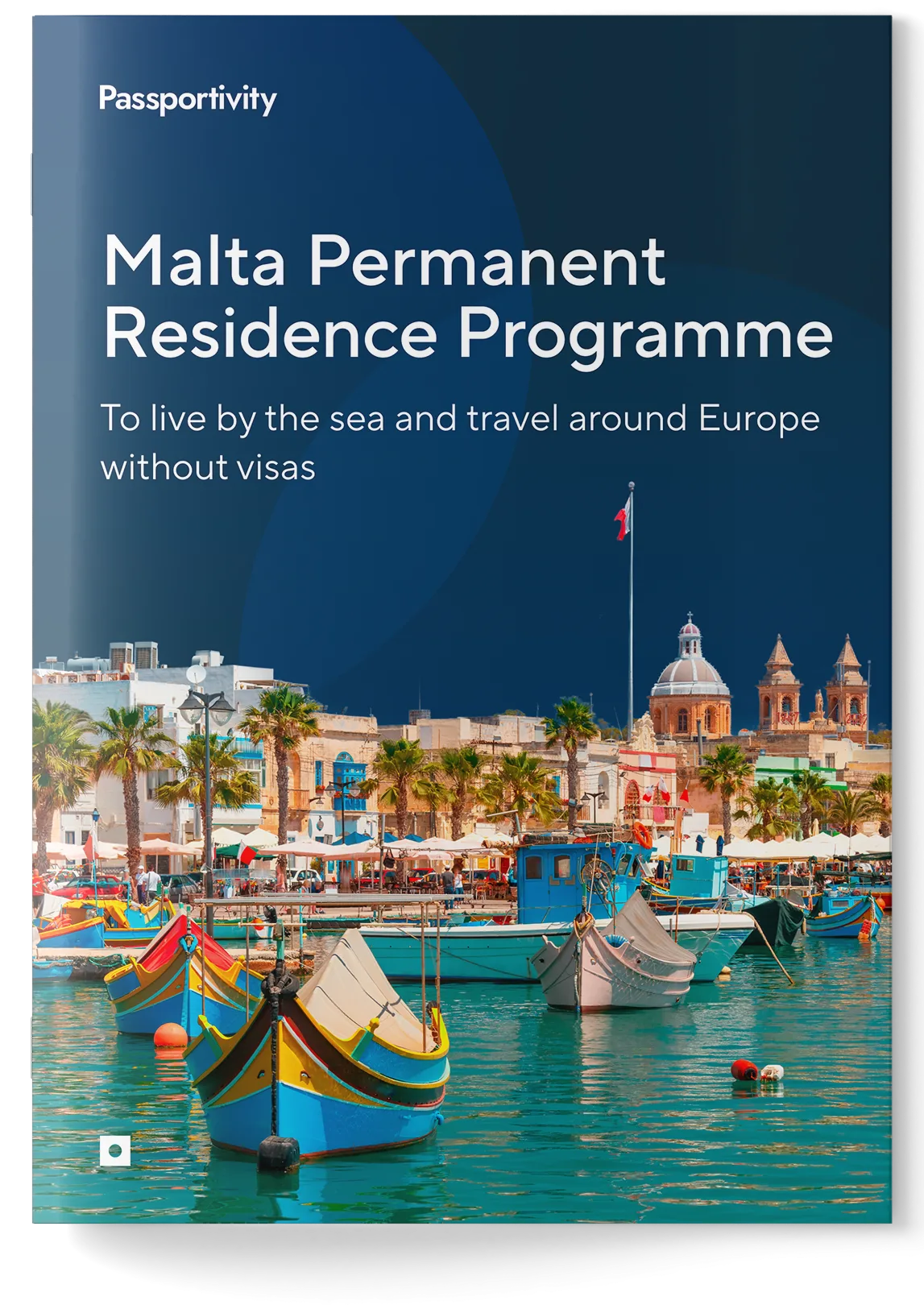
3. Retiring in Malta: permanent residence or tax-focused relocation
Malta has a highly international resident population, which may make relocation easier for
Malta offers two main routes for American retirees.
Malta Permanent Residence Programme, MPRP, is designed for applicants who want permanent residence status from the start. To qualify, applicants need to meet several financial conditions:
- purchase residential property worth at least €375,000 or rent residential property for at least €14,000 per year for a minimum
5-year period; - make a government contribution of around €37,000;
- pay an administration fee of around €60,000;
- make a charitable donation of €2,000 to a registered Maltese NGO;
- show assets of at least €500,000, including a required amount of liquid assets, or €650,000 with a lower liquid component.
Malta Global Residence Permit is a tax residence framework for financially independent applicants. It may suit retirees who plan to relocate and structure their lifestyle around Malta.
The main GRP tax conditions include:
- foreign income remitted to Malta is taxed at 15%;
- minimum annual tax is €15,000 per family;
- foreign income not transferred to Malta is not taxed there;
- capital gains earned outside Malta are exempt from Maltese tax, even if brought into Malta;
- income and capital gains arising in Malta are taxed at standard rates up to 35%;
- no inheritance tax is charged on assets.
For citizenship planning, Malta requires genuine residence. Applicants generally need at least 5 years of residence in Malta within the 6 years before the final 12 months preceding the application. They also need continuous residence in Malta for the 12 months immediately before applying.
4. Retiring in Spain: Non-Lucrative Visa for financially independent retirees
Spain ranked 8th in International Living’s 2026 Annual Global Retirement Index [33] Source: Retirement ranking — Annual Global Retirement Index 2026 . The ranking highlights Spain as one of the leading European retirement destinations, together with Greece, Portugal, Italy and France.
Spain
The first residence permit card is issued for 1 year. It can then be renewed twice, each time for 2 years. Renewal applications are submitted 60 days before the permit expires, but no later than 90 days after expiry.
Applicants need to prove annual income of at least €28,800, or €2,400 per month. The requirement increases by €7,200 per year for each additional family member.
For renewal, residents need to confirm income for 2 years: at least €57,600 for the main applicant and €14,400 for each additional family member.
Applicants must also prove a registered address in Spain by renting or purchasing property. The program does not set minimum requirements for the property value or rental amount.
Permanent residence may become available after 5 years of living in Spain with a residence permit. Spanish citizenship by naturalization may become available after 10 years of residence.
Spain attracts retirees with its warm climate, relaxed pace of life and

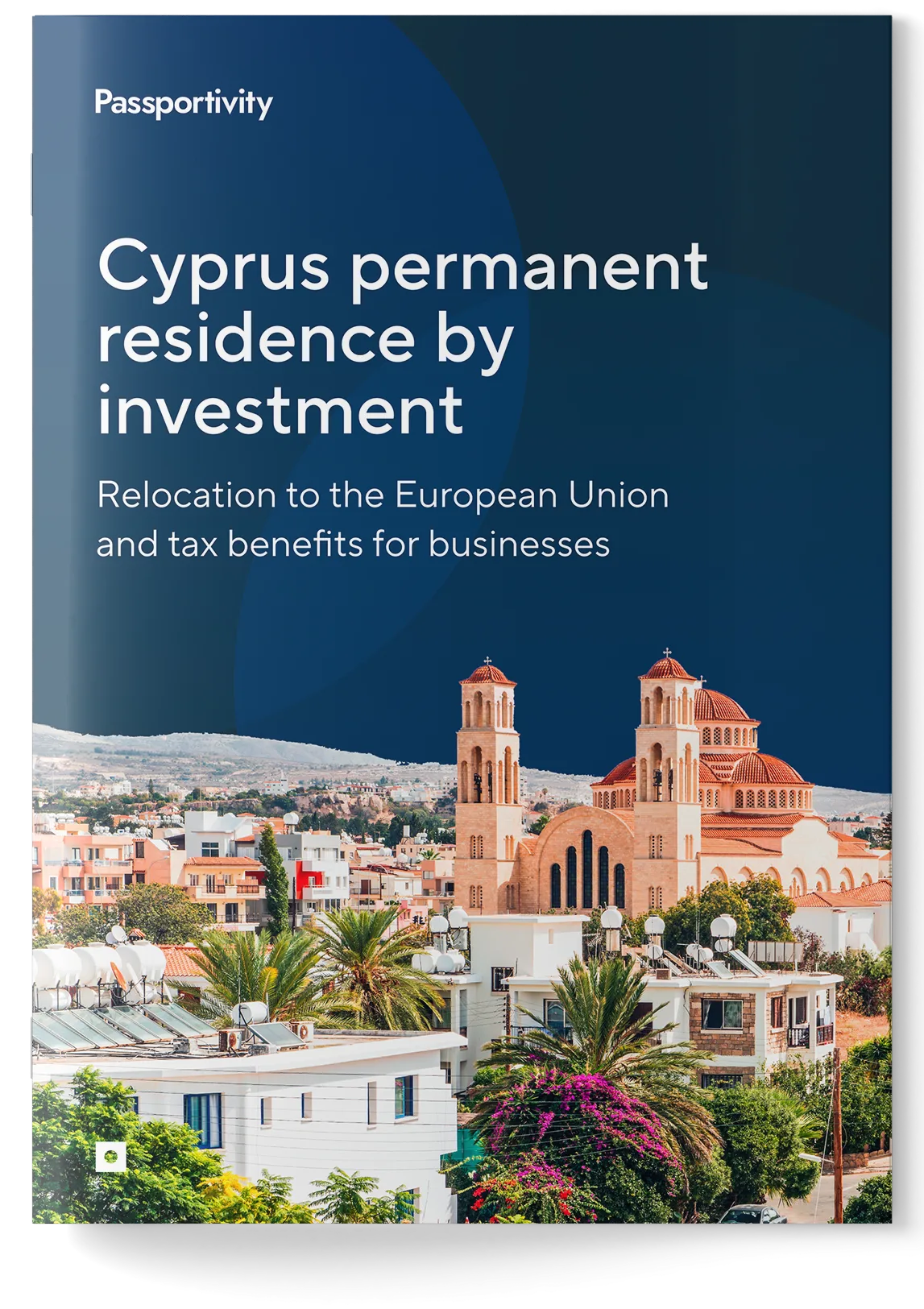
5. Retiring in Cyprus: permanent residence by investment
Cyprus has an international resident base, which may make relocation more familiar for American retirees. According to the 2021 Census, 74.6% of the population in the
CYSTAT also publishes a citizenship table where the United States is listed as a separate country of citizenship [35] Source: US citizens data — Population by Country of Citizenship .
Cyprus permanent residence by investment is a route for
Cyprus grants permanent residence rather than a temporary residence permit. Residents may live in Cyprus without restrictions. To maintain the status, they need to visit Cyprus at least once every 2 years.
Cyprus offers 4 investment options:
- Residential real estate purchase — €300,000+.
- Commercial real estate purchase — €300,000+.
- Purchase of shares in Cypriot companies — €300,000+.
- Purchase of securities — €300,000+.
For residential real estate, the investor may buy 1 or 2 properties with a total value of at least €300,000, excluding VAT. Only primary market properties from developers are eligible. For commercial real estate, both primary and secondary market properties are allowed.
Cyprus citizenship by naturalization may become available after 8 years of residence. The applicant must have legally lived in Cyprus for 8 out of the past 11 years. In the final year before applying, absences from Cyprus must not exceed 90 days in total.
6. Retiring in France: Visitor Visa for financially independent applicants
France ranked 7th in International Living’s 2026 Annual Global Retirement Index
[36]
Source: Retirement ranking — Annual Global Retirement Index 2026
. For retirees, France is usually valued for lifestyle, healthcare, culture and
France Visitor Visa is intended for financially independent applicants who want to live in France without working locally.
The main requirements include:
- sufficient income of at least €1,800 per month for a single applicant;
- higher income for couples or dependants;
- adequate accommodation in France for the whole visa period;
- health insurance valid in France for the applicant and family members.
Applicants may become eligible for French citizenship after about 5 years. Continuous residence means genuine living in France each year. In practice, applicants should plan France as their real place of residence if citizenship is part of the

7. Retiring in Italy: Elective Residence or Investor Visa
Italy ranked 6th in International Living’s 2026 Annual Global Retirement Index
[37]
Source: Retirement ranking — Annual Global Retirement Index 2026
. These rankings support Italy’s role as a
Italy offers both investment and
Italy Investor Visa is a residence by investment route. The minimum investment starts at €250,000, depending on the option chosen. It is intended for investors who want a
Italy Elective Residence is a
As a general benchmark, applicants for Italy Elective Residence need:
- passive income of at least €32,000 per year;
- suitable accommodation in Italy;
- sufficient financial independence to live without employment in Italy.
The route is designed for
Italian citizenship by naturalization requires 10 years of lawful residence. Applicants need to maintain legal residence, spend most of each year in Italy and meet integration requirements, which may include language and documentation at the citizenship stage.

8. Retiring in Austria: residence for financially independent applicants
Austria has a large international resident population, although official public statistics do not isolate American retirees as a separate group. According to Statistics Austria, 1,890,740 foreign citizens lived in Austria on January 1st, 2026, equal to 20.5% of the total population [38] Source: International population — Statistics Austria .
Austrian residence permit is a route for financially independent
The first residence permit is valid for 1 year. The second card is also valid for 1 year. After 2 years of living in Austria, a resident may receive a card valid for 3 years. After 5 years of residence, the applicant and family members may apply for Austria permanent residence.
The applicant must have:
- legal income from outside Austria;
- owned or rented housing in Austria;
- medical insurance;
- German language proficiency at A1 level or higher;
- no criminal record.
Applicants need to prove financial independence. The required amount depends on family composition and is usually calculated as double the minimum cost of living for the year before application. The minimum annual income for 1 applicant is €23,208.
Applicants also need suitable accommodation. There is no minimum property value, but the size and layout must match the family composition. A lease agreement must be concluded for at least 1 year.
Austrian citizenship is a
Olga Koltsova
Investment Programs Expert
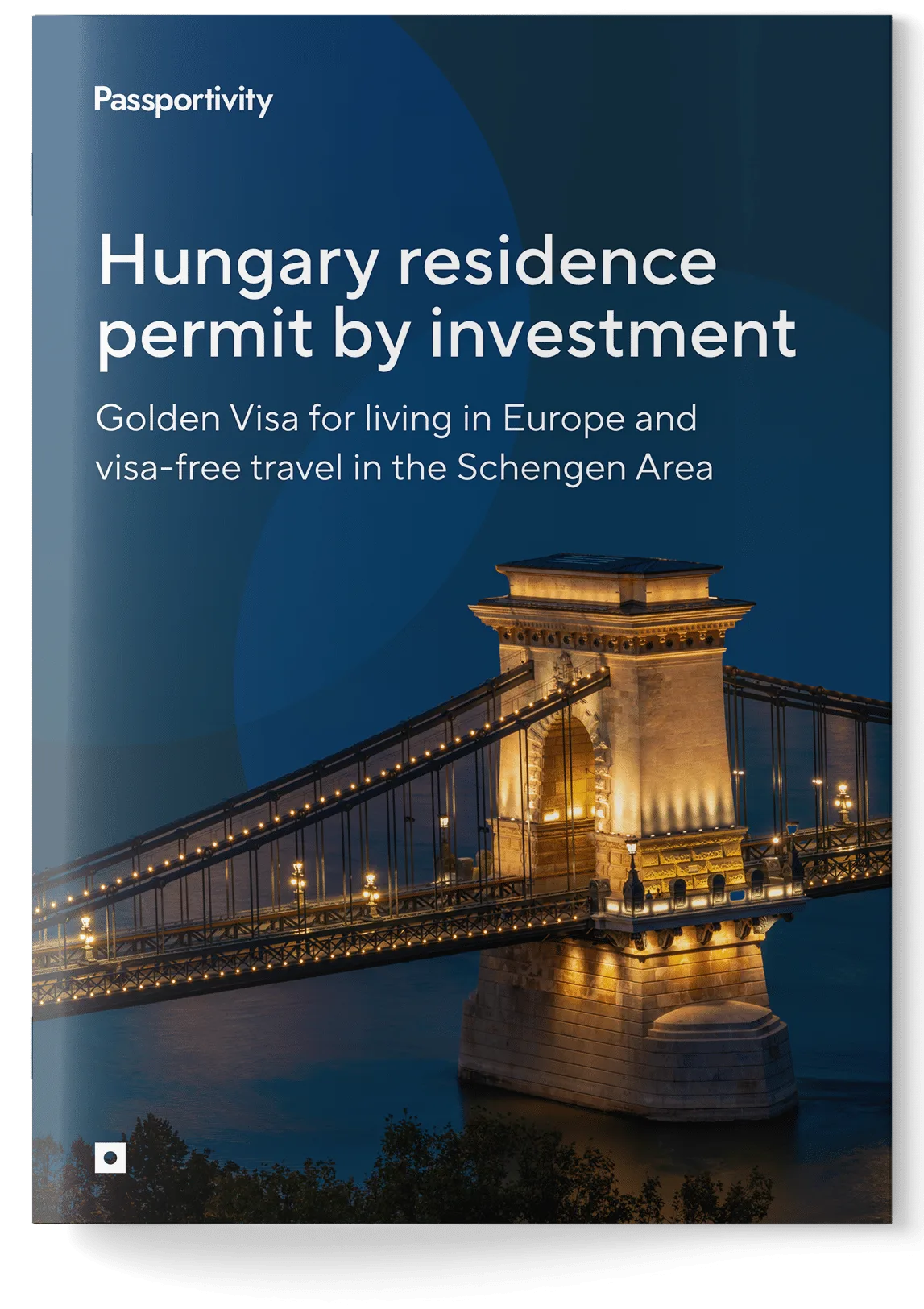
9. Retiring in Hungary: Guest Investor route
Hungary has a smaller American community than Portugal or Spain, but US citizens are present in the country’s official migration statistics. According to the Hungarian Central Statistical Office, about 4,800 foreign citizens with US citizenship lived in Hungary on January 1st, 2026
[39]
Source: American residents — Hungarian Central Statistical Office
. The data is not
Hungary Golden Visa is a residence by investment program for
The residence permit is issued immediately for 10 years. It can be renewed once for another 10 years if the applicant continues to meet the program conditions. Renewal is submitted from within Hungary through the Enter Hungary online platform at least 30 days before the permit expires.
Hungary offers 2 investment options:
- Purchase of fund units — €250,000+;
- University donation — €1,000,000+.
Under the fund option, the investor buys units in a real estate investment fund licensed by the Central Bank of Hungary. The certificate must be valid for at least 5 years. The investor also needs a registered address in Hungary, confirmed through property purchase or rental.
Under the donation option, the investment supports education, scientific research or artistic creativity. The applicant also needs to confirm a registered address in Hungary.
Hungarian citizenship cannot be obtained directly by investment. Hungarian citizenship through naturalization generally requires 8 years of continuous legal residence in Hungary.
10. Retiring in Andorra: residence by investment for financially independent retirees
Andorra has a highly international population, which may make relocation more familiar for foreign retirees. According to Andorra in Data 2025, the country had 88,649 residents, and 54.7% of them were foreign nationals [40] Source: International population — Andorra in Data 2025 .
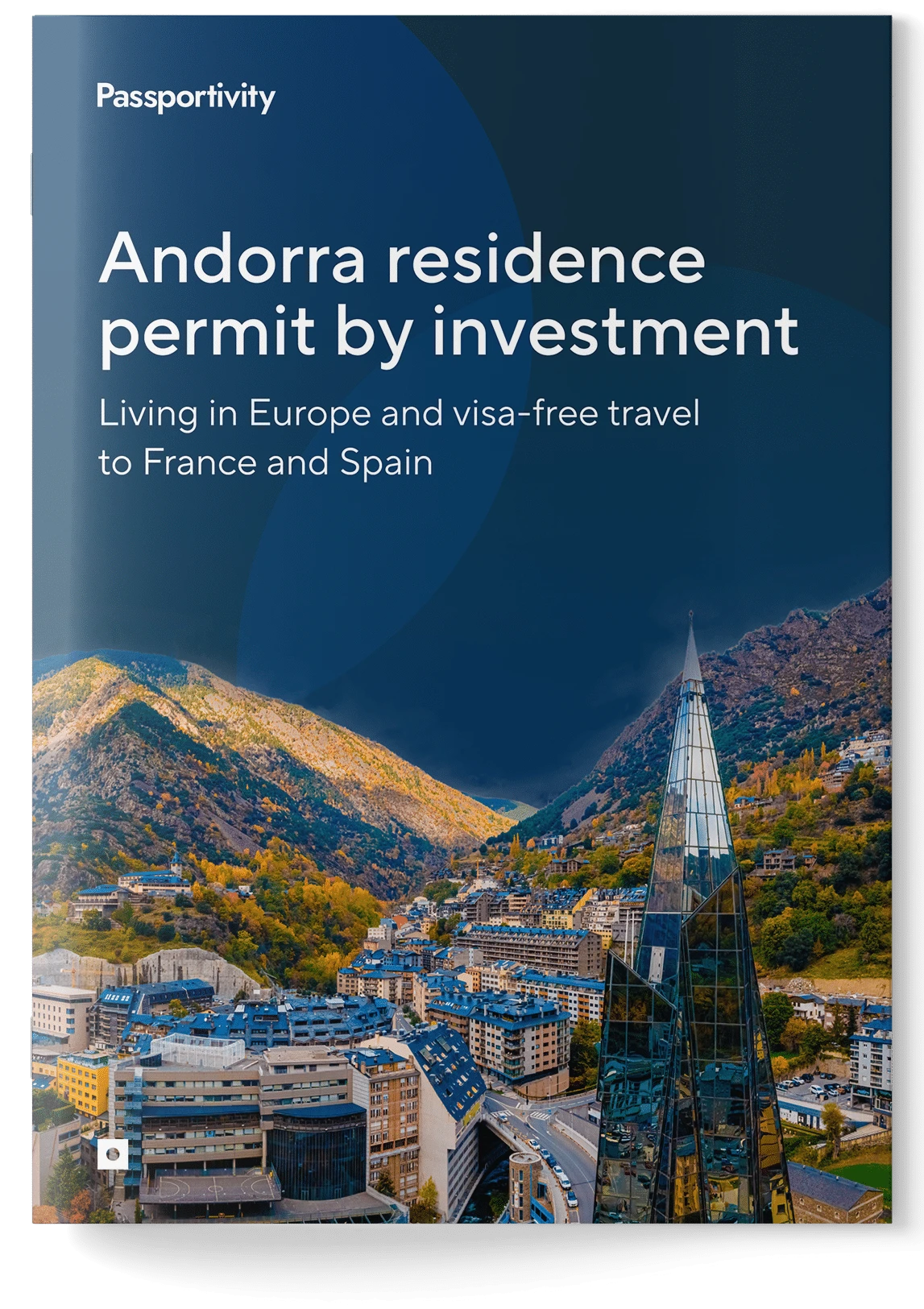
Andorra residence by investment is a passive residence route for foreigners who want to live in Andorra without working locally. The route may suit financially independent retirees who want a European base with a high quality of life, low tax rates and access to local banks, hospitals and schools.
The first residence card is issued for 2 years. The next card is valid for 3 years, and subsequent cards are valid for 10 years. To maintain the status, residents must live in Andorra for at least 90 days a year.
Andorra offers several investment options:
- contribution to the Housing Fund — €400,000+;
- property purchase — €800,000+;
- purchase of financial assets — €1,000,000+.
The Housing Fund option is not yet available, according to Passportivity’s March 2026 update. For property purchase, the investor buys one or more properties, and each property must be worth at least €800,000. If the property costs less than €1,000,000, the investor purchases financial assets to reach this amount.
Andorra citizenship is a
Criteria and country matches for Americans retiring in Europe
Golden Visas, financially independent visas and permanent residence programs can all support
Residence route and renewal conditions
The first criterion is the type of legal status. Some routes are designed for investors, while others suit retirees with passive income, pensions, savings or rental income.
For retirees who plan to live in the country, financially independent routes may be more relevant than investment routes. Examples include the Portugal D7 visa, Spain
Investment routes may suit retirees who want to combine relocation planning with capital allocation. Relevant options include Portugal Golden Visa, Greece Golden Visa, Malta Permanent Residence Programme, Cyprus permanent residence by investment and Hungary Golden Visa.
The main points to check are:
- how long the first residence permit is valid;
- how the permit is renewed;
- whether a spouse and dependent family members can be included;
- whether the route allows work or only passive income;
- whether permanent residence or citizenship is possible later.
Monthly budget and housing costs
Budget planning should start with the city, not only the country. Capital cities and coastal resort areas can be much more expensive than smaller towns or inland regions.
Hungary may be relevant for retirees who want to compare
Portugal, Greece, Spain and Italy often suit retirees who want a balance between lifestyle and cost control. Austria and Switzerland may suit
Healthcare and insurance
Medicare generally does not pay for healthcare or medical supplies outside the US, except in limited cases [42] Source: Medicare abroad — Medicare gov . American retirees therefore need private insurance, access to a local healthcare system, or both.
Spain, Italy and France deserve attention for retirees who prioritise health indicators. Eurostat estimated EU life expectancy at 81.7 years in 2024; among EU countries, Italy had one of the highest figures at 84.1 years, and Spain followed closely at 84.0 years [43] Source: Life expectancy — Eurostat .
For retirees with chronic conditions, the country choice should include an insurance review. The key questions are whether private insurance is available at the applicant’s age, whether
Taxation and double-tax treaties
Tax planning is essential for US citizens. The IRS states that US citizens and resident aliens abroad have US filing and reporting obligations, and foreign accounts may trigger additional reporting.
Some countries have specific regimes that may be relevant for retirees or
Italy also has a special regime for foreign pensioners who transfer tax residence to qualifying municipalities. The Italian Revenue Agency states that eligible pensioners may pay a 7% substitute tax on foreign income for each of the 9 tax periods covered by the option.
Malta may suit
US tax treaties also need a separate review [45] Source: US tax treaties — Internal Revenue Service . The IRS provides tables of income tax treaties, and Hungary needs special attention because IRS Publication 901 states that the US terminated the income tax treaty with Hungary.
Social Security and Medicare
Social Security and Medicare are separate issues. Most US citizens can receive Social Security benefits while living in many foreign countries, but the answer depends on the country, benefit type and individual circumstances [46] Source: Social Security abroad — Social Security Administration . The Social Security Administration provides a Payments Abroad Screening Tool for this purpose.
Medicare usually does not follow retirees to Europe. This makes healthcare planning more important for Americans than for many other nationalities.
A practical shortlist should answer 3 questions:
- whether Social Security payments can continue in the chosen country;
- whether Medicare should be kept for possible treatment in the US;
- which local or private insurance option covers healthcare in Europe.
Language, expat community and everyday integration
Language affects everyday life, healthcare, banking and document processing. Malta and Ireland are the most straightforward options for
The EF English Proficiency Index can help compare
For retirees who want smoother integration, Malta, Ireland, Portugal and Austria may be easier starting points. Spain, France, Italy, Greece, Cyprus and Hungary can still work well, but language planning should be part of the relocation process.
Housing in Europe
Housing should be checked before choosing a residence route. For retirees, the right location is not only about property price. It also affects healthcare access, transport, daily comfort, tax residence and renewal documents.
Malta may suit American retirees who want an

Climate and lifestyle
Climate matters because retirement is a
Portugal, Greece, Spain, Cyprus, Malta and parts of Italy are natural options for retirees who want sea access and a warmer climate. Greece is especially strong in retirement rankings: International Living placed Greece 1st in its 2026 Annual Global Retirement Index [48] Source: Retirement ranking — Annual Global Retirement Index 2026 . The index compares destinations by housing, cost of living, healthcare, visas, climate and ease of transition.
Greece’s official tourism portal also describes the country as having a Mediterranean climate with plenty of sunshine, mild temperatures and limited rainfall.
Austria, Switzerland and Ireland suit a different lifestyle. They may be more relevant for retirees who value infrastructure, stability, nature and safety over a Mediterranean climate.
Path to permanent residence and citizenship
Applicants who want permanent residence or citizenship should check the
Cyprus permanent residence can work as a
The key issue is not only the number of years. Applicants usually need to:
- maintain lawful residence;
- renew the permit on time;
- meet physical presence rules;
- pass language or integration requirements;
- keep a clean compliance record.
For this reason, the best place to retire in Europe for Americans depends on the full strategy. A retiree who wants lifestyle and healthcare may choose Spain, France or Italy. A retiree who wants investment residence may prefer Greece, Malta, Cyprus or Hungary. A family that wants an
Step-by-step process: how to obtain residence permit by investment in Europe
Obtaining a residence permit by investment in Europe usually takes
The process should be planned as a legal and financial project. Applicants need to confirm eligibility, prepare documents, prove the legal origin of funds, make the qualifying investment and maintain the residence status after approval.
-
1+ week sSelecting a program
The first task is choosing an appropriate country that aligns with the applicant's investment goals and lifestyle aspirations.
-
2—3 weeksGathering documents and submitting an application
To apply successfully, applicants must provide the necessary documentation, including:
- proof of income;
- police clearance certificate;
- evidence showing that all legal obligations regarding residency rights within the chosen jurisdiction have been met.
-
1+ month sDue Diligence
Applicants must undergo Due Diligence, a background check conducted by the government or a designated
third-party agency.This process is crucial for verifying the applicant’s financial standing, criminal history, and overall eligibility for the Golden Visa. It ensures that the individual meets the required standards and helps protect the integrity of the program by preventing fraud or illegal activities.
-
Up to 2 months
Making the required investment
The investor fulfils the investment condition according to the chosen option and provides supporting documents to confirm compliance.
-
2 to 8 months
Approval and receiving residency or citizenship
Upon approval, the applicant will receive a residence permit. Afterward, it is essential to fulfil the ongoing obligations required to maintain and renew the status.
Common mistakes Americans make when retiring in Europe
Americans who retire in Europe usually plan several issues at once: residence, housing, healthcare, taxes, banking and family logistics. Mistakes often happen when the country is chosen by lifestyle alone, without checking legal and financial consequences.
Choosing a country by lifestyle only
Climate, sea access and culture matter, but they should not be the only criteria. A retiree also needs to check residence rules, renewal conditions, healthcare access, tax exposure and the path to permanent residence or citizenship.
A residence permit may be only the first step. Citizenship by naturalization usually requires years of lawful residence, renewals, language knowledge and integration.
Assuming Medicare works in Europe
Medicare usually has limited coverage outside the US. Retirees who move to Europe normally need private health insurance, access to a local healthcare system, or both.
This should be checked before signing a lease or buying property. Older applicants may also need to review age limits,
Ignoring US tax filing obligations
Moving to Europe does not usually end US tax filing obligations. The IRS states that US citizens and resident aliens living abroad generally follow the same filing rules as those living in the US.
For affluent retirees, this may affect brokerage accounts, pensions, IRAs, rental income, trusts, foreign accounts and gifts. Tax questions should be reviewed with a US CPA before choosing a residence route.
Confusing residence, permanent residence and citizenship
A residence permit gives the right to live in a specific country under the conditions of the permit. Permanent residence and citizenship are separate statuses.
Investment residence and financially independent visas may support a
Underestimating banking and source of funds checks
Investment residence applications usually involve compliance checks. Authorities and banks may review income history, business activity, sale of assets, tax records and the origin of investment funds.
This is especially important for US retirees with complex assets. Trusts, LLCs, brokerage portfolios and real estate income may require additional explanation and documents.
Not planning Social Security and healthcare together
Social Security and Medicare should be reviewed separately. The Social Security Administration provides a Payments Abroad Screening Tool to help beneficiaries check whether payments may continue outside the US.
A retiree may be able to receive Social Security abroad, while Medicare coverage remains limited outside the US. This difference should be reflected in the relocation budget.
Final thoughts: where should Americans retire in Europe?
- The best place to retire in Europe for Americans depends on the purpose of relocation.
- Portugal, Greece, Spain and Italy may suit retirees who want a warmer climate and Mediterranean lifestyle.
- Malta and Ireland may be more convenient for
English-speaking retirees. - Austria and Andorra may suit applicants who prioritize safety, infrastructure and a high quality of life.
- Americans can legalize their stay in Europe through several residence routes. Retirees with passive income may consider the Portugal D7 visa, Spain
Non-Lucrative Visa, France Visitor Visa or Italy Elective Residence. - Investors may choose residence by investment programs in Greece, Malta, Cyprus, Hungary or Portugal.
- A residence permit may lead to permanent residence or citizenship by naturalization, but this is not automatic.
About the authors


Frequently asked questions
Yes. Americans can retire in Europe if they obtain a legal basis to stay long term. The most common routes are residence permits for financially independent people,
Retirees may consider the Portugal D7 visa, Spain
The US Department of State advises Americans who plan to retire abroad to check immigration or retirement visa requirements on the official government or embassy website of the country where they plan to live.
The right choice depends on income, healthcare needs, tax position, family plans, language, lifestyle and
Portugal may suit retirees who want a balanced lifestyle and D7 or Golden Visa routes.
Greece may suit those who want a Mediterranean lifestyle and residence by investment.
Malta may suit
France, Spain and Italy may suit retirees planning full relocation and
The easiest country depends on the applicant’s profile. For retirees with passive income, Portugal D7, Spain
A route is easier when the applicant clearly meets income, savings, health insurance, accommodation and background requirements. Government authorities make the final decision.
The required amount depends on the country and residence route. In this article, examples include:
- €
920+ month ly passive income for Portugal D7; - €28,800+ annual income for Spain
Non-Lucrative Visa; - €1,
800+ month ly income for France Visitor Visa; - €31,160+ annual passive income for Italy Elective Residence.
Investment routes start at €250,000+ in countries such as Greece, Portugal and Hungary, and €300,000+ in Cyprus.
Applicants also need to budget for housing, private health insurance, government fees, document preparation, tax advice and renewal costs.
European countries usually do not call these routes “retirement visas” officially. For American retirees, relevant
Common options include the Portugal D7 visa, Spain
Investors may also consider Greece Golden Visa, Malta Permanent Residence Programme, Cyprus permanent residence by investment, Hungary Golden Visa and Portugal Golden Visa.
In many cases, US retirees can receive Social Security payments while living abroad. The answer depends on citizenship, country of residence, benefit type and individual circumstances.
The Social Security Administration provides a Payments Abroad Screening Tool to help beneficiaries check whether payments may continue outside the United States.
Medicare usually does not cover healthcare or medical supplies outside the US, except in limited cases. This means American retirees who move to Europe normally need private health insurance, access to a local healthcare system, or both.
Healthcare planning should be completed before relocation. Retirees should check age limits,
Yes, US citizens and resident aliens generally remain subject to US tax rules after moving abroad. The IRS states that Americans living or traveling outside the US are generally required to file income tax returns, estate tax returns and gift tax returns in the same way as those residing in the United States.
Local tax residency rules may also apply in the European country of residence. Retirees with pensions, IRAs, brokerage accounts, rental income, trusts or foreign accounts should review the move with a US CPA.
A residence permit may later support permanent residence or citizenship by naturalization if the applicant meets the country’s requirements.
Applicants usually need to maintain lawful residence, renew permits on time, meet physical presence rules, pass language or integration requirements and keep a clean compliance record. Timelines vary: some countries offer permanent residence after several years, while citizenship may take 5 to
There is no single official statistic that shows where American retirees live in Europe by country. Public data usually tracks US citizens,
Portugal, Spain, France, Italy, Greece and Malta are often considered by Americans because they combine residence routes, infrastructure, lifestyle and healthcare access. Portugal also has a visible US citizen resident community in official migration statistics, according to the article draft.
Read also





Contact us today
Passportivity assists international clients in obtaining residence and citizenship under the respective programs. Contact us to arrange an initial private consultation.